Infant Autonomy: Mastering the First Bite of Independence
Scientifically Reviewed · Dr. Marwa Abd-Alazim · October 17, 2026
Review Criteria & Clinical Standards
This content undergoes rigorous scientific peer-review and medical editorial standards at Arab Psychology Network to ensure clinical accuracy, validity, and compliance with evidence-based guidelines from leading psychological and healthcare authorities (APA / WHO).
The Core Definition of Self-Feeding
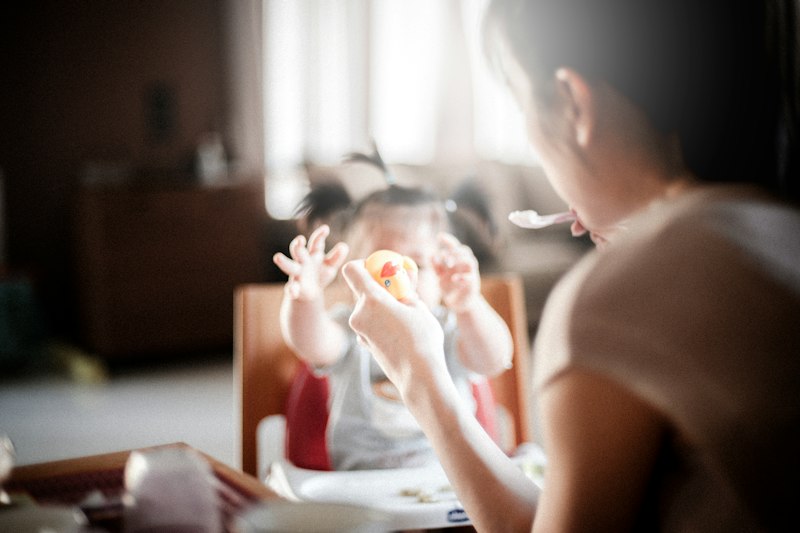
Self-feeding is defined as the complex developmental process by which an infant transitions from complete nutritional reliance on a caregiver to independently selecting, grasping, and delivering food items to their mouth. This ability represents a critical developmental milestone, marking the initial steps toward **autonomy** and mastery of the environment. Far beyond a simple motor task, self-feeding involves the sophisticated integration of sensory input, cognitive processing, motor planning, and execution. The fundamental mechanism behind this concept is the maturation of the nervous system, allowing for the coordination of multiple separate functions—such as visual tracking and grasping—into a single, intentional sequence of behaviors necessary for sustenance.
Psychologically, the act of self-feeding signifies a major shift in the infant’s relationship with food and the caregiver. It moves from a passive receptive role (being fed) to an active, exploratory role (feeding oneself). This shift encourages **agency** and early problem-solving skills, as the infant must learn to manipulate objects of varying shapes and textures and cope with the physical challenges of gravity and distance. The successful acquisition of self-feeding skills is intrinsically linked to the development of other physical proficiencies, particularly the ability to sit unsupported, which provides the necessary trunk stability for arm and hand movements.
While infants may initially rely on reflexive actions or the rudimentary whole-hand palmar grasp to manipulate food, the refinement of self-feeding relies heavily on the emergence of **fine motor control** and precise movements. The process typically begins between six and nine months of age, though individual variation is significant. Early attempts are characterized by messiness and inefficiency, but these initial explorations are crucial practice sessions that solidify the neural pathways required for later, more controlled feeding behaviors.
Historical and Theoretical Context
The study of self-feeding, while seemingly focused on physical behavior, is deeply rooted in **developmental psychology** and the field of pediatric occupational therapy. Historically, feeding was viewed primarily through a purely nutritional lens. However, the work of early developmental theorists, such as Arnold Gesell, emphasized the biological maturation schedule, suggesting that feeding milestones, like sitting and crawling, emerge in a predictable sequence dictated by intrinsic biological timetables. This perspective framed self-feeding as a marker of overall neurological readiness.
In the mid-to-late 20th century, research expanded to incorporate the cognitive and social dimensions of feeding. Psychologists began to recognize that feeding success was intertwined with attachment theory (the quality of the caregiver-infant bond) and sensory integration theories. The shift toward viewing the infant as an active participant in the feeding process gained traction, moving away from forced feeding schedules toward responsive or cue-based feeding. This contextualization highlights that self-feeding is not merely a physical skill but a **social-emotional experience** that shapes the infant’s early relationship with their environment and their primary caregivers.
Contemporary research, such as studies focusing on the correlations between self-feeding initiation and motor skill development (e.g., Chang, Chen, & Lin, 2019), consistently confirms that independence in feeding is tightly coupled with motor mastery. These findings emphasize that early self-feeding attempts provide vital feedback loops that refine the infant’s **motor planning** and proprioception. The historical trajectory shows a progression from a purely physiological perspective to a modern, holistic view that treats self-feeding as a crucial indicator of the integration of motor, cognitive, and sensory systems.
The Developmental Mechanics and Timeline
The acquisition of self-feeding skills unfolds across several stages, beginning with the infant’s ability to stabilize their body. Supported sitting is the initial prerequisite, followed by independent sitting, typically achieved around six months. This stability frees the upper limbs for reaching and grasping. Initially, the infant uses the **palmar grasp**, involving the whole hand to rake food toward the body or mouth. This is a crude method but allows the infant to begin exploring textures and practicing the transfer of objects.
As the infant progresses, usually between seven and twelve months, the grasp refines dramatically, moving toward the **pincer grasp**, which utilizes the thumb and forefinger to pick up small items with precision. This development in fine motor skills is directly responsible for the increased accuracy and control required for self-feeding. Simultaneously, the infant must develop sophisticated **hand-eye coordination**—the visual system must track the food, and the motor system must calculate the trajectory to the mouth, adjusting for shifts in position or speed.
The process is intensely iterative and requires consistent practice. Every successful attempt reinforces the neural connections governing reaching, grasping, and oral motor control. Furthermore, the ability to self-feed is closely related to exploration and curiosity; the infant’s innate drive to manipulate their environment naturally extends to food items. Caregivers who facilitate this exploration by providing age-appropriate food items are supporting not just feeding proficiency, but also broader cognitive development through sensory engagement and experimentation.
A Practical Example: The Transition to Solids
A clear, relatable example of the self-feeding principle in action is the introduction of soft, manageable finger foods, such as steamed pieces of carrot or soft pasta, to a seven-month-old infant. Prior to this, the infant may have only experienced purees delivered via spoon. The new scenario demands active participation and integration of multiple skills previously developed in isolation.
The “How-To” of this scenario demonstrates the complexity of the psychological process. First, the infant must use **visual attention** to locate the food item on the tray. Second, the motor system initiates a reach, requiring **spatial awareness** to judge the distance accurately. Third, the infant employs their developing fine motor skills to execute the appropriate grasp, which may start as a clumsy rake and transition into a more precise pincer grip. Fourth, the most challenging step: maintaining the grasp while simultaneously calculating the movement path and velocity to bring the food directly to the open mouth.
If the attempt is successful, the infant receives positive internal reinforcement (satisfaction, taste), motivating further attempts. If the attempt fails (e.g., the food drops or misses the mouth), the infant receives visual and proprioceptive feedback, which they use to adjust the motor plan for the next attempt. This cycle of observation, planning, execution, and correction is the essence of **sensorimotor learning** in the context of self-feeding, making the high chair a crucial laboratory for early cognitive and motor development.
Common Barriers to Self-Feeding Development
While self-feeding is a natural developmental progression, several factors can impede its successful acquisition, necessitating clinical intervention. One significant barrier is the presence of **food aversions** or neophobia—a reluctance to try new foods. Such aversions can stem from negative early feeding experiences, forcing, or underlying gastrointestinal discomfort, resulting in a decreased interest in food and, consequently, fewer self-feeding attempts and reduced practice opportunities.
Physical impairments constitute another major barrier. Disorders that limit range of motion or control of the hands, such as **cerebral palsy** or muscular dystrophy, directly impede the necessary fine motor skills for grasping and transferring food. Infants with these conditions often require adapted utensils or specialized feeding techniques to bypass the limitations imposed by their physical control. The lack of trunk stability associated with some motor disorders also complicates the process by undermining the stable base required for effective arm movement.
Furthermore, **sensory processing disorders** (SPD) can profoundly affect self-feeding. Infants with SPD may exhibit hypersensitivity to certain textures, temperatures, or smells. For example, an infant who is orally defensive might reject foods that are slimy, chunky, or sticky, leading to a restricted diet and an aversion to the tactile experience of handling food. Since exploration through touch is integral to learning to self-feed, these sensory sensitivities often require careful desensitization strategies led by occupational therapists specializing in sensory integration.
Significance and Clinical Impact
The ability to self-feed holds immense **clinical significance** because it serves as a sensitive early indicator of general neurological maturity and overall developmental status. Delays in self-feeding can signal potential issues not only in motor control but also in cognitive development, sensory integration, or the social-emotional domain. Pediatricians and developmental specialists regularly assess feeding milestones as part of routine screenings, using the proficiency of self-feeding as a barometer for the infant’s progression.
In applied settings, particularly pediatric **occupational therapy** and speech-language pathology, the concept of self-feeding forms a core component of intervention. Therapists utilize targeted strategies to address specific deficits, whether they involve strengthening the pincer grip, improving hand-to-mouth trajectory through practice, or desensitizing oral aversions. Successful intervention in this area not only ensures adequate nutritional intake but also supports the development of crucial skills required for future independence, such as dressing and hygiene.
Beyond clinical assessment, self-feeding is critical for the development of the infant’s sense of **autonomy**. Erik Erikson’s stages of psychosocial development highlight the importance of early independence. By successfully manipulating their food and controlling their intake, infants gain confidence in their own abilities, which lays the psychological foundation for the establishment of self-efficacy and independence in later childhood stages. The act itself is empowering, providing the infant with control over their immediate physiological needs.
Connections to Broader Psychological Concepts
Self-feeding is closely related to several other major psychological theories and concepts. It is an exemplary illustration of **sensorimotor learning**, a principle central to Jean Piaget’s theory of cognitive development, occurring during the first stage of life. The infant learns about object properties (texture, size, temperature) and spatial relationships through direct manipulation and repetitive interaction with food.
Furthermore, the context in which self-feeding occurs is highly relevant to **Attachment Theory**. The concept of “responsive feeding” dictates that caregivers should respect the infant’s cues regarding hunger, satiety, and desire for independence. A supportive caregiver who allows the infant to explore and attempt self-feeding—even if messy—fosters a secure attachment and promotes the child’s burgeoning autonomy, contrasting sharply with controlling or restrictive feeding practices that can lead to power struggles and feeding difficulties.
Finally, self-feeding is intrinsically linked to **sensory integration**, a concept popularized by occupational therapist A. Jean Ayres. Effective feeding requires the accurate processing of vestibular (balance), proprioceptive (body awareness), and tactile (touch) information. A child struggling with self-feeding may be dealing with an underlying sensory processing difficulty, making the task of handling and accepting new textures overwhelming. Therefore, clinical approaches to feeding often require an understanding of how the brain processes and responds to sensory input from the food and the environment. This developmental process belongs primarily to the subfield of **Developmental Psychology**, with significant overlap into Health Psychology and Clinical Pediatrics.