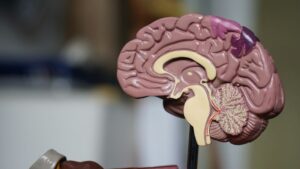
Semantogenic Disorder: How Language Shapes Your Reality
Scientifically Reviewed · Dr. Marwa Abd-Alazim · September 6, 2026
Review Criteria & Clinical Standards
This content undergoes rigorous scientific peer-review and medical editorial standards at Arab Psychology Network to ensure clinical accuracy, validity, and compliance with evidence-based guidelines from leading psychological and healthcare authorities (APA / WHO).

Introduction and Definitional Context
Semantogenic disorder represents a highly specific, albeit often conceptually integrated, form of cognitive disturbance characterized fundamentally by the systematic misinterpretation of linguistic meaning, specifically when those words are imbued or “colored” by intense emotional or affective states. This condition transcends simple misunderstanding; it is a profound distortion process where the inherent semantic value of a word is overridden or radically altered by the emotional context or resonance it holds for the individual. The resulting failure in communication highlights the complex, often fragile interplay between the purely logical processing of language (semantics) and the subcortical, limbic system influence of emotional experience (affect). Understanding semantogenic disorder requires recognizing that language, for the affected individual, ceases to be a neutral vehicle for information exchange; instead, it becomes a mirror reflecting internal emotional turmoil, leading directly to significant interpersonal and functional impairment.
The core pathology lies in the failure to maintain separation between the objective denotation of a word and the subjective emotional connotation it carries, particularly during heightened emotionality or in contexts where underlying psychological vulnerabilities are triggered. This process implies a failure of the cognitive system to inhibit emotionally salient but contextually irrelevant meanings. Consequently, the individual attributes personalized, emotionally biased meanings to spoken or written words, often perceiving threat, accusation, or judgment where none was intended. This mechanism fundamentally differs from generalized linguistic deficits; the individual retains the capacity for linguistic structure and vocabulary, but the meaning assigned to the words is consistently biased toward the dominant emotion dominating the individual’s current psychological state. The clinical presentation is therefore less about language production failure and more about severe comprehension failure rooted in affective intrusion.
The description provided in historical clinical settings, such as “Part of Joe’s mental disorder included semantogenic disorder,” underscores its nature as a component symptom or mechanism rather than a primary, standalone diagnosis in contemporary nomenclature. It functions as a powerful descriptor for a specific type of thought disturbance found across various complex psychiatric syndromes. To fully grasp the implications of semantogenic disorder, one must appreciate the extent to which emotional instability can functionally paralyze the ability to process external linguistic reality accurately, forcing the individual into a self-referential loop where all communication confirms internal negative feelings or fears.
Historical and Conceptual Origins
The concept of semantogenic disorder finds its conceptual roots within the broader 20th-century exploration of psychopathology, particularly the detailed study of formal thought disorders associated with severe psychoses. While not typically cataloged as an independent diagnostic entity in modern nosologies like the DSM or ICD, the descriptive term serves as a powerful and precise descriptor for a specific mechanism of cognitive dysfunction observed in complex mental illnesses, particularly those involving high degrees of paranoia or affective dysregulation. Early psychopathologists were intensely interested in how the formal structure of thought and language breaks down, meticulously distinguishing between disturbances in syntax, logical coherence, and semantic meaning attribution.
Semantogenic disorder specifically addresses the failure at the level of meaning attribution, arguing that certain semantic fields become pathologically hypersensitive to emotional charge. This historical placement contrasts it sharply with primary forms of aphasia, which are typically neurological deficits concerning lexical access or syntactic structure. Instead, the focus remains firmly on the psychological and affective origin of the misinterpretation. Clinicians in the mid-20th century recognized that in certain patients, the distortion of reality was mediated not by hallucinations or primary delusions alone, but by a consistent and predictable corruption of external information, specifically language, through an emotional filter. This observation led to the need for a term that encapsulated this specific phenomenon of emotion-driven semantic corruption.
The clinical utility of the term persists today in advanced descriptive psychopathology because it isolates the precise moment of communicative failure: the moment when the objective meaning of a word is supplanted by its subjective emotional weight. In the context of severe mental illness, where affective instability often precedes or accompanies thought fragmentation, semantogenic disorder provides a mechanistic link between the two domains. Therefore, the term acts less as a primary diagnosis and more as a detailed psychological descriptor of the central mechanism underlying specific communication failures observed in conditions like schizophrenia, severe bipolar disorder, or specific types of personality disorders characterized by affective volatility and relational paranoia.
Clinical Phenomenology and Manifestations
Clinically, semantogenic disorder manifests in several distinct and often debilitating ways, primarily centered around profound communication difficulty and affective volatility. Individuals suffering from this condition frequently exhibit an exaggerated, defensive, or even paranoid interpretation of speech, particularly if the words used possess secondary meanings, historical personal resonance, or slight emotional connotations. The impact is immediately evident in conversational settings where the flow is repeatedly disrupted by the patient reacting to a perceived slight or threat that was not objectively present in the speaker’s intent. This sensitivity extends across various forms of communication, including casual remarks, therapeutic inquiries, or instructions.
For instance, a simple, neutral statement delivered by a caregiver, such as “We need to adjust your schedule next week,” might be interpreted not as a logistical necessity, but as an impending threat of abandonment, punishment, or loss of control, due to the word “adjust” or “schedule” triggering underlying anxieties or emotional distress regarding personal autonomy. This misinterpretation leads directly to inappropriate emotional responses—excessive fear, intense anger, acute despair, or defensive withdrawal—that are wholly disproportionate to the objective content of the conversation. The pervasive nature of this mechanism means that almost any utterance can become a source of distress, creating an environment of perpetual suspicion and severely undermining the individual’s ability to maintain stable interpersonal relationships or engage effectively in therapeutic settings where language is the primary tool for intervention.
Furthermore, the disorder often leads to a phenomenon where the patient’s focus locks onto a single, emotionally charged word within a long sentence, causing them to completely disregard the context and overall meaning of the communication. This selective attention, driven by internal affect, results in fragmentated comprehension and an inability to process complex information sequentially. The subjective reality of the patient becomes constantly reinforced by external language, creating a cycle where every conversation validates their internal emotional state, irrespective of the external facts. The patient genuinely believes the speaker intended the emotionally loaded meaning, leading to accusations or defensive behaviors that further alienate them from those attempting to communicate neutrally.
The Role of Affective Coloring in Misinterpretation
The central pathology of semantogenic disorder lies in the process known as “affective coloring” or “emotional loading.” This mechanism describes how intense subjective feelings—such as fear, guilt, shame, or deep anxiety—corrupt the objective processing of semantic information. Under normal psychological conditions, the brain processes semantic content through pathways that are largely distinct from, though interactive with, emotional appraisal centers, primarily situated within the limbic system, including the amygdala and hippocampus. In this disorder, however, the affective system appears to exert a pathologically dominant and non-inhibited influence over the semantic system.
When a word is encountered, the associated emotional memory or the current affective state of the individual immediately biases the interpretation. This bias often prioritizes subjective emotional resonance over dictionary definition, syntactical structure, or contextual relevance. This pathological mechanism transforms language from objective data into highly personalized, emotionally charged stimuli. The emotional meaning of the word is retrieved faster and with greater salience than the neutral, literal meaning, effectively short-circuiting the cognitive process that should prioritize context-appropriate definitions. The affective tail begins to wag the semantic dog, leading to immediate, reactive emotional responses.
For instance, if an individual is currently experiencing intense, pervasive feelings of unworthiness or guilt, any word remotely associated with responsibility, failure, error, or judgment—even if used neutrally (e.g., “The clerk handled the error”)—will trigger the guilt response, leading to a distorted, self-referential interpretation of the speaker’s intent. The patient may interpret the speaker’s tone or phrasing as accusatory, even if the language was completely neutral, thereby confirming the individual’s negative internal emotional state and perpetuating the cycle of miscommunication and distress. The intensity of the affective state determines the scope of the semantic corruption, meaning that during periods of high emotional distress, nearly all external language may become unintelligible or threatening due to this pervasive coloring effect.
Cognitive and Linguistic Underpinnings
From a cognitive neuroscientific perspective, semantogenic disorder suggests a significant breakdown in key executive functions responsible for integrating and separating cognitive streams. Specifically, there appears to be a failure in the selective attention mechanisms required to isolate the denotative (literal) meaning of a word from its connotative (emotional) or associative meaning. Normally, the linguistic system efficiently retrieves the most probable meaning based on the current context, suppressing less relevant alternatives. In semantogenic disorder, however, the affective salience acts as an irresistible distraction, pulling attention away from the appropriate meaning toward the emotionally charged one, regardless of contextual fit.
Furthermore, models of semantic memory retrieval suggest that the inhibitory mechanisms, which normally suppress irrelevant or emotionally disruptive meanings during focused language comprehension, are critically compromised. This lack of inhibition allows emotionally salient, but contextually inappropriate, interpretations to flood conscious awareness, often resulting in a deluge of personalized, negative associations that overwhelm the intended message. This suggests potential dysfunction in brain regions crucial for emotional regulation and conflict monitoring. Research into related thought disorders often implicates the ventromedial prefrontal cortex and the anterior cingulate cortex, which are critical for modulating the strong input from limbic structures (emotion) onto higher-order language processing areas, such as Wernicke’s area (comprehension).
The linguistic consequence of this cognitive failure is a highly personalized lexicon where meanings are fluid, unstable, and perpetually dependent on the individual’s fluctuating emotional baseline, making consistent, linear communication almost impossible. The patient is not simply confused; they are operating under a different set of semantic rules dictated by their internal emotional landscape. This creates a significant barrier to insight, as the patient perceives their distorted interpretation as the objective truth, reinforced by the compelling emotional reaction it generates. The integrity of the cognitive apparatus responsible for filtering and prioritizing linguistic input based on objective reality is thus systematically dismantled by internal affective pressure.
Differential Diagnosis and Comorbidity
Differentiating semantogenic disorder from other forms of language disturbance is crucial for accurate clinical assessment and targeted intervention. It must be distinguished clearly from classic forms of aphasia (e.g., Wernicke’s or Broca’s), which involve primary deficits in language production or comprehension structure, often due to focal neurological damage. Semantogenic disorder, conversely, preserves the structural and grammatical integrity of language processing but corrupts the assigned meaning through affective interference, usually without specific neurological lesion. A patient with semantogenic disorder can repeat the words perfectly but misinterpret their intent, whereas an aphasic patient may struggle with repetition itself.
Clinicians must also distinguish it from generalized formal thought disorder, where the breakdown is often characterized by loosening of associations, tangentiality, neologisms, or incoherence, representing a broader disorganization of thought processes. While semantogenic disorder contributes to thought disorganization, its mechanism is highly specific: the distortion is directly traceable back to an affective trigger linked to the semantic content of the word. In contrast, generalized thought disorder may involve purely illogical leaps that are not necessarily driven by emotional valence.
Furthermore, while semantic distortions often appear in psychotic disorders like schizophrenia or severe bipolar episodes, semantogenic disorder describes the *mechanism* (emotion-driven misinterpretation) rather than the overall syndrome. In cases of extreme mood disorders, the semantic distortion is highly mood-congruent—a profoundly depressed individual might interpret “cloudy day” as a sign of imminent personal failure. Semantogenic disorder, however, focuses specifically on the immediate emotional charge of the word itself, implying a vulnerability in semantic processing that may predate or exacerbate the general delusional framework. It frequently co-occurs with conditions marked by intense emotional dysregulation and relational hypersensitivity, suggesting a common underlying vulnerability in the affective-cognitive interface.
Management and Therapeutic Considerations
Given that semantogenic disorder is typically understood as a specific symptom or mechanism within a larger psychotic or affective framework, effective management requires treating the underlying psychiatric condition first. Pharmacological stabilization is often paramount, utilizing agents such as antipsychotics or mood stabilizers to reduce the overall affective volatility and stabilize cognitive functions. By lowering the intensity of the internal emotional baseline, the affective coloring mechanism loses some of its pathological dominance over semantic processing. However, medication alone is rarely sufficient, as the learned pattern of semantic misinterpretation requires direct cognitive intervention.
Specific psychological interventions are necessary to address the distorted semantic processing directly. Cognitive Behavioral Therapy (CBT) techniques, particularly those focusing on cognitive restructuring and reality testing, are paramount. The goal is intensive psychoeducation: teaching the individual to recognize when their emotional state is hijacking the semantic interpretation of a word. This involves developing a critical self-awareness of the moment when a word triggers an emotional spike that leads to an irrational interpretation. The therapeutic process often involves systematic, step-by-step analysis of communication incidents.
Therapeutic strategies often employ structured exercises aimed at decoupling emotion from meaning. This process helps the patient develop inhibitory control over affective associations and prioritize contextual relevance. Key steps include:
- Identify the Core Emotional Trigger: The patient learns to recognize the internal feeling (e.g., fear, guilt) immediately preceding the misinterpretation.
- Identify the Resulting Semantic Distortion: The distorted meaning is explicitly stated and recorded (e.g., “When the doctor said ‘review,’ I thought he meant ‘punish'”).
- Challenge the Distortion: The patient is guided to use objective contextual evidence and logic to challenge the emotionally loaded interpretation (e.g., “What were the other 90% of the words about? Was there objective evidence of malice?”).
- Practice Substitution: The patient practices consciously substituting the emotionally loaded meaning with the neutral, context-appropriate meaning, reinforcing the objective denotation over the subjective connotation.
The long-term goal of therapy is to restore the integrity of objective reality testing within the linguistic domain, allowing the individual to engage in communication based on the shared, conventional meaning of words rather than their highly personalized, emotionally charged internal interpretations. This requires consistent practice and emotional stability derived from effective pharmacological and psychotherapeutic support.