Sensory Perception: How Your Brain Builds Your Reality
Scientifically Reviewed · Dr. Marwa Abd-Alazim · October 22, 2026
Review Criteria & Clinical Standards
This content undergoes rigorous scientific peer-review and medical editorial standards at Arab Psychology Network to ensure clinical accuracy, validity, and compliance with evidence-based guidelines from leading psychological and healthcare authorities (APA / WHO).

Core Definition and Function
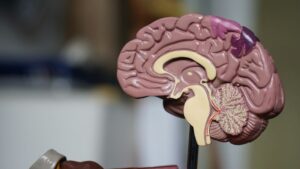
The sensory nerve, also scientifically known as the afferent neuron, serves as the fundamental biological conduit responsible for transmitting information detected by sensory receptors from the body’s periphery toward the central nervous system (CNS). Essentially, these nerves are the body’s primary communication lines, continuously feeding raw data about the external and internal environment to the spinal cord and brain for processing and interpretation. This constant influx of data allows for the formation of perception—the conscious awareness of stimuli—and the execution of vital, immediate reflex actions necessary for survival. Without the tireless work of sensory nerves, the organism would be entirely disconnected from its environment, unable to react to danger or seek out necessary resources.
The core function of the sensory nerve involves a critical process called transduction, where physical stimuli—such as mechanical pressure, chemical changes, light waves, or thermal energy—are converted into viable biological messages. This conversion results in the generation of electrochemical signals, or action potentials, which travel rapidly along the nerve fiber. The intensity of the stimulus directly correlates with the frequency of these action potentials; a stronger sensation, like a sharp stab of pain, will generate a higher frequency of signals than a mild touch. This coding mechanism ensures that the CNS receives not only the presence of a stimulus but also accurate information regarding its strength, allowing for nuanced and appropriate behavioral responses.
Sensory nerves are distinct from motor nerves (efferent neurons), which carry commands away from the CNS to muscles and glands. The sensory pathway is strictly unidirectional: from the sensory receptor (e.g., in the skin, eye, or tongue) up to the CNS. This organizational structure is paramount for maintaining order within the nervous system, ensuring that sensory input and motor output do not mix haphazardly, thus allowing for rapid and precise neural processing, which underpins all forms of conscious experience and unconscious regulation.
Anatomy and Mechanism of Afferent Transmission
The anatomical structure of a typical sensory neuron is pseudo-unipolar, meaning the cell body sits off to the side, and a single axon branches into two extensions: one traveling toward the periphery (dendrite-like receptor end) and the other toward the CNS. The cell bodies of these neurons are typically clustered together outside the spinal cord in structures known as dorsal root ganglia (DRG). The strategic placement of the DRG ensures that the cell body, which maintains the health and metabolism of the neuron, is protected while allowing the long axonal projections to extend far into the limbs and organs to monitor the environment.
Once a stimulus reaches a threshold level at the receptor site, the resulting action potential initiates its journey. The signal enters the spinal cord through the dorsal horn. At this point, the sensory information may take several paths. For simple, protective responses, the signal might synapse directly onto an interneuron and then immediately onto a motor neuron, forming a rapid reflex arc that bypasses the brain entirely. For conscious perception, however, the signal travels up ascending tracts within the spinal cord, crossing over to the contralateral side, eventually reaching higher processing centers in the brainstem, thalamus, and finally, the somatosensory cortex where the information is mapped and interpreted as conscious sensation.
The speed at which these signals travel is critical and is largely determined by the nerve fiber’s diameter and the presence of a myelin sheath. Large, heavily myelinated fibers (like A-alpha and A-beta fibers) transmit signals related to touch and muscle position extremely quickly, ensuring immediate awareness of limb movement and fine tactile sensation. Conversely, smaller, unmyelinated fibers (C-fibers) transmit signals more slowly, typically carrying information about dull, chronic pain and temperature changes. This difference in transmission speed dictates the timing and quality of our sensory experience, explaining why we often feel a sharp, immediate pain followed by a dull, throbbing ache.
Historical Context: Mapping the Sensory Pathways
The understanding of sensory nerves as distinct functional units originated primarily in the early 19th century through the groundbreaking work of physiologists Sir Charles Bell and François Magendie. Before their discoveries, the nervous system was often viewed as a singular, undifferentiated network. In 1811, Bell first described the functional differences between the anterior (ventral) and posterior (dorsal) roots of the spinal cord, suggesting that the dorsal roots were associated with sensation. Magendie, working independently in 1822, provided more definitive experimental proof, demonstrating that sectioning the dorsal roots resulted in a loss of sensation, while sectioning the ventral roots caused paralysis.
This pivotal finding established the Bell-Magendie Law, which remains a cornerstone of neuroscience and neuroanatomy. The law dictates the functional segregation of the spinal nerve roots: sensory (afferent) fibers enter the spinal cord dorsally, and motor (efferent) fibers exit ventrally. This law fundamentally shifted the understanding of the nervous system from a monolithic structure to a highly organized, parallel processing system, allowing subsequent generations of researchers to map specific sensory pathways for vision, hearing, and touch. The historical isolation of the sensory nerve’s role was essential for the later development of biological psychology and clinical neurology.
Classification and Types of Sensory Input
Sensory nerves are broadly classified based on the type of information they transmit and the location of their receptors. They are categorized into several modalities, ensuring that the CNS receives a complete spectrum of environmental information. Somatic sensory nerves deal with the body surface and musculature, transmitting information about touch, pressure, vibration, temperature, and pain (nociception). Additionally, a crucial component of somatic sensation is proprioception, which is the sense of the relative position and movement of body parts, allowing for coordinated movement without visual guidance.
In contrast, visceral sensory nerves monitor the internal organs and systems, transmitting information crucial for homeostasis, such as blood pressure, internal temperature, oxygen levels, and the stretching of organ walls. These signals rarely reach conscious awareness, but they are vital for the autonomic nervous system’s regulation of involuntary functions like heart rate and digestion. This dual system ensures that the body can simultaneously manage external threats requiring immediate action and internal processes requiring continuous, unconscious regulation.
Further classification is based on the type of receptor they innervate: mechanoreceptors respond to mechanical forces (touch, pressure); thermoreceptors respond to temperature changes; chemoreceptors respond to chemical stimuli (taste, smell, blood chemistry); photoreceptors respond to light (vision); and nociceptors respond specifically to damaging or painful stimuli. The specialization of these sensory nerve endings allows for incredibly precise detection and differentiation of the myriad stimuli bombarding the body at any given moment, forming the detailed mosaic of our sensory world.
Real-World Illustration: The Immediate Burn Reflex
A powerful, everyday demonstration of the sensory nerve’s function is the immediate reflex response to a painful stimulus, such as accidentally touching a hot stove. In this scenario, the primary goal of the sensory nerve is to initiate the fastest possible protective withdrawal, often before the individual is even consciously aware of the pain, as described in the original source material: “Joe had sensory nerves in his hand that sent impulses of pain to his central nervous system when he burnt his hand.”
The process begins the moment Joe’s hand makes contact with the heat source. Specialized thermoreceptors and nociceptors (pain receptors) in the skin are instantly activated by the damaging temperature. These receptors convert the thermal energy into a rapid stream of action potentials. This signal is carried by fast-conducting A-delta sensory fibers up the sensory nerve axon, through the dorsal root ganglion, and into the spinal cord. This is the crucial afferent pathway delivering the “danger” message.
Once the signal enters the spinal cord, two parallel events occur almost simultaneously. First, the sensory neuron synapses with an interneuron, which in turn activates the appropriate motor neurons (efferent neurons) controlling the muscles of the arm and hand. This direct, rapid connection forms the reflex arc, causing Joe’s hand to withdraw instantly from the stove. Second, a collateral branch of the sensory nerve continues the signal up to the brain, reaching the thalamus and somatosensory cortex. It is only after this second pathway completes its journey that Joe consciously registers the sensation of “burning pain,” confirming that the motor action was initiated solely by the fast-acting spinal reflex circuit, driven entirely by the sensory nerve input.
Clinical Significance and Impact
The study and understanding of sensory nerves hold immense clinical significance, forming the basis for diagnosing and treating a vast range of neurological and psychological conditions. Damage to sensory nerves, often resulting from trauma, diabetes (leading to peripheral neuropathy), or infections, results in profound sensory deficits, including numbness, tingling, or chronic, debilitating neuropathic pain. Clinicians rely on testing sensory nerve function—such as measuring nerve conduction velocity—to localize damage and determine the severity of neurological disorders.
Furthermore, sensory nerve function is critical in the development of sophisticated medical technologies. For instance, the functionality of prosthetic limbs is increasingly dependent on effective sensory feedback. Researchers are actively developing ways to stimulate remaining sensory nerves in amputees, allowing them to “feel” the objects they touch with their prosthetic devices. This integration of sensory input dramatically improves the usability and psychological acceptance of these artificial limbs, highlighting the fundamental importance of afferent feedback loops for embodied cognition and motor control.
In psychological fields, the integrity of sensory input is necessary for the accurate perception of reality. Disrupted sensory processing is a hallmark of many developmental and psychiatric disorders, such as sensory processing disorder (SPD) and certain forms of autism, where individuals may experience hyper- or hypo-sensitivity to typical stimuli. By understanding how sensory nerves transmit and filter data, psychologists and occupational therapists can develop targeted interventions designed to help patients modulate their responses to the sensory environment, improving their quality of life and functional independence.
Connections to Broader Psychological Fields
The sensory nerve is a foundational concept within Biological Psychology (Neuroscience), acting as the biological link between the external world and the internal mental experience. Its function is inextricably tied to the field of Perception, which studies how the brain interprets the raw data delivered by these afferent pathways. While the sensory nerve transmits the signal, the brain constructs the meaning—the difference between the simple detection of light waves and the complex perception of a face.
Sensory nerves also maintain a fundamental and opposing relationship with Motor Nerves (Efferent neurons). Together, they form the complete peripheral nervous system (PNS) and execute the cycle of stimulus, processing, and response. The entire concept of the Reflex Arc, a core teaching point in introductory psychology, depends entirely on the efficient communication between sensory input and motor output, demonstrating a simple, automatic form of behavior regulated outside of conscious awareness. This interplay is essential for understanding behaviorism and basic physiological responses in humans and animals.
Ultimately, the study of sensory nerves bridges the gap between anatomy, physiology, and cognitive psychology. By providing reliable, high-fidelity data from the environment, sensory nerves enable all higher-level cognitive functions, including memory formation, emotional response, and complex decision-making, emphasizing their role not just as simple wires, but as the essential data pipelines upon which the entire psychological architecture is built.