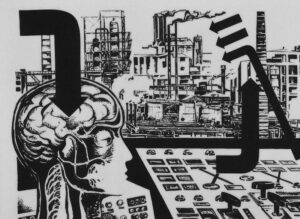
Cognitive Ergonomics: Decoding the Split-Screen Mind
Scientifically Reviewed · Dr. Marwa Abd-Alazim · September 9, 2026
Review Criteria & Clinical Standards
This content undergoes rigorous scientific peer-review and medical editorial standards at Arab Psychology Network to ensure clinical accuracy, validity, and compliance with evidence-based guidelines from leading psychological and healthcare authorities (APA / WHO).

Introduction to Separated Display Concept
The Separated Display represents a foundational design paradigm within the field of ergonomics and human-factors engineering, specifically concerning the interface between human operators and complex machinery or systems. Defined primarily by its architectural choice to physically or perceptually isolate critical information, the separated display serves the crucial function of prioritizing data presentation. This methodology dictates that primary information—the data essential for immediate decision-making, control input, or system monitoring—is distinctly segregated from secondary information, which typically consists of contextual details, diagnostic feedback, or ancillary measurements. The fundamental goal of employing a separated display architecture is to enhance the operator’s ability to rapidly identify, process, and respond to the most vital operational signals, thereby minimizing reaction latency and mitigating the potential for oversight or error caused by visual clutter.
This design choice is deeply rooted in the understanding of human cognitive limitations, particularly regarding attention and working memory capacity. By creating a clear hierarchical structure for information display, the separated display effectively manages the visual load placed upon the operator. Instead of forcing the user to mentally filter through a dense collection of heterogeneous data points, the system performs this filtering function proactively through deliberate spatial or visual differentiation. This preemptive organization is particularly valuable in high-stakes, time-critical environments where momentary distraction or difficulty in locating a crucial metric can have severe consequences for safety and operational efficiency. Thus, the separated display is not merely a layout choice, but a strategic implementation designed to optimize the human-machine interaction (HMI) based on established principles of perception and cognitive psychology.
To fully appreciate the utility of the separated display, it is necessary to contrast it with alternative architectures, most notably the integrated display. While integrated displays strive to present a holistic, unified view where related information is visually merged—often relying on emergent features or pattern recognition—the separated display takes the opposite approach, emphasizing discrete, easily localizable data clusters. The decision to employ separation is usually driven by operational requirements where the immediate recognition of a specific state variable (primary information) outweighs the need for holistic pattern synthesis (integrated information). For example, in an aircraft cockpit, the immediate reading of airspeed (primary) might be physically separated from environmental controls (secondary) to ensure that in an emergency, the pilot’s gaze is instantaneously drawn to the critical flight parameter without visual interference from less urgent data fields.
Core Principles of Ergonomics and Information Prioritization
The application of the separated display is an applied exercise in information ergonomics, focusing heavily on how human operators attend to and process visual stimuli. A core principle guiding this separation is the maximization of the signal-to-noise ratio in the visual field. In any complex system display, the ‘signal’ is the critical operational data requiring immediate attention, while the ‘noise’ is the surrounding, less urgent, contextual information that nonetheless must be present. By physically or perceptually separating these two categories, designers ensure that the signal maintains maximum saliency. This is achieved through systematic analysis of task requirements, determining which pieces of information drive immediate control actions (primary) versus those that support long-term monitoring or diagnostic assessment (secondary).
Effective prioritization requires designers to classify data based on several key criteria. These criteria often include the frequency of use, the criticality of the information (i.e., the severity of system failure if the data is ignored), and the time dependency of the required response. Information requiring an immediate response within a few seconds, such as an engine overheating warning or a rapidly decreasing oxygen level, is invariably classified as primary and positioned accordingly—often centrally, utilizing high contrast, or placed in a dedicated viewing zone. Conversely, information used for procedural checks, long-term trend analysis, or system configuration settings is relegated to secondary status, typically placed on peripheral screens, lower quadrants, or accessed via subordinate menus. This methodical classification ensures that the display architecture directly supports the operator’s workflow and required cognitive focus.
Furthermore, the principles of visual attention filtering are crucial to the success of separated displays. Human vision is highly adept at preattentive processing—the unconscious organization of the visual scene based on fundamental features like color, size, orientation, and spatial location. Separated displays leverage this innate ability by utilizing distinct preattentive features to mark primary data. If all critical data is grouped spatially and highlighted consistently (e.g., using a bright, uniform color scheme), the operator does not need to consciously search the entire display area; their attention is automatically drawn to the distinct section containing the primary information. This reduction in required conscious visual search effort is a primary ergonomic benefit, directly contributing to faster and more accurate interpretation of the operational state, particularly when the operator is under stress or experiencing high workload.
Design Mechanisms for Information Separation
The implementation of a separated display relies on several distinct design mechanisms, all aimed at creating clear boundaries between information categories. The most straightforward mechanism is spatial separation, where primary and secondary data sets are physically placed in different locations on the display surface or even on separate physical screens. For instance, in a process control room, the main operational parameters might be displayed on a dedicated console directly in front of the operator, while detailed diagnostic schematics are relegated to side monitors or wall displays. This physical distance reinforces the distinction between immediate control needs and contextual references. The key challenge in spatial separation is ensuring that the transition between primary and secondary viewing areas does not introduce excessive scanning time or neck/eye fatigue, adhering to ergonomic guidelines regarding visual angle and movement.
Beyond physical placement, separation can be achieved through differential visual encoding, often referred to as perceptual layering. This involves using varying visual properties to create a hierarchy even within a single display surface. Primary data might utilize large fonts, high brightness, sharp contrast, and highly saturated colors (e.g., red or yellow for warnings), ensuring maximal visibility. Secondary data, conversely, might use smaller fonts, dimmer intensity, lower contrast, or neutral colors (e.g., gray or blue), causing it to recede into the background. The goal is not to make the secondary data invisible, but to ensure that the primary data exerts a dominant attentional pull. Effective layering allows the operator to selectively attend to the critical information while still having the secondary context available without requiring a major shift in gaze or mental focus.
Another sophisticated mechanism involves temporal separation or state-based prioritization, particularly relevant in modern digital interfaces. In this system, information is separated based on the current operational mode or system state. Data classified as secondary during normal operation (e.g., maintenance schedules, communication logs) may dynamically transition to primary status if the system enters a failure or diagnostic mode. This requires intelligent display logic capable of automatically adjusting the visual hierarchy based on real-time input. For example, a hidden alarm log (secondary) might automatically pop up, gain maximum screen real estate, and use flashing high-contrast text (now primary) the moment a critical system failure is detected. This dynamic adjustment ensures that the concept of “primary” remains fluid and maximally relevant to the operator’s immediate needs.
Cognitive Load Theory and Separated Displays
A significant theoretical justification for the separated display lies in its ability to manage and reduce extraneous cognitive load, a key concept within Cognitive Load Theory (CLT). CLT posits that total cognitive load is composed of intrinsic load (inherent complexity of the task), germane load (load devoted to learning and schema formation), and extraneous load (mental effort wasted on processing poorly designed instructional or informational material). A cluttered or integrated display forces the operator to engage in unnecessary visual search and mental integration, contributing heavily to extraneous load. The cognitive effort expended on mentally separating signals from noise detracts from the mental resources available for genuine task performance.
By implementing separation, designers externalize the filtering and organizational tasks that would otherwise burden the operator’s working memory. When primary information is clearly isolated, the operator minimizes the time spent on “locating” the data and maximizes the time spent on “interpreting” and “acting” upon it. This reduction in search time directly translates into lower extraneous load, freeing up limited working memory capacity for tasks related to situational assessment and complex problem-solving (germane load). In critical situations, where working memory is often already taxed by stress and intrinsic task complexity, this design choice provides a vital buffer against cognitive overload, reducing the likelihood of critical errors known as “slips” or “lapses.”
Furthermore, separated displays aid in the efficient formation and execution of cognitive schemas. When information is consistently presented in the same segregated manner, operators develop strong mental models of where critical information resides. This consistency allows them to process the data automatically, almost reflexively, without conscious effort. This transformation from effortful processing to automatic recognition is fundamental for achieving expert performance, particularly in fast-paced operational environments. The predictability inherent in a well-designed separated display reduces the cognitive demand required to monitor system status, allowing the operator to maintain situational awareness focused on the overarching task objectives rather than the mechanics of data retrieval.
Applications and Contexts of Use
Separated display architectures are overwhelmingly favored in operational contexts where system reliability, rapid decision-making, and error minimization are paramount. One of the most prominent application areas is commercial and military aviation. In a modern cockpit, primary flight displays (PFDs) are strictly separated from multi-function displays (MFDs). The PFD contains only the most critical flight parameters—airspeed, altitude, heading, and attitude—essential for immediate control. Secondary information, such as flight plans, weather radar, or engine diagnostics, is typically found on the MFDs, often located adjacent or below the PFDs. This spatial separation ensures that even during high-workload phases (like takeoff or landing), the pilot’s focus remains locked onto the immediate safety-critical data stream.
Another crucial application is found in nuclear power plant control rooms and other complex process control environments. These systems involve thousands of data points, making effective prioritization mandatory. Primary displays often focus on core parameters of reactor stability, pressure, and temperature, frequently utilizing mimic diagrams or large, dedicated gauges placed directly within the primary field of view. Secondary information—such as historical logs, maintenance schedules, or tertiary coolant system statuses—is relegated to auxiliary panels or display walls. The separation here is vital not only for routine monitoring but especially for rapid fault diagnosis, ensuring that alarming parameters are instantly distinguishable from stable, contextual readings.
Furthermore, separated displays are increasingly utilized in advanced medical monitoring systems, particularly in intensive care units (ICUs) and operating theaters. A patient monitor must clearly separate primary, life-sustaining metrics (e.g., heart rate, immediate oxygen saturation) from secondary, trend-based data (e.g., historical blood pressure logs, ventilator settings). The critical readings are often displayed in large, high-contrast numerical format at the top of the monitor, while less immediate data is placed in smaller graphs or separate windows. This intentional separation minimizes ambiguity for medical personnel during high-stress interventions, ensuring that critical physiological status changes are immediately identified and acted upon, thereby directly impacting patient safety and outcome.
Contrast with Integrated Display Architectures
The separated display exists in direct philosophical opposition to the Integrated Display, a competing design philosophy. Integrated displays aim to combine multiple variables into a single, synthesized visual representation, often creating an emergent feature or pattern that summarizes the system state. For example, a display might merge engine pressure, temperature, and RPM into a single, geometric shape whose deformation signals system status. The primary advantage of integration is providing comprehensive situational awareness through pattern recognition; the operator assesses the overall health of the system instantaneously by recognizing a familiar, healthy shape versus an unfamiliar, abnormal shape, without needing to process individual numbers.
However, integrated displays introduce cognitive demands related to interpreting the emergent pattern, which can be challenging, particularly during training or under time pressure. If the pattern is complex or unfamiliar, the operator must dedicate significant effort to decoding the synthesized data. Separated displays avoid this complexity by ensuring that the meaning of the primary information is immediately clear and quantifiable—a specific number or a clear warning light requires no geometric interpretation. Where integration focuses on the relationship between variables, separation focuses on the immediate status of individual, critical variables.
The choice between separation and integration often depends on the specific demands of the task. Integrated displays are beneficial when the task requires continuous monitoring and assessment of complex relational health (e.g., monitoring a complex chemical process where temperature and pressure must remain correlated). Separated displays are superior when the task prioritizes rapid reaction to discrete, critical events and when minimizing the ambiguity of individual parameters is the paramount concern. In modern HMI design, hybrid solutions are common, where critical parameters are separated and highlighted, but related contextual data may be integrated into smaller, secondary information clusters to achieve a balanced approach that leverages the benefits of both philosophies.
Advantages in Performance and Safety
The implementation of separated display architectures yields measurable advantages in both operator performance and overall system safety. By minimizing extraneous cognitive load and reducing the required visual search time, separated displays consistently lead to faster decision-making cycles. When primary information is immediately salient, operators can bypass the time-consuming process of mentally parsing non-critical data. This speed advantage is crucial in dynamic systems where control inputs must be synchronized precisely with real-time system changes, leading to smoother operation and superior system control fidelity.
Perhaps the most critical safety advantage is the substantial reduction in operator error rates, particularly errors of omission or misreading. Cluttered, undifferentiated displays increase the likelihood that an operator will overlook a subtle but critical indicator—a phenomenon known as “data camouflage.” By separating and amplifying primary data, the display virtually eliminates this camouflage effect. Furthermore, the use of consistent spatial location for critical parameters in separated displays builds strong procedural memory, making it harder for the operator to mistakenly read one variable for another, even under conditions of high stress, fatigue, or time pressure, which are known factors that degrade focused attention.
The benefits of separation also extend to training and system familiarity. Because the display hierarchy is explicitly defined, new operators can quickly learn the critical parameters and their locations. This reduced learning curve accelerates proficiency and allows operators to reach functional expertise faster. Moreover, during system maintenance or upgrades, the clear segregation of data makes it easier for technicians and operators to isolate and troubleshoot specific components without being overwhelmed by peripheral system information, contributing to enhanced maintainability and overall operational resilience.
Challenges and Implementation Considerations
While highly effective, the separated display concept is not without its implementation challenges. One potential drawback is the risk of fragmented situational awareness. If the separation is too aggressive—if primary data is physically too distant from its secondary context—the operator may gain excellent localized knowledge (e.g., “The pressure is too high”) but lose sight of the overall system state (e.g., “Why is the pressure high and how does it relate to the temperature anomaly on the secondary monitor?”). Excessive spatial separation can force frequent and large shifts in visual scanning, which can be fatiguing and may itself introduce opportunities for momentary loss of awareness during the transition between viewing zones.
A significant technical challenge arises when dealing with dynamic information reclassification. Systems often change state, meaning that data considered secondary during normal operation might become primary during a failure event. Designing the interface to seamlessly and intuitively transition this information hierarchy without startling or confusing the operator requires complex software logic and careful user testing. If the system incorrectly or too frequently reclassifies data, the operator may lose trust in the display’s prioritization scheme, resorting to checking all data equally, thus negating the benefit of the separation.
Effective implementation, therefore, demands rigorous adherence to human factors testing. Designers must conduct extensive user trials to optimize the degree of separation—finding the balance between clarity and connectivity. Consideration must also be given to the sensory modalities used for separation; while visual separation is dominant, incorporating auditory or haptic feedback for primary alarms further enhances the separation and redundancy. Ultimately, the success of a separated display hinges on its ability to align its information hierarchy perfectly with the cognitive demands and procedural requirements of the specific operational environment.
Future Directions in Display Design
The future evolution of the separated display paradigm is increasingly intertwined with advancements in computational power and adaptive interface technologies. One key area of development is Adaptive Separation, where artificial intelligence (AI) and machine learning algorithms dynamically analyze the operator’s mental state (e.g., via eye-tracking or physiological monitoring) and the system’s operational state, automatically adjusting the hierarchy of information presented. If the AI detects high operator fatigue or a sudden surge in system instability, it can temporarily collapse secondary information or dynamically increase the saliency of primary data points to maximize focus during the critical window.
Another emerging trend involves the integration of separated display principles into Augmented Reality (AR) and Virtual Reality (VR) environments. These technologies offer unprecedented potential for spatial separation. For example, primary control inputs might remain on a physical console (tactile feedback), while secondary diagnostic schematics are overlaid holographically in the operator’s peripheral vision, providing contextual data without interfering with the primary visual task. This three-dimensional spatialization of data allows designers to create highly effective separation that transcends the limitations of flat, two-dimensional screens, potentially solving the dilemma of balancing clarity with context.
Finally, the blending of visual separation with non-visual cues, such as haptic feedback, represents a valuable future direction. Critical primary alarms could be communicated not only visually but also through vibrations in control sticks or consoles, providing a redundant and highly prioritized channel of communication that is physically separated from the visual stream. As systems become more complex and data streams proliferate, the fundamental ergonomic principle of the separated display—prioritizing the signal above the noise—will remain critical, driving innovation toward more intelligent, adaptive, and multi-modal human-machine interfaces.