The Sheep-Goat Effect: How Your Beliefs Rewire Reality
Scientifically Reviewed · Dr. Marwa Abd-Alazim · August 23, 2026
Review Criteria & Clinical Standards
This content undergoes rigorous scientific peer-review and medical editorial standards at Arab Psychology Network to ensure clinical accuracy, validity, and compliance with evidence-based guidelines from leading psychological and healthcare authorities (APA / WHO).
SHEEP-GOAT EFFECT
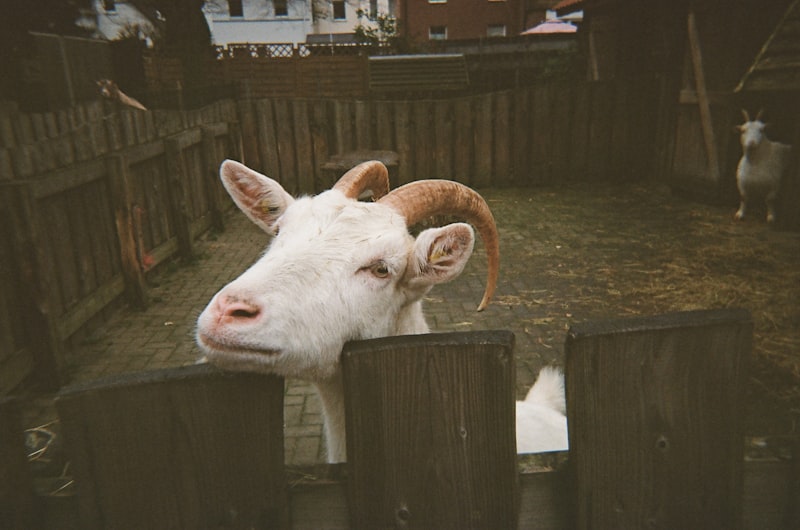
The Sheep-Goat Effect is a widely recognized phenomenon within the field of parapsychology, describing a correlation between a participant’s belief in the existence of extrasensory perception (ESP) or psychokinesis (PK) and their subsequent performance in tests designed to measure these abilities. This terminology neatly divides experimental subjects into two distinct groups: the “sheep,” who are defined as individuals who accept or believe in the reality of psi phenomena, and the “goats,” who are skeptical or actively disbelieve in such phenomena. The effect posits that the sheep tend to achieve statistically significant positive scoring rates, generally exceeding chance expectation, while the goats typically score at or slightly below chance expectation, sometimes even demonstrating a significant negative correlation known as a “psi-missing” effect. Understanding this differential response based purely on attitude is central to interpreting many decades of experimental data within parapsychology, suggesting that psychological variables, particularly expectation and motivation, play a critical mediating role in the manifestation of purported psi abilities.
The primary significance of the Sheep-Goat Effect lies in its implication that success in parapsychological tasks is not solely dependent on an innate, unconscious ability, but is heavily influenced by conscious cognitive and affective states prior to and during the experiment. Skeptical participants (goats) might unconsciously suppress any potential successful outcomes, perhaps due to internal conflict or a desire to confirm their existing non-belief, leading to chance results or psi-missing. Conversely, believers (sheep) approach the task with a positive expectancy, which researchers hypothesize may facilitate the delicate and elusive nature of psi manifestation. This effect is often treated as one of the most robust findings in experimental parapsychology, providing a crucial framework for analyzing variance within large datasets, and demonstrating that the simple dichotomy of belief versus disbelief is a powerful predictor of quantitative outcomes in controlled settings.
The original observation of this correlation demands careful consideration of experimental design, especially concerning blinding and participant screening. For the effect to be truly meaningful, the classification of participants must occur independently of the experimental results themselves, typically utilizing standardized questionnaires or surveys administered well before the actual testing phase begins. Furthermore, the effect underscores a challenge inherent in studying phenomena where the observer’s attitude might influence the observed outcome, blurring the lines between pure ability and psychological bias. Researchers frequently employ techniques to maximize the expression of the effect, such as ensuring high motivation among the sheep and maintaining strict, standardized conditions across both belief groups to isolate the attitudinal variable as the primary determinant of performance divergence.
Definition and Origin of the Terminology
The Sheep-Goat Effect was formally introduced into parapsychological discourse by Gertrude Schmeidler in the late 1940s, originating from her extensive research conducted at the City College of New York. Schmeidler’s initial work utilized card-guessing tasks, primarily Zener cards, to test for ESP. Crucially, before the guessing trials commenced, participants were asked to state their level of belief or disbelief in the possibility of success in such tasks. Schmeidler adopted the biblical metaphor from the Gospel of Matthew (Chapter 25), where the righteous are separated from the wicked, likening the believers to the “sheep” who are placed on the right (associated with positive outcomes) and the disbelievers to the “goats” who are placed on the left (associated with negative or null outcomes). This nomenclature quickly became standard terminology, efficiently encapsulating the fundamental divergence in performance based on attitude.
Schmeidler’s early meta-analysis established a consistent pattern: participants categorized as sheep consistently demonstrated a small but statistically significant positive deviation from the mean chance expectation (MCE), while the goat group frequently scored at MCE or, notably, showed a deviation significantly below MCE. This below-chance performance among the goats is scientifically interpreted not merely as a lack of ESP, but as potential evidence of psi-missing, suggesting an unconscious process actively avoiding the correct target, perhaps driven by the psychological need to confirm their skepticism. The differential effect between the two groups—the sheep scoring high and the goats scoring low—is statistically far more compelling than the isolated scores of either group when compared against chance alone, solidifying the importance of attitude as a primary moderating variable.
The robust nature of Schmeidler’s initial findings spurred widespread replication efforts across various laboratories and experimental setups, including studies involving precognition and psychokinesis (PK). These subsequent experiments largely corroborated the initial findings, confirming that the attitude index—the measure of belief or skepticism—serves as a reliable, though not perfect, predictor of scoring direction. While the absolute magnitude of the effect is typically small, often represented by a modest correlation coefficient, its consistency across different populations, experimenters, and time periods has led proponents to argue that the Sheep-Goat Effect is an intrinsic component of psi manifestation, suggesting that the conscious framework of the participant fundamentally shapes the expression of the underlying phenomenon.
Theoretical Framework: Belief and Performance
The theoretical underpinnings of the Sheep-Goat Effect are deeply rooted in psychological theories of expectation, motivation, and cognitive dissonance. From a psychological perspective, a believer (sheep) approaches the task with reduced internal resistance and heightened positive expectancy. This state may foster the relaxed, focused, and open mental environment often cited by parapsychologists as optimal for psi operation. The expectancy effect, analogous to the placebo effect in medicine, dictates that the participant’s belief in a successful outcome can positively influence their subtle cognitive processing or motivational level, thereby potentially enhancing whatever mechanisms facilitate psi success. This positive feedback loop—belief leading to better performance, which reinforces belief—is hypothesized to stabilize the sheep’s ability to score positively.
Conversely, skeptics (goats) are hypothesized to experience significant internal conflict or cognitive interference. If a goat truly believes ESP is impossible, any unconscious success they might achieve would create cognitive dissonance, challenging their fundamental worldview. To resolve this dissonance, the unconscious mind might actively work against the correct outcome, leading to the observed psi-missing. Furthermore, high levels of anxiety, self-monitoring, and critical analysis of the task itself—characteristics often associated with strong skepticism in this context—may disrupt the non-volitional and often spontaneous nature attributed to psi functioning. Therefore, the goat’s performance is not merely a lack of ability, but potentially an active, if unconscious, inhibitory process driven by psychological defense mechanisms against phenomena they deem impossible.
Beyond simple belief, researchers have explored finer distinctions in attitude, such as desire, intention, and anxiety levels, finding that these variables frequently interact with the basic sheep-goat dichotomy. For example, a sheep who is highly anxious about failing might perform worse than a relaxed sheep, illustrating that attitude is a complex psychological variable, not a simple binary switch. The effect highlights that psi phenomena, if real, are highly sensitive to subtle internal states. This sensitivity has led to theoretical models proposing that psi abilities are inherently fragile and easily disrupted by internal noise, which skepticism and anxiety readily provide. Thus, the Sheep-Goat Effect serves as a robust indicator that psychological factors act as essential gatekeepers for the expression of potential psi abilities, modulating whether the outcome manifests as positive scoring, chance results, or psi-missing.
Experimental Paradigms in Parapsychology
The methodologies used to test the Sheep-Goat Effect must first reliably categorize participants and then expose them to a suitable psi task. The initial classification typically involves standardized questionnaires, such as the Belief in Psychic Phenomena Questionnaire (BPPQ) or similar scales, which measure the participant’s acceptance of various psi claims (e.g., telepathy, clairvoyance, precognition). Participants are often classified based on a median split of scores, ensuring that the defined sheep and goat groups represent the extremes of belief within the tested population, maximizing the likelihood of observing the differential performance effect. The reliability and validity of these attitudinal scales are crucial, as a poorly measured attitude variable will obscure the resulting correlation.
The actual experimental tasks employed are varied but must adhere to strict controls to eliminate conventional explanations (e.g., sensory leakage, fraud). Common tasks include forced-choice ESP tests, such as guessing which target image (often one of four or five options) is being focused on by a distant sender, or which target will be randomly selected by a computer sequence (precognition). In psychokinesis (PK) experiments, participants might attempt to influence the output of a Random Number Generator (RNG) device using only mental intention. In all these paradigms, the crucial statistical measure is the comparison of the mean scoring rates of the sheep versus the goats. A successful demonstration of the Sheep-Goat Effect requires a statistically significant difference between these two means, where the sheep score higher than the goats, irrespective of whether the individual group scores are significantly above or below chance expectation.
Special attention is often paid to ensuring that experimenter expectation does not bias the results, a phenomenon known as the Experimenter Effect. If the experimenter knows which participants are sheep and which are goats, they might unconsciously cue or treat the groups differently, potentially influencing performance. Therefore, many well-designed studies employ double-blind protocols where the experimenter administering the test is unaware of the participant’s belief category, and the scoring analysis is conducted by a third party. When such stringent controls are utilized, and the Sheep-Goat Effect persists, researchers argue that it strengthens the claim that the attitude variable is the critical predictor, rather than a methodological artifact or experimenter influence.
Statistical Manifestation and Interpretation
Statistically, the Sheep-Goat Effect is often quantified using correlation coefficients, most commonly Pearson’s r, which measures the linear relationship between the continuous variable of belief (as measured by the attitude scale score) and the continuous variable of deviation from mean chance expectation (MCE). A positive correlation (e.g., r = +.10 to +.30, though often smaller in magnitude) indicates that as belief score increases, the positive deviation from chance also increases. Conversely, strong skepticism correlates with scores closer to or below MCE. The statistical significance of the effect is generally determined by comparing the mean scores of the two defined groups (sheep vs. goats) using a t-test or ANOVA, looking for a reliable difference in their distribution of scores.
A key nuance in interpreting the effect is understanding the phenomenon of psi-missing, most frequently observed among the goat population. Psi-missing occurs when scores are significantly below chance expectation, indicating that the participant’s guesses are consistently wrong at a rate that cannot be attributed to random error. Parapsychologists interpret this as the influence of psi operating counter to the participant’s conscious intention to succeed, often driven by the unconscious psychological pressure to confirm their disbelief. When comparing the sheep and goats, the overall Sheep-Goat Effect is often maximized when the sheep demonstrate psi-hitting (positive scores) and the goats demonstrate psi-missing (negative scores), resulting in a wide disparity between the group means.
Critics often point out that while the effect may be statistically significant across large meta-analyses, the effect size (the magnitude of the correlation r) is typically very small. Proponents counter that even a small effect size, if consistently replicated across independent studies, represents a genuine phenomenon that must be theoretically accounted for, especially given the low signal-to-noise ratio inherent in measuring purported psi phenomena. The consistency of the Sheep-Goat Effect across varied tasks and laboratories suggests that the psychological state (belief) is a fundamental mediator, making it one of the most reliable effects found within parapsychological research, serving as a powerful demonstration that attitudinal variables must be controlled for in any experimental assessment of human psi capacity.
Critiques and Alternative Explanations
Skeptical critics of parapsychology offer several alternative, non-psi explanations for the observed Sheep-Goat Effect, focusing primarily on methodological artifacts and psychological biases that do not require the existence of extrasensory perception. One primary critique centers on the possibility of response bias. Believers (sheep) might be more motivated to please the experimenter or have a higher propensity for guessing in a way they perceive as “trying hard,” potentially leading to patterns of responses that could coincidentally correlate with targets, even if true ESP is absent. Conversely, goats might exhibit a highly conservative or deliberately resistant guessing strategy, which could skew their responses toward non-random, yet non-psi-related, deviations below chance.
Another significant criticism relates to the statistical methodology and the potential for the File Drawer Effect. If parapsychologists primarily publish studies that show a significant difference between sheep and goats, while studies where the effect failed to materialize are filed away unpublished, the published literature will present an artificially inflated view of the effect’s robustness. Meta-analyses attempt to address this by estimating the number of unpublished null results necessary to negate the existing positive correlation, but this remains a persistent challenge in assessing the true magnitude of the effect. Critics also question the reliability and construct validity of the belief questionnaires themselves, suggesting that they may measure general optimism, willingness to comply, or fantasy proneness rather than a pure belief in psi, confounding the interpretation of the correlation.
Furthermore, experimenter effects remain a source of contention. Even with double-blinding attempts, subtle, unconscious cues or differential handling of the belief groups by the experimenter could potentially influence performance, especially given the high sensitivity of the effect. While proponents argue that the effect holds up under the most rigorous conditions, critics maintain that until every possible conventional explanation—including subtle sensory cues, data handling errors, and response artifacts—is definitively ruled out, the conclusion that the correlation is due to a genuine psi interaction modulated by belief remains unwarranted. The debate thus often centers on whether the consistent, small correlation observed is truly evidence of a psychological modulation of psi, or merely a reflection of complex, yet normal, psychological and methodological biases.
Related Parapsychological Effects
The Sheep-Goat Effect rarely operates in isolation; its expression often interacts with other known patterns of performance variability observed in parapsychological experiments. Understanding these related phenomena is essential for a comprehensive analysis of the role of attitude in psi testing.
- Decline Effect: This refers to the observation that a participant’s scoring rate, even if initially significant, tends to decrease over the course of a long testing session or series of trials. The Decline Effect interacts with the Sheep-Goat Effect because sheep, while starting strong, may show a more pronounced decline due to fatigue or loss of focus, while goats, starting at chance or psi-missing levels, may stabilize or even regress toward chance as the session progresses.
- Differential Effect: This is a broader term encompassing any systematic difference in scoring rate based on participant or experimental characteristics. The Sheep-Goat Effect itself is a prime example of a differential effect, specifically differentiating performance based on the belief variable. Other differential effects might include differences based on personality traits, time of day, or gender.
- Focusing Effect: This phenomenon suggests that psi performance is enhanced when the subject can narrow their focus or attention onto the target or the task. Sheep, due to their higher motivation and positive expectancy, might engage in more effective focusing strategies, thereby amplifying the positive deflection predicted by the Sheep-Goat model.
- Position Effect: This refers to scoring biases related to the physical location of the target or the order in which responses are given. For instance, participants might unconsciously favor guessing the first or last target in a sequence. While generally considered independent of attitude, researchers must control for position effects to ensure that the observed Sheep-Goat correlation is not an artifact of differential position bias between the two groups.
- Preferential Effect: This describes the tendency for subjects to score better on certain types of targets or under conditions that they personally prefer or find more engaging. A sheep’s belief system often includes a preference for the experimental setting or the idea of success, which aligns with their positive scoring tendency, reinforcing the overarching differential established by the Sheep-Goat Effect.
These related effects demonstrate the complexity of psi research, highlighting that performance is multidetermined, requiring sophisticated statistical models that can account for the interaction between belief, fatigue, cognitive strategy, and experimental conditions.
Meta-Analysis and Robustness of Findings
A significant body of evidence supporting the reliability of the Sheep-Goat Effect stems from comprehensive meta-analyses that aggregate data from hundreds of independent studies conducted over several decades. These large-scale analyses allow researchers to detect subtle, consistent patterns that might be statistically insignificant in any single experiment. The overall conclusion drawn from major meta-analyses, such as those conducted by Dean Radin, Charles Honorton, and Daryl Bem, is that the correlation between belief and performance is consistently positive and statistically significant across a wide range of methodologies and experimental settings.
For instance, early meta-analyses focusing on forced-choice ESP tests frequently yielded small but highly significant correlations, often demonstrating a cumulative Z-score far exceeding what would be expected by chance. This collective result suggests that while the effect size is small, its persistence across independent researchers, locations, and time periods lends considerable weight to the argument that the attitudinal variable reliably predicts the direction of scoring deviation. Meta-analysis helps to mitigate concerns related to sampling error in individual studies and provides a more robust estimate of the true effect size in the population. The persistence of the effect, even after attempting to adjust for the theoretical file drawer problem, reinforces the claim that the belief system of the participant is a non-trivial factor in psi research.
However, even within meta-analyses, there is variation in the magnitude of the Sheep-Goat Effect depending on specific moderating variables, such as the type of psi task (PK versus ESP), the level of sensory shielding, and the demographic characteristics of the participants. This variation suggests that the effect is not monolithic but is context-dependent. Despite these variations, the overall pattern remains: believers tend to score higher than skeptics. Consequently, many contemporary parapsychologists consider the assessment of participant attitude to be a mandatory prerequisite for conducting and interpreting psi experiments, ensuring that the critical psychological variable driving the differential effect is properly accounted for in statistical models.
Conclusion and Future Research Directions
The Sheep-Goat Effect stands as one of the most consistently observed and heavily analyzed phenomena in parapsychology. It provides compelling evidence that psychological variables, specifically the participant’s a priori belief or disbelief in the possibility of psi, are highly effective predictors of experimental outcomes. The effect moves the discussion beyond the simple question of whether psi exists, shifting focus to the intricate conditions under which it might manifest, strongly suggesting that success is deeply intertwined with motivation, expectation, and the psychological inhibition or facilitation provided by belief. The core finding—that sheep score positively and goats score at or below chance—has profoundly influenced experimental design in the field, making the measurement of attitude a standard practice.
Future research directions concerning the Sheep-Goat Effect must focus on moving beyond simple correlation to establishing a clearer causal pathway. This involves utilizing advanced neuroscientific techniques, such as EEG or fMRI, to monitor the neural correlates of belief and skepticism during psi tasks. By observing real-time brain activity, researchers hope to pinpoint the specific cognitive mechanisms responsible for the psychological resistance or facilitation associated with the goat and sheep categories. For example, do goats exhibit higher levels of prefrontal cortex activity indicative of conscious inhibition or critical analysis during the response phase, compared to the more relaxed, intuitive state of the sheep?
Ultimately, the longevity and statistical consistency of the Sheep-Goat Effect necessitate its inclusion in any serious discussion about human performance in non-conventional tasks. Whether interpreted as evidence of genuine psi modulated by attitude, or as a sophisticated demonstration of unconscious psychological bias impacting response strategy, the effect confirms that the internal state of the participant is inextricably linked to the measured outcome. Continued investigation into this differential effect promises to illuminate the complex interplay between consciousness, belief, and the limits of human perception.