Shock Probation: Does Short-Term Incarceration Really Work?
Scientifically Reviewed · Dr. Marwa Abd-Alazim · October 16, 2026
Review Criteria & Clinical Standards
This content undergoes rigorous scientific peer-review and medical editorial standards at Arab Psychology Network to ensure clinical accuracy, validity, and compliance with evidence-based guidelines from leading psychological and healthcare authorities (APA / WHO).
The Core Definition of Shock Probation
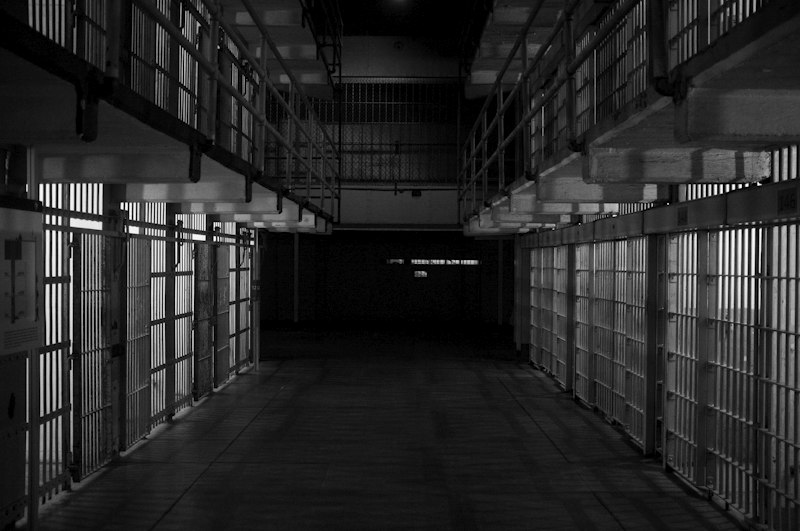
Shock probation is a specialized form of alternative sentencing utilized within the criminal justice system, designed to address issues of prison overcrowding while simultaneously attempting to facilitate behavioral reform in the offender. At its simplest, it involves a court ordering a short, intense period of incarceration—often ranging from 30 to 180 days—followed by the suspension of the remaining sentence, placing the individual under strict community supervision, known as probation. The fundamental mechanism distinguishing this approach is the psychological intervention inherent in the brief prison stay, which is intended to serve as a traumatic, yet controlled, experience.
The core philosophy underpinning shock probation rests on the belief that a short exposure to the harsh realities of institutional confinement will serve as a profound wake-up call, or “shock,” to the individual. This brief yet impactful experience aims to instill a visceral understanding of the consequences of criminal behavior, ideally deterring future offenses more effectively than a straightforward sentence of community probation alone. Courts typically reserve this sentencing option for non-violent, first-time, or situational offenders who are deemed salvageable and whose crimes, while serious, do not necessitate lengthy, costly imprisonment.
Furthermore, shock probation functions as a crucial tool for judicial efficiency. By integrating a short custodial sentence with an extended period of community supervision, the justice system can manage the tension between the need for punishment (retribution) and the goal of rehabilitation. The structure ensures that the offender receives immediate, tangible consequences for their actions, satisfying the requirement for penal sanction, while avoiding the long-term destabilization effects and high costs associated with protracted prison terms. This balance is critical in jurisdictions facing severe resource constraints and high rates of incarceration.
The Psychological Mechanism: Deterrence and Behavior Change
The effectiveness of shock probation is fundamentally reliant upon the principles of specific deterrence theory, a concept derived heavily from behavioral psychology. The short period of incarceration is designed to function as a powerful, aversive stimulus. When the individual experiences the loss of freedom, the rigidity of prison routine, and the general discomfort and danger associated with institutional life, this negative experience is meant to create a strong conditioned response linking criminal behavior directly to severe negative consequences.
This psychological intervention aims to achieve a cognitive restructuring in the offender. Unlike traditional probation, which may be perceived as a relatively easy outcome, the “shock” element forces the individual to confront the gravity and seriousness of their crime and the potential trajectory of their life if they continue down a path of deviance. The memory of the brief imprisonment is intended to remain salient, acting as an internal constraint whenever future criminal opportunities arise. This process attempts to leverage emotional and experiential learning over purely rational calculation of costs and benefits.
However, the psychological impact is complex and not universally effective. While some individuals may internalize the punitive message and exhibit genuine remorse and behavioral change, others may experience increased resentment, anxiety, or further desensitization to the correctional environment. If the shock period is too brief or the individual is already heavily involved in the criminal subculture, the intended aversive stimulus may fail to produce the desired lasting deterrent effect. Therefore, the success of the psychological mechanism often hinges on the offender’s personal history, their support system upon release, and the quality of the subsequent supervision phase.
Historical Development and Legislative Origins
The concept of utilizing short, intense periods of confinement as a corrective measure gained traction in the mid-20th century, primarily as policymakers searched for viable alternatives to full-term imprisonment. The formal legislative development of shock probation began in the United States, with Ohio often cited as the first state to formally adopt such a statute in the 1960s, though it became widespread only in the 1970s. This period marked a significant shift in correctional policy, driven largely by the confluence of rapidly escalating crime rates and catastrophic overcrowding in state prisons and local jails.
Before this innovation, sentencing options were generally bifurcated: either traditional, often lenient probation in the community or lengthy, full-term incarceration. There was a recognized need for a middle ground—a mechanism that provided immediate punishment sufficient to satisfy public demands for justice, yet retained the potential for rehabilitation without committing the state to decades of costly confinement. Shock probation was initially championed as an economical and rehabilitative compromise, offering the courts flexibility to tailor sentences to specific offender risks and needs.
The philosophy behind its implementation was deeply rooted in the pragmatic belief that the penal system needed to be efficient. Proponents argued that a short taste of prison was sufficient to frighten the offender, reducing the likelihood of future criminality while simultaneously freeing up valuable prison beds for more dangerous, long-term inmates. This historical context illustrates that while the mechanism relies on a psychological principle (deterrence), the initial impetus for its widespread adoption was primarily administrative and fiscal—a response to the severe infrastructural crisis within the American correctional system during that era.
The Implementation Process: A Practical Example
To illustrate the application of shock probation, consider the case of a young adult, ‘Alex,’ convicted of a non-violent property crime, such as grand theft auto, who has no prior felony convictions and demonstrates genuine remorse. A judge reviewing Alex’s background might determine that a lengthy prison sentence is disproportionate to the crime and potentially damaging to Alex’s future prospects, yet simple community service or standard probation might not adequately convey the seriousness of the offense. In this scenario, shock probation provides the ideal structured intervention.
The process begins with the formal sentencing hearing, where the judge pronounces a standard term of imprisonment (e.g., three years). However, immediately following this sentencing, the judge exercises statutory authority to commit the offender to a correctional facility for a specified, short duration—the “shock” period, which might be 90 to 120 days. During this period, Alex is housed within the general prison population, exposed fully to the discipline, deprivations, and dangers of institutional life, making the experience authentic and impactful.
The crucial step involves the suspension of the remaining sentence upon completion of the initial shock period. The judge conditionally releases Alex to the community under the strict oversight of a probation officer. This transition requires a detailed plan, demonstrating the step-by-step application of the psychological principle:
- The Aversive Stimulus: The initial 90-day incarceration serves as the intense negative reinforcement, establishing a clear mental link between the criminal act and severe loss of liberty.
- The Behavioral Contract: Upon release, Alex signs a contract outlining stringent conditions (e.g., mandatory employment, substance testing, curfew, regular meetings with the probation officer). These conditions act as a constant reminder of the suspended sentence.
- The Contingency: The threat of immediate re-incarceration for the full remaining sentence (e.g., two years and nine months) serves as the powerful motivator for compliance. The memory of the “shock” period makes this threat highly credible and immediate.
Significance, Goals, and Societal Impact
The significance of shock probation extends beyond its application to individual offenders, playing a vital role in macro-level correctional policy. One of its primary goals is to serve as a strategic cost-saving measure. Long-term incarceration is prohibitively expensive for taxpayers, encompassing costs related to housing, healthcare, security, and staffing. By substituting years of imprisonment with a few months of custody followed by community supervision, jurisdictions realize substantial fiscal benefits, allowing resources to be redirected toward other rehabilitative programs or law enforcement efforts.
Furthermore, shock probation attempts to mitigate the long-term criminogenic effects often associated with traditional, lengthy prison sentences. Extensive periods of confinement can lead to the erosion of pro-social ties, loss of employment history, and deeper integration into criminal networks, paradoxically increasing the likelihood of reoffending upon release. By limiting the duration of institutional exposure, shock probation aims to preserve the offender’s connection to their family, employment, and community structure, facilitating a smoother and more successful reintegration process.
Societally, this form of sentencing represents a judicial acknowledgement that not all offenders require the same punitive response. It provides courts with the flexibility to dispense justice that is both firm (via the incarceration component) and merciful (via the opportunity for rehabilitation), thereby potentially increasing public confidence in the justice system’s ability to administer personalized and effective sanctions. The practice acknowledges the complexity of criminal motivation and attempts to leverage psychological trauma for positive, lasting behavioral change.
Empirical Effectiveness and Recidivism Rates
Despite its intuitive appeal and widespread adoption, empirical research into the effectiveness of shock probation in significantly lowering recidivism rates has yielded mixed and often disappointing results. The primary metric for success in correctional interventions is the reduction in reoffending, and numerous studies conducted since the 1980s have struggled to demonstrate a clear, statistically significant advantage of shock probation over traditional, non-incarceration-based probation.
Research, such as those conducted by Byrne and Hummer (1999) and Cochran and Binder (2003), suggests that while shock probation may be effective for certain subgroups of offenders—particularly those with strong community ties and low prior criminal histories—overall effectiveness is highly debatable. In many instances, the short period of incarceration, while shocking, does not fundamentally alter the underlying factors contributing to criminal behavior, such as substance abuse, lack of education, or socio-economic deprivation. The psychological shock alone is often insufficient without robust, intensive support during the subsequent supervision phase.
A critical finding in the evaluation literature is that the mechanism of the “shock” itself may not be the decisive factor in positive outcomes. Instead, any observed reduction in reoffending may be more attributable to the heightened level of supervision, mandatory programming, and strict compliance monitoring associated with the post-release probation phase. If the community supervision component is weak, the initial punitive experience quickly loses its deterrent power. Thus, while shock probation achieves goals related to prison management and cost reduction, its efficacy as a specialized psychological tool for deterrence remains highly contingent on the quality of its implementation.
Connections to Criminological and Psychological Theory
Shock probation exists at the intersection of several major theoretical frameworks. Within criminology, it is firmly rooted in the classical school of thought, which emphasizes rational choice and deterrence. It assumes that individuals weigh the potential pain of punishment against the pleasure derived from the crime; the shock experience is designed to drastically tip the scale toward pain. This contrasts sharply with modern rehabilitative theories that focus on addressing root causes like trauma, cognitive deficits, or social learning.
Psychologically, the concept draws heavily on principles of operant conditioning, specifically the use of positive punishment. The brief incarceration is a powerful punishment designed to decrease the likelihood of the preceding behavior (criminality) recurring. However, its success is limited by the distance between the shock event and the potential future crime, a critical element often overlooked in sentencing policy. For punishment to be optimally effective in conditioning, it must be immediate and consistent, which is difficult to maintain over the long duration of the community supervision phase.
The broader category of psychology this concept engages with is forensic psychology, specifically focusing on correctional interventions and offender risk management. It connects closely with other intermediate sanction models, such as boot camps or intensive supervision probation, all of which attempt to offer structured, punitive alternatives to traditional incarceration. However, unlike restorative justice models which focus on repairing harm to victims and community reintegration through mediation, shock probation remains fundamentally centered on the use of state-sanctioned punitive coercion to force behavioral compliance.