Visual Safety Cues: How Warning Labels Direct Behavior
Scientifically Reviewed · Dr. Marwa Abd-Alazim · October 20, 2026
Review Criteria & Clinical Standards
This content undergoes rigorous scientific peer-review and medical editorial standards at Arab Psychology Network to ensure clinical accuracy, validity, and compliance with evidence-based guidelines from leading psychological and healthcare authorities (APA / WHO).
The Core Definition of Signal Word Panels
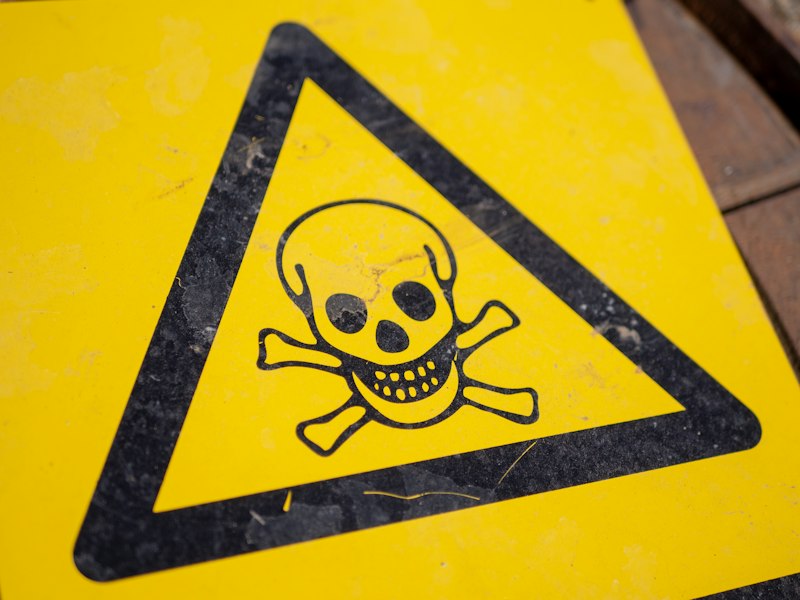
The Signal Word Panel is a critically important visual communication tool utilized across industrial, commercial, and consumer contexts, fundamentally rooted in the principles of human factors and safety engineering. It is defined as a standardized warning sign or label that prominently features a specific, predefined signal word intended to immediately convey the nature and severity level of a potential hazard. This panel serves as the primary interface between a hazardous condition or product and the user, aiming to trigger a rapid and appropriate behavioral response to mitigate risk. Its design is meticulously controlled by regulatory bodies to ensure maximum clarity, impact, and universal comprehension, often incorporating specific colors, sizes, and graphic symbols alongside the text.
The core objective of the Signal Word Panel is to overcome the inherent limitations of human attention and processing speed, especially in high-stress or complex environments. By utilizing highly salient visual cues, the panel aims to achieve near-instantaneous recognition of danger. For instance, the simple presence of a red panel indicates a level of severity that demands immediate action, effectively bypassing the slower processes of reading and interpreting lengthy safety instructions. This immediate, pre-attentive processing is the fundamental mechanism by which these panels facilitate effective risk communication.
The effectiveness of the Signal Word Panel lies in its uniformity. International and national standards dictate that specific words—such as DANGER, WARNING, or CAUTION—must correspond to precise levels of risk, ranging from imminent, life-threatening hazards (Danger) to potential minor injury or property damage (Caution). This standardization ensures that regardless of the specific context—be it a construction site, a consumer product label, or an instructional manual—the psychological interpretation of the severity remains consistent, reinforcing learned safety behaviors and minimizing the potential for misinterpretation in critical moments.
The Psychological Mechanism of Risk Perception
Signal Word Panels function by tapping directly into established cognitive and perceptual frameworks regarding threat assessment. Psychologically, the human brain prioritizes visual stimuli that are novel, intense, or associated with learned survival instincts. The deliberate use of high-contrast colors (like safety yellow and black, or red and white) and large, bold typography ensures that the panel achieves high visual salience, guaranteeing it captures selective attention quickly, even amidst a cluttered visual field. This rapid capture of attention is essential because, during an emergency, the brain’s ability to process new information decreases, and response time becomes paramount.
The specific signal word acts as a powerful cognitive shorthand. Words like “Danger” carry immense emotional and conceptual weight, activating the brain’s fear response system (the amygdala) faster than neutral language. This immediate affective response primes the individual for protective action, increasing alertness and motor readiness. Furthermore, the standardization of these words across industries leverages the principle of conditioned response; repeated exposure to these pairings (e.g., Red = Danger) establishes an automatic, almost reflexive, safety behavior, significantly reducing the required cognitive load necessary to decide on a course of action during a high-stakes event.
Ineffective signal word panel design, conversely, can lead to habituation, where individuals become accustomed to excessive or non-severe warnings, resulting in the “cry wolf” effect. Psychology dictates that if a warning is frequently present but rarely associated with actual harm, its effectiveness diminishes over time. Therefore, the accurate calibration of the signal word to the actual risk severity is a crucial psychological design consideration, ensuring the warning retains its impact and credibility, maximizing the likelihood that the recipient will comply with the necessary safety measures outlined or implied by the panel.
Historical Development and Standardization
The formal development of the Signal Word Panel system is closely linked to the rise of modern industrial safety movements and the formalization of human factors engineering following the mid-20th century. While basic warning signs have existed for centuries, the systematic, psychologically informed approach to risk labeling emerged primarily in the decades after World War II. The rapid technological advancement and subsequent increase in industrial accidents necessitated a unified system that transcended language barriers and provided consistent risk classification across diverse products and environments.
Key organizations, notably the American National Standards Institute (ANSI) in the United States and the International Organization for Standardization (ISO) globally, spearheaded efforts to codify the design and application of these panels. These organizations relied heavily on empirical studies conducted by early human factors specialists who researched visual acuity, reaction times, and the cross-cultural perception of colors and symbols. The goal was to move away from idiosyncratic company warnings toward a universally recognizable, performance-based warning system that could be interpreted quickly and correctly by nearly any user, regardless of their background or literacy level.
The evolution of the Signal Word Panel reflects a growing psychological understanding that safety is not solely dependent on engineering controls but also on effective human-machine interaction. Early panels focused heavily on text, but research soon demonstrated the superiority of integrating graphic pictograms—universal symbols that convey meaning instantly—alongside the signal word. This shift recognized that visual processing is often faster than linguistic processing, solidifying the panel’s role as a composite communication device designed for maximum instantaneous impact and reliability in preventing both acute and chronic injuries in the workplace and consumer setting.
A Practical Illustration: Industrial Chemical Storage
Consider a practical scenario involving the storage and handling of hazardous chemicals in a large manufacturing facility. An employee approaches a row of storage drums, one of which contains a highly corrosive acid. The safety protocol relies heavily on the Signal Word Panel affixed directly to the drum to communicate the immediate and severe risk.
The panel on the corrosive acid drum is designed with a specific hierarchy of information designed to guide behavior instantly.
- The employee immediately observes the panel due to its mandated large size and the dominant use of RED coloring, which is reserved for the highest level of risk.
- The most prominent textual element is the signal word, DANGER, positioned at the top. Psychologically, this word communicates that exposure will result in death or serious irreversible injury, demanding immediate and extreme caution before any physical contact occurs.
- Accompanying the word is a graphic symbol—perhaps a pictogram showing a hand being dissolved—that visually reinforces the corrosive nature of the threat, confirming the danger without requiring the employee to read the specific chemical name or detailed hazard statement.
This step-by-step recognition process demonstrates the efficiency of the Signal Word Panel. The employee does not waste precious seconds debating the severity; the panel dictates the necessary action: the individual will immediately retrieve and don the required Personal Protective Equipment (PPE), such as heavy-duty gloves, face shield, and chemical apron, before attempting to move or dispense the acid. If the panel had instead used the word CAUTION (yellow/less severe risk), the employee might incorrectly assume that standard work gloves were sufficient, leading to potential chemical burns. The panel thus acts as a psychological stop sign, ensuring the appropriate safety response is executed before interaction with the hazard begins.
Significance in Human Factors and Safety Culture
The Signal Word Panel is indispensable within the field of Human Factors Psychology and plays a critical role in shaping organizational safety culture. In high-reliability organizations (HROs), where errors can have catastrophic consequences (e.g., nuclear power, aviation, medicine), the precise and unambiguous communication provided by these panels is a foundational element of system safety. By standardizing risk communication, organizations can significantly reduce human error attributable to confusion, lack of awareness, or misinterpretation of warnings.
Beyond immediate accident prevention, the consistent use of well-designed Signal Word Panels reinforces a safety-first culture. When employees or consumers repeatedly encounter clear, consistent, and accurate warnings, it builds trust in the organization’s commitment to safety and fosters a proactive mindset regarding hazard identification. Conversely, poor or inconsistent labeling can erode this trust, leading to skepticism about all warnings and increasing the likelihood of risk-taking behaviors. The panel is therefore a regulatory compliance tool and a psychological anchor for institutional values regarding health and safety.
The application of these panels extends far beyond traditional industrial settings. They are crucial in consumer product labeling (especially pharmaceuticals, cleaning agents, and power tools), public health campaigns (e.g., warning signs for infectious hazards), and transportation infrastructure (e.g., road hazard signs). In each context, the panel’s function remains the same: to leverage visual and cognitive psychology to deliver a high-impact, low-latency warning that motivates appropriate precautionary behavior. The effective design minimizes ambiguity, maximizing the probability of a safe outcome for the user.
Connections to Related Psychological Theories
The design and functionality of the Signal Word Panel are deeply interwoven with several classical theories in experimental and cognitive psychology. One primary connection is to Signal Detection Theory (SDT). SDT focuses on how humans make decisions under conditions of uncertainty, specifically how they distinguish between genuine signals (a true warning) and background noise (clutter or false alarms). An effective Signal Word Panel must be designed to maximize the likelihood of a “Hit” (correctly identifying the hazard) while minimizing “Misses” (failing to see a real hazard) and “False Alarms” (responding to a non-existent threat). The standardization of color and placement is the engineering effort to optimize this detection process.
Furthermore, the construction of the panel relies heavily on the principles of Gestalt Psychology, particularly the laws of proximity and figure-ground organization. The panel must be perceived as a unified, coherent warning unit (a strong “figure”) against the backdrop of the environment (“ground”). Elements such as the signal word, the symbol, and the color border are grouped together (law of proximity) to ensure the user processes the warning holistically, rather than as separate, disconnected pieces of information. This holistic processing accelerates comprehension and response time.
The Signal Word Panel also relates to the study of Cognitive Ergonomics, which examines how human information processing capabilities relate to system design. By using universally understood symbols and standardized risk classifications, the panel is designed to be highly compatible with inherent human cognitive limitations, such as limits on working memory and susceptibility to distraction. This ensures that the message is not only received but correctly encoded and stored for rapid retrieval in future situations involving similar levels of risk, placing the panel squarely within the discipline of applied cognitive science.