Simulation Training: Mastering Reality Through Synthesis
Scientifically Reviewed · Dr. Marwa Abd-Alazim · August 28, 2026
Review Criteria & Clinical Standards
This content undergoes rigorous scientific peer-review and medical editorial standards at Arab Psychology Network to ensure clinical accuracy, validity, and compliance with evidence-based guidelines from leading psychological and healthcare authorities (APA / WHO).
Definition and Core Principles of Simulation Training
Simulation training is defined as a sophisticated pedagogical methodology that deliberately removes the trainee from the actual operational environment, relocating them to a controlled, synthetic setting where real-world conditions are meticulously replicated. This method is fundamentally employed when the task being learned is either inherently complex, involves substantial physical or financial risk, or is classified as hazardous, making errors in the live environment potentially catastrophic. By isolating the training activity, organizations ensure that critical skills are mastered and procedural knowledge is deeply internalized without exposing personnel or expensive equipment to undue danger.
The core principles underpinning effective simulation training revolve around high instructional fidelity, immediate and objective feedback, and the facilitation of deliberate practice. Fidelity refers to the degree to which the simulation accurately mirrors the physical and psychological demands of the real job; high fidelity ensures that the cognitive and motor skills acquired are robustly transferable. Furthermore, a crucial element is the provision of robust debriefing mechanisms, where performance data collected during the simulated exercise is analyzed, allowing instructors to pinpoint specific areas of weakness and reinforce correct decision-making processes, thereby accelerating the learning curve significantly.
Technologically, simulation environments rely on a spectrum of tools designed to create immersive and functional replicas of the workplace. These tools frequently include sophisticated computer simulations which model complex system behaviors and dynamic environments, advanced mechanical aids like mock cockpits or surgical manikins, and the construction of elaborate fictitious scenarios designed to stress-test the trainee’s knowledge under realistic pressure. The goal is not merely to mimic the appearance of the operational setting, but to replicate the psychological stress, time constraints, and critical decision points that define successful performance in the target domain.
Historical Context and Evolution
While the concept of practicing skills in a controlled, artificial setting has ancient roots, modern simulation training gained significant traction in the early 20th century, largely driven by the burgeoning needs of the aviation sector. The limitations and inherent dangers of initial flight training necessitated safer, more cost-effective alternatives for ground instruction. A landmark development was the invention of the Link Trainer in the late 1920s, a mechanical device that allowed pilots to practice instrument flying procedures on the ground, serving as the progenitor of modern flight simulators and firmly establishing the concept of off-the-job procedural training.
The post-World War II era saw a dramatic technological acceleration, transforming simulation from purely mechanical aids to complex electromechanical and, eventually, wholly digital systems. The transition to digital computing allowed simulators to model dynamic variables—such as atmospheric changes, complex equipment failures, and multi-system interactions—with unprecedented realism. This computational power expanded the utility of simulation beyond pilot training into highly technical fields such as nuclear power plant operation, military command and control, and sophisticated medical procedures, where the margin for error is nonexistent and training must account for rare, high-consequence events.
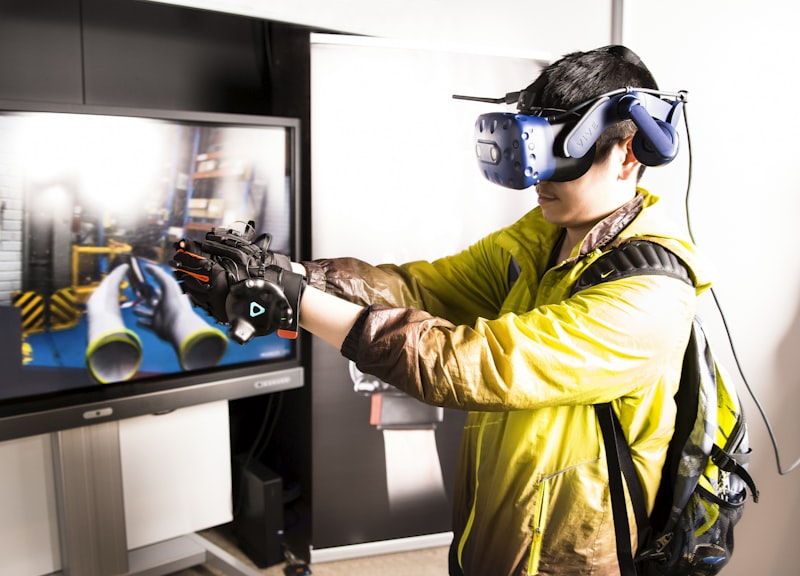
Contemporary simulation systems have evolved to incorporate advanced immersion technologies, most notably Virtual Reality (VR) and Augmented Reality (AR). VR offers trainees a fully enclosed, three-dimensional digital environment, providing a powerful sense of presence that enhances psychological fidelity and engagement. AR systems overlay digital instructional elements or synthetic data onto the real world, facilitating procedural guidance or complex equipment maintenance training while the trainee remains physically present with the equipment. This integration of pervasive computing and enhanced sensory feedback represents the current frontier, moving training closer to the ideal of seamless knowledge transfer.
Key Components of Simulation Environments
Effective simulation training environments are built upon several interlocking components designed to maximize the learning outcome and ensure the applicability of the skills acquired. The primary physical component is the simulator itself, which can range from highly complex, full-mission simulators that replicate an entire vehicle or control room, to desktop-based part-task trainers focusing on specific procedures. These physical components must accurately reproduce the control interfaces, tactile feedback, and sensory inputs that the trainee would encounter in the real world, ensuring that muscle memory and procedural sequencing are correctly established.
Equally critical are the software and modeling architectures that drive the simulation. These systems employ complex mathematical models to accurately represent the physics, dynamics, and systems behavior of the task environment. For instance, in an engineering simulation, the software must precisely model fluid dynamics, structural stress, and component degradation in real-time response to the trainee’s inputs. The quality of these models, often referred to as engineering fidelity, directly impacts the validity of the training experience and the confidence that the learned responses will be effective under actual operating conditions.
Finally, all modern simulation environments integrate sophisticated data capture and analysis tools essential for effective debriefing. These tools record every action, decision, error, and physiological metric (where applicable) throughout the scenario. This objective data forms the basis of the instructional feedback loop, allowing instructors to move beyond subjective assessment to data-driven performance review. Key metrics often analyzed include response time under pressure, adherence to standard operating procedures, and the efficiency of resource management, all crucial elements in complex, team-based operations.
Advantages Over On-the-Job Training (OJT)
Simulation training offers distinct and substantial advantages over traditional On-the-Job Training (OJT), particularly in fields where mistakes carry severe penalties. The most salient benefit is the ability to practice dangerous, rare, or high-cost tasks repeatedly in a completely safe and non-punitive environment. Trainees are encouraged to make errors, as errors become invaluable teaching moments that would be impossible or irresponsible to replicate during live operations. This freedom to fail accelerates learning and builds cognitive resilience when facing unforeseen circumstances.
Furthermore, simulation provides absolute control over the training scenario and environmental variables, a level of standardization unattainable in the unpredictable real world. Instructors can precisely manipulate conditions, ranging from critical equipment malfunctions to severe weather events, ensuring that every trainee is exposed to the exact same high-stakes challenges. This standardization guarantees that all personnel meet the minimum competency requirements for handling emergency situations, a vital factor in ensuring organizational safety and regulatory compliance across the workforce.
A significant economic advantage of simulation is the reduction in logistical costs and wear and tear on expensive operational assets. Training a pilot in a full-motion simulator, for example, is dramatically less expensive than utilizing a multi-million dollar aircraft, consuming fuel, and requiring extensive support infrastructure. By dedicating the initial, error-prone learning phases to the simulator, organizations minimize operational downtime, conserve resources, and extend the service life of mission-critical equipment, making simulation a fiscally prudent investment in long-term workforce development.
Applications Across Industries
The utility of simulation training extends across virtually every high-reliability industry, demonstrating its versatility as a critical tool for maintaining operational excellence and safety standards. The initial applications in aviation and military defense remain foundational, but the methodology has been successfully adapted to fields ranging from healthcare to deep-sea exploration.
In the healthcare sector, medical simulation utilizes high-fidelity patient manikins and virtual reality surgical trainers to allow doctors, nurses, and emergency personnel to practice complex procedures, inter-team communication, and crisis management protocols, such as responding to cardiac arrest or managing mass casualty events. This application is crucial because it allows practitioners to refine invasive techniques without risk to actual patients. The benefits are numerous and highly specialized:
- Surgical Proficiency: Allowing repeated practice of complex motor skills and minimally invasive techniques.
- Team Resource Management (TRM): Training interdisciplinary teams to communicate effectively under stress in operating rooms or emergency departments.
- Procedural Standardization: Ensuring all staff adhere strictly to established protocols for infection control and medication administration.
Similarly, the energy and maritime industries rely heavily on simulation. Operators of nuclear power plants use control room simulators to practice responding to catastrophic failures and core meltdowns, maintaining crucial public safety. In shipping, bridge resource management simulators train captains and crews in navigation, collision avoidance, and docking procedures under various adverse weather conditions, significantly improving safety and efficiency on the high seas.
Fidelity and Transfer of Training
The success of any simulation program is ultimately judged by the extent to which the skills and knowledge acquired in the synthetic environment transfer successfully to the real operational setting—a concept known as transfer of training. This transfer is heavily reliant on the concept of fidelity, which is not a single measure but a combination of physical fidelity and psychological fidelity.
Physical fidelity relates to the objective similarity between the simulator and the real-world equipment, encompassing the accurate placement of controls, the feel of the instruments, and the visual representation of the environment. While high physical fidelity is often desirable, it is not always strictly necessary, especially for training cognitive or decision-making skills. For instance, a simple desktop simulator may suffice for practicing checklist adherence, even if it lacks the full motion and tactile feedback of a complex simulator.
Conversely, psychological fidelity is arguably the more critical metric; it measures the extent to which the simulation evokes the same cognitive processes, perceptual cues, and emotional responses as the real task. If the trainee feels the same pressure, makes the same types of critical decisions, and utilizes the same problem-solving strategies in the simulator as they would in the field, then the psychological fidelity is high, maximizing the positive transfer of learning. Achieving this often involves sophisticated scenario design that focuses on stress induction and cognitive workload management rather than mere physical replication.
Challenges and Limitations
Despite its profound benefits, simulation training is not without its challenges and inherent limitations. The most immediate challenge is the substantial initial investment required for developing and maintaining high-fidelity simulators, which often involve complex software licensing, specialized hardware, and dedicated infrastructure. This cost barrier can prevent smaller organizations from adopting comprehensive simulation programs, limiting access to advanced training methodologies.
Another significant limitation relates to the phenomenon of negative transfer, where skills learned in the simulator actually hinder performance in the real environment. This typically occurs when the fidelity is imperfect, leading the trainee to learn “simulator-specific” behaviors that are inappropriate or inefficient when translated to the real equipment. For example, if a control mechanism in the simulator responds too slowly or too quickly compared to the real mechanism, the trainee may develop incorrect timing or force application habits that must be subsequently corrected in the live environment.
Furthermore, while simulation excels at teaching procedural and psycho-motor skills, it sometimes struggles to fully replicate the complexity of social dynamics and unforeseen external variables inherent to the real world. Though team simulations address inter-personal communication, they often lack the authentic presence of non-training personnel, bureaucratic pressures, or equipment wear and tear that contribute significantly to real-world operational challenges. Instructors must carefully manage the transition phase to ensure trainees understand the difference between the controlled simulated environment and the inherent messiness of live operations.
Future Directions in Simulation Technology
The future of simulation training is deeply intertwined with advancements in artificial intelligence (AI), machine learning (ML), and adaptive learning systems. AI is increasingly being leveraged to create highly intelligent virtual instructors and opponents within the simulation environment, capable of dynamically adjusting the scenario difficulty in real-time based on the trainee’s performance data. This ensures that the training environment remains consistently challenging and relevant, optimizing the time spent in the simulator.
A second major development involves the integration of sophisticated biometric and physiological monitoring. Future simulators will routinely track heart rate variability, eye movements, cognitive load, and stress levels of the trainee. This data will allow the system to objectively measure psychological fidelity and identify when a trainee is reaching optimal levels of challenge or succumbing to debilitating stress, providing highly personalized feedback aimed at improving performance under high cognitive load.
Finally, there is a strong trend toward greater accessibility and integration through cloud-based simulation platforms and widespread deployment of lightweight, portable VR/AR solutions. This shift democratizes access to high-quality training tools, moving specialized simulation out of dedicated, expensive centers and into more localized training environments, ensuring that critical skill maintenance and refreshers can be performed more frequently and closer to the point of need.