Somniloquy: Unlocking the Secrets of Your Sleeping Mind
Scientifically Reviewed · Dr. Marwa Abd-Alazim · August 27, 2026
Review Criteria & Clinical Standards
This content undergoes rigorous scientific peer-review and medical editorial standards at Arab Psychology Network to ensure clinical accuracy, validity, and compliance with evidence-based guidelines from leading psychological and healthcare authorities (APA / WHO).
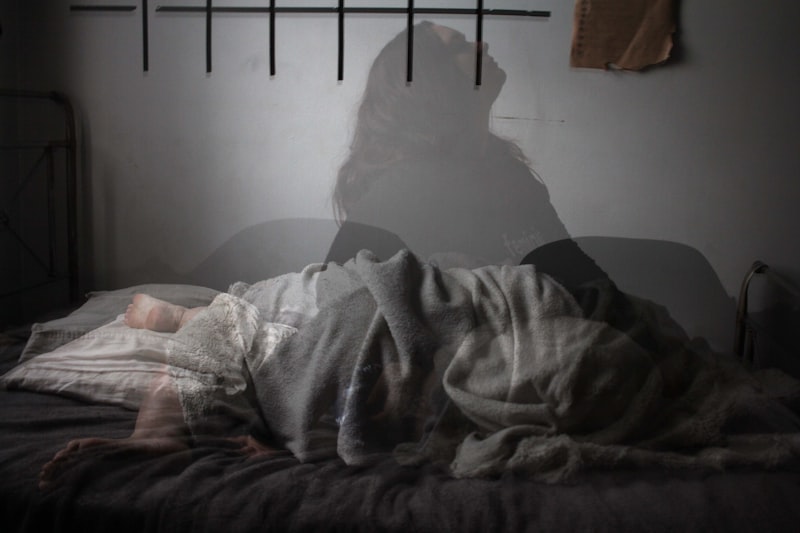
Defining Somniloquy: An Overview of Sleep Talking
Somniloquy, commonly referred to as sleep talking, is a non-pathological parasomnia characterized by the emission of speech or sounds during sleep. This phenomenon ranges widely in complexity, encompassing simple mumbling, short phrases, emotional outbursts, or even seemingly complete sentences. Although sleep talking is incredibly common, especially in childhood and adolescence, its precise mechanisms are complex, involving involuntary muscle activity coupled with varying levels of cognitive processing during different stages of the sleep cycle. It is fundamentally a disturbance of the transition between sleep stages, where the brain generates verbal output while the body remains largely in a state of sleep-induced paralysis or reduced motor control. Unlike conscious conversation, the speaker is unaware of the vocalizations, and the content rarely correlates directly with external reality or immediate waking concerns, often reflecting the ongoing narrative of dreams or fragmented thought processes.
The classification of somniloquy places it within the broader category of parasomnias, specifically those disorders involving undesirable physical events or experiences that occur during entry into sleep, within sleep, or during arousal from sleep. Crucially, as highlighted by clinical consensus, sleep talking is typically benign and does not, in isolation, constitute a major psychiatric or neurological disorder. It is a manifestation of partial arousal, wherein the verbal centers of the brain become momentarily activated while the higher cognitive functions necessary for full consciousness and self-monitoring remain dormant. This partial activation explains why the speech produced is often illogical, disjointed, or unintelligible, yet occasionally coherent enough to be interpreted by listeners, such as a bed partner.
A key characteristic distinguishing somniloquy from other nocturnal vocalizations is its involuntary nature and lack of associated motor activity, such as sleepwalking or violent thrashing, which are typical of other parasomnias like REM behavior disorder (RBD). While the specific frequency and intensity of sleep talking vary significantly among individuals—some experiencing it nightly, others only under periods of severe stress or fever—the common thread is the breakdown of the brain’s inhibitory mechanisms that usually silence vocal activity during slumber. Understanding this mechanism requires a detailed examination of the underlying sleep architecture and the specific neurochemical environments that govern the different phases of the sleep cycle, particularly those involving rapid eye movement (REM) sleep and non-rapid eye movement (NREM) sleep.
Etiological Foundations and Theoretical Mechanisms
The precise etiology of sleep talking is considered multifactorial, involving a combination of genetic predisposition, environmental triggers, and neurobiological architecture. Studies indicate a strong familial component, suggesting that individuals with first-degree relatives who experience somniloquy are significantly more likely to develop the condition themselves. This genetic link suggests an inherited variability in the thresholds of arousal and inhibition mechanisms within the central nervous system. Specific neurotransmitter systems, particularly those governing motor control and arousal—such as the GABAergic and monoaminergic systems—are implicated in regulating the transition between the quiet, paralyzed state of REM sleep and the partially aroused state necessary for verbal output. When these systems are dysregulated, even momentarily, the involuntary vocalization characteristic of sleep talking can occur.
Environmental and psychological stressors play a pivotal role as potent triggers for somniloquy, even in individuals without a notable genetic predisposition. High levels of anxiety, acute stress, emotional turmoil, or significant life changes have all been documented to increase the frequency and intensity of sleep talking episodes. The theoretical framework suggests that the brain, unable to fully process or inhibit these psychological tensions during wakefulness, may release this cognitive load through verbalization during periods of reduced conscious control. Furthermore, physiological disturbances, such as acute illness, fever, or pain, can profoundly disrupt the stability of the sleep cycle, leading to increased fractional arousal events conducive to somniloquy.
The underlying mechanism of somniloquy is often described as a dissociative state, where motor areas responsible for speech production are momentarily disinhibited, while the executive functions necessary for logical thought and self-monitoring remain suppressed. This dissociation is hypothesized to involve structures deep within the brainstem and limbic system, which regulate emotional expression and automatic motor responses. During periods of unstable sleep, these structures may fire spontaneously, triggering the motor cortex to initiate speech without the filter of the frontal lobes. This explains the often crude, emotional, or nonsensical nature of the verbalizations. The temporary nature of this disinhibition is what defines the benign classification of the parasomnia, as the brain quickly reasserts control and returns to the stable sleep state.
Sleep Architecture and the Timing of Vocalizations
While sleep talking can technically occur during any stage of sleep, its characteristics vary dramatically depending on whether it manifests during NREM or REM sleep, a factor critical to understanding its clinical presentation. The original clinical observations often noted its occurrence during REM sleep, which is the stage characterized by vivid dreaming and muscle atonia (paralysis). In REM sleep, somniloquy is believed to be the verbal manifestation of the ongoing dream narrative. Because the motor centers are highly inhibited during REM, the speech is typically brief, muffled, emotionally charged, and lacks the complex motor movements (like sitting up) associated with NREM events. The vocalizations are often linked to specific dream content—a shout of alarm, a brief argument, or a declaration related to the dream’s plot—before the inhibitory mechanisms rapidly suppress the activity again.
In contrast, sleep talking that occurs during NREM sleep—specifically stages N2 and N3 (deep sleep)—is generally less intelligible and often sounds like groans, mumbled words, or short, disjointed phrases. NREM somniloquy is considered a disorder of arousal, similar to sleepwalking or night terrors, resulting from an incomplete transition from deep sleep to wakefulness. Because muscle tone is not fully paralyzed during NREM stages, these verbalizations may sometimes be accompanied by gross motor movements, such as turning over or repositioning the body. These NREM events tend to be less frequent than REM-associated episodes but can be louder and more disruptive, reflecting the greater depth from which the individual is attempting partial arousal.
The distinction between REM and NREM somniloquy is crucial for clinical assessment, though definitive identification often requires polysomnography (PSG). The frequency of sleep talking tends to peak during the latter half of the night, corresponding to periods where REM sleep is more prominent and NREM periods are shorter and lighter. Understanding the cyclical nature of these occurrences helps caregivers or bed partners manage the disturbances. For instance, if an individual is known to talk most frequently during the early morning hours, interventions can be targeted toward optimizing sleep hygiene and reducing disturbances during that critical phase of the sleep cycle.
Clinical Manifestations and Characteristics of Speech
The clinical presentation of somniloquy varies widely in terms of volume, frequency, and comprehensibility. Episodes may be subtle, consisting of barely audible whispers or guttural sounds, or they may involve loud shouting and clear articulation that can easily awaken others, as illustrated by the common scenario where “Joe often suffered from sleep talking that woke Lyn up.” The vocalizations are often recognized for their speed and fragmented quality, sometimes resembling glossolalia (speaking in tongues) due to poor articulation and rapid delivery. The content can occasionally be vulgar, aggressive, or surprisingly revealing, leading to significant embarrassment for the individual if the content is relayed to them later. However, clinicians emphasize that the content of sleep talking should generally not be taken literally as an accurate representation of the person’s waking thoughts or secrets, but rather as an unfiltered expression of subconscious material or cognitive residue.
Specific characteristics often observed during episodes include:
-
Lack of Coherence: Sentences are frequently incomplete, grammatically incorrect, or jump rapidly between unrelated topics.
-
Emotional Intensity: The tone of voice may carry significant emotional weight (fear, anger, sadness) even if the words themselves are meaningless.
-
Unresponsiveness: Attempts by listeners to engage the sleeper in conversation typically fail, resulting in either a brief, irrelevant response or a return to silence, confirming the state of non-conscious arousal.
-
Amnesia: The sleeper typically has complete amnesia for the episode upon waking, regardless of how complex or loud the verbalization was.
The impact of these manifestations is often directed toward the sleeping environment rather than the individual themselves. While the sleeper is generally unaffected physiologically, the disruption caused to partners or housemates can lead to significant secondary issues, including sleep deprivation, relationship strain, and anxiety about the content being revealed. Management often centers on mitigating this psycho-social impact. For instance, measures such as using white noise machines or sleeping in separate rooms are sometimes necessary to preserve the sleep quality of the partner, thereby transforming the management of sleep talking into a relational issue rather than solely an individual one.
Differential Diagnosis and Non-Pathological Nature
A critical aspect of the clinical evaluation of sleep talking is confirming its non-pathological status, adhering to the principle that it is often “not from a pathological cause.” While somniloquy itself is benign, it must be differentiated from other, more serious sleep disorders or neurological conditions that can present with vocalizations. This process, known as differential diagnosis, is essential to ensure that the vocalizations are not symptoms of an underlying, treatable medical problem. The primary conditions to rule out include nocturnal seizures, specifically complex partial seizures originating from the temporal lobe, and REM sleep behavior disorder (RBD).
In RBD, vocalizations are often loud and associated with vigorous motor activity, such as punching, kicking, or leaping out of bed, representing the physical acting out of dreams. Unlike benign sleep talking, RBD is often progressive and carries significant clinical weight, as it is highly correlated with the future development of neurodegenerative diseases such as Parkinson’s disease and Lewy body dementia. Conversely, nocturnal seizures can present with stereotyped, repetitive, and often bizarre vocalizations that are usually shorter in duration than somniloquy episodes and may be accompanied by distinctive electroencephalographic (EEG) patterns. The absence of these associated features—physical violence, recurring injury, or specific seizure activity—strongly supports the diagnosis of simple somniloquy.
Furthermore, sleep talking must be distinguished from sleep terrors (NREM parasomnia), where vocalizations are usually terrifying screams or cries, accompanied by signs of extreme autonomic arousal (tachycardia, sweating, dilated pupils), and are followed by profound confusion rather than simple amnesia. The general rule is that if the vocalization is the sole, primary symptom, and the individual returns immediately to quiet sleep without confusion, injury, or severe autonomic distress, the diagnosis leans heavily toward primary somniloquy. Therefore, the benign nature of sleep talking is established by the exclusion of more complex and potentially harmful sleep pathologies, reinforcing its status as a minor, generally harmless sleep anomaly.
Associated Conditions and Risk Factors: The Hyperactivity Connection
While somniloquy is often isolated, its frequency can be exacerbated by, or associated with, a range of comorbid factors and conditions. The original observation suggesting a link to hyperactivity, though not consistently emphasized in modern sleep medicine texts, aligns with the broader understanding that conditions involving central nervous system over-arousal or dysregulation often precipitate somniloquy. Hyperactivity, particularly in the context of Attention-Deficit/Hyperactivity Disorder (ADHD), involves significant impairments in inhibitory control and emotional regulation, factors known to destabilize sleep architecture. Children and adults with ADHD frequently exhibit increased rates of movement during sleep, nocturnal awakenings, and parasomnias, suggesting that a generally hyper-aroused neurological baseline can lower the threshold for fragmented arousal events like sleep talking.
Beyond hyperactivity, other significant risk factors include acute or chronic illness, particularly those accompanied by fever, which drastically alters thermoregulation and sleep homeostasis. Substance use, especially the consumption of alcohol, caffeine, or certain medications (such as some antidepressants or stimulants), is also strongly associated with increased episodes of sleep talking. These substances disrupt the natural balance of REM and NREM cycles, leading to rebound REM sleep and increased instability during transitions, thereby providing more opportunities for verbalization to occur. Furthermore, other comorbid parasomnias are common; individuals who experience sleepwalking or teeth grinding (bruxism) often report higher frequencies of somniloquy, suggesting a shared underlying vulnerability to fragmented arousal states.
The relationship between sleep talking and psychological stress is perhaps the most documented non-physiological risk factor. High-stress periods, characterized by academic pressure, work deadlines, or interpersonal conflict, consistently correlate with increased vocalizations. This connection supports the hypothesis that somniloquy serves as an outlet for unprocessed cognitive and emotional material. In these instances, the management of the sleep talking often relies less on direct intervention and more on treating the underlying anxiety or stressor, thereby stabilizing the sleep environment indirectly.
Psycho-Social Impact and Management Strategies
The primary therapeutic focus for sleep talking is not typically aimed at eliminating the behavior, but rather managing its psycho-social consequences, especially the impact on co-sleepers. When episodes are infrequent, management usually involves reassurance and implementation of basic sleep hygiene practices. However, in cases like that of “Joe and Lyn,” where the somniloquy is disruptive enough to cause sleep deprivation in the partner, more direct strategies are warranted.
Management strategies often begin with behavioral and environmental modifications:
-
Optimizing Sleep Hygiene: Ensuring a consistent sleep schedule, limiting screen time before bed, and avoiding heavy meals, alcohol, and caffeine in the hours leading up to sleep helps stabilize the sleep cycle and reduces the frequency of arousal events.
-
Stress Reduction: Incorporating relaxation techniques, such as meditation or progressive muscle relaxation, into the evening routine can significantly reduce the underlying anxiety that triggers severe episodes.
-
Environmental Mitigation: For the partner, using earplugs, white noise generators, or, in severe cases, implementing a temporary “sleep divorce” (sleeping in separate rooms) can maintain adequate sleep quality until the frequency of the somniloquy decreases.
-
Addressing Privacy Concerns: If the content of the sleep talking is perceived as embarrassing or revealing, establishing clear communication and boundaries with the partner is necessary, often coupled with professional reassurance that the content is not representative of conscious thought.
Pharmacological intervention is rarely indicated for primary somniloquy due to its benign nature, but it may be considered if the sleep talking is secondary to a severe, treatable underlying condition, such as chronic anxiety or another disruptive parasomnia. In such cases, low-dose anti-anxiety medications or hypnotics might be used temporarily to stabilize sleep architecture. However, the risk of side effects often outweighs the benefit for simple sleep talking. The most effective long-term management relies on identifying and mitigating the specific triggers—whether they are physiological (fever, medication) or psychological (stress, emotional trauma)—that destabilize the sleep pattern.
Summary of Therapeutic and Prognostic Considerations
The prognosis for individuals experiencing primary somniloquy is overwhelmingly positive. For children, the condition frequently resolves spontaneously as the central nervous system matures and sleep cycles stabilize during adolescence. For adults, while the condition may persist chronically, it rarely leads to significant morbidity unless it is a symptom of a more serious underlying disorder, such as RBD or complex seizures. The persistence of sleep talking throughout adulthood is usually manageable through strict adherence to sleep hygiene and stress management protocols.
In conclusion, sleep talking, or somniloquy, is a prevalent and generally harmless parasomnia characterized by involuntary verbalizations during sleep, often occurring during REM sleep. Its non-pathological status is confirmed through the exclusion of severe neurological and psychiatric conditions. While genetic factors and general hyper-arousal (including the tendency toward hyperactivity) can predispose an individual, the immediate triggers are typically environmental stressors, fever, or substance use.
Ultimately, successful management prioritizes the quality of life for both the sleeper and their partner, utilizing non-pharmacological methods to stabilize sleep cycles and mitigate the disruptive noise. Clinical intervention is reserved primarily for cases where the somniloquy is highly frequent, associated with significant emotional distress, or suspected to mask a more severe underlying sleep disorder requiring targeted treatment.