Sleep Terror Disorder: Decoding the Root of Night Panic
Scientifically Reviewed · Dr. Marwa Abd-Alazim · October 7, 2026
Review Criteria & Clinical Standards
This content undergoes rigorous scientific peer-review and medical editorial standards at Arab Psychology Network to ensure clinical accuracy, validity, and compliance with evidence-based guidelines from leading psychological and healthcare authorities (APA / WHO).
Introduction: Defining Sleep Terror Disorder
Sleep Terror Disorder, often referred to as night terror or pavor nocturnus, is a profound and distressing sleep condition characterized by an abrupt awakening from non-rapid eye movement (NREM) sleep, accompanied by intense fear, panic, and significant physiological signs of autonomic arousal. Unlike typical nightmares, which occur during REM sleep and are usually recalled, sleep terror episodes arise from deep sleep stages, leaving the individual disoriented, unresponsive to comfort, and typically with no memory of the event upon full awakening. This distinction is crucial for understanding the underlying mechanisms and the experience of those affected by this parasomnia.
This disorder falls under the umbrella of parasomnias, which are undesirable physical events or experiences that occur during entry into sleep, within sleep, or during arousal from sleep. Sleep terror episodes are classified specifically as NREM sleep arousal disorders, alongside sleepwalking and confusional arousals, due to their origin in the deepest stages of sleep. The key idea behind sleep terror lies in an incomplete arousal from slow-wave sleep, where the brain partially awakens but remains in a state of deep sleep, leading to a fragmented consciousness dominated by intense fear and a surge of physiological responses.
The phenomenon of sleep terror is not merely a bad dream; it involves a complex interplay of neurological and physiological factors that manifest as a dramatic and often frightening display. The individual, though seemingly awake and highly agitated, is not truly conscious or aware of their surroundings. This state of partial arousal, combined with overwhelming terror, creates a unique and challenging clinical picture that requires careful differentiation from other sleep disturbances or medical conditions. Understanding its core definition and underlying principles is the first step toward effective diagnosis and management.
Characteristics and Phenomenology of Episodes
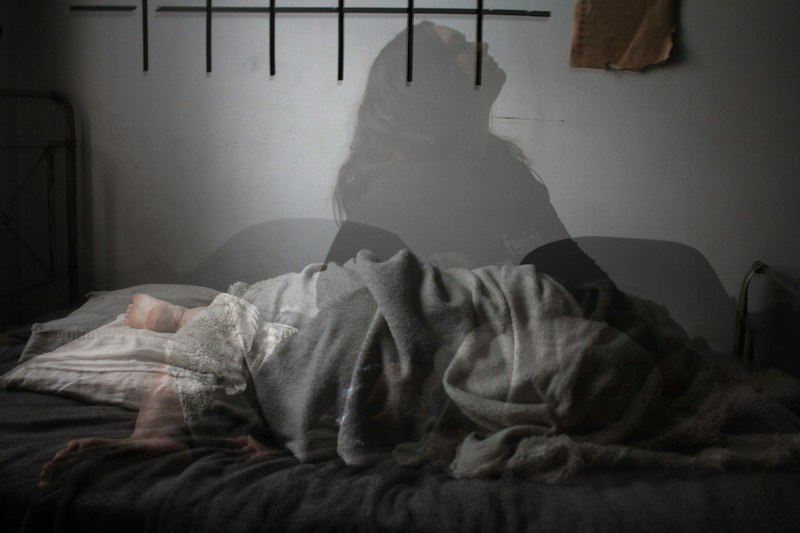
A typical Sleep Terror Disorder episode begins suddenly and dramatically, often within the first third of the night, when NREM sleep is most prominent. The individual may sit bolt upright in bed, emit a piercing scream or cry, and exhibit profound signs of distress. Their eyes may be wide open, staring blankly, with a terrified or confused expression. Physiologically, there is a marked increase in heart rate (tachycardia), rapid breathing (tachypnea), sweating (diaphoresis), and muscle tension, reflecting the profound autonomic arousal associated with the intense fear.
During an episode, the affected individual is largely unresponsive to attempts at comfort or communication. They may appear confused and disoriented, failing to recognize familiar faces or surroundings. Attempts to awaken or soothe them can sometimes lead to increased agitation or even defensive, aggressive behaviors, as they may perceive the helper as a threat within their terror-filled state. Episodes typically last from a few seconds to several minutes, after which the individual usually lies back down and returns to sleep as abruptly as they awakened, often with no recollection of the event the next morning, a phenomenon known as amnesia.
The lack of recall is a hallmark feature distinguishing sleep terrors from nightmares, which are vivid, fear-inducing dreams that occur during REM sleep and are typically well-remembered. The content of a sleep terror, if any distorted fragments are recalled, is often vague and involves a sense of imminent danger or threat, rather than a coherent narrative. These characteristic behaviors and the subsequent amnesia are crucial for clinical assessment, helping to differentiate sleep terror from other conditions such as epileptic seizures or nocturnal panic attacks, which may present with some overlapping symptoms but differ significantly in their underlying mechanisms and clinical implications.
Epidemiology and Risk Factors
Sleep Terror Disorder is predominantly observed in childhood, representing one of the most common parasomnias in this age group. Its peak prevalence occurs between the ages of 3 and 7 years, with estimates suggesting that between 1% and 6% of children experience sleep terrors at some point. While less common, the disorder can persist or emerge in adulthood, although adult episodes tend to be less frequent, of shorter duration, and sometimes associated with more complex underlying psychological or physiological factors. There appears to be no significant gender predisposition in childhood, but some studies suggest a slight male predominance in adults.
The exact etiology of sleep terror remains incompletely understood, but it is believed to involve a combination of genetic predisposition and environmental factors. There is a strong familial component, with individuals more likely to experience sleep terrors if a first-degree relative has a history of sleep terrors, sleepwalking, or other NREM sleep arousal disorders. This suggests a hereditary tendency towards an immature or dysregulated arousal system during sleep, particularly in children whose central nervous systems are still developing.
Several factors can precipitate or exacerbate sleep terror episodes. These include conditions that increase arousal instability during sleep, such as sleep deprivation, irregular sleep schedules, fever, and certain medications that affect central nervous system activity. Underlying sleep disturbances, most notably sleep apnea or restless legs syndrome, can also trigger episodes by causing frequent micro-arousals. Furthermore, psychological stressors, such as elevated stress levels, significant life changes, or anxiety, have been identified as important contributing factors, particularly in adults, highlighting the intricate connection between mental well-being and sleep architecture.
Historical Perspective and Scientific Understanding
The phenomenon of sudden, terrifying awakenings from sleep has likely been observed throughout human history, with early descriptions often attributed to supernatural causes or vague medical conditions. The term “pavor nocturnus,” Latin for “fear of the night,” has been historically used to describe these episodes, predating modern psychological and physiological classifications. However, a scientific understanding of Sleep Terror Disorder began to emerge more clearly with the systematic study of sleep stages and the development of polysomnography in the mid-20th century.
Pioneering sleep researchers, through techniques like electroencephalography (EEG), were able to differentiate sleep terrors from nightmares by identifying their distinct occurrence during NREM sleep rather than REM sleep. This fundamental discovery was crucial in moving the understanding of sleep terrors away from a purely psychological interpretation to one that recognized a significant physiological component related to arousal mechanisms. Early research focused on the immature central nervous system in children as a primary factor, explaining the higher prevalence in developmental years.
Over time, the scientific understanding has evolved to recognize the complex interplay of genetic, developmental, and environmental factors. Modern sleep medicine has classified sleep terrors firmly within the category of NREM sleep arousal disorders, emphasizing the incomplete arousal from deep sleep as the core mechanism. This historical progression from anecdotal observation to detailed neurophysiological investigation has been instrumental in shaping current diagnostic criteria and therapeutic approaches, moving towards evidence-based interventions that address both the physiological and psychological dimensions of the disorder.
Diagnosis and Differential Considerations
The diagnosis of Sleep Terror Disorder is primarily clinical, relying heavily on a detailed patient history and, if available, eyewitness accounts from family members or caregivers. A thorough clinical interview will explore the frequency, duration, and characteristics of the episodes, including the presence of intense fear, autonomic arousal, unresponsiveness, and subsequent amnesia. It is essential to gather information about potential triggers, such as sleep deprivation, stress, or concurrent medical conditions, and to review the individual’s overall sleep hygiene practices.
A physical examination can help rule out other medical conditions that might mimic sleep terror symptoms. While polysomnography (a comprehensive sleep study) is not typically required for a straightforward diagnosis of sleep terrors, it may be indicated in cases where the diagnosis is uncertain, if episodes are very frequent or severe, or if other underlying sleep disorders, such as sleep apnea, are suspected. Polysomnography can objectively confirm the occurrence of arousal from NREM sleep and exclude other sleep-related events like nocturnal seizures or significant sleep-disordered breathing.
Differential diagnosis is critical to ensure appropriate management. Sleep Terror Disorder must be distinguished from nightmares, which are distressing dreams during REM sleep that involve recall. It also needs to be differentiated from other NREM sleep arousal disorders like sleepwalking or confusional arousals, which share similar physiological mechanisms but differ in the predominant behavioral manifestation and level of fear. Furthermore, epileptic seizures, particularly nocturnal frontal lobe epilepsy, and nocturnal panic attacks, which are true awakenings with panic and usually involve full memory recall, must be carefully considered and ruled out to avoid misdiagnosis and ineffective treatment.
Treatment and Management Strategies
Treatment for Sleep Terror Disorder typically begins with non-pharmacological interventions, focusing on addressing underlying factors and promoting optimal sleep hygiene. This involves ensuring adequate sleep duration, maintaining a regular sleep schedule, creating a relaxing bedtime routine, and optimizing the sleep environment to be dark, quiet, and cool. Identifying and eliminating potential triggers, such as caffeine intake, excessive screen time before bed, or stress, is also crucial. For children, a technique called scheduled awakenings, where the child is gently awakened 15-30 minutes before the usual onset of an episode, can be highly effective in disrupting the cycle of deep sleep arousal.
Addressing any co-occurring psychological or physiological conditions is a cornerstone of management. If underlying stress, anxiety, or other anxiety disorders are identified, psychotherapy, such as cognitive-behavioral therapy (CBT), can be beneficial in helping individuals develop coping mechanisms. For physiological sleep disturbances, such as sleep apnea, specific treatments like continuous positive airway pressure (CPAP) therapy can significantly reduce the frequency and severity of sleep terror episodes by improving sleep quality and reducing sleep fragmentation.
Pharmacological interventions are generally considered a last resort for severe, persistent, or highly disruptive cases of Sleep Terror Disorder, especially when other strategies have failed. Medications like low-dose benzodiazepines (e.g., clonazepam) can be prescribed to suppress deep NREM sleep, thereby reducing the likelihood of an episode. Certain antidepressants, particularly tricyclic antidepressants, may also be used due to their sedating effects and ability to alter sleep architecture. However, these medications carry potential side effects and should be used cautiously, under strict medical supervision, emphasizing that the primary focus remains on identifying and ameliorating root causes rather than merely suppressing symptoms.
Impact and Related Sleep Conditions
The impact of Sleep Terror Disorder extends beyond the individual experiencing the episodes, often causing significant distress and concern for family members or caregivers who witness the frightening events. While individuals usually have no memory of the terror, repeated disruptions can lead to secondary issues such as daytime fatigue, irritability, and anxiety about sleep, particularly in adults. For children, chronic sleep terrors can sometimes be a marker for underlying developmental or emotional stressors, warranting further psychological assessment within the context of child development and clinical psychology.
Understanding sleep terrors is critical within the broader field of sleep medicine, as it highlights the complexities of sleep architecture and arousal mechanisms. Its study contributes to our knowledge of NREM sleep arousal disorders, which encompass a spectrum of conditions including sleepwalking and confusional arousals. These disorders share common physiological pathways involving incomplete arousal from deep sleep, but manifest differently. Research into these connections helps to refine diagnostic categories and develop more targeted therapeutic approaches across the parasomnia spectrum.
Furthermore, Sleep Terror Disorder can be related to or exacerbated by various other psychological and neurological conditions. High levels of stress, trauma, or underlying conditions such as PTSD can increase the susceptibility to sleep terrors, particularly in adults. Its occurrence can also sometimes be confused with or co-exist with other sleep disturbances, emphasizing the need for comprehensive evaluation. By understanding its interconnectedness with other sleep conditions and psychological states, clinicians can provide more holistic and effective care, improving the overall well-being and sleep quality for those affected.