Social Change: How Collective Beliefs Redefine Our World
Scientifically Reviewed · Dr. Marwa Abd-Alazim · August 27, 2026
Review Criteria & Clinical Standards
This content undergoes rigorous scientific peer-review and medical editorial standards at Arab Psychology Network to ensure clinical accuracy, validity, and compliance with evidence-based guidelines from leading psychological and healthcare authorities (APA / WHO).
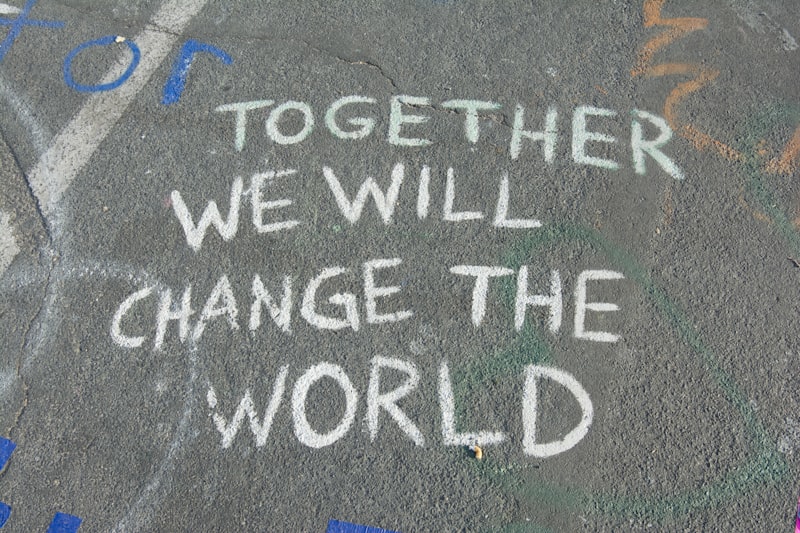
Defining Social Change and Societal Structure
Social change is formally defined as a profound, non-reversible process by which the general structure of a society is fundamentally altered. This alteration encompasses systemic shifts in key social institutions, established behavioral patterns, normative frameworks, and stratification systems over time. It represents a transformation that moves beyond minor, everyday fluctuations in social interaction, focusing instead on macro-level reconfigurations of the social order. For a shift to qualify as true social change, it must impact the fundamental relationships that define society, such as those between the state and the citizen, the employer and the employee, or the family unit and the community.
The core difficulty in analyzing social change lies in distinguishing between superficial trends and deep-seated structural transformations. A temporary economic recession or a passing fad in fashion does not constitute social change; conversely, the emergence of a globalized, instantaneous communication infrastructure or the widespread acceptance of previously marginalized family structures represents a true change because it alters the underlying institutional blueprint. Societal structure involves the enduring framework of roles, statuses, and institutions that provide stability and predictability. When social change occurs, these frameworks themselves are reorganized, leading to new expectations for individual behavior and new distributions of power and resources.
Understanding the scope of analysis is critical when studying this phenomenon. True structural change is typically a long-term process, requiring observation across generations to fully gauge its impact and permanence. It is often multivariate, meaning it is rarely caused by a single factor but rather by a complex interplay of internal contradictions (e.g., class conflict) and external pressures (e.g., environmental crises or technological diffusion). The result of such change is the creation of a new equilibrium, where new norms and institutional arrangements eventually stabilize, allowing society to function under a transformed set of rules and values.
Historical Examples: The Industrial Revolution and Modern Shifts
The most frequently cited historical example of transformative social change driven by impersonal forces is the Industrial Revolution. Beginning in the eighteenth century, this process involved far more than mere mechanization; it triggered a complete overhaul of Western social organization. Previously agrarian and localized societies were rapidly transformed into urbanized, industrialized nations. This shift introduced new class structures—the industrial bourgeoisie and the proletariat—and fundamentally redefined labor, moving production from the home to the centralized factory. This change necessitated new forms of governance, education, and social control to manage the unprecedented density and complexity of urban life, demonstrating how technological and economic shifts compel institutional adaptation.
In the late twentieth and early twenty-first centuries, the world has witnessed the acceleration of social change driven by the Digital Revolution, often termed the Information Age. This transition, involving the widespread deployment of computers, the internet, and mobile technologies, has dramatically compressed time and space, fundamentally altering communication patterns and global economic connectivity. The rise of the gig economy, the blurring of work and private life boundaries, and the emergence of massive global social networks are all manifestations of this recent social change. These technological forces are restructuring traditional industries and creating new forms of social capital and digital divides, influencing everything from political mobilization to personal identity formation.
Furthermore, profound normative shifts exemplify another critical dimension of social transformation. The historical movement toward free sexual expression, for instance, represents a significant change in moral and legal frameworks concerning sexuality, reproduction, and family life. This process involved challenging long-standing religious and cultural taboos, leading to changes in divorce laws, reproductive rights, and the legalization of same-sex marriage. Such changes demonstrate that social transformation is not limited to economic or technological realms but extends deeply into the cultural core of a society, altering intimate relationships and the perceived legitimacy of various lifestyle choices, often resulting from sustained advocacy by specific social movements.
Mechanisms of Change: Impersonal Forces (Economic and Technological)
A significant portion of social change results from impersonal forces, which operate independently of the conscious, immediate goals of specific groups or individuals. Chief among these are economic forces, particularly those related to globalization and the shift in capital flows. Globalization creates transnational interdependencies, forcing local institutions to conform to global economic standards and market pressures. For example, the movement of manufacturing jobs from developed to developing nations restructures the social contract in both regions, leading to deindustrialization and subsequent social dislocation in the former, while creating rapid, often uneven, urbanization and new labor struggles in the latter. These shifts in economic power and resource allocation serve as powerful, often irresistible, drivers of structural change.
Technological forces act as potent catalysts for structural alteration. Innovation often generates unintended consequences that necessitate broad social adaptation. The invention of the printing press, for instance, fractured the Church’s monopoly on knowledge and laid the groundwork for mass literacy and modern science. Similarly, contemporary breakthroughs in biotechnology and artificial intelligence pose deep ethical and social dilemmas regarding labor, life extension, and privacy. These technological advancements are not merely tools; they embed new patterns of behavior and interaction within society, often outpacing the ability of legal and moral systems to govern their application, thereby forcing rapid, reactive social change.
Demographic shifts also constitute powerful impersonal forces. Changes in population size, age structure, and ethnic composition exert immense pressure on existing social infrastructure. For example, the aging populations in many Western and East Asian countries necessitate massive overhauls of healthcare systems, pension schemes, and labor policies. Large-scale international migration alters the cultural landscape and challenges national identity, leading to new political conflicts and the formation of multicultural societies. These demographic realities are slow-moving but inescapable determinants of long-term social change, demanding complex institutional responses to maintain societal cohesion and economic viability.
Mechanisms of Change: Agency and Collective Action (Social Movements)
In contrast to impersonal forces, social change is frequently the direct result of human agency, manifested most powerfully through organized collective action, particularly social movements. These movements are organized efforts by groups of people to promote or resist changes in society. They function by identifying a perceived injustice or societal flaw, mobilizing resources (time, money, labor), and framing their grievances in a way that resonates with broader public values, thereby challenging the legitimacy of the existing power structure.
Successful social movements often employ sophisticated strategies, including public protest, civil disobedience, political lobbying, and media engagement, to achieve institutional goals. The U.S. Civil Rights Movement, for example, did not merely protest unfair laws; it fundamentally altered the legal framework regarding race and citizenship, dismantling segregation and establishing new civil protections. This type of change is deliberate and conscious, driven by a normative vision for a transformed society. Movements succeed when they exploit political opportunities—moments of institutional weakness or shifts in public opinion—to press their demands for systemic reform or revolution.
Furthermore, the role of charismatic leaders and organizational infrastructure is crucial for translating diffuse public discontent into focused pressure for social change. Leaders articulate the movement’s goals and mobilize the necessary resources, while the organizational structure ensures sustainability beyond initial bursts of activism. Whether advocating for environmental protection, gender equality, or worker rights, collective action demonstrates that individuals, when organized effectively, possess the power to deliberately restructure societal institutions and norms, directly influencing the direction and pace of social transformation.
Types and Dimensions of Social Change
Social change can be categorized based on its pace and scope. Revolutionary change is rapid, dramatic, and often violent, resulting in the fundamental overthrow of existing political and social orders (e.g., the French or Russian Revolutions). In contrast, reformist change is gradual, incremental, and typically occurs within the existing institutional framework, seeking to modify laws or policies rather than dismantle the entire system (e.g., parliamentary reforms or gradual expansion of voting rights). Both types of change contribute to the overall trajectory of societal transformation, but their processes and immediate impacts vary significantly in terms of social disruption and conflict.
The dimensions of social change are often analyzed by differentiating between material and non-material culture. Material change refers to alterations in technology, infrastructure, and physical resources, which are often easier to adopt and measure. Non-material change, conversely, refers to shifts in values, beliefs, ideologies, and norms—the intangible elements that define a culture’s moral compass. Typically, material changes (like the introduction of mobile phones) occur rapidly, creating pressure on non-material culture to adapt (leading to new norms around privacy or social interaction).
A key theoretical observation regarding these dimensions is the concept of cultural lag, posited by William F. Ogburn. Cultural lag occurs when non-material culture fails to keep pace with rapid material changes. For instance, medical technology may advance to prolong life significantly (material change), but social institutions and ethical norms regarding end-of-life care, resource allocation, and family obligations may lag behind, causing societal stress and conflict. This uneven pace of transformation highlights why social change is rarely smooth, often resulting in periods of widespread disorientation or institutional crisis until cultural systems fully adjust to new material realities.
Theories of Social Change (Evolutionary vs. Cyclical)
Sociological thought has produced several major frameworks for understanding the mechanisms and direction of social change. Early theories, often termed Social Evolution (associated with thinkers like Auguste Comte and Herbert Spencer), posited that societies naturally progress in a linear fashion, moving from simple, homogenous states to complex, differentiated ones. While largely discredited in their original deterministic forms due to ethnocentric bias, these theories established the idea that change is a movement toward greater functional complexity and specialization, a core element of modern structural functionalism.
Conversely, Conflict Theories, most famously articulated by Karl Marx, view change not as smooth evolution but as the inevitable outcome of internal contradictions and power struggles, particularly those rooted in economic disparity and class conflict. For Marxists, the engine of social change is the dialectical struggle between dominant and subordinate classes. Change is revolutionary and occurs when the existing mode of production becomes a fetter on the development of productive forces, leading to a rupture and the establishment of a new, potentially more equitable, social structure.
A third major stream includes Cyclical Theories (developed by thinkers like Oswald Spengler and Arnold Toynbee). These theories reject the linear progression of evolutionism, arguing instead that societies follow predictable life cycles: birth, maturation, decline, and eventual collapse. Change is viewed as recurrent and patterned, suggesting that historical processes repeat themselves and that civilizations inevitably decay due to internal exhaustion or external challenges. While less popular today, cyclical theories offer a crucial counterpoint by emphasizing the fragility and impermanence of even the most sophisticated societal structures, reminding analysts that not all change is progress.
Psychological Implications of Rapid Social Change
Rapid and widespread social change places considerable psychological demands on the individual. One of the most significant consequences, first explored by Émile Durkheim, is anomie—a state of normlessness. Anomie occurs when the traditional norms and values that govern behavior and provide meaning are eroded faster than new ones can take their place. This leads to social and moral disorientation, increased rates of deviance, and heightened personal stress, as individuals lack clear guidelines for acceptable conduct in the rapidly transforming social environment.
The individual experience of social change often involves significant identity renegotiation. The shift from traditional to modern or post-modern societies requires individuals to adopt new roles, skills, and belief systems that may contradict the values instilled in them during childhood. This is particularly evident in intergenerational conflict, where younger generations, adapting readily to new technologies and norms, find themselves profoundly disconnected from the experiences and expectations of their elders. This dissonance can manifest as psychological strain, anxiety, and a feeling of alienation from the broader social fabric.
To cope with the upheaval caused by large-scale transformation, individuals rely heavily on psychological resilience and social capital. Societies that facilitate strong social support networks, institutional adaptability, and inclusive mechanisms for dialogue tend to buffer their citizens from the most severe psychological impacts of change. Conversely, societies where change is imposed without consultation or where social capital is weak are more likely to experience widespread social unrest and mental health crises, underscoring the critical importance of mediating the psychological costs of necessary social change.
Related Concepts: Cultural Change and Social Evolution
While frequently used interchangeably, it is vital to distinguish between social change and cultural change. As previously noted, social change refers strictly to alterations in the structural organization, institutions, and stratification of society. Cultural change refers to shifts in the meaning-making apparatus of society—its values, beliefs, symbols, language, and expressive forms. Although interdependent—a change in economic structure (social change) will inevitably lead to new cultural values regarding work and consumption (cultural change)—they are distinct analytical categories essential for rigorous sociological analysis.
The concept of social evolution, despite its critiques, remains historically important for understanding the intellectual origins of the study of social change. While contemporary sociologists typically avoid the term “evolution” because of its historical association with deterministic progress and the ranking of societies, modern concepts of societal development and modernization still grapple with similar questions regarding complexity, differentiation, and adaptation. Modern approaches focus less on a singular path of progress and more on divergent developmental trajectories influenced by specific historical and geographical contingencies.
In conclusion, social change is a continuous, complex, and multi-faceted process that defines the trajectory of human history. It is driven by a dynamic interaction between vast, impersonal economic and technological forces and the conscious, organized actions of human groups seeking to realize specific visions for their future. The study of social change remains central to psychology and sociology because it illuminates how human behavior, institutions, and beliefs are constantly being negotiated and restructured under the pressure of transformation.