Social Neuroscience: The Biology of Human Connection
Scientifically Reviewed · Dr. Marwa Abd-Alazim · October 3, 2026
Review Criteria & Clinical Standards
This content undergoes rigorous scientific peer-review and medical editorial standards at Arab Psychology Network to ensure clinical accuracy, validity, and compliance with evidence-based guidelines from leading psychological and healthcare authorities (APA / WHO).
What is Social Neuroscience?
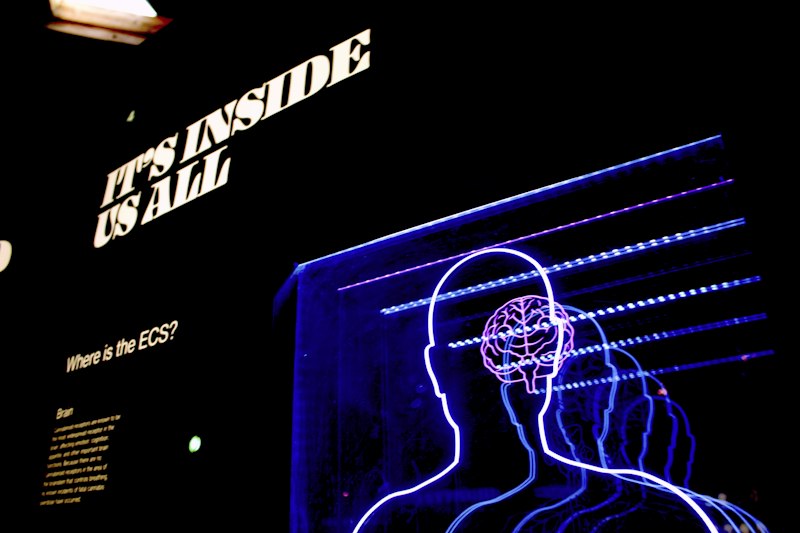
Social neuroscience is a dynamic and relatively young interdisciplinary field dedicated to understanding the intricate relationship between social processes and their underlying neural mechanisms. It represents a confluence of insights from traditional neuroscience, psychology, and sociology, aiming to unravel how the human brain and nervous system orchestrate and are influenced by social interactions. This field moves beyond studying individual cognitive processes in isolation, instead focusing on how our neural architecture facilitates complex social behaviors, from simple gaze following to elaborate group dynamics and emotional bonding. Its primary objective is to provide a comprehensive biological foundation for understanding the full spectrum of social phenomena, thereby bridging the gap between the mind, brain, and social environment.
The core tenet of social neuroscience posits that social behavior, far from being purely a product of environmental learning or conscious decision-making, is deeply rooted in specific neural circuits and biological predispositions. It investigates how our brains encode information about others, process social cues, regulate social emotions, and enable collective action. This involves exploring how our perceptions of others shape our own neural states and, conversely, how our internal neural states influence our engagement with the social world. By employing advanced methodologies, social neuroscience seeks to identify the specific brain regions, neural networks, and neurochemical processes that underpin our capacity for social connection, cooperation, conflict, and empathy.
This rapidly expanding field has significantly transformed the study of social behavior, offering unprecedented insights into its biological underpinnings. Early research in social neuroscience provided foundational understanding into how the brain processes various social cues, such as facial expressions, body language, and vocal intonations. It has begun to map the complex neural networks that are engaged during different forms of social interaction, from reciprocal communication to group decision-making. The pursuit of these insights not only enriches our theoretical understanding of human nature but also holds profound implications for addressing challenges in social functioning and psychological well-being across diverse populations.
Key Principles and Mechanisms
A fundamental principle guiding social neuroscience is the concept of a “social brain,” which refers to a set of interconnected brain regions specifically involved in social cognition and behavior. These regions are not necessarily exclusively dedicated to social tasks but are consistently recruited and interact in specific ways when individuals engage with social stimuli. Key mechanisms explored include the neural encoding of social information, such as recognizing faces and interpreting intentions, and the processes involved in perspective-taking and mentalizing, often referred to as Theory of Mind. Understanding these mechanisms is crucial for explaining how humans form impressions, predict others’ actions, and navigate complex social landscapes.
Advanced neuroimaging techniques, particularly functional magnetic resonance imaging (fMRI), have been instrumental in revealing the specific neural pathways that are activated when individuals perform social tasks. Studies have consistently pointed to the involvement of areas like the medial prefrontal cortex, temporoparietal junction, superior temporal sulcus, and anterior cingulate cortex in various aspects of social cognition. These findings suggest that while social processes are distributed across the brain, certain areas may indeed be specialized or preferentially engaged for specific social cognitive processes, such as distinguishing self from other, understanding social norms, or processing social rewards and punishments.
Furthermore, social neuroscience has significantly illuminated the neural mechanisms underlying social emotions, which are pivotal for human connection and group cohesion. Research has delved into the brain circuits responsible for experiencing and recognizing emotions like empathy, compassion, trust, and even more complex states such as attachment. For instance, studies on empathy often highlight the activation of brain regions associated with both personal emotional experience (e.g., insula, anterior cingulate cortex) and cognitive perspective-taking (e.g., temporoparietal junction), suggesting a dual-component neural basis for this crucial social emotion. The investigation of these neural underpinnings provides a more complete picture of how we form bonds, respond to others’ distress, and maintain cooperative relationships.
Emergence of Social Neuroscience
The formal emergence of social neuroscience as a distinct field can be traced back to the late 20th and early 21st centuries, a period characterized by significant technological advancements in brain imaging and a growing recognition within both cognitive neuroscience and social psychology of the need for a deeper biological understanding of social phenomena. Prior to this, social psychology primarily focused on environmental and cognitive explanations for behavior, while neuroscience often studied the brain in isolation from complex social contexts. The realization that the brain is fundamentally a social organ, constantly shaped by and responding to its social environment, provided the impetus for this integrative approach. Key figures like John Cacioppo and Gary Berntson are often credited with coining the term and championing the interdisciplinary dialogue that established the field.
This new discipline was born out of a desire to reconcile the insights from psychological theories of social behavior with the burgeoning knowledge of brain function. Researchers began to ask how phenomena like prejudice, cooperation, or social influence manifest at a neural level. The development of non-invasive brain imaging techniques, particularly fMRI, provided the crucial tools needed to observe brain activity in real-time as individuals engaged in social tasks. This technological leap allowed scientists to move beyond lesion studies or purely behavioral observations, offering a window into the dynamic neural processes underpinning human sociality. The convergence of these technological capabilities with theoretical questions from social psychology created fertile ground for a new scientific endeavor.
The historical context also includes a broader scientific movement towards interdisciplinary research. As fields matured, the limitations of disciplinary silos became apparent. Social neuroscience exemplified a commitment to breaking down these barriers, recognizing that a comprehensive understanding of human sociality requires integrating multiple levels of analysis—from genes and neurons to individual cognitions, interpersonal interactions, and cultural influences. This integrative perspective challenged existing paradigms and laid the groundwork for a more holistic and biologically informed understanding of social life.
Pioneering Research and Early Discoveries
Early pioneering research in social neuroscience often focused on identifying the basic neural substrates for fundamental social processes. One significant area of inquiry involved the study of face perception, recognizing that the ability to identify and interpret faces is paramount for social interaction. Early studies using fMRI identified regions like the fusiform face area as specialized for processing facial information, laying a groundwork for understanding the neural architecture dedicated to social recognition. This work highlighted how even seemingly simple social acts have dedicated neural machinery.
Another pivotal development was the discovery and investigation of mirror neurons. Initially identified in monkeys, these neurons fire both when an individual performs an action and when they observe another individual performing the same action. This discovery sparked immense interest in social neuroscience because it offered a potential neural mechanism for understanding others’ actions, intentions, and emotions, providing a biological basis for imitation, empathy, and social learning. While the exact role of mirror neurons in human social cognition remains a topic of ongoing debate, their discovery profoundly influenced the field’s trajectory.
The burgeoning field also saw extensive research into the neural underpinnings of Theory of Mind, the capacity to attribute mental states—beliefs, desires, intentions—to oneself and others. Investigations began to pinpoint specific brain regions, such as the temporoparietal junction and medial prefrontal cortex, as consistently active during tasks requiring mentalizing. These early discoveries were crucial because they provided empirical evidence for the brain’s role in complex social cognitive processes, moving beyond simple sensory processing to the sophisticated interpretation of others’ inner worlds. This early work firmly established social neuroscience as a legitimate and vital area of scientific inquiry.
Understanding Empathy: A Practical Illustration
To illustrate the practical application of social neuroscience, consider the phenomenon of empathy, which is our ability to understand and share the feelings of another. Imagine a friend tells you about a recent personal loss, expressing deep sadness and disappointment. Your immediate reaction is not just intellectual comprehension but often includes a vicarious experience of their emotional state – you might feel a pang of sadness yourself, or a strong desire to comfort them. This everyday scenario is a rich subject for social neuroscience, which seeks to explain how our brain enables this profound capacity for emotional connection.
From a social neuroscience perspective, this empathetic response involves a complex interplay of various neural systems. When your friend shares their experience, your brain processes not only the linguistic content of their words but also their facial expressions, vocal tone, and body language. These social cues activate specific brain regions associated with emotion processing and perspective-taking. For instance, the sounds of distress or the sight of a sad face can trigger activity in areas like the amygdala, involved in processing emotions, and the insula, which is crucial for interoception and feeling internal states.
Furthermore, your brain engages in a process of simulating or mirroring your friend’s emotional state. This “shared representation” hypothesis suggests that observing someone else’s emotion can activate similar neural pathways in the observer that would be active if the observer were experiencing that emotion firsthand. This is a key aspect of how empathy is thought to work at the neural level, moving beyond mere recognition of an emotion to an actual resonance with it. The ability to distinguish between your own feelings and those of your friend, while still experiencing a connection, also engages higher-order cognitive control mechanisms, highlighting the sophisticated nature of human empathy.
Neural Pathways in Action: The “How-To” of Empathy
When you hear your friend’s story and feel their sadness, social neuroscience research indicates a specific sequence of neural activation. First, sensory information (auditory and visual cues) is processed by the primary sensory cortices. This information then quickly propagates to regions involved in emotional processing, such as the amygdala, which flags the emotional significance of the input. Simultaneously, areas like the anterior insula and the anterior cingulate cortex (ACC), known for their roles in emotional awareness and pain processing, become active. These regions are thought to contribute to the subjective feeling component of empathy, allowing you to “feel” what your friend is experiencing.
Beyond the emotional resonance, cognitive components of empathy, such as perspective-taking, also come into play. Regions like the temporoparietal junction (TPJ) and the medial prefrontal cortex (mPFC) are crucial for mentalizing – inferring your friend’s beliefs, intentions, and emotional states. The TPJ, in particular, is implicated in distinguishing between self and other, allowing you to understand your friend’s perspective without fully conflating it with your own. Through these integrated neural processes, your brain constructs a nuanced understanding of your friend’s internal state, enabling an appropriate and supportive social response.
The “how-to” of empathy, therefore, involves a dynamic interplay between “bottom-up” emotional mirroring processes and “top-down” cognitive regulation. fMRI studies observing individuals during empathy-inducing tasks have consistently shown this pattern of activation. For example, when participants observe others in pain, brain areas associated with experiencing pain oneself (e.g., anterior insula, ACC) are often activated. This neural overlap provides a compelling biological explanation for how we can vicariously experience the emotions of others, forming the bedrock of compassionate social interaction and illustrating the power of social neuroscience in demystifying complex human experiences.
The Profound Importance of Social Neuroscience
The importance of social neuroscience to the broader field of psychology cannot be overstated. By providing a biological lens through which to examine social behavior, it fundamentally enriches our understanding of human nature. Traditionally, psychology has often grappled with the “nature versus nurture” debate, but social neuroscience offers a compelling framework for understanding how biological predispositions and environmental factors intricately interact to shape our social lives. It moves beyond simply describing social phenomena to explaining the underlying mechanisms, offering a more complete and integrated picture of the human mind and its place in the social world.
This field is crucial because it helps to bridge the explanatory gap between the microscopic world of neurons and the macroscopic world of human social interaction. It allows researchers to investigate how neural processes give rise to complex social cognitions and emotions, and conversely, how social experiences can alter brain structure and function. This bidirectional influence is a cornerstone of the social neuroscience perspective, highlighting the plasticity of the social brain and its continuous adaptation to its environment. Understanding this interplay is essential for developing comprehensive theories of social development, behavior, and pathology.
Furthermore, social neuroscience provides empirical support for many long-standing psychological theories, while also challenging and refining others. For instance, it offers tangible evidence for the neural systems involved in phenomena like social learning, group identification, and moral decision-making, which were previously studied primarily through behavioral observations or self-report. By providing objective measures of brain activity, it lends a new level of rigor and precision to the study of social phenomena, fostering a deeper, more mechanistic comprehension of why we behave the way we do in social contexts.
Real-World Applications and Therapeutic Potential
The insights gleaned from social neuroscience have profound real-world applications across various domains, extending far beyond the confines of academic research. In clinical settings, this understanding is vital for diagnosing and developing interventions for conditions characterized by impaired social functioning, such as autism spectrum disorder, schizophrenia, and even personality disorders like psychopathy. By identifying the specific neural deficits or atypical activations associated with these conditions, researchers can design more targeted therapies aimed at improving social communication, emotion recognition, and empathy. For example, neurofeedback training informed by social neuroscience findings could potentially help individuals regulate brain activity in social processing regions.
Beyond clinical applications, social neuroscience has implications for education, marketing, and even legal systems. In education, understanding the neural basis of social learning and cooperation can inform the design of more effective collaborative learning environments. In marketing, insights into how the brain processes social influence and trust can lead to more ethically informed and effective communication strategies. Moreover, the field contributes to our understanding of moral decision-making and social justice, offering perspectives on how brain mechanisms might influence biases, group cohesion, and responses to fairness, which could eventually inform public policy and legal frameworks.
Ultimately, one of the most significant impacts of social neuroscience lies in its potential to inform interventions that enhance psychological well-being and foster healthier social interactions. By elucidating the neural basis of emotions like compassion and attachment, it opens avenues for developing programs that cultivate these positive social traits. Understanding the neural mechanisms of social stress and resilience can lead to better stress management techniques and interventions to prevent social isolation. This knowledge empowers us to create environments and therapeutic approaches that are more attuned to our fundamental social nature, ultimately leading to a more connected and empathetic society.
Interdisciplinary Links and Related Concepts
Social neuroscience, by its very nature, is deeply intertwined with numerous other psychological and neuroscientific disciplines. It draws heavily from social psychology, adopting its theoretical frameworks and experimental paradigms to investigate social phenomena at the neural level. Similarly, it shares methodologies and core principles with cognitive neuroscience, particularly in its use of neuroimaging techniques to map brain activity during mental processes, though social neuroscience specifically applies these to social cognition. This synergy allows for a richer, multi-layered understanding of human experience.
Furthermore, social neuroscience has strong connections with affective neuroscience, which focuses on the neural mechanisms of emotion. Given that emotions are fundamental to social interaction, understanding how the brain processes and regulates affect is critical for social neuroscience’s goals, especially concerning concepts like empathy, moral judgment, and social bonding. It also intersects with developmental psychology, as researchers investigate how the social brain develops from infancy through adulthood, and how early social experiences shape neural architecture and subsequent social behavior.
Other related fields include neuroeconomics, which examines the neural basis of decision-making in economic and social contexts; cultural neuroscience, which explores how cultural values and practices influence brain function and vice versa; and moral psychology, which investigates the neural and psychological underpinnings of moral judgment and behavior. These connections highlight social neuroscience’s role as a central hub, synthesizing knowledge from diverse areas to construct a more integrated understanding of the human condition, emphasizing the social brain’s pervasive influence on nearly every aspect of our lives.
Social Neuroscience’s Place in Psychology
Within the broader landscape of psychology, social neuroscience occupies a crucial and increasingly prominent position, often considered a subfield that bridges biological psychology and social psychology. It serves as a powerful testament to the modern trend of psychological science moving towards more mechanistic and biologically informed explanations of behavior. It challenges the historical separation of mind and body, demonstrating unequivocally that social experiences are not merely abstract psychological events but are deeply embodied and instantiated within the brain.
This field acts as a unifying discipline, offering a common language and set of tools for researchers across different specializations to investigate social phenomena. It allows for the integration of data from various levels of analysis—from genetic predispositions and neurochemical processes to individual cognitive biases and group dynamics. By providing empirical evidence for the biological roots of our social nature, social neuroscience enriches psychological theories, making them more robust and explanatory. Its multidisciplinary approach also fosters collaboration and innovation, pushing the boundaries of what is possible in psychological research.
In conclusion, social neuroscience represents an exciting frontier in scientific inquiry, poised to continue revolutionizing our understanding of social behavior. By meticulously exploring the neural pathways that underpin social interaction, researchers are progressively unraveling the profound mysteries of the social brain. The insights gained from this burgeoning field promise to yield increasingly important contributions to our comprehension of the complex interplay between biology and environment in shaping human sociality, with significant implications for psychological health, well-being, and the fabric of society itself. As research progresses, we can anticipate a deeper, more nuanced appreciation of how our brains are inherently designed for connection and social engagement.