Somatosensory Cortex: Mapping Your Physical Reality
Scientifically Reviewed · Dr. Marwa Abd-Alazim · August 20, 2026
Review Criteria & Clinical Standards
This content undergoes rigorous scientific peer-review and medical editorial standards at Arab Psychology Network to ensure clinical accuracy, validity, and compliance with evidence-based guidelines from leading psychological and healthcare authorities (APA / WHO).
The Core Definition and Location
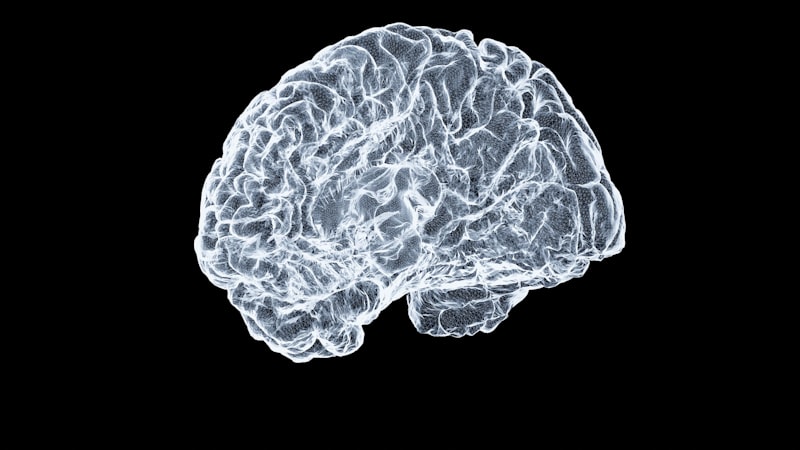
The somatosensory area, often referred to as the somatic sensory system, constitutes the complex network of neural structures responsible for processing sensory information originating from the body itself. This system is crucial for enabling an organism to perceive physical interactions with the environment, covering sensations such as touch, temperature, pressure, vibration, pain, and proprioception (the sense of body position and movement). The foundation of this system lies within the cerebral cortex, specifically in the postcentral gyrus, which serves as the primary receiving station for tactile and position-related signals.
Functionally, the somatosensory area receives highly organized input that has traveled through ascending pathways from peripheral receptors distributed throughout the skin, muscles, and joints. This input is relayed through the brainstem and the thalamus before finally terminating in the cortex. The simple one-sentence definition of this area is that it is the region of the brain that translates physical stimuli on the body’s surface into conscious sensation and awareness of the body’s spatial orientation. Without this intricate processing area, an individual would be unable to distinguish between a gentle breeze and a sharp pinprick, nor would they be able to maintain balance or execute coordinated motor tasks without visual feedback.
The key organizational principle of the somatosensory area is its topographic representation, meaning that specific points on the body map directly to specific areas of the cortex. The primary somatosensory cortex (S1) is anatomically located in the anterior part of the parietal lobe, immediately behind the central sulcus—the deep groove separating the frontal and parietal lobes. This precise mapping allows for immediate localization and interpretation of stimuli, serving as a critical gateway between the external physical world and our internal conscious experience.
Anatomy and Functional Organization
The somatosensory cortex is subdivided into several distinct areas, designated as Brodmann areas 3a, 3b, 1, and 2, which together form the Primary Somatosensory Cortex (S1). Each of these sub-regions specializes in processing slightly different sensory modalities. For instance, area 3b is considered the main recipient of general cutaneous inputs (touch and pressure), while area 3a receives input mainly from muscle stretch receptors, vital for proprioception. Areas 1 and 2 further process and integrate these inputs, creating a more complex understanding of the stimulus, such as texture and shape.
The most striking feature of the S1 organization is the distorted representation of the body known as the sensory homunculus (Latin for “little man”). This schematic illustration demonstrates that the amount of cortical tissue dedicated to a particular body part is not proportional to its physical size, but rather to the density of sensory receptors and the importance of fine discriminatory ability in that area. Consequently, the hands, lips, tongue, and face occupy vastly larger areas of the somatosensory cortex compared to the back or the torso. This differential allocation of neural space underscores the evolutionary importance of fine motor skills and tactile exploration.
Beyond the primary area, the Secondary Somatosensory Cortex (S2) is involved in higher-level processing, including the recognition of objects through touch (stereognosis) and linking sensory information with memory and emotion. S2, located inferior to S1, also plays a crucial role in pain processing and integrating information from both sides of the body, allowing for a holistic and bilateral perception of touch. The functional organization of these areas is columnar, meaning that neurons within a vertical column through the cortical layers respond to the same specific type of peripheral stimulus, ensuring highly specific and segregated processing pathways for different sensory qualities.
Historical Discovery and Mapping
The understanding of the localized function of the somatosensory cortex developed primarily in the 20th century, building upon earlier theories of brain localization. A critical methodology employed in mapping this area was the use of evoked potentials and direct electrical stimulation. Evoked potentials are electrical signals generated by the nervous system in response to sensory stimulation, which can be recorded and mapped to reveal corresponding points in the cortex that react to specific body touches. This technique confirmed the existence of precise somatotopic mapping.
The pioneering work of neurosurgeon Wilder Penfield, often in collaboration with Herbert Jasper and Theodore Rasmussen in the 1930s through the 1950s, was instrumental in developing the detailed map of the human cortex. During brain surgery, often performed while the patient was conscious under local anesthesia to avoid damaging critical areas, Penfield applied weak electrical currents to the cortical surface. When stimulating the postcentral gyrus, patients reported feeling sensations—tingling, numbness, or pressure—in specific, corresponding body parts. These systematic observations allowed Penfield and Rasmussen to meticulously chart the sensory homunculus, demonstrating definitively the topographical organization of S1.
Prior to Penfield’s functional mapping, the anatomical foundation was laid by researchers like Korbinian Brodmann, who classified the cortex based on its cellular structure (cytoarchitecture). Brodmann’s areas 1, 2, 3a, and 3b provided the anatomical framework that later functional studies would validate, cementing the concept that the complexity of the cortex is organized both structurally and functionally into specialized units. This historical context highlights the shift from generalized theories of brain function to highly specific, empirically validated localization models.
The Mechanism of Sensation
The journey of a sensory signal, such as the touch of a feather, begins at specialized receptors in the skin or deep tissues. These receptors transduce the physical energy (mechanical, thermal, or chemical) into electrochemical signals. These signals travel along peripheral nerves and enter the spinal cord. Depending on the type of sensation, the signal follows one of two primary ascending pathways: the Dorsal Column-Medial Lemniscal (DCML) pathway, which primarily carries information about fine touch, vibration, and proprioception; or the Spinothalamic Tract (STT), which transmits signals related to pain, temperature, and crude touch.
Both pathways eventually converge on the thalamus, often described as the brain’s relay station. The thalamus filters and processes this incoming information before sending projections directly to the primary somatosensory cortex (S1). This thalamic relay ensures that the information arriving at the cortex is already highly organized and segregated according to the quality and location of the stimulus. The fidelity of this signal transmission is paramount for accurate perception.
Upon reaching S1, the neural impulses activate specific columns of neurons corresponding to the body area stimulated. The intensity of the sensation is encoded by the frequency of the firing neurons, while the quality is encoded by which specific neurons (e.g., those specializing in pressure versus vibration) are activated. This complex, hierarchical processing system ensures not only that we feel a stimulus, but that we immediately know precisely where it occurred, what its characteristics are, and whether it requires a behavioral response.
Practical Application: Understanding Phantom Limb Syndrome
A powerful real-world illustration of the somatosensory cortex’s functioning, and its plasticity, is the phenomenon of phantom limb syndrome (PLS). PLS occurs when individuals who have undergone amputation continue to experience sensations, often painful or uncomfortable, seemingly originating from the missing limb. This scenario demonstrates that sensation is not purely peripheral; it is fundamentally a cortical phenomenon, determined by the activity within the brain’s map.
The “How-To” of this psychological principle involves cortical reorganization. When a limb is removed, the sensory input to the corresponding cortical area ceases. However, the neural territory in the sensory homunculus remains. Over time, neighboring cortical areas—such as the representation of the face or the shoulder, which are often immediately adjacent to the limb representation—begin to invade and take over the now-silent territory. For example, if the hand area is invaded by the face area, touching the patient’s cheek might cause them to feel a distinct sensation in their missing hand.
Therapies for PLS, such as mirror box therapy, leverage this understanding of cortical mapping and reorganization. By tricking the visual system into believing the missing limb is still present and functioning, therapists attempt to provide visual feedback that contradicts the maladaptive sensory reorganization in the somatosensory cortex. This therapeutic approach highlights that the somatosensory map is not static but is constantly undergoing plastic changes based on input and experience, making it a dynamic target for psychological and neurological intervention.
Significance in Clinical Psychology and Neuroscience
The somatosensory system holds immense significance across clinical psychology, rehabilitation, and fundamental neuroscience. In clinical settings, understanding the topographical map and its potential for reorganization is essential for treating chronic pain conditions. Chronic pain is often characterized not just by ongoing peripheral irritation, but by maladaptive central sensitization and structural reorganization within S1 and S2, leading to exaggerated pain perception or allodynia (pain caused by a non-painful stimulus).
Furthermore, the detailed knowledge of S1 is critical in stroke rehabilitation. When stroke damages parts of the somatosensory cortex, patients experience sensory deficits, which profoundly impair their motor function, even if the primary motor cortex (M1) is intact, because sensation is necessary for guided movement. Rehabilitation protocols now often focus on sensory retraining and stimulation, using neuroplasticity principles to encourage the recruitment of intact cortical regions to take over the function of the damaged area.
In modern neuroscience, the somatosensory cortex is central to the development of advanced neuroprosthetics and Brain-Computer Interfaces (BCIs). Researchers are actively working on systems that can not only interpret motor intent from the motor cortex but also provide realistic, tactile feedback directly to S1, allowing prosthetic limb users to “feel” what they touch. This application transforms prosthetics from mere tools into extensions of the body, relying entirely on the precision and organization of the somatosensory map.
Connections to Related Neural Systems
The somatosensory cortex does not operate in isolation; it is deeply intertwined with several other neural systems, most notably the motor system. The S1 is positioned immediately posterior to the Primary Motor Cortex (M1, located in the precentral gyrus). Together, S1 and M1 form the sensorimotor system, illustrating that sensory perception and motor action are intrinsically linked—we sense in order to move, and our movements generate new sensory feedback.
Key concepts related to the somatosensory system include proprioception and Nociception. Proprioception refers to the body’s non-visual sense of movement and position, crucial for coordination and balance, with its signals heavily processed in S1. Nociception is the neural process of encoding and processing noxious (potentially harmful) stimuli, which leads to the sensation of pain. While the initial processing of pain occurs via the spinothalamic tract and S1, the emotional and cognitive components of pain perception are integrated in broader areas, including the anterior cingulate cortex and the insula.
The study of the somatosensory system belongs broadly to the subfield of Biological Psychology and Cognitive Neuroscience. It provides a fundamental model for understanding how the brain represents the physical body and interacts with the external world. By examining how peripheral input is centrally mapped, integrated, and interpreted, researchers gain insight into essential cognitive processes, including spatial awareness, body schema, and the neural basis of consciousness itself.