Space Perception: How Your Brain Maps Reality
Scientifically Reviewed · Dr. Marwa Abd-Alazim · August 31, 2026
Review Criteria & Clinical Standards
This content undergoes rigorous scientific peer-review and medical editorial standards at Arab Psychology Network to ensure clinical accuracy, validity, and compliance with evidence-based guidelines from leading psychological and healthcare authorities (APA / WHO).
Introduction and Definition of Space Perception
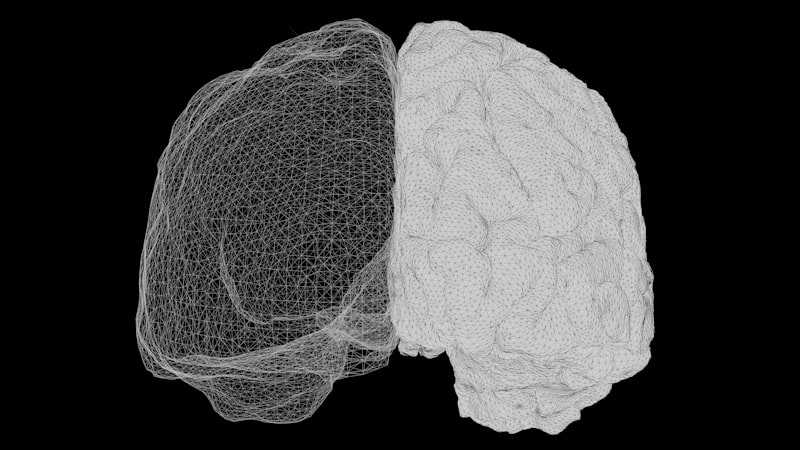
Space perception constitutes the complex psychological and physiological process by which organisms gain an awareness of the three-dimensional characteristics of their environment based on sensory input. This fundamental cognitive ability allows for the accurate judgment of the location, distance, dimensions, and orientation of objects relative to the self and to one another. At its core, space perception involves the brain’s incredible capacity to transform the often-ambiguous two-dimensional data received by the sensory receptors, particularly the retina, into a stable, navigable, and meaningful representation of the world. It is not merely the registration of light or sound waves, but the active construction of a spatial model essential for planning movements, navigating complex environments, and interacting effectively with physical objects.
The definition extends beyond simple awareness, encompassing the integration of diverse sensory modalities. While visual input provides the richest array of cues for distance and depth estimation, space perception relies heavily on auditory information (localization of sound sources), somatosensory input (proprioception and touch), and vestibular feedback (sense of balance and head orientation). This integration ensures robustness; if one sense is compromised, the others can often compensate to maintain a coherent spatial map. Therefore, the study of space perception delves into how these disparate sensory streams are unified within the central nervous system to establish both an egocentric framework (space defined relative to the observer’s body) and an allocentric framework (space defined relative to external landmarks).
Historically, the understanding of how humans perceive space has been divided between nativist and empiricist views. Nativists, such as Immanuel Kant, suggested that spatial concepts like depth and causality are innate structures of the mind, present from birth. Conversely, empiricists, notably George Berkeley, argued that the perception of space, particularly distance, must be learned through experience, association, and correlation of visual input with motor actions, such as reaching or walking. Modern psychology acknowledges a synthesis of these positions, recognizing that while certain basic sensory capacities are innate, the sophisticated calibration and utilization of complex depth cues are refined and solidified through active interaction with the environment during early development, emphasizing the plasticity of the spatial processing system.
The Role of Sensory Input: Monocular Cues
Monocular cues are the powerful set of visual indicators available to a single eye that allow the observer to infer depth and dimension, effectively translating the flat retinal image into three-dimensional space. These cues are often referred to as pictorial cues because they are the same methods utilized by artists to create illusions of depth on a two-dimensional canvas. These static cues operate based on geometric principles, light and shadow, and the learned correlation between an object’s appearance and its inferred distance. Understanding these cues is crucial because they function effectively at distances where binocular cues, which rely on the slight difference between two retinal images, become negligible.
Several key pictorial cues are essential for monocular depth judgment. **Linear perspective** relies on the observation that parallel lines, such as railroad tracks, appear to converge at a vanishing point on the horizon; the greater the convergence, the greater the perceived distance. **Relative size** allows for distance estimation based on the assumption that objects of a similar class (e.g., cars or people) maintain a consistent size; thus, an object casting a smaller retinal image is perceived as being further away. Similarly, **texture gradient** shows that surfaces composed of uniformly spaced elements appear denser and finer as distance increases. Furthermore, **interposition**, or occlusion, is a powerful cue where one object partially blocking the view of another is necessarily perceived as being closer.
In addition to these static, pictorial cues, monocular space perception utilizes cues based on motion. **Motion parallax** is perhaps the most critical dynamic monocular cue, arising from the observer’s movement. When the viewer moves their head or body, closer objects appear to move rapidly across the visual field in the opposite direction of movement, whereas distant objects appear to move slowly or remain stationary. This differential speed of image movement across the retina provides instantaneous and precise information about the relative depth of multiple objects in the scene. Furthermore, the non-pictorial cue of **aerial perspective** contributes to perception over very long distances, where atmospheric scattering causes distant objects to appear hazier, bluer, and less saturated than nearby objects, signaling increased distance.
Binocular Vision and Depth Perception
While monocular cues provide rich information, the most powerful and reliable cue for fine-grained depth perception, particularly within close proximity, is derived from **binocular vision**. This ability, known as stereopsis, leverages the fact that because the two eyes are horizontally separated by approximately 6.5 centimeters, each eye receives a slightly different view of the world. This slight discrepancy between the retinal images is termed **binocular disparity**, and it is this disparity that the visual cortex processes to generate the vivid, three-dimensional perception of depth. Stereopsis is vital for tasks requiring precise spatial manipulation, such as threading a needle or catching a ball.
The neurophysiological processing of binocular disparity occurs primarily in the primary visual cortex (V1) and subsequent visual areas. Specialized neurons, known as disparity detectors, are tuned to respond selectively to specific degrees of disparity, corresponding to particular distances in space. The process requires successful **binocular fusion**, where the brain merges the two slightly different images into a single, coherent percept. Points in space that fall upon corresponding points on the two retinas—those that would have zero disparity—lie on an imaginary curved surface called the **horopter**. Objects closer than the horopter exhibit crossed disparity, and objects farther away exhibit uncrossed disparity, providing the brain with the continuous depth map necessary for stereoscopic vision.
Beyond retinal image disparity, two other important binocular cues contribute to space perception, although they are based on muscular feedback rather than retinal images. The first is **convergence**, which refers to the inward turning of the eyes required to keep an object focused on the fovea of both eyes. The muscular effort involved in convergence provides proprioceptive input to the brain; the greater the convergence required, the closer the object is inferred to be. The second cue is **accommodation**, the process by which the ciliary muscles change the shape of the lens to keep objects focused. Although technically a monocular process, the muscular tension involved provides a feedback cue that is often integrated with convergence, particularly for objects within arm’s reach, thereby contributing to the overall estimation of proximity.
Physiological Mechanisms of Spatial Processing
The perception of space is orchestrated by highly specialized neural circuits within the brain, primarily involving the visual cortex and the parietal lobe. Visual information, after initial processing in the primary visual cortex (V1), is segregated into two major functional pathways: the Ventral Stream (the “What” pathway), which is responsible for object recognition and identification, and the Dorsal Stream (the “Where/How” pathway), which is fundamentally dedicated to space perception, spatial localization, motion detection, and the visual control of action. Damage to the dorsal stream often results in profound spatial deficits, while object recognition remains relatively intact, underscoring its pivotal role in spatial awareness.
The **posterior parietal cortex (PPC)** serves as a critical nexus for spatial integration. This area receives input not only from visual processing centers but also from the vestibular system (responsible for balance and head orientation) and the somatosensory system (body position and touch). The PPC uses this multisensory information to construct and maintain dynamic maps of space, crucial for orienting the body and directing movements. Neurons in the PPC often have receptive fields that are anchored to the observer’s body (egocentric reference frames), allowing the brain to compute the location of objects relative to the head, eyes, or hands, which is essential for accurate reaching and grasping.
Furthermore, the hippocampal formation, particularly the hippocampus and associated entorhinal cortex, is essential for higher-order spatial cognition, specifically the formation of mental maps necessary for large-scale navigation. Within this system, specialized cells encode spatial location: **place cells** fire when an animal is in a specific location in the environment; **grid cells**, found in the entorhinal cortex, fire at the vertices of an imagined hexagonal grid covering the environment, providing a metric for spatial distance; and **head-direction cells** maintain an internal compass, firing only when the head is pointed in a specific direction. These interconnected systems work together to create a robust, enduring representation of **allocentric space**, allowing us to navigate effectively even when landmark visibility is compromised.
Perceptual Constancies and Spatial Stability
A key challenge for the brain in processing space is maintaining a stable and consistent perception of objects despite continuous changes in sensory input caused by the observer’s movement or changes in viewing conditions. This stability is achieved through **perceptual constancies**, cognitive mechanisms that compensate for shifts in the retinal image. Two crucial spatial constancies are size constancy and shape constancy. **Size constancy** ensures that we perceive an object’s true size as invariant, irrespective of its distance. Although a distant object projects a much smaller image onto the retina, the brain automatically compensates by factoring in the perceived distance, often using cues like linear perspective or texture gradients, to scale the object’s perceived size appropriately.
Similarly, **shape constancy** allows us to recognize that an object retains its actual shape even when viewed from different angles that cause radical changes in its projected retinal image. For instance, a rectangular door is always perceived as a rectangle, even when viewed obliquely, where its retinal projection is trapezoidal. The maintenance of these constancies highlights the interpretive nature of space perception; the brain does not passively receive data but actively constructs a stable reality based on learned rules and contextual information, ensuring that the world does not appear to shrink or distort as we move through it.
Another critical aspect of spatial stability involves compensating for self-motion. When the eyes move (saccades), the retinal image shifts rapidly, yet we perceive the world as stationary. The brain solves this problem through a mechanism involving **corollary discharge** or efference copy. When the motor system initiates an eye movement, a copy of that motor command is simultaneously sent to the visual processing centers. This command allows the sensory system to anticipate the resulting image shift and subtract it from the expected visual input. This internal compensation mechanism ensures that movement in the visual field is attributed correctly—either to movement of the external environment or to movement of the observer’s own body—thereby preserving the perceived stability of external space.
Developmental Aspects of Space Perception
The ability to perceive space is not fully formed at birth but develops through a dynamic interplay between innate capacities and environmental experience. Infants initially possess basic visual tracking and some innate preferences for high-contrast stimuli, but their ability to use complex depth cues emerges gradually. **Monocular cues**, such as motion parallax, are often functional earlier in infancy than binocular cues, as they do not require the precise coordination of two eyes. The visual system undergoes rapid maturation, and by about three to five months, infants typically show evidence of responding to pictorial depth cues, suggesting that the initial calibration phase is underway.
The development of **stereopsis**, the hallmark of binocular depth perception, occurs relatively suddenly, usually between three and five months of age, following the establishment of cortical connectivity necessary to fuse the disparate retinal images. Crucially, the refinement of space perception is heavily dependent on **active engagement** with the environment. Research suggests that the onset of self-locomotion, such as crawling, marks a significant milestone. As infants begin to move independently, they gain new visual feedback and motor experiences that calibrate their spatial judgments, particularly regarding the steepness of slopes and the traversability of gaps, providing a critical empirical foundation for their spatial understanding.
Beyond infancy, the capacity for sophisticated spatial mapping and reasoning continues to mature. Children progress from relying primarily on egocentric spatial representations (e.g., “The toy is to my left”) to developing robust **allocentric** maps (e.g., “The library is north of the school”), essential for long-term navigation and memory. Cognitive abilities like mental rotation and visualizing spatial transformations improve throughout childhood and adolescence, paralleling the maturation of the prefrontal and parietal cortices. This developmental trajectory underscores the importance of a sensitive period early in life during which the visual system must receive appropriate, coordinated input from both eyes to establish the foundation for accurate, complex space perception.
Clinical Relevance and Disorders
Disruptions to the neural pathways responsible for space perception can lead to a variety of debilitating clinical conditions, providing critical insight into the system’s normal functioning. One of the most dramatic examples is **visual spatial neglect** (or hemispatial neglect), typically resulting from damage to the posterior parietal lobe (most commonly the right hemisphere). Patients with neglect fail to attend to, or even acknowledge, stimuli presented on the contralesional side of space, often behaving as if that half of the world does not exist, despite having intact primary vision. This condition demonstrates that spatial awareness is actively constructed and relies on dedicated attention and integration circuits.
Disorders affecting binocular coordination directly impair stereopsis. Conditions such as **strabismus** (misalignment of the eyes) or **amblyopia** (lazy eye) prevent the brain from fusing the two retinal images correctly. If uncorrected during the critical developmental period, the brain often suppresses the input from the weaker eye, leading to **stereoblindness**—a lifelong inability to perceive depth through binocular disparity, forcing the individual to rely exclusively on less precise monocular cues. The severity of the deficit highlights the delicate balance required for binocular integration and the non-recoverable nature of this ability if the neural connections are not properly established early in life.
Understanding the intricacies of space perception is also highly relevant in contemporary applications like **virtual reality (VR)** and **augmented reality (AR)**. For these technologies to create compelling, immersive experiences, they must accurately simulate the full spectrum of spatial cues—monocular, binocular, and motion-based. Failures in simulating these cues accurately, such as discrepancies between visual motion and vestibular feedback, can lead to spatial confusion, disorientation, and common symptoms like simulator sickness. Therefore, research into human spatial processing informs the engineering requirements necessary to create seamless and physiologically comfortable virtual environments, ensuring that the constructed space aligns harmoniously with the brain’s inherent mechanisms for spatial awareness and navigation.