SSDR: Why Your Survival Brain Takes Control
Scientifically Reviewed · Dr. Marwa Abd-Alazim · August 25, 2026
Review Criteria & Clinical Standards
This content undergoes rigorous scientific peer-review and medical editorial standards at Arab Psychology Network to ensure clinical accuracy, validity, and compliance with evidence-based guidelines from leading psychological and healthcare authorities (APA / WHO).
SPECIES-SPECIFIC DEFENSE REACTION (SSDR): An Overview
The concept of the Species-Specific Defense Reaction (SSDR) describes a set of innate, highly conserved behavioral responses elicited by an organism when confronted with immediate or perceived threat, particularly when other, previously learned coping mechanisms are unavailable or ineffective. This reaction represents an evolutionarily derived bias that dictates the organism’s automatic response profile to adverse stimuli. Crucially, the presence of these pre-programmed behaviors holds profound implications for how an organism learns to escape or avoid danger through subsequent conditioning processes. The definition highlights that SSDRs manifest primarily as a defense strategy against noxious stimuli, specifically when the learned response repertoire, or the presence of a protective conspecific, is absent, forcing the reliance on the genetic blueprint for survival. This framework shifts the understanding of learning from a purely blank-slate perspective to one acknowledging significant biological constraints and preparedness.
Understanding the SSDR is essential for appreciating the limits and efficiencies of operant conditioning, particularly concerning avoidance learning. These innate responses are not random; they are adaptive behaviors honed by natural selection over millennia, ensuring the highest probability of survival in ancestral environments. When an organism encounters an aversive stimulus, such as a predator cue or pain stimulus, the immediate, unconditioned response is an SSDR—be it freezing, fleeing, or aggressive display. The intensity and type of the SSDR are highly dependent on the ecological niche and physiological structure of the species in question. For example, a gazelle’s SSDR is dominated by flight, whereas a tortoise’s SSDR often involves immediate withdrawal and passive defense. This fundamental, unlearned readiness to react forms the baseline upon which all subsequent attempts at conditioned escape behavior must be built.
The influence of SSDRs is particularly evident in the field of experimental psychology, where researchers have observed marked differences in the ease with which animals acquire various escape behaviors. If the required instrumental response (e.g., pressing a lever to turn off a shock) conflicts dramatically with the organism’s SSDR (e.g., freezing or fleeing in place), the rate of learning is dramatically impaired, sometimes rendering the behavior virtually unlearnable. Conversely, if the required escape response closely resembles or utilizes the SSDR (e.g., running from one side of a chamber to another), learning is instantaneous and robust. Therefore, the SSDR does not merely represent a reaction; it acts as a powerful determinant of the organism’s overall capacity for flexible, survival-oriented learning, establishing a crucial boundary between innate instinct and acquired behavior.
Theoretical Foundations and Historical Context
The development of the SSDR concept emerged largely as a critique and refinement of traditional, radical behaviorism, which posited that all behaviors were equally conditionable given the appropriate reinforcement schedule. Early twentieth-century learning theories, such as those championed by B.F. Skinner, emphasized environmental control and reinforcement contingencies, viewing the organism’s biological makeup as largely irrelevant to the acquisition of new responses. However, researchers began noticing significant anomalies in laboratory settings, particularly in avoidance learning paradigms. It became clear that certain stimulus-response pairings were learned with extreme difficulty, while others were acquired almost immediately, defying the equal-associability principle central to general process learning theory. This observational gap necessitated a theoretical construct that accounted for internal, biological predispositions that constrained external learning.
The formalization of the SSDR concept is often attributed to researchers like Robert Bolles in the late 1960s and early 1970s, who argued that instrumental learning, particularly avoidance, is not arbitrary but is fundamentally constrained by the animal’s innate survival repertoire. Bolles proposed that when an animal is placed in an aversive situation, it does not initially generate random behaviors; rather, it cycles through a small, fixed set of species-specific defensive behaviors. These behaviors (the SSDRs) are highly resistant to modification because they have high evolutionary utility. Any successful avoidance response learned by the animal must either be an SSDR itself or a behavior that is easily integrated into the existing SSDR framework. This theoretical shift moved psychology away from a purely environmentalist perspective toward an ethological and cognitive understanding of learning, emphasizing the importance of biological preparedness.
The introduction of SSDRs paved the way for more sophisticated models of learning that acknowledged the interaction between phylogeny (evolutionary history) and ontogeny (individual development). It provided a compelling explanation for phenomena such as preparedness, where certain fears (like snakes or spiders) are acquired much faster and are more resistant to extinction than non-prepared fears (like flowers or electrical outlets). The SSDR framework demonstrated that the defensive system operates under a principle of efficiency: when faced with a threat, the organism defaults to the quickest, most reliable, genetically encoded action rather than expending time and energy attempting to learn a novel, potentially fatal, instrumental response. This historical shift integrated evolutionary biology directly into the study of learning, providing a richer, more ecological valid understanding of behavior acquisition.
The Role of Innate Preparedness
Innate preparedness is the mechanism by which SSDRs exert their powerful influence on learning. This principle suggests that organisms are not born as blank slates but possess a genetic predisposition to form certain associations quickly and effortlessly, particularly those related to survival and defense. Preparedness ensures that the behavioral repertoire required for immediate survival is readily accessible and minimally reliant on trial-and-error learning, which is often too slow when facing acute threats. The defense reactions codified as SSDRs are, by definition, prepared responses; they are highly salient to the organism and automatically linked to the perception of danger. These reactions are triggered rapidly by specific cues (e.g., sudden movement, loud noises, chemical alarm signals) that historically predicted danger for that species.
Preparedness manifests as a fundamental bias in the associative learning process. When an animal attempts to learn an escape behavior, the success rate hinges on the congruence between the required instrumental response and the existing SSDR. If the task requires a behavior that is biologically incompatible with the innate defense reaction—for example, requiring a rat to stand motionless and press a lever when its innate SSDR is rapid freezing or frantic escape—the preparedness factor works against learning. The innate tendency to freeze or flee is so powerful that it actively interferes with the execution of the required arbitrary response. This interference effect highlights that preparedness is not merely a passive advantage for certain associations, but an active constraint that suppresses non-adaptive behaviors during moments of high stress.
Furthermore, preparedness explains why behaviors that utilize the SSDR are learned so rapidly, often in a single trial. For instance, if the required escape response involves running away from the shock source (fleeing), which is a powerful SSDR, the animal exhibits almost immediate learning. This rapid acquisition suggests that the neural pathways connecting the danger stimulus to the SSDR are already functionally wired, requiring minimal modification or associative strength formation. This biological readiness ensures that resources are not wasted on learning inefficient strategies. Therefore, preparedness serves as the evolutionary filter, ensuring that SSDRs remain the dominant, default behaviors in threatening situations, thereby shaping the entire landscape of defensive learning across the lifespan of the organism.
Behavioral Manifestations of SSDRs
SSDRs are typically categorized into a finite set of behavioral strategies, each designed to maximize survival chances against different types of threats. The primary manifestations universally observed across many mammalian and avian species include freezing, fleeing (flight), and fighting (aggression). The specific manifestation chosen is often context-dependent, relying on factors such as the distance to the threat, the perceived chance of escape, and the presence of cover. For instance, freezing is highly advantageous when the threat is distant or relies on movement detection, rendering the animal cryptically invisible. Freezing involves complete immobility, a reduction in heart rate (bradycardia), and tense musculature, preparing the animal for a rapid transition to flight or fight if the threat intensifies or comes closer.
Fleeing, or active avoidance, is engaged when the animal perceives an escape route and the immediate danger is close enough to warrant rapid movement. This SSDR is characterized by high sympathetic nervous system activation, including rapid heart rate (tachycardia) and a frantic burst of locomotion designed to increase the distance between the organism and the threat. In laboratory settings, requiring an animal to flee a shock area is highly compatible with the SSDR, leading to rapid conditioning. Conversely, fighting, or aggressive defense, is typically a last resort, employed when the threat is inescapable and the animal is cornered. This response involves defensive posturing, vocalizations, and direct physical confrontation, aimed at deterring or injuring the attacker, thereby facilitating a momentary escape opportunity.
Beyond these core reactions, certain species exhibit specialized SSDRs highly adapted to their specific ecological niches. A classic example is the defensive burying behavior observed in rodents, particularly rats. When a rat receives a shock from an object (e.g., a probe in the cage), its SSDR often involves rapidly displacing bedding material or substrate towards the source of the shock, effectively neutralizing the threat by burying it. This is a highly prepared response, learned far more quickly than arbitrary escape responses like lever pressing. Similarly, some species engage in tonic immobility (playing dead), a response that can deter predators who prefer live prey. These diverse manifestations underscore the evolutionary flexibility of the defensive system while maintaining the core principle: the response is innate, highly reliable, and prioritized over learned behaviors in threatening contexts.
SSDRs and Operant Conditioning
The most significant contribution of the SSDR framework to psychological science lies in its ability to explain the differential effectiveness of reinforcement in avoidance learning. Operant conditioning relies on the principle that behaviors followed by rewarding consequences are strengthened, and those followed by punishing consequences are weakened. However, the SSDR concept demonstrates that the organism’s innate defensive repertoire fundamentally modulates this relationship. When an experiment requires an animal to perform an arbitrary, non-SSDR behavior to avoid or escape an aversive stimulus, the animal experiences response competition. The powerful internal drive to execute the SSDR (e.g., freeze) conflicts directly with the weak, newly forming learned response (e.g., press a lever), leading to poor performance and delayed learning.
Consider the classic lever-press avoidance task used with rats. If the rat must press a lever to terminate an electric shock, this required action is often incompatible with the rat’s primary SSDRs of freezing or cornering. The rat spends most of its time immobile or attempting to escape the enclosure, behaviors that prevent contact with the lever. The animal is effectively trapped between two powerful forces: the external reinforcement contingency requiring the press, and the internal, evolutionary contingency demanding the SSDR. Because the SSDR is a reliable, genetically mandated survival strategy, it typically wins this competition, making the lever press response incredibly difficult to condition and often requiring extensive shaping and training trials.
In sharp contrast, when the instrumental response is aligned with the SSDR, learning is virtually effortless. If the same rat is placed in a shuttle box and required to run from the shocked side to the safe side (fleeing), learning occurs in one or two trials. This is because running is a powerful SSDR, and the experimental contingency simply reinforces a behavior the animal is already biologically primed to perform under threat. The reinforcement merely channels the innate response into a specific, effective direction. Thus, SSDRs serve as behavioral facilitators when congruent with the task requirement, and as powerful inhibitors when they conflict. This mechanism provides a clear biological explanation for why certain phobias are easily acquired and difficult to extinguish, while arbitrary fears are not.
Experimental Evidence and Classic Studies
A wealth of experimental data supports the SSDR hypothesis, primarily derived from studies utilizing avoidance conditioning in rodents and pigeons. One of the most compelling lines of evidence comes from comparisons between different instrumental responses within the same aversive setting. Researchers consistently found that responses such as running, jumping, or shuttle-box avoidance—all behaviors utilizing innate SSDRs—were acquired rapidly, often with perfect performance after minimal exposure. Conversely, arbitrary movements, such as pressing a lever, rearing up on hind legs, or turning a wheel in a restricted space, showed dramatically slower acquisition curves and high rates of extinction when the SSDR of freezing was dominant.
Classic studies involving the defensive burying response in rats provide a clear demonstration of SSDR strength. When a rat receives a shock through a metal prod projecting into its cage, the immediate and dominant response is often not to flee the cage or press a lever, but to push bedding material toward the shock source, sometimes spending minutes vigorously attempting to cover the offensive object. Researchers found that they could easily reinforce this burying behavior, demonstrating that it is an available and highly prepared instrumental response. Trying to train the same rat to press a lever located near the prod to avoid shock proved exponentially harder, confirming that the innate SSDR of burying actively interfered with the acquisition of the arbitrary lever press response.
Further evidence is derived from studies manipulating the temporal relationship between the warning stimulus and the required response. If the warning stimulus is short, demanding an immediate response, the SSDR dominates. If the warning period is prolonged, giving the animal time to inhibit the immediate SSDR and cognitively process the required operant response, the animal is more likely to learn the arbitrary behavior. This suggests that SSDRs function as reflexive, high-priority responses, but they can be modulated or suppressed by higher cognitive functions when time permits. The robustness of SSDRs, however, means that if the aversive stimulus intensity is increased, the organism quickly reverts to the innate defensive response, overriding the fragile, learned instrumental behavior, confirming the primacy of the evolutionary defense strategy.
Biological and Evolutionary Significance
The evolutionary significance of SSDRs lies in their role as high-stakes, low-error survival mechanisms. In the natural environment, delays in responding to a predator or immediate threat can be fatal. Natural selection strongly favored organisms whose defensive reactions were pre-wired, rapid, and effective against common threats. SSDRs thus represent the evolutionary compromises and solutions to perennial survival problems faced by a species. The behaviors are efficient because they bypass the lengthy and risky process of individual trial-and-error learning, immediately initiating the most probable life-saving action.
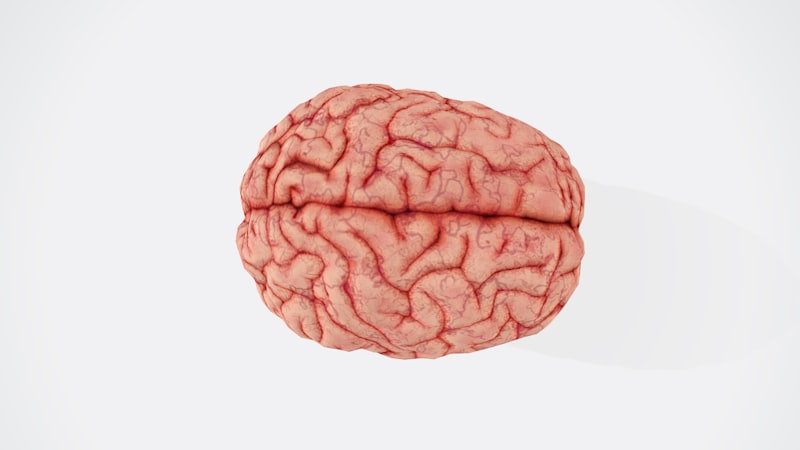
Biologically, SSDRs are governed primarily by subcortical structures, particularly the amygdala and brainstem circuits, which are responsible for processing immediate threat cues and coordinating rapid autonomic and somatic responses. The involvement of these older, more primitive brain structures ensures that the defense reaction is rapid and automatic, often occurring before full cortical processing and conscious awareness of the threat has been achieved. This neurological architecture underscores why SSDRs are so resistant to modification by higher-order cognitive or conditioned processes—they are fundamentally reflexive survival programs embedded deep within the nervous system hierarchy.
The persistence of SSDRs, even in benign laboratory environments, highlights their essential evolutionary utility. They serve as a critical buffer, guaranteeing a baseline level of defensive competence regardless of an organism’s developmental experience or learning history. From an evolutionary perspective, the cost of sometimes interfering with a specific laboratory task is negligible compared to the benefit of ensuring instantaneous and reliable self-preservation in the face of a genuine threat. This biological imperative ensures that the behavioral repertoire is weighted heavily toward responses proven effective over vast stretches of evolutionary time, thus prioritizing phylogeny over individual learning flexibility when survival is on the line.
Clinical Implications and Related Concepts
The principles derived from the study of SSDRs have important clinical implications, particularly in understanding anxiety disorders and phobias in humans. Human defensive reactions, while often overlaid with complex cognitive appraisals, still exhibit fundamental SSDR patterns. Panic attacks, for example, often involve intense sympathetic activation leading to an overwhelming urge to flee or freeze, behaviors consistent with innate SSDRs. The rapid acquisition and resistance to extinction characteristic of specific phobias (e.g., fear of heights, spiders, or enclosed spaces) are classic examples of preparedness in action, where the conditioned fear stimulus taps into an evolutionarily significant SSDR.
Therapeutic interventions, such as exposure therapy, can be viewed partially as attempts to override or modulate the SSDR. By gradually exposing the individual to the feared stimulus in a safe environment, the goal is to inhibit the innate flight or freezing response and replace it with a more adaptive, non-defensive instrumental response. However, the strong biological preparedness underlying the SSDR explains why extinction of phobias is often slow and why relapse is common, especially when the individual experiences stress or high arousal, conditions that tend to activate the primitive defense system.
Related concepts, such as the Behavioral Inhibition System (BIS), which governs risk assessment and anxiety-related freezing, are deeply intertwined with SSDRs. The BIS is essentially the cognitive and motivational superstructure governing the execution of specific SSDRs, particularly freezing and passive avoidance. Furthermore, understanding SSDRs helps explain why trauma often leads to chronic hypervigilance and exaggerated startle responses; the individual’s defensive system has been sensitized, leading to a lowered threshold for activating the innate, immediate SSDRs. Thus, the SSDR framework provides a powerful bridge connecting fundamental animal learning theory to the etiology and treatment of human clinical pathology centered around fear and avoidance.