Language Lateralization: How Your Brain Masters Speech
Scientifically Reviewed · Dr. Marwa Abd-Alazim · September 2, 2026
Review Criteria & Clinical Standards
This content undergoes rigorous scientific peer-review and medical editorial standards at Arab Psychology Network to ensure clinical accuracy, validity, and compliance with evidence-based guidelines from leading psychological and healthcare authorities (APA / WHO).
Introduction to the Speech Area and Lateralization
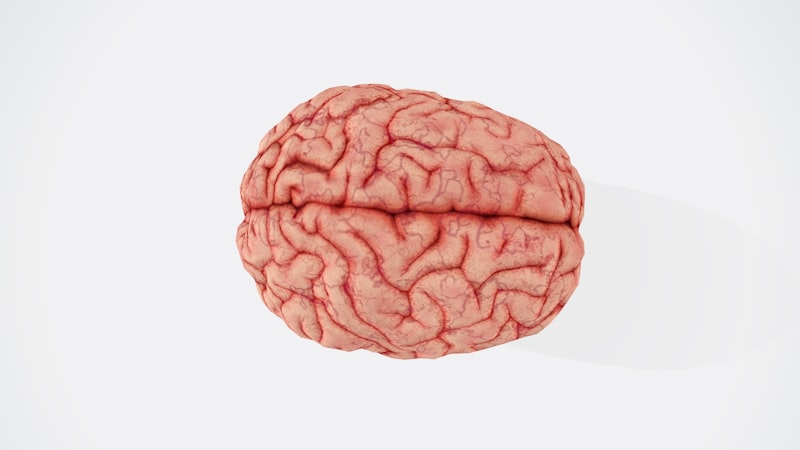
The concept of the Speech Area refers to the highly specialized regions of the cerebral cortex responsible for the complex processes underlying language—specifically, the production, comprehension, and integration of spoken language. These areas are not monolithic but rather constitute a distributed network primarily centered within the perisylvian region of the dominant hemisphere. For the vast majority of the human population, this dominant hemisphere is the left hemisphere, a phenomenon known as cerebral lateralization. This hemispheric specialization underscores a fundamental organization principle of the human brain, ensuring efficiency and dedicated processing power for our most complex cognitive function: language.
The localization of language functions to the left side of the brain is one of the most robust findings in cognitive neuroscience, consistently observed across cultures and linguistic groups, although exceptions do exist, particularly among left-handed individuals or those who have sustained early brain injury. This lateralization is not absolute; while core syntax and phonology are typically managed by the left hemisphere, critical aspects such as prosody, emotional tone, and contextual interpretation often rely heavily on homologous regions within the right hemisphere, demonstrating that language processing is ultimately achieved through extensive inter-hemispheric cooperation. Understanding the speech area requires moving beyond simple localization models and embracing the view of a functionally integrated system, where highly specific cortical regions collaborate via extensive white matter pathways.
Historically, the study of the speech area began through clinicopathological correlation, where specific language deficits (aphasias) observed in patients were mapped onto post-mortem brain damage. This methodology successfully identified the two cornerstone regions of classical language theory: Broca’s Area and Wernicke’s Area. However, contemporary research utilizing advanced neuroimaging techniques, such as functional magnetic resonance imaging (fMRI) and magnetoencephalography (MEG), has revealed that language tasks activate a much broader and more dynamic network extending far beyond these classical boundaries, involving regions in the frontal, temporal, and parietal lobes. This expanded understanding acknowledges the inherent complexity required to convert abstract thought into structured speech and vice versa, involving sensory input, motor planning, working memory, and semantic retrieval.
Broca’s Area: Production and Syntax
Broca’s Area, often referred to as the expressive language center, is traditionally located in the posterior inferior frontal gyrus (PFC), corresponding generally to Brodmann Areas 44 and 45. Area 44 (the pars opercularis) is thought to be critical for phonological processing and complex syntactic operations, acting as a crucial hub for assembling grammatical structure. Area 45 (the pars triangularis) is implicated more heavily in semantic processing, particularly in working memory aspects related to retrieving and manipulating meaningful units of language. Damage to this region results in Broca’s Aphasia, a non-fluent condition characterized by effortful speech, telegraphic sentence structure, and significant difficulties with speech production, despite relatively preserved language comprehension capabilities.
The primary function of Broca’s Area extends beyond simple motor articulation; it is fundamentally involved in the planning and sequential organization required for fluent speech output. It acts as a crucial interface between higher-level cognitive planning (what we want to say) and the motor execution systems (how we physically move the articulators). Patients with severe damage struggle not only with forming complex sentences but also with sequencing the necessary movements of the tongue, lips, and larynx correctly. Furthermore, contemporary research suggests that Broca’s Area plays a vital role in processing hierarchical structure in non-linguistic domains, such as music or sequential motor tasks, suggesting its function is fundamentally linked to processing complex ordering and structure, which is highly relevant for grammatical rules.
Crucially, while Broca’s Aphasia is defined as a non-fluent disorder, it often involves subtle but significant deficits in comprehending complex grammatical structures, particularly those involving passive voice or embedded clauses. This observation challenges the strict localization model that posited Broca’s Area solely handled production. For instance, a patient might struggle to differentiate between “The boy was chased by the dog” and “The dog was chased by the boy,” indicating a deficit in processing syntax when meaning relies heavily on grammatical cues rather than purely semantic information. This demonstrates the integral relationship between syntactic production and comprehension, linking Broca’s Area directly into the comprehension network.
Wernicke’s Area: Comprehension and Meaning
Wernicke’s Area, designated as the primary receptive language center, is typically situated in the posterior section of the superior temporal gyrus (STG), often corresponding to Brodmann Area 22. This region is fundamentally responsible for processing and interpreting auditory language input, converting acoustic signals into meaningful linguistic units, a process known as lexical-semantic analysis. Damage to Wernicke’s Area results in Wernicke’s Aphasia, characterized by fluent, often excessive speech that is devoid of meaning (sometimes referred to as “word salad”), coupled with severe impairment in auditory comprehension. Patients may produce numerous neologisms (made-up words) and paraphasias (substituting incorrect words or sounds), often unaware that their speech is nonsensical.
The function of Wernicke’s Area is highly specialized for mapping sound sequences onto their associated conceptual representations. It serves as a central repository or access point for the lexicon—the mental dictionary containing all known words and their meanings. When we hear speech, auditory information is initially processed in the primary auditory cortex and then relayed to Wernicke’s Area, where the acoustic features are matched with stored semantic knowledge. A breakdown in this area means that while the patient can physically hear the sounds, the sounds fail to trigger the corresponding conceptual meaning, leading to profound comprehension difficulties and, consequently, disordered output that reflects this internal confusion.
The severity of comprehension deficits in Wernicke’s Aphasia often makes communication extremely challenging. Although the patient’s speech retains normal rhythm and intonation (prosody), the content is highly disorganized. For example, a patient might fluently describe an object using related but incorrect words, or substitute a sound or word with a completely unrelated one (e.g., saying “spoon” when they mean “fork,” or “drizzle” when they mean “rain”). The lack of self-monitoring and awareness of their linguistic error is a distinguishing feature, suggesting that Wernicke’s Area is also crucial for monitoring one’s own speech output against internalized linguistic rules and desired semantic goals.
The Arcuate Fasciculus: Connection and Integration
The functional integration between the production and comprehension centers is mediated by the Arcuate Fasciculus, a prominent bundle of white matter fibers that acts as the primary anatomical bridge connecting Broca’s Area (frontal lobe) with Wernicke’s Area (temporal lobe). This crucial pathway allows for rapid communication, ensuring that comprehension guides production and that internal verbalizations can be monitored against auditory input. The integrity of this tract is essential for the smooth, error-free flow of language processing, particularly in tasks requiring repetition or verbal working memory.
Damage specifically localized to the Arcuate Fasciculus, while sparing Broca’s and Wernicke’s areas themselves, leads to a distinct clinical syndrome known as Conduction Aphasia. Patients with this condition exhibit remarkably preserved speech comprehension and relatively fluent, though slightly hesitant, spontaneous speech. However, their defining impairment is a disproportionate inability to repeat words or phrases, especially complex or novel ones. They often struggle to bridge the gap between the perceived auditory input and the motor commands necessary for immediate reproduction, frequently making phonemic paraphasias during attempts at repetition, where sounds are transposed or substituted (e.g., saying “toss” for “boss”).
Neuroanatomical studies, particularly those using Diffusion Tensor Imaging (DTI), have refined our understanding of the Arcuate Fasciculus, suggesting it is composed of multiple segments rather than a single tract. This includes a direct posterior segment connecting Wernicke’s Area to the parietal lobe, an indirect anterior segment connecting the inferior parietal lobe to Broca’s Area, and potentially a third segment that directly links the two classical centers. This multi-segmental architecture suggests a complex relay system, supporting not only direct repetition but also the integration of semantic, syntactic, and phonological information necessary for complex communication and thought.
The Role of the Right Hemisphere in Speech
While the left hemisphere dominates the core mechanics of language—syntax, grammar, and phonology—the Right Hemisphere plays an indispensable role in the pragmatic and emotional aspects of communication, often grouped under the term prosody. Prosody encompasses the rhythm, stress, intonation, and emotional tone embedded within speech. Without the input from the right hemisphere, speech sounds robotic, lacking the emotional nuance and contextual framing necessary for effective social interaction. The right hemisphere processes both receptive and expressive prosody, enabling us to understand sarcasm, humor, and emotional intent.
Specific damage to the right hemisphere can lead to deficits known as aprosodias, which mirror the left hemisphere aphasias but involve emotional communication rather than linguistic structure. For example, damage to the right frontal lobe (homologous to Broca’s Area) can result in expressive aprosodia, where the patient struggles to inject appropriate emotional tone into their speech, speaking in a monotone manner. Conversely, damage to the right temporoparietal region (homologous to Wernicke’s Area) can cause receptive aprosodia, where the patient cannot interpret the emotional tone of others’ speech, often failing to recognize anger, sadness, or surprise conveyed solely through voice inflection.
Furthermore, the right hemisphere is crucial for processing non-literal language, including metaphor, idioms, and discourse coherence. When interpreting a phrase like “He spilled the beans,” the left hemisphere processes the literal meaning of each word, but the right hemisphere integrates context and pulls the appropriate idiomatic meaning (“revealed a secret”). It helps maintain the overall narrative flow of conversation, linking sentences into a coherent story or argument. These functions highlight that effective communication relies on a continuous, sophisticated exchange between the specialized linguistic processing of the left hemisphere and the contextual, emotional processing capacities of the right hemisphere.
Historical Development and Key Discoveries
The scientific localization of the speech area began in earnest in the mid-19th century. Although ancient Greek physicians recognized the link between head injury and speech loss, it was the French physician Pierre Paul Broca who provided the first definitive empirical evidence. In 1861, after examining a patient known as “Tan” (who could only utter the word “tan”), Broca performed a post-mortem examination revealing a lesion in the posterior inferior frontal lobe of the left hemisphere. This pivotal case established the principle of localization and hemispheric dominance for language, firmly placing the expressive function in what is now known as Broca’s Area.
Just over a decade later, the German physician Carl Wernicke further advanced the model by identifying a distinct syndrome. In 1874, Wernicke reported patients who could speak fluently but whose speech made no sense and who could not comprehend language. Post-mortem analysis of these patients revealed lesions in the posterior superior temporal gyrus. Wernicke synthesized these findings into a groundbreaking model, proposing that language was not controlled by a single center but by interconnected specialized regions: one for motor images of words (Broca’s) and one for auditory images of words (Wernicke’s). He also correctly predicted the existence of Conduction Aphasia, caused by a disconnection between these two centers.
The Wernicke-Geschwind Model, formalized later by Norman Geschwind, became the prevailing classical paradigm for understanding language processing for nearly a century. This model provided a straightforward, sequential pathway for language: auditory input travels from the ear to the auditory cortex, then to Wernicke’s Area for comprehension; if a response is required, the signal travels via the Arcuate Fasciculus to Broca’s Area for motor planning, and finally to the motor cortex for articulation. While this model is now considered overly simplistic, it remains the foundational framework upon which all modern understanding of the central speech area is built, offering invaluable insight into the functional segregation of production and comprehension.
Modern Neuroimaging and Functional Localization
The advent of sophisticated neuroimaging techniques has revolutionized the study of the speech area, moving beyond the limitations of lesion studies which only reveal function when the area is damaged. Functional Magnetic Resonance Imaging (fMRI) allows researchers to map brain activity in real-time by detecting changes in blood oxygenation levels during language tasks, revealing precise functional localization. Positron Emission Tomography (PET) provides metabolic activity maps, and Transcranial Magnetic Stimulation (TMS) allows for temporary, non-invasive disruption of specific cortical areas to test causality in language processing.
These modern methods have overwhelmingly supported the functional importance of Broca’s and Wernicke’s areas but have also revealed that language processing is far more distributed and relies on extensive cortical and subcortical networks. Key areas identified outside the classical model include portions of the supplementary motor area (SMA) for initiation of speech, the basal ganglia for fluency and sequencing, and the superior parietal lobe for integrating spatial and sensory information related to language. This distributed network emphasizes that language is a highly complex cognitive function requiring the coordination of memory, attention, and motor control circuits across the entire brain.
Furthermore, neuroimaging has highlighted the critical role of the ventral and dorsal streams in language processing. The dorsal stream, involving the Arcuate Fasciculus, is associated with sensorimotor integration, crucial for mapping sounds to articulatory movements (e.g., repetition and phonological working memory). The ventral stream, running through the temporal lobe, is associated with mapping sounds to meaning, crucial for lexical and semantic processing. This dual-stream model offers a more nuanced framework than the classical Wernicke-Geschwind model, explaining why certain aphasias might affect articulation but spare semantic knowledge, or vice versa, based on the specific stream that has been compromised.
Clinical Implications: Aphasias and Disorders
The clinical manifestations arising from damage to the speech area are collectively termed aphasias, representing acquired communication disorders that affect the ability to comprehend or express language. These disorders are typically categorized based on fluency, comprehension, and repetition ability. The most common cause of aphasia is cerebrovascular accident (stroke), but they can also result from traumatic brain injury, tumors, or neurodegenerative diseases. Accurate diagnosis relies on careful assessment of specific linguistic deficits, which often correlates strongly with the location and extent of the brain lesion.
Major classifications include Non-fluent Aphasias (e.g., Broca’s Aphasia), characterized by difficulty initiating speech, reduced rate of output, and often significant grammatical impairment; and Fluent Aphasias (e.g., Wernicke’s Aphasia), characterized by effortless speech production but poor content and impaired comprehension. A third severe category is Global Aphasia, which results from widespread damage encompassing large portions of the perisylvian region, severely impairing all aspects of language—expression, comprehension, and repetition—rendering the patient largely unable to communicate verbally.
In addition to core linguistic aphasias, damage to the speech area networks can result in related motor speech disorders. Dysarthria involves difficulty articulating words due to muscular weakness or incoordination of the speech apparatus (tongue, lips, vocal cords), often arising from damage to motor cortex pathways related to articulation. Apraxia of Speech (AOS), often co-occurring with Broca’s Aphasia, is a motor planning disorder where the patient knows what they want to say but struggles with the complex planning and sequencing of muscle movements necessary to produce speech sounds accurately, leading to inconsistent, searching, and effortful articulation errors.
Developmental Aspects of Language Acquisition
The development of the speech area is intrinsically linked to the process of language acquisition during early childhood, demonstrating remarkable plasticity. While the lateralization of language function to the left hemisphere is genetically predisposed, the refinement and specialization of Broca’s and Wernicke’s areas are heavily dependent on linguistic exposure and interaction during a crucial critical period, typically spanning the first few years of life. During this time, the brain is maximally efficient at learning grammatical structures and phonological rules.
Early language exposure drives the structural maturation of white matter tracts like the Arcuate Fasciculus and enhances the functional connectivity within the perisylvian network. Studies show that infants and young children rely on a more diffuse, bilateral network for language processing, gradually consolidating functions primarily into the left hemisphere as they mature. This initial plasticity is highly adaptive; if a young child sustains severe damage to the left speech area, the right hemisphere can often take over language functions with much greater success than would be possible in an adult brain, underscoring the dynamic nature of cortical organization in response to environmental demands.
The stages of language development, from babbling to the production of complex syntax, correspond to the maturation of different cortical regions. Phonological perception relies initially on temporal lobe processing, while the explosion of vocabulary and semantic knowledge further strengthens Wernicke’s area connections. The development of grammatical complexity and sentence formulation correlates strongly with the ongoing maturation and myelination of Broca’s Area and the prefrontal cortex, indicating that the fully functional speech area is a gradual construct, honed by continuous linguistic experience throughout childhood and adolescence.