Speech-Tolerance: Master Your Auditory Comfort Limits
Scientifically Reviewed · Dr. Marwa Abd-Alazim · August 27, 2026
Review Criteria & Clinical Standards
This content undergoes rigorous scientific peer-review and medical editorial standards at Arab Psychology Network to ensure clinical accuracy, validity, and compliance with evidence-based guidelines from leading psychological and healthcare authorities (APA / WHO).
Definition and Psychoacoustic Context
The Speech-Tolerance Level (STL) is a critical psychophysical measurement defining the maximum acceptable intensity of speech sounds before they elicit subjective discomfort, irritation, or pain in the listener. This threshold represents the upper limit of the listener’s functional dynamic range for verbal communication stimuli. It is fundamentally distinct from the simple physical volume of sound; rather, STL measures the intensity at which the complex acoustic characteristics of the human voice—including its spectral composition, temporal modulations, and inherent complexity—are deemed overtly excessive and uncomfortable for the auditory system to process. Identifying the STL is vital in both clinical audiology and psychoacoustics, as it provides crucial insight into how an individual processes suprathreshold auditory information, often serving as an indicator of auditory health and central nervous system function related to loudness perception.
Unlike the absolute threshold of hearing, which marks the quietest sound detectable, STL establishes the upper boundary of comfortable listening. In a typical healthy auditory system, the dynamic range—the span between the quietest detectable sound and the loudest tolerable sound—is substantial. The STL determines where this comfort range ends when specifically encountering speech. When individuals state that a television or conversation is “too loud,” they are articulating that the sound pressure level has exceeded their personal STL. This phenomenon often involves both peripheral auditory processing (cochlear mechanics) and central neural mechanisms that register the unpleasantness associated with high-intensity stimulation, linking auditory input to limbic and autonomic nervous system responses.
The concept of STL is highly relevant because speech is the primary mode of human communication and the most frequently encountered complex auditory stimulus in daily life. Research indicates that the subjective discomfort associated with speech exceeding tolerance levels can be more pronounced than that caused by equally intense pure tones or broadband noise, likely due to the highly structured and information-rich nature of the speech signal. Therefore, the measurement of STL provides a functional assessment of how the auditory system handles high-intensity, ecologically relevant stimuli, offering a more precise clinical picture of auditory tolerance limitations compared to general loudness discomfort measurements.
Measurement Techniques and Standardization
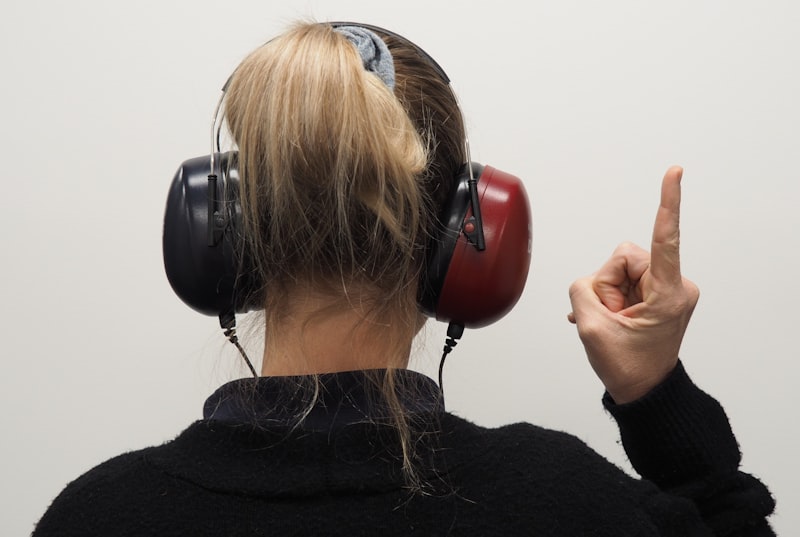
Determining the Speech-Tolerance Level involves standardized audiological procedures designed to elicit a consistent subjective response from the patient regarding discomfort. The testing is typically performed in a sound-treated booth using calibrated equipment, such as an audiometer and headphones or free-field speakers. The stimulus employed is usually continuous discourse or running speech, presented monaurally or binaurally. The examiner gradually increases the intensity of the speech stimulus, often using an ascending method of limits, and instructs the patient to signal the precise moment the sound transitions from merely loud to truly uncomfortable or intolerable, but not necessarily physically painful.
Standardization requires careful instruction phrasing to ensure the patient understands the nature of the threshold being sought. Phrases such as, “Tell me when the sound is unpleasantly loud, where you would want to turn it down if you could,” are common, aiming to identify the point of psychological aversion rather than the threshold of physical pain. The resulting measurement is recorded in decibels Hearing Level (dB HL) or decibels Sound Pressure Level (dB SPL). Consistency in the method—whether using continuous versus pulsed speech, or utilizing different response scales (e.g., seven-point categorical loudness scales)—is paramount for reliable clinical comparison across different evaluations or institutions.
Despite attempts at standardization, the measurement of STL remains inherently subjective, introducing potential challenges related to examiner bias and patient cooperation or understanding. Furthermore, the acoustic characteristics of the speech stimulus itself can influence the measured threshold; for instance, speech containing sharp, high-frequency components might reduce the measured STL compared to speech dominated by lower frequencies. Clinicians must account for these variables, often by averaging multiple trials or comparing the STL result against established norms for the patient’s age group and hearing status. The reliability of STL measurement is crucial, especially when using the metric to program the maximum power output of digital hearing aids.
Distinction from Loudness Discomfort Level (LDL)
While often used interchangeably in casual conversation, the Speech-Tolerance Level (STL) must be technically differentiated from the general Loudness Discomfort Level (LDL). LDL represents the maximum intensity level tolerated for any sound, usually measured using spectrally simple stimuli, such as pure tones at various frequencies or broadband noise. LDL provides a general physiological ceiling for auditory input, reflecting the integrity of the cochlear and central pathways to handle loud volumes irrespective of the signal’s complexity.
The key distinction lies in the stimulus modality: STL specifically uses speech. Speech is a dynamically complex signal characterized by rapid changes in frequency and amplitude, which engages the auditory system differently than steady-state tones or noise. For many individuals, especially those with certain types of sensorineural hearing loss, the STL measured with speech may be slightly lower than the LDL measured with pure tones, due to the rapid onset and transient peaks inherent in verbal stimuli. This difference highlights the auditory system’s sensitivity to the temporal fine structure of sound when assessing comfort.
Measuring both STL and LDL provides a more comprehensive diagnostic profile. A significant discrepancy between a patient’s pure-tone LDL and their speech STL can point toward specific auditory processing difficulties, particularly relating to the processing of supra-threshold speech signals. For instance, a person might tolerate a 100 dB pure tone but find 90 dB speech intolerable. This information is invaluable in clinical settings, guiding the selection of compression algorithms in hearing aids to ensure that the rapid peaks of conversational speech are managed below the patient’s specific tolerance threshold, thereby maximizing comfort and acceptance of the device.
Physiological Mechanisms and Auditory Pathway Involvement
The determination of the Speech-Tolerance Level is deeply rooted in the physiological functioning of the auditory system, particularly mechanisms related to loudness coding and protection. A primary mechanism influencing STL is loudness recruitment, which is the abnormal, rapid growth of perceived loudness typically associated with sensorineural hearing loss resulting from damage to the Outer Hair Cells (OHCs) in the cochlea. When OHCs are damaged, the ear loses its natural internal compression system, causing sounds to jump from barely audible to excessively loud over a much smaller intensity range than normal, thus drastically reducing the STL.
Beyond the cochlea, the Central Auditory Nervous System (CANS) plays a crucial role in establishing and modulating tolerance levels. The perception of discomfort or pain associated with high-intensity speech involves processing in the auditory cortex, but also in limbic structures (such as the amygdala) and the brainstem, which mediate emotional responses and protective reflexes. The signal that a sound is “too loud” initiates a complex neural cascade that links acoustic intensity to aversion. In individuals with hyperacusis, there is often hypothesized to be a central gain mechanism increase, where neurons in the CANS over-respond to normal levels of input, leading to a pathologically lowered STL.
Furthermore, the efferent auditory system, specifically the medial olivocochlear (MOC) bundle, contributes to the regulation of sound input and potentially influences the STL. The MOC system sends feedback from the brainstem back to the OHCs, dampening their response to intense sounds and offering a protective mechanism. Dysfunctions or limitations in the MOC reflex could theoretically impair the auditory system’s ability to adequately attenuate high-level speech input, resulting in an artificially lowered or poorly regulated STL. Understanding these physiological underpinnings is essential for developing therapeutic strategies aimed at normalizing auditory tolerance.
Variability and Influencing Factors
The Speech-Tolerance Level is not a static constant; it exhibits significant inter-individual variability among the general population, typically spanning a range of 90 dB HL to 110 dB HL in audiologically healthy adults. More critically, STL is subject to significant influence from various extrinsic and intrinsic factors. Extrinsic factors include the immediate acoustic environment, such as reverberation and background noise. Exposure to chronically loud environments, even if not damaging, can temporarily elevate the STL due to adaptation, or conversely, cause temporary threshold shifts that might indirectly affect tolerance.
Intrinsic factors contribute heavily to variability. Age is a significant factor; while older adults may initially maintain or slightly increase their tolerance levels, the prevalence of age-related sensorineural hearing loss (presbycusis) often introduces recruitment, leading to a reduced STL. Psychological states, such as high levels of stress, anxiety, or fatigue, are also known to temporarily lower an individual’s tolerance for loud sounds, making speech that would normally be acceptable seem irritating or painful. This suggests a strong connection between central emotional regulation and auditory tolerance thresholds.
Pathological conditions are perhaps the most influential intrinsic factors. Conditions like hyperacusis, tinnitus, and certain neurological disorders directly manifest as abnormally low STL, often requiring clinical intervention. Furthermore, medications, particularly ototoxic drugs, can alter the functioning of the cochlea and CANS, impacting loudness recruitment and subsequently lowering the measured STL. Recognizing the dynamic nature of STL requires clinicians to consider the patient’s overall health, psychological status, and exposure history when interpreting tolerance measurements.
Clinical Relevance and Pathological States
The clinical significance of measuring the Speech-Tolerance Level cannot be overstated, particularly in the fields of rehabilitative audiology and neurotology. STL is a fundamental parameter used in the prescription and fitting of amplification devices, such as hearing aids. Modern digital hearing aids rely on sophisticated compression systems to amplify soft sounds while limiting the output of loud sounds. If the maximum power output (MPO) of the hearing aid exceeds the user’s measured STL, the device will likely cause discomfort, leading to rejection or inconsistent use, thereby negating the benefits of amplification.
A pathologically reduced STL is the hallmark symptom of hyperacusis, a debilitating auditory disorder characterized by an abnormal intolerance to ordinary environmental sounds, including conversational speech. For individuals with hyperacusis, typical speech levels (around 60-70 dB SPL) can feel overwhelmingly loud or painful, severely limiting their participation in social and occupational activities. Clinical assessment of STL is essential for diagnosing the severity of hyperacusis and monitoring the effectiveness of treatment protocols, such as sound desensitization therapies.
STL measurement is also integral to the management of tinnitus, the perception of sound in the absence of an external stimulus. A significant proportion of tinnitus sufferers also experience reduced sound tolerance. Therapeutic approaches like Tinnitus Retraining Therapy (TRT) utilize low-level sound generators to habituate the central nervous system, and the setting of these sound generators must be carefully calibrated to remain well below the patient’s STL to ensure comfort and efficacy of the noise exposure. Thus, STL serves as a vital anchor point for safe and effective auditory rehabilitation across several critical hearing disorders.
Implications for Communication and Environmental Design
The determination of the population’s average Speech-Tolerance Level has significant implications extending into communication dynamics and acoustic environmental design. When speech levels in a communal environment consistently approach or exceed the STL of sensitive individuals, it creates barriers to effective communication and negatively impacts quality of life. For the general population, maintaining conversational levels comfortably below the average STL ensures that communication is received without stress or discomfort, promoting better social interaction and cognitive performance.
In architectural and environmental acoustics, understanding STL helps inform strategies for noise mitigation and soundscape planning. For instance, in open-plan offices, classrooms, or restaurants, where ambient speech noise can accumulate, design efforts must focus on acoustic treatments (e.g., sound-absorbing materials, sound masking systems) that prevent cumulative speech levels from reaching uncomfortable intensities. Designing spaces with low reverberation times ensures that intense speech signals decay quickly, reducing the likelihood of exceeding the STL for patrons and workers.
Furthermore, in occupational health settings, particularly those involving amplified or monitored speech (e.g., air traffic control towers, call centers, broadcasting studios), monitoring the intensity of the equipment output relative to the estimated STL of the employee is crucial for preventative healthcare. Chronic exposure to speech output that is close to the tolerance threshold, even if not immediately damaging, can lead to auditory fatigue or lowered tolerance over time. Implementing protocols that regulate maximum allowable headset output based on individual STL measurements is a necessary step toward preserving long-term auditory health and comfort.
Research Trends and Future Directions
Contemporary research into the Speech-Tolerance Level is moving toward developing more objective and nuanced measures to supplement the current reliance on subjective patient reporting. One significant avenue involves investigating electrophysiological correlates of loudness discomfort. Researchers are exploring whether changes in auditory evoked potentials, such as the Auditory Brainstem Response (ABR) or cortical potentials, correlate reliably with the point at which a patient reports discomfort. Objective measures would remove variability associated with patient motivation, fatigue, or misunderstanding of instructions, leading to more consistent and clinically robust STL assessments.
Pharmacological research is also focusing on the neurochemical basis of reduced tolerance (hyperacusis), aiming to modulate central auditory gain mechanisms. Potential therapeutic targets include neurotransmitter systems, such as GABA and NMDA receptors, which are implicated in the regulation of neural excitability within the Central Auditory Nervous System. Successful pharmacological intervention could potentially raise the STL in pathologically sensitive individuals, restoring a functional dynamic range for speech input.
In hearing technology, the future direction involves developing highly personalized and adaptive amplification systems. Next-generation hearing aids are being designed to not only measure but also anticipate the user’s instantaneous STL based on fluctuating environmental conditions and internal states. Utilizing machine learning algorithms, these devices could predict when a spectrally complex signal like speech is approaching the user’s discomfort zone and automatically apply highly precise compression or filtering to those specific frequency bands, ensuring that the critical speech information is delivered comfortably below the individual’s maximum tolerance threshold, thereby optimizing both audibility and comfort simultaneously.