Vocal Communication: The Hidden Psychology of Human Bonds
Scientifically Reviewed · Dr. Marwa Abd-Alazim · October 13, 2026
Review Criteria & Clinical Standards
This content undergoes rigorous scientific peer-review and medical editorial standards at Arab Psychology Network to ensure clinical accuracy, validity, and compliance with evidence-based guidelines from leading psychological and healthcare authorities (APA / WHO).

The Core Definition of Speech
Speech is fundamentally the vocalized form of communication employed by humans, and to varying degrees, by certain animal species. It is a highly complex process predicated upon the systematic and syntactic combination of discrete units, or phonemes, drawn from a speaker’s internal mental lexicon. In its most rudimentary form, speech can manifest as a singular utterance, conveying a specific intent or emotional state. While primarily associated with vocal articulation, the broader act of expressing linguistic content can, in some contexts, be understood to encompass non-vocal methods, such as the gestural communication found in sign languages, or even paralinguistic vocalizations like humming, which convey meaning beyond conventional words.
The distinctive ability of humans to both produce and comprehend complex speech is a hallmark of our species, forming the bedrock of human interaction and cultural transmission. Speech is an indispensable component of language, serving as the primary vehicle through which intricate thoughts, nuanced feelings, abstract ideas, and detailed information are conveyed from one individual to another. This intricate system allows for the externalization of internal mental states, facilitating collaboration, social bonding, and the cumulative transfer of knowledge across generations, thereby underpinning the very fabric of human society and intellectual progress.
The fundamental mechanism underpinning speech involves the precise coordination of various physiological systems. Air expelled from the lungs passes through the larynx, where the vocal cords vibrate to produce sound. This raw sound is then shaped and modified by the articulators—including the tongue, lips, teeth, and palate—within the oral and nasal cavities. The resulting sound waves are then perceived and interpreted by the listener’s auditory system and brain. This seamless integration of respiratory control, phonation, and articulation allows for the rapid generation of distinct speech sounds that, when combined according to specific linguistic rules, form meaningful words and sentences, enabling the rich tapestry of human verbal exchange.
The Mechanics of Speech Production and Perception
The scientific investigation of speech is known as phonetics, a specialized sub-discipline within linguistics that meticulously examines the production, transmission, and perception of speech sounds. This field delves into the intricate physical properties of speech, scrutinizing its acoustic characteristics, the physiological processes involved in its generation, and the perceptual mechanisms through which listeners interpret these sounds. Phonetics is typically divided into three main branches: articulatory phonetics, which studies how speech sounds are made by the vocal organs; acoustic phonetics, which analyzes the physical properties of the sound waves produced; and auditory phonetics, which investigates how listeners perceive and interpret these sounds.
At its core, speech is constructed from a finite set of fundamental components: vowels, consonants, and in many languages, tones. Vowels are produced with an open vocal tract, allowing air to flow freely, and are differentiated by the position of the tongue and lips. Consonants, conversely, involve some degree of obstruction to the airflow within the vocal tract. The specific way in which these components are articulated, modulated, and sequentially arranged dictates the precise meaning of the speech. For instance, subtle changes in tongue position can differentiate between a “beat” and a “boot,” while the presence or absence of vocal cord vibration distinguishes a “pat” from a “bat.” These minute phonetic distinctions are crucial for encoding and decoding linguistic information accurately.
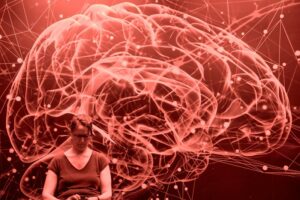
Beyond the individual sound units, the mechanics of speech involve sophisticated brain processes. The motor cortex initiates the commands for articulation, sending signals to the muscles of the respiratory system, larynx, pharynx, and oral cavity. Simultaneously, areas like Broca’s area are critical for speech production, specifically for coordinating the complex sequences of muscle movements required. On the perceptual side, the auditory cortex processes the incoming sound waves, while Wernicke’s area plays a pivotal role in comprehending the meaning of the perceived speech. The intricate interplay between these neural structures and physiological systems underscores the remarkable biological sophistication underlying human verbal communication.
Historical Foundations of Speech Research
The study of speech, while a relatively modern scientific pursuit in its rigorous empirical forms, has roots extending back to ancient philosophical inquiries into the nature of language and rhetoric. Early grammarians in India, such as Pāṇini in the 4th century BCE, meticulously described the phonetic and phonological systems of Sanskrit, demonstrating a profound understanding of speech sound production and organization. Similarly, ancient Greek philosophers like Plato and Aristotle pondered the relationship between words, thoughts, and reality, laying foundational conceptual groundwork for later linguistic and psychological investigations. However, a distinct scientific focus on speech as a physiological and acoustic phenomenon began to coalesce much later, driven by advancements in anatomy, physics, and eventually, experimental psychology.
The 19th and early 20th centuries marked a significant period of systematic inquiry. Scholars like Alexander Melville Bell, the father of Alexander Graham Bell, developed detailed systems for transcribing speech sounds, such as Visible Speech, which graphically represented articulatory positions. This era also saw the emergence of foundational texts in phonetics, with figures like Henry Sweet and Daniel Jones pioneering the development of phonetic transcription systems that would eventually lead to the International Phonetic Alphabet (IPA). Concurrently, early experimental psychologists, such as Wilhelm Wundt, began to explore the psychological processes underlying language and speech, examining aspects like reaction times to spoken words and the perception of speech sounds in controlled laboratory settings.
The mid-20th century witnessed a rapid acceleration in speech research, fueled by technological innovations like the spectrograph, which allowed for visual analysis of speech acoustics, and the rise of computational linguistics. Key figures like Roman Jakobson, a prominent linguist and phonologist, contributed significantly to understanding the distinctive features of speech sounds and their role in meaning differentiation. Noam Chomsky’s revolutionary work on generative grammar, while primarily focused on syntax, also spurred intense interest in the underlying cognitive mechanisms of language, indirectly influencing psycholinguistic studies of speech production and comprehension. This period cemented speech research as an interdisciplinary field, integrating insights from linguistics, psychology, neuroscience, and engineering to unravel the complexities of human vocal communication.
Speech in Everyday Life: A Practical Example
To illustrate the intricate process of speech in a practical, everyday context, consider the common scenario of ordering a coffee at a bustling café. This seemingly simple interaction involves a complex interplay of cognitive, linguistic, and physiological processes for both the speaker and the listener. The entire sequence, from forming the intention to communicate to the successful exchange of information, hinges on the efficient and accurate production and perception of spoken language.
First, the customer forms the intention to order a “latte.” This abstract thought must be converted into a linguistic representation. The customer’s brain accesses their mental lexicon to retrieve the word “latte” and its associated phonological structure – the sequence of speech sounds that constitute the word. Simultaneously, the brain constructs the appropriate syntactic frame for a request, perhaps “Could I please have a latte?” or “A latte, please.” Once the linguistic plan is formed, the motor cortex activates, sending precise commands to the articulators. The lungs provide air, the vocal cords vibrate to produce voicing, and the tongue, lips, and jaw move with exquisite timing and coordination to shape the air into the distinct vowels and consonants of “latte” and the surrounding words. The result is an audible speech signal, a series of sound waves carrying the intended message.
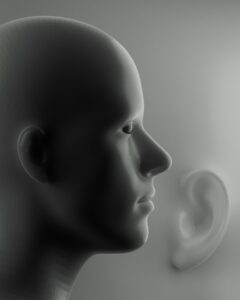
For the barista, the process is reversed. Their ears capture the sound waves produced by the customer’s speech. The auditory system converts these physical vibrations into neural signals, which are then transmitted to the brain. The auditory cortex processes the incoming acoustic information, identifying the individual phonemes and their sequential arrangement. Wernicke’s area plays a crucial role in interpreting these sounds as meaningful words and phrases, reconstructing the linguistic message: “A latte, please.” This rapid and often unconscious process allows the barista to understand the customer’s request, confirm it, and prepare the correct drink. This simple transaction thus showcases the remarkable efficiency and complexity of human speech, enabling seamless social interaction and the exchange of needs and information in a dynamic environment.
Significance and Broad Impact of Speech
The significance of speech to the field of psychology, linguistics, and human society at large is profound and multifaceted. As the primary mode of verbal communication for most individuals, speech is indispensable for human development, social interaction, and cognitive processing. From a developmental perspective, the acquisition of speech is a critical milestone, enabling children to express needs, learn about the world, and form complex relationships. Psychologists study speech to understand how language is learned, processed, and used, providing insights into cognitive functions such as memory, attention, and problem-solving, as well as the intricate relationship between thought and language.
The applications of speech research are vast and extend into numerous contemporary fields. In clinical therapy, particularly speech therapy (or speech-language pathology), understanding the mechanisms of speech production and perception is vital for diagnosing and treating a wide range of communication disorders, from articulation difficulties and stuttering to aphasia resulting from neurological damage. In education, insights from speech science inform pedagogical approaches to reading, phonics instruction, and second language acquisition. By recognizing how speech sounds are formed and perceived, educators can develop more effective strategies to help students master literacy and pronunciation, facilitating academic success.
Beyond clinical and educational settings, the principles of speech are harnessed in various technological and commercial domains. In the realm of marketing and media, understanding the prosodic features of speech—intonation, rhythm, and stress—can be crucial for conveying specific messages, eliciting emotions, and influencing consumer behavior. Furthermore, the rapid advancements in artificial intelligence and natural language processing heavily rely on sophisticated models of speech. Voice assistants, dictation software, and speech-to-text technologies are built upon decades of research into phonetics, phonology, and acoustic analysis, continually improving their ability to recognize, synthesize, and interpret human speech, thereby transforming how humans interact with technology.
Interconnections with Language and Cognition
While often used interchangeably, speech is distinct from language, though inextricably linked. Language is the broader system of conventional symbols and rules that allows for the encoding and decoding of meaning. Speech is one specific modality through which language is expressed, alongside writing, signing, and internal thought. This distinction is crucial in fields like psycholinguistics and cognitive psychology, where researchers investigate how the brain processes linguistic information independently of its vocal manifestation. For example, a person may have intact language abilities (e.g., understanding grammar, having a rich vocabulary) but have impaired speech production due to a motor disorder. Conversely, one might be able to produce speech sounds but lack the coherent linguistic structure to form meaningful sentences.
Speech is intimately connected to other core linguistic concepts such as phonology, syntax, semantics, and pragmatics. Phonology specifically studies the organization of speech sounds within a particular language, focusing on how these sounds function to distinguish meaning. Syntax governs the rules for combining words into grammatically correct sentences, while semantics concerns the meaning of words and sentences. Pragmatics, on the other hand, deals with how language is used in social contexts, including the unspoken rules and conventions that influence the interpretation of speech. Understanding speech requires appreciating how these various linguistic levels interact, from the physical production of sounds to the abstract interpretation of meaning within a social context.
Moreover, speech is deeply embedded within the broader domain of human cognition. The act of speaking requires complex cognitive processes, including memory retrieval (accessing words from the lexicon), planning (structuring sentences and ideas), attention (focusing on the message and the listener), and self-monitoring (correcting errors in real-time). Similarly, speech perception involves cognitive processes such as auditory scene analysis, pattern recognition, and inferencing. The study of speech thus offers a valuable window into the workings of the human mind, revealing how we organize thoughts, retrieve information, and interact with our environment through one of our most fundamental capacities. This interdisciplinary lens highlights speech not merely as a physical act but as a manifestation of intricate cognitive architecture.
Speech Disorders and Therapeutic Applications
The complexity of speech production and perception means that various factors can lead to communication difficulties, collectively known as speech disorders. These disorders can arise from a multitude of causes, including developmental delays, neurological damage, structural abnormalities of the vocal tract, or psychological factors. Common examples include articulation disorders, where individuals have difficulty producing specific speech sounds correctly; phonological disorders, which involve patterns of sound errors; fluency disorders like stuttering, characterized by disruptions in the flow of speech; and voice disorders, affecting the quality, pitch, or loudness of the voice due to issues with the vocal cords or larynx. Each type of disorder presents unique challenges to effective verbal communication, impacting an individual’s social interactions, academic performance, and overall quality of life.
The identification and remediation of speech disorders fall under the specialized domain of speech therapy, also known as speech-language pathology. Speech-language pathologists (SLPs) are trained professionals who assess, diagnose, and treat communication and swallowing disorders. Their work involves a deep understanding of phonetics, phonology, anatomy, and psychology to tailor interventions that address specific deficits. For instance, an SLP might use articulatory exercises to help a child correctly produce a “r” sound, or employ fluency shaping techniques to reduce stuttering in an adult. They also work with individuals who have lost speech due to stroke (aphasia) or brain injury, helping them regain communication skills through targeted exercises and alternative communication strategies.
Therapeutic applications extend beyond direct remediation of speech production. SLPs also address the broader impact of speech disorders on an individual’s language comprehension, social competence, and emotional well-being. This holistic approach recognizes that speech is not merely a motor act but an integral part of an individual’s identity and their ability to connect with others. Through personalized treatment plans, often involving collaboration with families, educators, and other healthcare professionals, speech therapy aims to enhance functional communication, improve quality of life, and empower individuals to participate more fully in their communities, underscoring the vital role of understanding and supporting the human capacity for spoken language.
Speech in the Digital Age: AI and Beyond
The study of speech has become increasingly critical in the digital age, particularly with the rapid advancements in artificial intelligence (AI) and machine learning. Speech recognition technology, which converts spoken words into text, relies heavily on decades of research in phonetics, acoustic phonetics, and computational linguistics. These systems analyze the complex acoustic patterns of human speech, break them down into their constituent speech sounds, and then map these sounds to linguistic units to infer the spoken words. Similarly, speech synthesis, or text-to-speech (TTS) technology, generates artificial speech from written text, requiring detailed models of human articulation, prosody (intonation, rhythm, stress), and natural sound production to create output that is both intelligible and natural-sounding.
The integration of speech technologies into everyday life is pervasive, fundamentally altering how humans interact with devices and information. Voice assistants like Siri, Alexa, and Google Assistant have become commonplace, enabling hands-free operation of smartphones, smart home devices, and navigation systems. Dictation software allows for efficient text input, while real-time translation applications are breaking down language barriers. These technologies are not merely conveniences; they offer significant accessibility benefits for individuals with disabilities, providing alternative means of control and communication. The continuous improvement of these systems underscores the ongoing importance of deeply understanding the nuances of human speech.
Looking ahead, the future of speech research in the digital realm promises even more sophisticated applications. Developments in emotion recognition from speech, speaker identification for security purposes, and the creation of highly personalized AI voices are active areas of research. Researchers are exploring how AI can not only understand what is said but also how it is said, interpreting subtle cues in pitch, tempo, and timbre to infer emotional states or identify individual speakers. This trajectory points towards a future where human-computer interaction becomes even more intuitive and nuanced, blurring the lines between natural conversation and digital interface. The ongoing interplay between human speech, cognition, and advanced technology continues to push the boundaries of what is possible in communication and information processing.