Spinal Reflexes: The Hidden Engine of Human Behavior
Scientifically Reviewed · Dr. Marwa Abd-Alazim · October 6, 2026
Review Criteria & Clinical Standards
This content undergoes rigorous scientific peer-review and medical editorial standards at Arab Psychology Network to ensure clinical accuracy, validity, and compliance with evidence-based guidelines from leading psychological and healthcare authorities (APA / WHO).
Introduction: Defining the Spinal Animal
The concept of a “spinal animal” fundamentally refers to organisms possessing an internal skeletal axis, commonly known as a vertebral column or spine. This defining characteristic is central to the classification and understanding of a vast and diverse group of organisms that dominate many ecological niches across the planet. Far from being a mere structural component, the spine serves as the primary support system, enabling intricate movements, protecting the central nervous system, and providing attachment points for muscles, thereby facilitating a dynamic interaction with the environment. These animals exhibit remarkable adaptability, thriving in a wide array of habitats ranging from the profound depths of the oceans to the highest terrestrial altitudes, showcasing an evolutionary success story rooted in their unique structural blueprint.
This internal skeletal framework, composed of a series of articulated vertebrae, distinguishes them from invertebrates and underpins their capacity for complex behaviors and advanced physiological functions. The flexibility and strength afforded by the vertebral column have been pivotal in the diversification of body plans and locomotor strategies observed within this group. From the swift agility of a bird in flight to the powerful movements of a terrestrial mammal, the presence of a spine is inextricably linked to their ability to navigate, forage, and reproduce effectively within their respective ecosystems. Understanding the anatomy and ecology of these creatures provides profound insights into the principles of biology and evolution.
The Core Definition: Vertebrates and Their Defining Characteristics
At its core, the term “spinal animal” is synonymous with vertebrates, a subphylum of the phylum Chordata. Vertebrates are characterized by the presence of a cartilaginous or bony vertebral column that encases and protects the dorsal hollow nerve cord, which develops into the central nervous system. This fundamental structure provides both rigidity for support and flexibility for movement, a combination critical for their varied lifestyles. The vertebral column is segmented, comprising individual vertebrae connected by ligaments, tendons, and often intervertebral discs, allowing for a remarkable range of motion while maintaining structural integrity.
Beyond the defining vertebral column, vertebrates share several other key characteristics that differentiate them from other animal groups. These include a cranium (skull) that protects the brain, a well-developed closed circulatory system with a ventral heart, and a pair of eyes that provide sophisticated visual perception. Furthermore, they typically possess a specialized excretory system with kidneys, and a complex endocrine system that regulates various physiological processes. These advanced anatomical features collectively contribute to their high metabolic rates, active lifestyles, and often large body sizes compared to most invertebrates, enabling them to occupy dominant positions in many food webs.
The presence of a true internal skeleton, or endoskeleton, provides a distinct advantage over the external skeletons (exoskeletons) found in many invertebrate groups like insects and crustaceans. An endoskeleton allows for continuous growth without molting, facilitates larger body sizes, and offers a more dynamic framework for muscle attachment, leading to more powerful and precise movements. This internal scaffolding has been a cornerstone of vertebrate evolutionary success, enabling diversification into fish, amphibians, reptiles, birds, and mammals, each adapting their spinal structure to suit their specific environments and modes of locomotion.
Historical Context and Evolutionary Origins
The evolutionary history of spinal animals, or vertebrates, traces back to the Cambrian Period, approximately 540 million years ago, a time of significant diversification of animal life. Early chordates, the ancestors of vertebrates, possessed a flexible rod-like structure called a notochord, which provided axial support. Over millions of years, this notochord was gradually replaced or supplemented by a series of cartilaginous or bony elements, forming the primitive vertebral column. One of the earliest known vertebrates, Myllokunmingia, discovered in the Chengjiang fossil beds of China, provides crucial evidence of these foundational characteristics, including a distinct head and gill slits, signaling the emergence of true vertebrates.
The transition from simple chordates to early vertebrates involved several key innovations. The development of a distinct head with sensory organs, the evolution of a brain protected by a cranium, and the segmentation of the notochord into vertebrae were critical steps. These early vertebrates were jawless fish, belonging to groups like the Agnatha, exemplified by modern lampreys and hagfish. These primitive forms primarily filtered food from the water or scavenged, lacking the ability to bite and chew. Their success, however, laid the groundwork for further evolutionary advancements that would dramatically reshape marine and eventually terrestrial ecosystems.
A pivotal evolutionary leap occurred with the emergence of jaws, leading to the diversification of gnathostomes (jawed vertebrates). Jaws allowed for more efficient predation and varied feeding strategies, driving an explosion of new forms and ecological roles. Subsequently, the evolution of paired fins in fish provided greater control and maneuverability in water, setting the stage for the eventual transition to land. The development of robust skeletal structures, lungs, and limbs in certain fish lineages led to the appearance of tetrapods (four-limbed vertebrates) during the Devonian period, marking the colonization of terrestrial environments and opening up vast new evolutionary pathways for spinal animals.
Anatomical Foundations: The Vertebral Column and Beyond
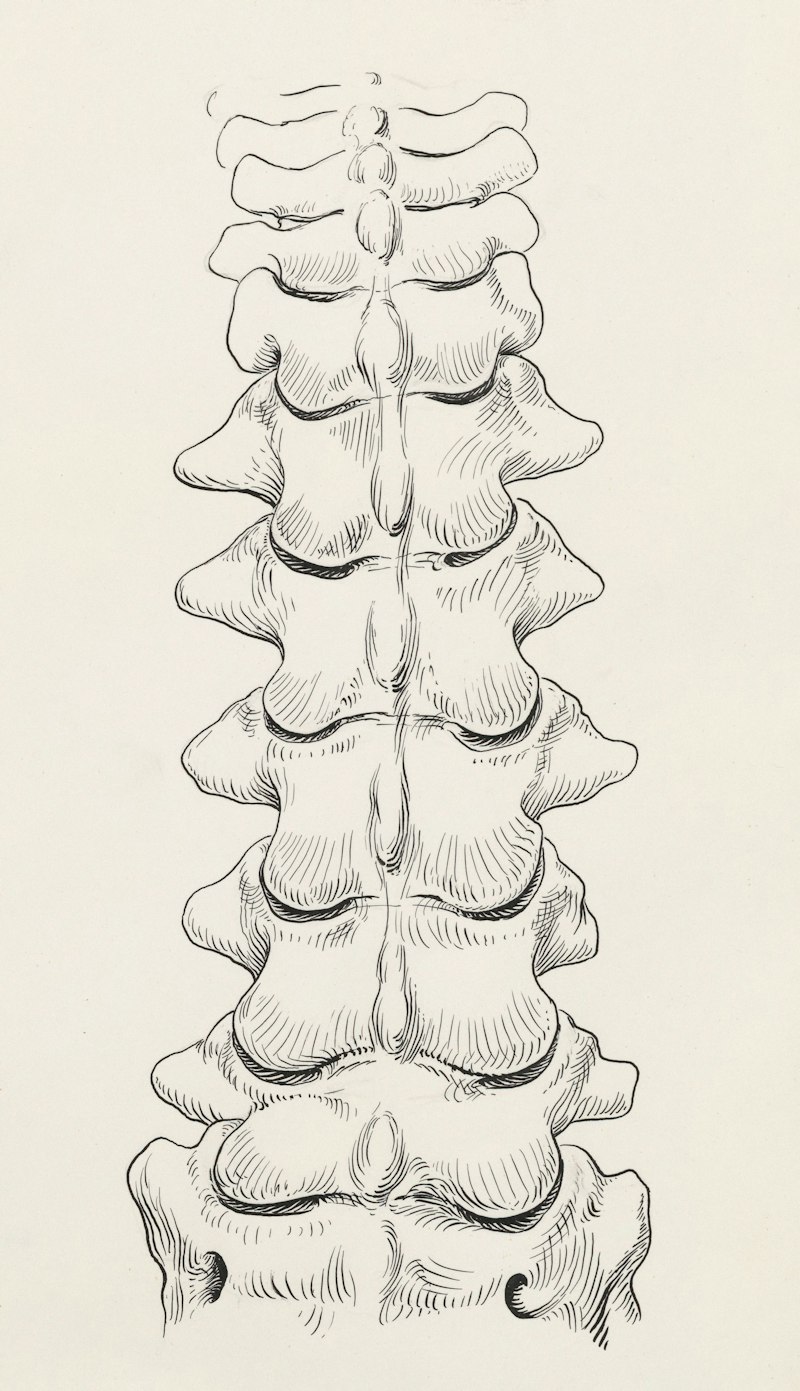
The anatomy of spinal animals is fundamentally defined by their internal skeletal system, particularly the vertebral column. This complex structure is not merely a rigid rod but a dynamic, flexible axis composed of individual bones called vertebrae, which are intricately connected by ligaments, tendons, and often cartilaginous intervertebral discs. These connections allow for a wide range of movements—flexion, extension, lateral bending, and rotation—while simultaneously providing robust support for the body’s weight and protecting the delicate spinal cord housed within the vertebral canal. The specific number, size, and shape of vertebrae vary significantly across species, reflecting adaptations to different modes of locomotion and environmental pressures.
Beyond the vertebral column, the endoskeleton of spinal animals includes a cranium (skull) that encases the brain and sensory organs, and often an appendicular skeleton comprising limbs (fins, wings, legs) and their associated girdles (pectoral and pelvic). These skeletal components work in concert with a sophisticated musculoskeletal system, where muscles attach to bones via tendons, enabling powerful and precise movements. The entire system is highly integrated, allowing for complex motor patterns, from the undulating swimming of a fish to the bipedal gait of a human, each facilitated by the nuanced interplay of bones, joints, and muscles.
Furthermore, spinal animals possess a range of specialized external features and sensory organs that enable them to perceive and interact with their environment effectively. These include eyes for vision, ears for hearing, olfactory organs for smell, and various tactile receptors. The morphology and efficiency of these organs are highly diverse, tailored to the specific ecological niche of each species. For instance, bats possess advanced echolocation, while raptors have exceptionally keen eyesight. These sensory capabilities, combined with their robust internal support and powerful musculature, allow spinal animals to navigate complex terrains, detect prey or predators, and engage in intricate social behaviors, underscoring their remarkable adaptability and evolutionary success.
Ecological Adaptations and Diversity
Spinal animals exhibit an extraordinary range of habitats and ecological strategies, demonstrating their unparalleled adaptability across virtually every biome on Earth. From the abyssal plains of the deep sea to the freezing expanse of the polar regions, and from arid deserts to lush tropical rainforests, vertebrates have evolved diverse physiological and behavioral adaptations to thrive. Their internal skeleton provides the necessary structural integrity to support varying body sizes against gravity, withstand hydrostatic pressures, or endure powerful forces during movement, enabling them to occupy a vast spectrum of ecological roles. This versatility is a key factor in their widespread distribution and ecological dominance.
Their feeding strategies are equally diverse, making them predominantly generalist feeders, although many species specialize. Vertebrates encompass herbivores, carnivores, omnivores, filter-feeders, and even scavengers, each employing sophisticated mechanisms for acquiring and processing food. For example, ruminants like cattle possess specialized digestive systems to break down cellulose, while raptors have sharp talons and beaks for tearing flesh. This broad dietary spectrum contributes to their ability to exploit various trophic levels within an ecosystem, influencing nutrient cycling and community structure. The presence of jaws in most vertebrates has been a significant evolutionary advantage, allowing for efficient capture and processing of a wide array of food sources.
Beyond feeding, spinal animals demonstrate complex reproductive strategies, social structures, and communication methods. Some species are solitary, while others form intricate social groups with hierarchies and cooperative behaviors. Parental care varies from minimal investment in broadcasting gametes to extensive post-natal care, as seen in many birds and mammals. These ecological and behavioral adaptations are intimately linked to their anatomical and physiological capabilities, all underpinned by the vertebral column and associated structures. The ability to move efficiently, sense their surroundings, and adapt their diets has allowed spinal animals to become primary consumers, predators, and ecosystem engineers in countless environments globally.
A Practical Example: Human Locomotion
To illustrate the practical application of the spinal animal’s core principles, consider the everyday act of human locomotion, specifically walking or running. As bipedal mammals, humans rely heavily on the intricate design and function of their vertebral column and associated musculoskeletal system to achieve upright posture, balance, and efficient movement. The human spine, a marvel of biological engineering, is not a straight rod but features characteristic S-shaped curves (cervical, thoracic, and lumbar lordosis and kyphosis) that act as natural shock absorbers, distributing stress during movement and protecting the brain from jarring impacts.
The “how-to” of human locomotion involves a complex interplay of the spine, pelvis, and lower limbs. When a person takes a step, the vertebral column maintains stability while allowing for subtle rotational movements in the torso that counteract the swinging motion of the arms and legs, contributing to balance. The intervertebral discs, acting as flexible cushions, absorb the forces generated with each foot strike, preventing direct transmission of impact to the skull. Muscles attached to the spine, such as the erector spinae and abdominal muscles, work synergistically to stabilize the core, enabling the powerful contractions of leg muscles that propel the body forward. Without the spine’s unique combination of rigidity and flexibility, bipedal locomotion as we know it would be impossible, highlighting its indispensable role.
Furthermore, the spinal cord, housed safely within the vertebral canal, serves as the primary conduit for nerve signals between the brain and the rest of the body. During locomotion, motor commands from the brain are transmitted down the spinal cord to activate the muscles in the legs, while sensory feedback from the feet, muscles, and joints travels back up the spinal cord to the brain, informing it about body position and environmental contact. This continuous feedback loop allows for dynamic adjustments to gait, balance, and speed, enabling us to walk on uneven terrain, change direction, or transition into a run seamlessly. The sophisticated integration of the skeletal, muscular, and nervous systems, with the spine as its central pillar, is what makes human movement both powerful and remarkably agile.
Significance and Impact in Biological Sciences
The study of spinal animals holds immense significance across various biological sciences, forming a cornerstone of understanding in fields such as zoology, comparative anatomy, physiology, and evolutionary biology. The vertebral column, as a unifying feature, provides a framework for investigating phylogenetic relationships and tracing the evolutionary trajectory of complex life forms from aquatic origins to terrestrial dominance. By comparing the spinal structures of different vertebrate groups, scientists can deduce common ancestry, identify adaptive divergences, and reconstruct the grand narrative of life on Earth. This comparative approach has been crucial in establishing the comprehensive Tree of Life, illustrating the diversification of species over geological timescales.
Moreover, the insights gained from studying spinal animals have profound practical applications in diverse areas. In medicine, knowledge of the human vertebral column, its biomechanics, and its pathologies is fundamental to orthopedics, neurology, and physical therapy, addressing conditions like spinal cord injuries, scoliosis, and disc herniations. Comparative biology, which examines similarities and differences among living things, leverages the study of spinal animals to understand human health and disease, as animal models often provide crucial insights into physiological processes and therapeutic interventions. For example, studying the regenerative capabilities of salamander spines can inform research into human spinal cord repair.
Beyond medicine, the principles derived from spinal animal morphology and function are applied in engineering, robotics, and even art. The efficient and robust designs of vertebrate skeletons inspire biomimetic engineering solutions for structures and mechanisms that require both strength and flexibility. In fields like biomechanics, the analysis of movement in spinal animals informs the design of prosthetic limbs, ergonomic tools, and athletic training programs. Understanding the intricate balance of forces and structural components in a spine provides valuable lessons for creating resilient and adaptable artificial systems, underscoring the enduring impact of these biological designs on technological innovation and human well-being.
Connections, Relations, and Broader Classification
Spinal animals, or vertebrates, are intimately connected to a broader array of biological concepts and are classified within a hierarchical system that reflects their evolutionary relationships. They represent the most derived and complex subphylum within the phylum Chordata. This phylum is defined by four key characteristics present at some stage of development: a notochord, a dorsal hollow nerve cord, pharyngeal slits, and a post-anal tail. While vertebrates possess all these, their defining feature is the replacement of the notochord with a segmented vertebral column. Other chordates include urochordates (tunicates) and cephalochordates (lancelets), which retain the notochord throughout their lives and lack a true vertebral column, providing crucial insight into the evolutionary steps leading to vertebrates.
Within the vertebrates, there are major groups that represent significant evolutionary divergences, each with its own defining characteristics and adaptations. These include:
- Agnatha (Jawless Fish): Representing the most primitive vertebrates, such as lampreys and hagfish, which lack jaws and paired fins.
- Chondrichthyes (Cartilaginous Fish): Including sharks, rays, and chimaeras, characterized by a skeleton made entirely of cartilage.
- Osteichthyes (Bony Fish): The most diverse group of vertebrates, possessing a bony skeleton and often a swim bladder, encompassing ray-finned and lobe-finned fish.
- Amphibia (Amphibians): The first tetrapods to colonize land, typically having a biphasic life cycle with aquatic larval stages and terrestrial adult stages.
- Reptilia (Reptiles): Characterized by scales, amniotic eggs, and often ectothermic regulation, including snakes, lizards, turtles, and crocodiles.
- Aves (Birds): Endothermic vertebrates with feathers, wings, and typically hollow bones, adapted for flight.
- Mammalia (Mammals): Endothermic vertebrates characterized by fur or hair, mammary glands, and typically live birth, including humans.
These classifications highlight the immense diversity within spinal animals, each group representing a unique set of adaptations to specific environmental pressures.
The broader category to which spinal animals belong is the phylum Chordata, which itself is part of the larger superphylum Deuterostomia, a major division of the animal kingdom. Deuterostomes are distinguished by their embryonic development, where the anus forms before the mouth, a characteristic shared with echinoderms (e.g., starfish) and hemichordates (acorn worms). This deep evolutionary connection underscores the common ancestry of seemingly disparate animal groups and places spinal animals within a grander scheme of biological relatedness, emphasizing the shared developmental pathways that have shaped the diversity of life on Earth. The study of these connections continues to reveal the intricate tapestry of evolution.
Conclusion: The Enduring Success of Spinal Animals
Spinal animals, or vertebrates, represent an extraordinarily successful and diverse lineage within the animal kingdom, characterized by their defining internal skeletal axis—the vertebral column. This unique anatomical feature provides unparalleled structural support, flexibility, and protection for the central nervous system, enabling complex locomotion and a wide range of physiological functions. From their ancient origins in the Cambrian Period as simple jawless fish to their present-day dominance across terrestrial, aquatic, and aerial environments, vertebrates have continually adapted and diversified, giving rise to an astonishing array of forms, from microscopic fish to colossal whales and towering giraffes.
Their evolutionary journey has been marked by pivotal innovations, including the development of jaws, paired fins, and limbs, which have allowed them to exploit diverse ecological niches and adopt varied feeding strategies. The intricate interplay between their skeletal, muscular, and nervous systems has facilitated sophisticated behaviors, from intricate social structures to advanced sensory perception, allowing them to thrive in virtually every biome on Earth. The study of spinal animals continues to yield profound insights into evolution, biomechanics, neurobiology, and comparative physiology, impacting fields from medicine and conservation to engineering and robotics.
In essence, the vertebral column is more than just a bone structure; it is the central pillar of an entire subphylum’s evolutionary triumph. It embodies the principles of efficiency, adaptability, and resilience that have allowed spinal animals to become the most conspicuous and often dominant inhabitants of their respective ecosystems. Understanding these organisms is fundamental to comprehending the intricate web of life on our planet and appreciating the remarkable capabilities that an internal skeleton has conferred upon this enduring and adaptable group.