Spinal Nerves: The Body’s Hidden Psychological Gateway
Scientifically Reviewed · Dr. Marwa Abd-Alazim · September 13, 2026
Review Criteria & Clinical Standards
This content undergoes rigorous scientific peer-review and medical editorial standards at Arab Psychology Network to ensure clinical accuracy, validity, and compliance with evidence-based guidelines from leading psychological and healthcare authorities (APA / WHO).
Introduction to Spinal Nerves
Spinal nerves constitute a crucial element of the peripheral nervous system (PNS), serving as the primary conduits for communication between the spinal cord—part of the central nervous system (CNS)—and the vast network of organs, muscles, and sensory receptors throughout the body. Emerging directly from the spinal cord segments, these nerves are responsible for mediating virtually all sensory reception from the periphery and executing motor commands originating in the brain and spinal reflex centers. Their function is essential not only for voluntary movement and conscious sensation but also for the critical, involuntary operations managed by the autonomic nervous system. Understanding the structure and function of spinal nerves is foundational to the study of neurology and psychology, as they bridge the psychological experience of sensation and action with the underlying biological machinery.
The anatomical organization of spinal nerves is highly specialized, reflecting their complex dual role. Each spinal nerve is classified as a “mixed” nerve, meaning it contains both sensory (afferent) fibers transmitting information toward the CNS and motor (efferent) fibers carrying instructions away from the CNS. This interwoven structure allows for instantaneous bidirectional communication, facilitating the rapid execution of reflexes and the nuanced control required for complex motor tasks. Their systematic arrangement along the vertebral column ensures that every region of the trunk, neck, and limbs receives precise and segmented neural supply, a pattern known as dermatomal and myotomal innervation that is critical for clinical diagnosis.
This entry will provide a comprehensive examination of the spinal nerves, beginning with a precise anatomical definition and tracing their historical discovery. Subsequent sections will detail their intricate structure, classification, physiological characteristics, and vital functional roles within both the somatic and autonomic divisions of the nervous system. Finally, the discussion will address the clinical significance of these nerves, including common pathologies and their diagnostic relevance, before concluding with a synthesis of their importance to human physiology.
Detailed Anatomical Definition and Composition
Spinal nerves are defined as the 31 pairs of nerves that exit the vertebral canal through the intervertebral foramina, each pair corresponding to a specific segment of the spinal cord. Although they emerge from the spinal cord as separate roots, the dorsal (posterior) and ventral (anterior) roots quickly merge to form a single, short trunk—the spinal nerve proper—just lateral to the cord itself. This formation immediately establishes the mixed nature of the nerve. Anatomically, they are categorized based on the region of the vertebral column from which they emerge: 8 cervical (C1–C8), 12 thoracic (T1–T12), 5 lumbar (L1–L5), 5 sacral (S1–S5), and 1 coccygeal (Co1). It is noteworthy that there are eight cervical nerves but only seven cervical vertebrae, a difference accounted for by the C1 nerve exiting above the first cervical vertebra (atlas) and the C8 nerve exiting below the seventh cervical vertebra.
The segregation of sensory and motor information is maintained at the root level. The dorsal root is exclusively composed of sensory, or afferent, fibers. These fibers convey information regarding pain, temperature, touch, and proprioception from the body’s periphery back toward the CNS. A defining feature of the dorsal root is the presence of the Dorsal Root Ganglion (DRG), an enlargement housing the cell bodies of all the sensory neurons. Because these sensory neurons are unipolar—meaning the cell body sits off to the side—the action potential bypasses the cell body entirely as it travels from the sensory receptor to the spinal cord gray matter. This protected location within the ganglion ensures the integrity of sensory pathways.
Conversely, the ventral root is solely motor, or efferent, carrying commands from the CNS to effector organs, primarily skeletal muscles (somatic motor) and smooth muscles or glands (autonomic motor). The cell bodies for these motor neurons reside within the gray matter of the spinal cord (specifically, the anterior horn for somatic motor neurons). The motor axons travel out through the ventral root, bypassing any ganglion, until they merge with the sensory fibers of the dorsal root to form the spinal nerve trunk. This immediate fusion of specialized sensory and motor components into a single anatomical structure underlies the vast and comprehensive innervation provided by the spinal nerves to the entire body below the head.
Historical Understanding and Discovery
The earliest recorded anatomical studies concerning the nervous system, including rudimentary descriptions of peripheral nerves, date back to the 2nd century A.D. with the work of the Greek physician Galen. Galen meticulously dissected various animals and, based on these observations, described nerves emerging from the spine. However, his understanding of nerve function was deeply limited by the prevailing physiological theories of the time, which often involved vital spirits flowing through hollow tubes. While he correctly identified the physical presence and segmental arrangement of these structures, the functional distinction between sensory and motor pathways remained unknown, and their connection to complex psychological phenomena was purely speculative.
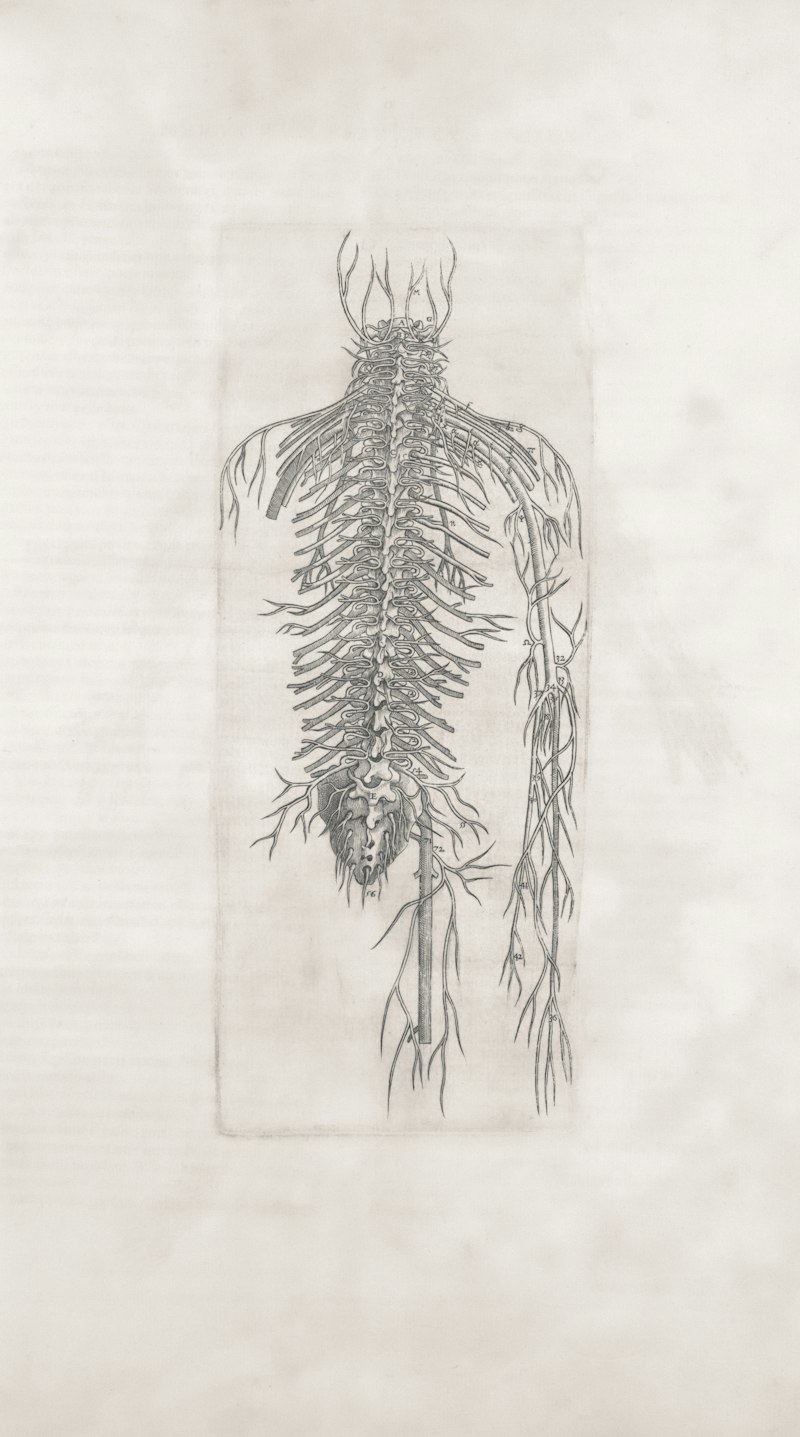
Significant advancements occurred during the Renaissance, fueled by a renewed focus on human dissection. In the 16th century, anatomists such as Andreas Vesalius and Hieronymus Fabricius provided far more detailed and accurate mappings of the spinal nerves and their extensive branching patterns. Vesalius’s groundbreaking work, De humani corporis fabrica libri septem (1543), included detailed illustrations that clarified the emergence of the spinal nerves, their subsequent division into rami (branches), and the precise way in which they innervated the body’s organs and muscles. These detailed morphological descriptions laid the groundwork for modern neuroanatomy, moving the field beyond ancient theories and providing a reliable map of the peripheral pathways.
The 19th century marked a pivotal shift from purely anatomical mapping to physiological understanding. Key discoveries, such as the Bell-Magendie law (establishing the functional separation of dorsal sensory and ventral motor roots), provided the final piece of the functional puzzle. Crucially, the French physiologist Claude Bernard contributed to the understanding that spinal nerves were not merely somatic pathways but also integral components of the autonomic nervous system. His research helped demonstrate that certain nerve fibers carried instructions governing involuntary functions, such as glandular secretion and vascular control, thereby establishing the comprehensive role of these peripheral structures in maintaining homeostasis and internal physiological regulation, far beyond simple movement and sensation.
Detailed Structure and Segmental Organization
Upon exiting the intervertebral foramen, the short, mixed spinal nerve trunk almost immediately divides into several major branches, or rami, which distribute the nerve’s fibers to different regions of the body. The two principal branches are the dorsal (posterior) ramus and the ventral (anterior) ramus. The dorsal rami, typically smaller, innervate the deep muscles and overlying skin of the posterior trunk, providing both motor supply to the intrinsic back muscles (e.g., erector spinae) and sensory innervation to the corresponding strip of skin along the back. Due to their limited distribution, the dorsal rami maintain a distinct segmental pattern throughout the spine.
The ventral rami, however, are significantly larger and are responsible for innervating the much broader areas of the trunk, the neck, and, most importantly, the limbs. In the thoracic region (T1–T12), the ventral rami remain largely segmented, forming the intercostal nerves that supply the intercostal muscles, abdominal wall, and overlying skin. In contrast, the ventral rami of the cervical, lumbar, and sacral regions do not maintain their segmental pattern. Instead, they merge and intertwine extensively with adjacent rami to form complex networks known as nerve plexuses, which are essential for the coordinated, redundant innervation of the extremities.
The four major nerve plexuses formed by the ventral rami include:
- Cervical Plexus (C1–C5): Supplies the muscles and skin of the neck, shoulder, and upper chest, notably giving rise to the phrenic nerve, which is critical for diaphragm control and respiration.
- Brachial Plexus (C5–T1): An extremely complex network that provides the entire motor and sensory innervation to the upper limb, yielding major terminal branches like the median, ulnar, radial, and musculocutaneous nerves.
- Lumbar Plexus (L1–L4): Supplies the lower abdominal wall, anterior thigh, and medial leg, including the femoral and obturator nerves.
- Sacral Plexus (L4–S4): Provides innervation to the buttocks, perineum, and the rest of the lower limb, most famously giving rise to the sciatic nerve, the largest nerve in the human body.
This organization into plexuses ensures that multiple spinal segments contribute to the innervation of a single muscle or skin region in the limbs, providing functional redundancy. If a single spinal nerve root is damaged, the resulting deficit is often partial, as other roots contributing to the plexus can maintain some level of function, highlighting the evolutionary importance of this interwoven structure.
Physiological Characteristics and Fiber Types
The physiological function of spinal nerves is wholly dependent on the diverse types of nerve fibers they carry. These fibers are broadly classified based on the direction of impulse transmission (afferent/efferent) and the types of structures they innervate (somatic/visceral). The composite nature of the spinal nerve allows it to serve as the conduit for all four functional categories of peripheral nerve fibers:
- Somatic Afferent (Sensory): Transmits impulses from the skin, skeletal muscles, and joints (conscious sensation and proprioception).
- Somatic Efferent (Motor): Transmits impulses to skeletal muscles (voluntary movement).
- Visceral Afferent (Sensory): Transmits impulses from visceral organs (internal sensation, often unconscious or perceived as pain/pressure).
- Visceral Efferent (Motor/Autonomic): Transmits impulses to smooth muscles, cardiac muscle, and glands (involuntary control).
The sensory fibers, housed in the dorsal root, are particularly crucial for the maintenance of body awareness and reaction to the environment. They carry highly specialized information. For example, large-diameter, myelinated fibers (A-beta fibers) rapidly transmit information about light touch and proprioception (sense of joint position), allowing for fine motor coordination. Conversely, smaller, thinly myelinated or unmyelinated fibers (A-delta and C fibers) are responsible for transmitting pain and temperature signals, forming the protective barrier that allows the organism to avoid damaging stimuli. The integration of this diverse sensory input occurs immediately upon entering the spinal cord, feeding into ascending pathways destined for the cerebral cortex or directly triggering spinal reflexes.
The motor fibers, originating in the ventral root, execute commands. Somatic motor fibers synapse directly onto skeletal muscle fibers, releasing acetylcholine to initiate contraction, leading to voluntary movement. Visceral efferent fibers, however, are part of the autonomic nervous system (ANS) and require a two-neuron chain (preganglionic and postganglionic neurons). These autonomic fibers are integrated into the spinal nerve through specialized connections called rami communicantes. The white rami communicantes carry preganglionic sympathetic fibers from the spinal nerve to the sympathetic trunk ganglia, while the gray rami communicantes carry postganglionic sympathetic fibers back from the ganglia to the spinal nerve for distribution to sweat glands, smooth muscle in blood vessels, and piloerector muscles in the body wall and limbs. This integration ensures that even involuntary functions like blood pressure regulation in the limbs are governed via the spinal nerve pathways.
Functional Roles in Somatic and Autonomic Systems
The functional dichotomy of the spinal nerves is best understood by separating their roles within the somatic and autonomic nervous systems. Within the somatic nervous system, spinal nerves are the executors of voluntary action and the receptors of conscious external stimuli. Every controlled movement—from the gross manipulation of large muscles to the fine dexterity required for writing—is dependent upon the integrity of the motor fibers within the ventral roots and their subsequent branches. Damage to these motor fibers results in paralysis or weakness (palsy) in the corresponding muscle group. Furthermore, the sensory component relays tactile feedback essential for motor learning and adaptation, ensuring that movements are appropriately scaled and executed based on environmental conditions.
A fundamental function of the spinal nerves is their participation in reflex arcs. A reflex arc is the simplest neural pathway, allowing for rapid, involuntary responses to stimuli. This pathway involves a sensory neuron (via the dorsal root) detecting a stimulus (e.g., heat), synapsing directly or through an interneuron within the spinal cord gray matter, and immediately activating a motor neuron (via the ventral root) to produce a response (e.g., muscle withdrawal). Because these responses bypass higher brain centers, they are extremely fast and protective. The knee-jerk reflex, mediated primarily by the L2–L4 spinal nerves, is a classic example used clinically to test the functional integrity of the spinal segment and its associated peripheral nerves.
The spinal nerves’ role in the autonomic nervous system is primarily mediated by the sympathetic division, especially in the thoracolumbar region (T1–L2). As noted previously, autonomic fibers enter and exit the sympathetic chain via the rami communicantes. This allows the sympathetic nervous system, responsible for the “fight or flight” response, to regulate involuntary functions in the periphery. For instance, sympathetic fibers traveling within the spinal nerves control the constriction and dilation of blood vessels in the skin and muscles, regulate sweating, and influence hair follicle movement. This constant, unconscious regulation is vital for maintaining homeostasis, such as adjusting skin temperature or redistributing blood flow during exercise or stress.
Clinical Relevance and Pathologies
The segmental organization of spinal nerves provides essential diagnostic tools for clinicians, primarily through the concepts of dermatomes and myotomes. A dermatome is the specific area of skin that is predominantly supplied by sensory nerve fibers from a single spinal nerve root. Mapping these dermatomal areas (e.g., C6 supplies the thumb, T4 supplies the nipple line) allows neurologists to pinpoint the level of a spinal cord or nerve root injury based on where a patient experiences sensory loss, numbness, or pain. Similarly, a myotome is the group of muscles primarily innervated by the motor fibers of a single spinal nerve root. Testing the strength of key muscles associated with specific myotomes (e.g., testing L5 function by evaluating big toe extension) helps localize motor deficits.
One of the most common pathologies involving spinal nerves is radiculopathy, often referred to as a “pinched nerve.” This condition occurs when a nerve root is compressed or irritated as it exits the spinal canal, typically due to a herniated or bulging intervertebral disc, bony spurs (osteophytes), or spinal stenosis (narrowing of the canal). The symptoms of radiculopathy are directly related to the functional fibers being compressed: compression of sensory fibers leads to radiating pain (e.g., sciatica, which involves L4–S3 roots), paresthesia (tingling), or numbness; compression of motor fibers leads to muscle weakness or atrophy in the corresponding myotome. Accurate identification of the affected spinal nerve root is crucial for determining appropriate surgical or conservative treatment strategies.
Other significant clinical conditions include trauma and inflammation. Direct trauma, such as that caused by a severe blow or motor vehicle accident, can sever or severely damage the nerve roots, leading to profound and permanent sensory and motor loss depending on the severity and location. Furthermore, infections or inflammatory processes, such as those caused by the herpes zoster virus (shingles), target the Dorsal Root Ganglia. Since the DRG houses the sensory cell bodies, inflammation here causes severe, localized pain and a characteristic rash along the specific dermatomal distribution of the affected spinal nerve, demonstrating the intimate link between the nerve structure and observable clinical manifestations.
Conclusion
Spinal nerves are indispensable components of the nervous system, functioning as the vital communication links between the central processing unit of the spinal cord and the entire periphery. As mixed nerves, they efficiently combine sensory input from the environment and motor commands from the CNS, facilitating everything from essential homeostatic functions regulated by the autonomic system to complex, voluntary movements of the limbs. Their organized, segmental structure, characterized by the fusion of distinct dorsal (sensory) and ventral (motor) roots, ensures comprehensive and reliable innervation. From the earliest anatomical descriptions provided by Galen to modern physiological understanding, the study of spinal nerves continues to define our comprehension of neurological function, providing the foundation for diagnosing and treating a wide array of sensory, motor, and autonomic disorders.
References
- Bernard, C. (1851). De la physiologie générale. Paris: J.-B. Baillière.
- Fabricius, H. (1559). De humani corporis fabrica libri. Basel: Johannes Oporinus.
- Galen. (n.d.). In Encyclopædia Britannica. Retrieved February 27, 2021, from https://www.britannica.com/biography/Galen
- Lund, J. (2008). Spinal Nerves. In Encyclopedia of Neuroscience (pp. 1173-1178). Springer Berlin Heidelberg.
- Vesalius, A. (1543). De humani corporis fabrica libri septem. Basel: Johannes Oporinus.