Auditory Physiology: The Tiny Guard Protecting Your Ears
Scientifically Reviewed · Dr. Marwa Abd-Alazim · October 6, 2026
Review Criteria & Clinical Standards
This content undergoes rigorous scientific peer-review and medical editorial standards at Arab Psychology Network to ensure clinical accuracy, validity, and compliance with evidence-based guidelines from leading psychological and healthcare authorities (APA / WHO).
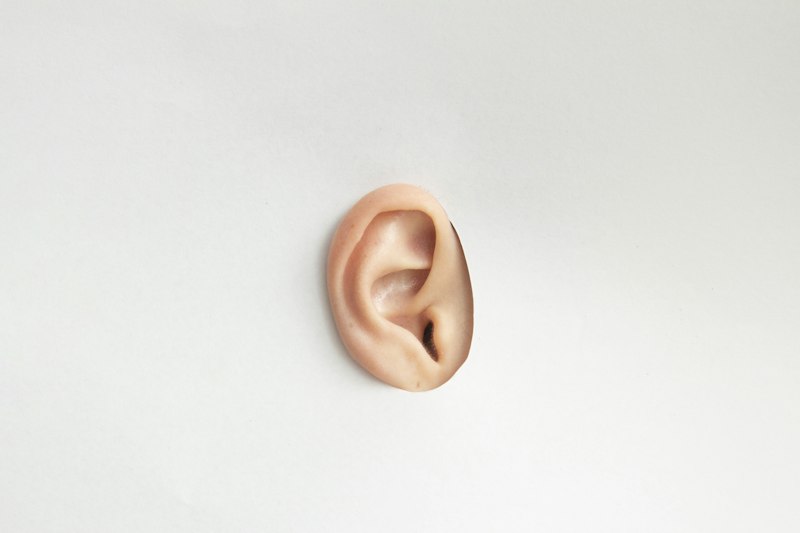
Introduction: The Smallest Muscle with a Significant Role in Audition
The stapedius muscle, despite being the smallest skeletal muscle in the human body, plays an extraordinarily vital role in the intricate process of hearing and protecting the delicate structures of the inner ear. Located deep within the temporal bone, specifically within the middle ear cavity, this minute muscle is an essential component of the auditory system’s defensive mechanisms. Its primary function revolves around modulating the transmission of sound vibrations from the middle ear to the inner ear, thereby preventing potential damage from excessively loud noises and refining auditory perception.
Understanding the stapedius muscle requires an appreciation of its precise anatomical placement, its sophisticated physiological response, and the profound clinical implications associated with its dysfunction. It is not merely a passive structure but an active participant in an involuntary reflex arc known as the acoustic reflex. This reflex mechanism acts as an automatic volume control, dynamically adjusting the sensitivity of our hearing apparatus to a wide range of sound intensities, thereby safeguarding the sensitive hair cells within the cochlea. This entry will delve into the multifaceted aspects of the stapedius muscle, from its fundamental definition to its broader significance within auditory science and clinical practice.
The overarching principle governing the stapedius muscle’s function is sound attenuation. By contracting in response to loud sounds, it exerts a mechanical influence on the stapes bone, one of the three tiny bones of the ossicular chain. This action stiffens the entire chain, reducing the efficiency with which sound energy is transferred to the inner ear. This protective mechanism is crucial for preserving long-term hearing health and ensuring optimal sound processing in varying acoustic environments. Without the functional integrity of the stapedius muscle, our auditory system would be far more susceptible to damage from everyday loud noises, highlighting its indispensable contribution to human sensory experience.
Anatomy of the Stapedius Muscle: A Microscopic Marvel
Anatomically, the stapedius muscle is a remarkable structure, celebrated for its diminutive size, yet precise architecture. It originates from the bony walls of the pyramidal eminence, a small, cone-shaped projection located on the posterior wall of the middle ear cavity. From this origin, its tendon emerges, passing through a small aperture at the apex of the pyramid before inserting onto the neck of the stapes bone. This strategic attachment allows the muscle to exert a leverage effect on the stapes, the innermost bone of the ossicular chain, which is directly connected to the oval window of the inner ear.
Measuring approximately 2 millimeters in length and 0.2 millimeters in thickness, the stapedius muscle holds the distinction of being the smallest skeletal muscle in the human body. Despite its microscopic dimensions, it is composed of striated muscle fibers, similar to the much larger muscles responsible for limb movement. These fibers contain sarcomeres, the fundamental contractile units, enabling rapid and forceful contraction when stimulated. This intricate microstructure facilitates its swift response to auditory stimuli, underscoring its sophisticated design for a highly specialized function.
The innervation of the stapedius muscle is provided by the facial nerve (Cranial Nerve VII), specifically by a small branch that arises from the vertical segment of the nerve within the temporal bone. This direct innervation by the facial nerve is clinically significant, as it means that disorders affecting the facial nerve can also impact the function of the stapedius muscle. The precise neural pathway from the brainstem to the stapedius muscle forms a critical part of the acoustic reflex arc, enabling rapid, bilateral, and involuntary muscle contraction in response to sound, further emphasizing its role as an integral component of the auditory protection system.
Physiology: The Acoustic Reflex Mechanism
The physiological action of the stapedius muscle is intrinsically linked to the acoustic reflex, an involuntary muscular contraction that occurs in both middle ears in response to sufficiently loud sound stimuli. When a sound exceeding a certain intensity threshold (typically around 70-100 dB HL, depending on frequency and individual) reaches the ear, an afferent signal is transmitted from the cochlea via the auditory nerve to the brainstem. Within the brainstem, specifically the cochlear nucleus and superior olivary complex, this auditory information is processed, triggering an efferent motor command. This command is then relayed through the facial nerve to the stapedius muscle.
Upon receiving the neural impulse, the stapedius muscle contracts, pulling the neck of the stapes bone posteriorly and laterally. This movement causes the stapes to tilt slightly, increasing the impedance of the ossicular chain. By stiffening the chain of tiny bones (malleus, incus, and stapes), the efficiency of sound energy transmission from the eardrum to the oval window is significantly reduced. This attenuation is more pronounced for low-frequency sounds, which is particularly beneficial as high-intensity low-frequency sounds carry substantial energy that can be damaging to the delicate structures of the inner ear.
The primary purpose of this reflex is to protect the inner ear from acoustic trauma, thereby helping to prevent noise-induced hearing loss. However, the acoustic reflex also plays a more subtle role in enhancing speech perception. By selectively attenuating low-frequency components of sound, it can help to reduce the masking effect of background noise, allowing higher-frequency speech sounds to be more clearly perceived. Furthermore, the reflex can also reduce the perception of self-generated sounds, such as chewing or speaking, which would otherwise be excessively loud due to bone conduction, contributing to a more balanced and comfortable auditory experience.
Historical Context of Middle Ear Function Understanding
The understanding of the middle ear and its components, including the stapedius muscle, has evolved over centuries, building upon foundational anatomical discoveries. Early anatomists, such as Andreas Vesalius in the 16th century, provided some of the first detailed descriptions of the human ear structures. However, the functional significance of these tiny bones and muscles remained largely speculative for a considerable time. The detailed mechanics of sound transmission through the ossicular chain, and the precise roles of the stapedius and tensor tympani muscles, only began to be fully elucidated with advancements in physiological experimentation and the development of more sophisticated investigative tools.
In the 17th century, scientists like Jean-Baptiste Denis described the general structure of the ear in more detail, yet a comprehensive understanding of the dynamic interplay of the ossicular chain and its associated musculature was still distant. The concept of the acoustic reflex as a protective mechanism gained traction in the late 19th and early 20th centuries. Researchers began to observe and measure the changes in middle ear impedance in response to loud sounds, leading to the gradual recognition of the stapedius muscle’s active role in this process. This period marked a shift from purely anatomical descriptions to a more functional and physiological understanding of the auditory system.
The detailed study of the facial nerve and its branches, which innervates the stapedius muscle, also contributed significantly to understanding its function and clinical importance. As neurological sciences advanced, the intricate neural pathways involved in the acoustic reflex arc were mapped, further solidifying the stapedius muscle’s position as a key player in auditory protection and modulation. This historical progression highlights how the study of the stapedius muscle, initially a mere anatomical curiosity, transformed into a crucial area of research, yielding insights into both normal hearing physiology and the pathophysiology of various auditory and neurological disorders.
The Stapedius Muscle in Everyday Life: A Practical Example
To truly grasp the significance of the stapedius muscle, consider a common scenario: you are walking down a bustling city street, and suddenly, an unexpected and extremely loud truck horn blares right beside you. Without the rapid, involuntary action of your stapedius muscles, the intense sound pressure could potentially cause immediate damage to the delicate hair cells within your cochlea, leading to temporary or even permanent hearing loss. This is where the stapedius muscle performs its critical protective function, acting as an automatic and instantaneous sound dampener.
Here’s a step-by-step breakdown of how the psychological principle of the acoustic reflex, mediated by the stapedius muscle, applies in this real-world example:
- Sound Detection: The sudden, loud truck horn produces powerful sound waves that enter your outer ear and vibrate your eardrum.
- Signal Transmission: These vibrations are then mechanically amplified by the ossicular chain (malleus, incus, and stapes) in your middle ear and transmitted to the inner ear via the oval window.
- Brainstem Processing: The inner ear converts these mechanical vibrations into electrical signals, which are sent via the auditory nerve to the brainstem. The brainstem rapidly processes the high intensity of this sound.
- Neural Command: In response to the detected loud sound, the brainstem sends an immediate motor command through the facial nerve to the stapedius muscles in both of your ears (the acoustic reflex is bilateral).
- Muscle Contraction: Your stapedius muscles instantly contract. This action pulls the stapes bone, stiffening the entire ossicular chain.
- Sound Attenuation: The stiffened ossicular chain becomes less efficient at transmitting the powerful sound energy to the inner ear. This effectively dampens the incoming sound, particularly its low-frequency components, reducing the overall intensity that reaches the sensitive cochlea.
- Protection Achieved: As a result, your inner ear is protected from the potentially damaging effects of the loud horn, minimizing the risk of acoustic trauma and preserving your hearing sensitivity.
This rapid, automatic response, occurring within milliseconds, is a testament to the sophisticated protective mechanisms inherent in the human auditory system, with the stapedius muscle playing a central, indispensable role.
Clinical Significance and Impact on Hearing Health
The functional integrity of the stapedius muscle and its associated acoustic reflex is of paramount importance in clinical audiology and otology. Its assessment provides valuable diagnostic information for various conditions affecting the middle ear, inner ear, auditory nerve, and the facial nerve itself. The presence, absence, or abnormalities of the acoustic reflex can guide clinicians in localizing pathologies within the auditory pathway.
Clinically, the stapedius muscle is utilized in several ways. For instance, testing the acoustic reflex threshold (the softest sound level that elicits the reflex) and its decay (how long the contraction can be sustained) is a routine part of audiological evaluations. An absent or elevated reflex threshold can indicate a variety of issues, including conductive hearing loss due to otosclerosis or fluid in the middle ear, sensorineural hearing loss, or lesions along the auditory or facial nerve pathways. For example, in cases of Bell’s palsy, where the facial nerve is temporarily paralyzed, the stapedius muscle on the affected side will not contract, leading to an absent acoustic reflex and sometimes a condition called hyperacusis, an abnormal sensitivity to sound.
Furthermore, the stapedius muscle’s protective role has significant implications for public health, particularly in preventing noise-induced hearing loss in occupational settings or from recreational activities. While the reflex offers some protection, it is not foolproof against prolonged exposure to very loud sounds, which can overwhelm its dampening capacity. Understanding its limitations helps in advocating for hearing protection measures. Researchers also study the stapedius muscle to better understand conditions like tinnitus, where its dysfunction might contribute to auditory symptoms, or hyperacusis, where an impaired or absent reflex can exacerbate sound intolerance. The muscle’s response also provides insights into the overall health and function of the central auditory pathways and brainstem reflexes, making it an invaluable diagnostic tool.
Connections to Auditory Neuroscience and Related Concepts
The stapedius muscle does not operate in isolation; its function is intimately connected with a broader network of concepts within auditory neuroscience and sensory physiology. Its closest anatomical and functional counterpart in the middle ear is the tensor tympani muscle. While both muscles contribute to the acoustic reflex by stiffening the ossicular chain, they differ in their innervation and primary reflex triggers. The tensor tympani is innervated by the trigeminal nerve (Cranial Nerve V) and is primarily involved in non-acoustic reflexes, such as those triggered by tactile stimulation of the face or during chewing and swallowing, though it can also respond to very loud sounds. The stapedius muscle, with its facial nerve innervation, is the dominant muscle in the acoustic-acoustic reflex.
Beyond its direct muscular counterpart, the stapedius muscle’s function is inextricably linked to the mechanics of the entire ossicular chain – the malleus, incus, and stapes. These three tiny bones act as an impedance matching system, efficiently transferring sound energy from the air-filled middle ear to the fluid-filled inner ear. The stapedius muscle modifies this mechanical advantage, reducing the transfer efficiency to protect the cochlea. Its action also relates to the concept of auditory threshold, influencing the dynamic range of hearing by modulating the intensity of sounds reaching the sensory receptors.
The stapedius muscle’s role places it firmly within the broader subfield of Auditory System Physiology and Neurotology. It highlights the complex interplay between mechanical structures, neural pathways, and involuntary reflexes that characterize the human sensory systems. Understanding its function is crucial for comprehending how the brainstem integrates auditory input with motor output, and how peripheral structures contribute to the central processing of sound. This small muscle therefore serves as a microcosm for exploring fundamental principles of sensory protection, neural reflex arcs, and the adaptive capabilities of the human body in response to environmental stimuli.