Stealth Jurors: Unmasking Hidden Bias in the Courtroom
Scientifically Reviewed · Dr. Marwa Abd-Alazim · August 25, 2026
Review Criteria & Clinical Standards
This content undergoes rigorous scientific peer-review and medical editorial standards at Arab Psychology Network to ensure clinical accuracy, validity, and compliance with evidence-based guidelines from leading psychological and healthcare authorities (APA / WHO).
The Phenomenon of the Stealth Juror: Definition and Context
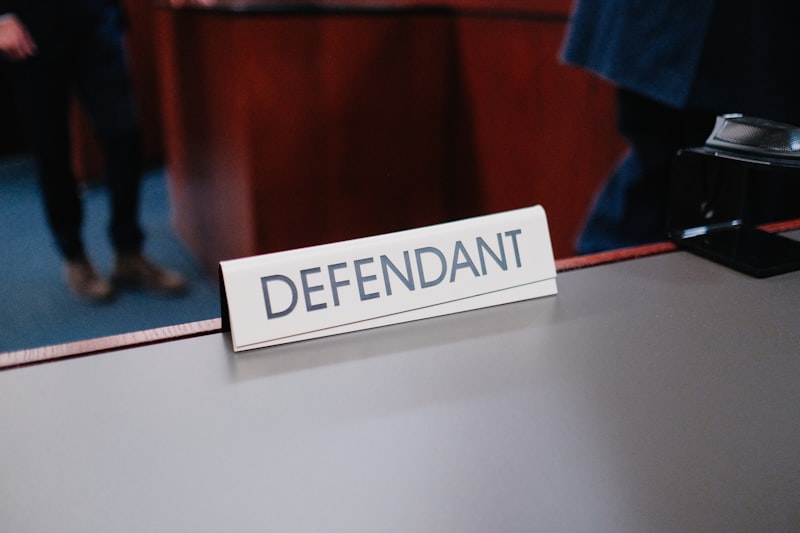
The concept of the stealth juror refers to an individual who actively and intentionally conceals significant biases, preconceptions, or personal experiences during the jury selection process, known as voir dire, with the calculated aim of being seated on a jury. Unlike a merely biased juror whose prejudices might be revealed through standard questioning or passive observation, the stealth juror undertakes a deliberate campaign of deception, providing answers that are socially desirable or specifically tailored to avoid exclusion by the judge or the opposing legal counsel. This behavior fundamentally undermines the constitutional guarantee of an impartial jury, transforming the fact-finding mission of the court into an opportunity for the individual to advance a personal agenda or ensure a predetermined outcome, irrespective of the evidence presented during the trial. The presence of such a juror represents a profound threat to the integrity and fairness of the judicial system, requiring extensive diligence from all parties involved in litigation.
The selection of an impartial jury is the cornerstone of justice in adversarial legal systems, relying heavily on the candor of prospective jurors when questioned about their ability to render a verdict based solely on the law and the presented facts. When a prospective juror hides material information—such as a personal relationship with a party, an undisclosed negative experience with similar litigation, or deeply held ideological views relevant to the case’s subject matter—they violate their implicit duty to the court and corrupt the jury pool from within. The goal of the stealth juror is not simply to serve, but to exert influence over the deliberation process, acting as an advocate for a hidden viewpoint rather than a neutral arbiter of truth. This intentional misrepresentation during the preliminary stages of the trial is what legally differentiates the stealth juror from one who may possess unconscious or minor biases that were simply not thoroughly explored during questioning.
Understanding the context of the stealth juror requires recognizing the high stakes involved in many legal disputes, which can incentivize individuals to manipulate the selection process. Civil cases involving vast sums of money, or criminal cases addressing polarizing social issues like capital punishment, gun control, or specific forms of corporate liability, often attract individuals who feel a strong, personal investment in the verdict. These individuals may view their deception not as a legal or ethical failing, but as a necessary act of social justice or personal retribution. Legal scholars and trial consultants dedicate significant resources to identifying these hidden agendas, acknowledging that a single, highly motivated individual can possess the persuasive power necessary to sway the entire jury during the critical deliberation phase, thereby substituting personal prejudice for judicial fairness.
Psychological Motivations and Intent
The motivations driving a prospective juror to become a stealth juror are multifaceted and deeply rooted in individual psychology, moving beyond simple disagreement with the law or general bias. A primary psychological driver is the desire for control and agency within a system often perceived as distant or unresponsive. If an individual feels strongly about a particular social or political issue that is central to the trial—for instance, medical malpractice, police misconduct, or environmental regulation—they may feel compelled to ensure the “correct” outcome, believing that the judge and attorneys cannot be trusted to select a truly representative jury. This sense of ideological mission often overrides the ethical obligation to honesty, leading the individual to rationalize their deceit as a necessary means to a righteous end, providing them with a highly personal investment in the trial’s conclusion.
Another significant motivational factor is confirmation bias, coupled with a pre-existing cognitive commitment to one side of the dispute. A stealth juror may have already decided the guilt or liability of one party based on preliminary media coverage or personal experiences that mirror the case details. Their intentional concealment during voir dire is thus driven by a need to validate their initial conclusion. This intent is crucial because it transforms the juror from a neutral vessel of fact-finding into a determined advocate. The psychological energy expended on maintaining the façade of impartiality throughout the selection process and the trial itself is substantial, often requiring the juror to engage in calculated suppression of instinctual reactions and careful scripting of responses to difficult questions posed by counsel.
In some cases, the motivation is highly personal, potentially involving unresolved trauma or a desire for specific revenge. For example, an individual who was previously a victim of a crime similar to one being tried might conceal that history to ensure they are seated, intending to use the jury room as a platform for catharsis or vicarious justice against the defendant, regardless of the evidence presented in the current case. These deeply personal, often unconscious, drives make the individual particularly resistant to objective legal reasoning. The psychological complexity of the stealth juror lies in the fact that their deception is not usually random; it is a targeted effort to manipulate the system to fulfill a specific, and often powerful, inner need or ideological commitment that they believe is paramount to the abstract concept of judicial neutrality.
The Mechanics of Deception During Voir Dire
The process of voir dire is designed to be a filtering mechanism, relying on open communication to identify and dismiss prospective jurors who harbor disqualifying biases. The stealth juror, however, approaches this process as a strategic game, employing specific mechanical techniques of deception to pass muster. One fundamental technique is providing highly generalized or ambiguous answers to open-ended questions. Where an attorney seeks narrative detail about past experiences or opinions, the stealth juror offers vague platitudes about fairness and open-mindedness, carefully avoiding any specific language that might trigger a challenge for cause or prompt a preemptory strike. They understand that specific details, such as mentioning membership in a highly partisan organization or detailing a negative interaction with law enforcement, are instant red flags, and they systematically scrub these details from their public presentation.
A second key mechanical technique involves mastering the art of the socially desirable answer. Jurors are often asked questions about controversial topics, such as their feelings regarding large financial judgments, corporate responsibility, or specific ethnic groups. The stealth juror, having anticipated these questions, provides the response they know the court expects—the answer of an ideal, impartial citizen—rather than their true opinion. This requires advanced cognitive effort, involving not just lying by omission, but active fabrication. For instance, if asked whether they can be fair to a large corporation despite personal feelings about corporate greed, the stealth juror will offer a firm “Yes, I can set aside my personal feelings,” even if their actual intent is to punish the corporation regardless of the evidence of negligence in the specific case before them.
Furthermore, the mechanics of deception extend into non-verbal communication and demeanor. Experienced trial attorneys and jury consultants often rely on subtle cues, such as shifts in posture, lack of eye contact, or signs of hostility, to gauge a prospective juror’s true disposition. The stealth juror is often acutely aware of this scrutiny and consciously works to mask these indicators. They may present an overly eager or docile demeanor, maintain consistent eye contact, and use neutral, measured tones, creating a persona of reliability and apparent impartiality that belies their true intentions. This level of sustained performance makes detection exceptionally challenging, as the deception is not a fleeting moment of dishonesty but a calculated, ongoing performance designed to penetrate the judicial firewall of voir dire and secure a seat on the panel.
Legal and Ethical Ramifications
The discovery of a stealth juror post-verdict carries profound legal ramifications, often resulting in complex appellate challenges that threaten the finality of the judgment. The presence of a juror who intentionally concealed material bias is viewed as a violation of the fundamental right to a fair trial, guaranteed by the Sixth Amendment of the U.S. Constitution and analogous state provisions. If it is successfully proven that the juror’s deception was material—meaning the information concealed would have legitimately provided a basis for disqualification—the court may be required to grant a mistrial or overturn the verdict, thereby wasting significant judicial resources and causing substantial emotional and financial distress to the litigants. The legal standard for overturning a verdict based on juror misconduct, particularly in the United States, is often governed by the *McDonough* standard, requiring proof of intentional concealment and a finding that the concealed facts demonstrate actual bias that resulted in prejudice to the complaining party.
Ethically, the act of becoming a stealth juror constitutes a severe breach of civic duty and the solemn oath taken before the court. The juror swears or affirms that they will tell the truth during voir dire and that they will render a decision based solely on the evidence and the law, free from external prejudice. By intentionally lying during selection, the individual commits a deliberate act of contempt against the court and the principles of justice. This ethical violation is often seen as more grievous than passive bias because it involves premeditated manipulation of the system. While few jurisdictions actively prosecute jurors for misrepresentation during selection, the ethical transgression highlights the fragility of the jury system, which relies entirely on the honesty and good faith of its participants to function as intended.
The discovery of juror misconduct can lead to lengthy and difficult evidentiary hearings, where the judge must determine the nature and extent of the deception. If the stealth juror is discovered during the trial, they can be immediately removed and replaced by an alternate, minimizing harm. However, post-verdict exposure is far more damaging. The legal system must balance the need to ensure fairness with the strong policy interest in protecting the sanctity of jury deliberations and the finality of verdicts. This balancing act often involves probing the juror’s state of mind and the exact nature of the lie, which can be an invasive and highly contentious process. Ultimately, the successful challenge of a verdict based on a stealth juror sends a clear, if costly, signal that the intentional corruption of the jury selection process will not be tolerated, reinforcing the paramount importance of judicial impartiality.
Challenges in Detection and Remediation
Detecting the stealth juror presents significant challenges due to the inherent limitations of the voir dire process itself. Attorneys are typically granted limited time to question a large panel of prospective jurors, restricting the depth of inquiry possible. Furthermore, the very nature of human deception means that highly motivated individuals are adept at anticipating questions and tailoring their responses to appear neutral. Standard psychological tools used to detect general truthfulness often fail when confronted with a juror who has mentally rehearsed their deceptive narrative. The use of supplemental written questionnaires can sometimes unearth inconsistencies, but these too can be strategically managed by the individual determined to conceal their true feelings, making remediation reliant on the sheer luck of identifying a subtle flaw in their performance.
Remediation strategies are complicated by the legal constraints placed on jury investigation. While attorneys and their consultants may conduct limited background research, including searches of public records and social media (where permissible), accessing private information is prohibited. A juror who maintains a minimal digital footprint or who is careful to exclude partisan commentary from public view is nearly impossible to vet fully. Moreover, even when suspicions are raised during questioning, the judge may be reluctant to dismiss a juror for cause without concrete evidence of bias, forcing the attorney to use a limited preemptory strike on someone whose bias is merely suspected rather than proven. This difficulty places the non-deceiving party at a distinct disadvantage, as they must expend valuable resources and strikes based on intuition rather than concrete fact.
When a stealth juror is discovered after the verdict has been rendered, remediation involves a burdensome and highly contentious legal battle. The challenging party must first gain permission to investigate the jury post-verdict, which is often difficult due to rules protecting deliberation privacy. If evidence of deception is found, the challenging party must then prove that the concealed information was material and, crucially, that the resulting bias actually prejudiced the outcome of the trial. Proving this causal link—that the juror’s hidden bias, rather than the facts or the law, drove the verdict—is a high bar that demands extensive time, expert testimony, and significant legal expense. Thus, while legal remedies exist, the difficulty of detection combined with the complexity of post-verdict remediation means that many stealth jurors succeed in their mission without consequence.
Impact on Trial Fairness and Due Process
The most corrosive impact of the stealth juror is the direct assault on the principle of trial fairness and the constitutional guarantee of due process. A fundamental tenet of the American legal system is that verdicts must be based on a rational application of the law to the facts presented in court, not on extraneous personal grudges or predetermined ideological positions. When a stealth juror successfully infiltrates the panel, they introduce an element of calculated irrationality. They do not enter the deliberation room seeking truth; they enter seeking validation for their concealed perspective, often acting as an internal advocate or saboteur whose mission is to sway other jurors toward a specific, non-evidentiary outcome. This intentional corruption of the deliberation process means that the final verdict, even if factually correct, lacks the necessary procedural legitimacy.
During deliberation, the stealth juror can exert disproportionate influence. Highly motivated individuals are often more vocal, persistent, and persuasive than passively serving jurors. They may deliberately introduce misinformation, appeal to non-legal emotional arguments, or simply refuse to budge from their position, leading to a hung jury or a coerced verdict. The presence of a single, determined juror with a hidden agenda can effectively negate the evidence and the judge’s instructions, transforming the collective decision-making process into an ideological battleground. This manipulation erodes the trust among the jurors themselves and, subsequently, the public’s confidence in the judicial outcome, regardless of which party ultimately prevailed.
Ultimately, the presence of a stealth juror fundamentally violates due process because the process itself has been compromised from its inception. Due process demands that both parties have an equal opportunity to present their case before an unbiased tribunal. When one party is unknowingly forced to present their case to a juror who has already determined the outcome and actively lied to secure that position, that party is denied their constitutional right to a fair hearing. This violation necessitates judicial vigilance, as the integrity of every verdict relies upon the foundational assumption that the individuals judging the case have met the minimum standard of impartiality—an assumption the stealth juror intentionally renders false through their deceit.
Profiles and Typologies of Stealth Jurors
While the term stealth juror encompasses anyone who hides bias, specific typologies help legal professionals understand the underlying motivations and anticipate behavior. One common profile is the Ideological Activist, characterized by a deep, immovable commitment to a particular social or political cause central to the case (e.g., environmental protection, specific political ideologies, or anti-corporate sentiment). This juror views the trial as a crucial opportunity to advance their cause, believing the systemic outcome is more important than the individual facts. They are highly intelligent, articulate, and often masterful at providing neutral, boilerplate answers during voir dire, having mentally prepared to mask their strong affiliations to ensure they can influence the resulting public policy or legal precedent.
A second typology is the Personal Vindicator. This individual has a direct, often traumatic, personal history that mirrors the facts of the case—they may have been a victim of a similar incident, sued by a similar entity, or have a family member with a parallel experience. Their motivation is not abstract ideology but personal catharsis or revenge. They seek to use the current trial to settle an old score or achieve the justice they feel was denied to them previously. These jurors are often the most difficult to spot because their concealed information is specific and highly personal; they are motivated by emotional resonance rather than grand political schemes. They will typically deny having any relevant experience or downplay its significance, knowing that full disclosure would result in immediate dismissal for cause due to clear conflict of interest.
The third major type is the Contrarian or Authority Resister. This juror is motivated less by the case substance and more by a desire to challenge or disrupt established authority, including the judge, the legal system, or large institutional parties. They may conceal minor criminal histories, past disputes with government agencies, or a general anti-establishment worldview, simply because they wish to prove that they can outsmart the system. Their deception is driven by a desire for personal power and validation of their cleverness. Identifying these individuals requires looking for subtle inconsistencies in their background information, or perhaps an overly defiant or overly cooperative demeanor during questioning, which can indicate an underlying effort to manipulate the authority figures in the courtroom.
Mitigation Strategies for Legal Counsel
To mitigate the risk posed by the stealth juror, legal counsel must employ rigorous and adaptive strategies during the limited time afforded in voir dire. The most effective strategy involves shifting away from simple, closed-ended questions that allow for easy, deceptive “yes/no” or “I can be fair” responses. Instead, counsel should focus on using specific, narrative-based questions designed to elicit detailed stories, opinions, or specific past experiences. For example, rather than asking, “Do you have any bias against doctors?” a better question might be, “Describe an instance in your life where you felt the outcome of a situation was unfair, and what role authority or expertise played in that feeling?” Eliciting narrative responses makes it significantly harder for a stealth juror to maintain a consistent, impartial façade.
Strategic utilization of jury consultants and supplementary data is another critical mitigation technique. Consultants, often trained in forensic psychology and non-verbal communication, can observe subtle cues that attorneys, focused on the legal elements, might miss—such as hesitation, defensive body language, or overly rehearsed answers. Furthermore, where permitted by court rules, detailed review of public records and social media profiles can provide invaluable context. A juror who professes impartiality regarding corporate malpractice in court, but whose social media history is filled with anti-corporate rhetoric, immediately raises a red flag, allowing counsel to use a preemptory strike or challenge for cause based on factual inconsistency.
Finally, counsel must develop a keen understanding of the specific demographics and ideological landscape relevant to the case and be prepared to use preemptory challenges strategically on jurors who are “too good to be true.” A prospective juror who fits a demographic profile highly likely to possess a specific bias (e.g., a strong proponent of tort reform in a high-damages case) but who provides perfectly neutral, generalized answers with excessive ease, should be treated with heightened suspicion. The decision to strike a juror is often based on subtle, cumulative indicators that suggest intentional concealment rather than obvious bias. By preparing targeted questions, utilizing expert observation, and prioritizing candor over demographic preference, legal counsel can significantly reduce the likelihood of a high-impact stealth juror successfully infiltrating the final panel.