Stereognosis: Identifying the World Through Touch Alone
Scientifically Reviewed · Dr. Marwa Abd-Alazim · September 1, 2026
Review Criteria & Clinical Standards
This content undergoes rigorous scientific peer-review and medical editorial standards at Arab Psychology Network to ensure clinical accuracy, validity, and compliance with evidence-based guidelines from leading psychological and healthcare authorities (APA / WHO).

STEREOGNOSIS: Definition and Foundational Concepts
Stereognosis, derived from the Greek words stereos (solid) and gnosis (knowledge), is the sophisticated neurocognitive ability to recognize the three-dimensional form, identity, and nature of an object solely through the sense of touch, without the aid of vision or audition. This ability is often referred to interchangeably with tactile gnosis or haptic perception, representing one of the highest orders of sensory processing performed by the brain. It moves far beyond simple tactile sensation, which merely registers pressure, temperature, or vibration. Instead, stereognosis requires the instantaneous and seamless integration of multiple sensory inputs—including kinesthesia (awareness of movement), proprioception (sense of body position), and fine discriminative touch—to construct a cohesive mental image of the object being manipulated. The successful identification of an everyday item, such as a key, a coin, or a paperclip, rests entirely upon the integrity of these complex neural pathways and the brain’s ability to compare the perceived sensory data against stored memory templates.
The distinction between primary tactile sensation and stereognosis is crucial for understanding its clinical significance. A patient may retain unimpaired primary senses—they can feel the pressure of a doctor’s finger and discern sharp from dull stimuli—yet be completely unable to name or describe an object placed in their hand. This inability, known as astereognosis, signifies a failure not of the peripheral nervous system (the input mechanism), but of the central nervous system’s capacity for sensory integration and cortical interpretation. Stereognosis demands active exploration and manipulation; the fingers must actively move across the object’s surface, detecting its contours, texture, and weight distribution. This active process generates a dynamic sensory feedback loop that is far more informative than passive contact alone, highlighting the cognitive involvement required for object recognition.
Successful stereognosis is fundamentally reliant on the comparison of immediate sensory data with previously stored cognitive representations. When an individual handles a car key, the brain simultaneously registers the cold metallic temperature, the specific serrated texture, the distinct shape, and the weight. These disparate pieces of information are rapidly synthesized in the parietal lobe and then referenced against memory schemas of known objects. If the sensory input matches the memory template of a key, recognition occurs. If this integrative process is disrupted, the individual might describe the object’s individual characteristics (e.g., “it is cold and has sharp edges”) but fail to achieve semantic identification (“it is a key”), demonstrating a dissociation between elemental sensation and conceptual knowledge.
The Neuroanatomy of Stereognosis
The neural architecture supporting stereognosis is complex, primarily involving the ascending pathways of the spinal cord and high-level cortical processing centers within the brain. The initial sensory data, specifically fine touch, vibration, and proprioception, travels via the Dorsal Column-Medial Lemniscus (DCML) pathway. This highly myelinated tract ensures rapid transmission of precise positional and discriminative information from the periphery up to the thalamus. At the thalamic level, specifically the Ventral Posterior Lateral (VPL) nucleus, these signals are sorted and relayed to the primary somatosensory cortex (S1). The integrity of the DCML pathway is essential, as primary input deficits often masquerade as true astereognosis, requiring careful clinical separation during assessment.
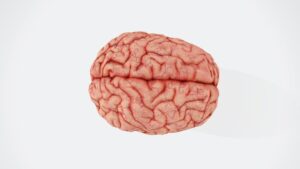
The critical stage of integration and recognition occurs within the cerebral cortex, predominantly spanning the primary (S1) and secondary (S2) somatosensory cortices, culminating in the posterior parietal lobe. The S1 cortex, located in the postcentral gyrus, is responsible for mapping and localizing the initial sensory input (e.g., where the pressure is applied). However, it is the secondary somatosensory cortex (S2) and the surrounding posterior parietal association areas that perform the crucial task of combining these elemental sensations into a meaningful percept. S2 integrates input from both S1 and areas involved in memory and motor control, allowing for the creation of a unified, three-dimensional representation of the handled object. Lesions confined solely to S1 may reduce the sensitivity of touch, but true astereognosis—the loss of recognition—is more commonly associated with damage extending into S2 and the association areas.
The parietal lobe acts as the crucial hub for spatial awareness and multisensory integration. The inferior parietal lobule, in particular, receives converging input regarding the object’s size, shape, and how the hand is configured around it (kinesthetic data). This area connects extensively with frontal lobe regions responsible for motor planning (allowing for purposeful manipulation) and temporal lobe structures involved in visual recognition and memory storage. Therefore, stereognosis is not a function localized to a single point but rather a result of a distributed network. Damage anywhere along this sophisticated pathway—from the peripheral nerves transmitting proprioception to the cortical association areas responsible for synthesizing the final percept—can impair the ability to identify objects by touch alone.
Components and Submodalities of Recognition
Stereognosis is not a monolithic sense but rather a composite skill relying on the precise interaction of several distinct sensory submodalities. For an individual to successfully identify an object, they must accurately process and integrate information regarding its fundamental physical properties. These necessary inputs include texture discrimination (the ability to differentiate smooth, rough, or granular surfaces), proprioception (knowing the exact position and configuration of the fingers and hand), kinesthesia (sensing the motion and effort used during manipulation), and thermal perception (detecting the temperature of the object, which aids in material identification, e.g., metal versus plastic). The brain must synthesize these components rapidly to form a holistic understanding of the object’s physical reality.
The process of active touch is paramount to successful stereognosis. Unlike passive touch, where an object is merely pressed against the skin, active touch involves the purposeful manipulation, rotation, and exploration of the object using exploratory procedures (EPs). Psychologist James Gibson outlined several key exploratory procedures utilized in haptic perception, each designed to extract specific properties:
- Lateral Motion: Used primarily to detect and discriminate texture and surface roughness.
- Pressure: Used to assess the hardness and compliance of the object.
- Enclosure: Involving grasping the object to determine its overall size and shape.
- Contour Following: Tracing the edges and curves to establish the precise form.
- Unsupported Holding: Used to estimate the object’s weight and density.
The ability to perform these procedures efficiently and interpret the resultant feedback distinguishes highly acute stereognosis from basic sensation. If a patient is unable to actively manipulate an object due due to motor deficits (e.g., severe paralysis or apraxia), the assessment of stereognosis becomes significantly complicated, as the failure may stem from motor inability rather than sensory integration failure. Therefore, true stereognosis requires the functional integrity of both the sensory processing pathways and the motor system that allows for meaningful interaction with the environment.
Clinical Assessment and Testing Procedures
Testing for stereognosis is a crucial component of a comprehensive neurological and sensory examination, particularly when investigating potential lesions in the parietal lobe or dorsal columns. The standard procedure involves placing common, easily identifiable objects into the patient’s hand while their eyes are closed, preventing any visual cues. Objects chosen for testing are typically familiar household items with distinct shapes, sizes, and textures, ensuring that failure is due to sensory processing rather than unfamiliarity.
The methodology must be rigorous to ensure accurate diagnosis. The clinician typically presents a series of objects, one at a time, such as a key, a coin (penny or nickel), a paperclip, a marble, or a safety pin. The patient is instructed to manipulate the object, using their fingers and palm, and then verbally identify the object or describe its physical properties. Crucially, the examiner must first confirm the integrity of primary sensations, including light touch, pinprick, vibration, and proprioception. If a patient has profound loss of primary sensation, they cannot perform stereognosis, and the resultant deficit is a consequence of the primary loss, not a failure of cortical integration. Astereognosis is only diagnosed when primary sensation is substantially intact or minimally impaired.
Scoring and interpretation involve noting not only whether the patient correctly names the object, but also the nature of any errors. For instance, a patient might incorrectly identify a key as a coin (a shape error), or they may correctly describe all characteristics without achieving semantic recognition (a gnosis error). The clinician must also test each hand separately, as unilateral astereognosis often points directly to a contralateral parietal lobe lesion. Furthermore, stereognosis testing is often paired with tests for related parietal functions, such as agraphesthesia (the inability to recognize letters or numbers written on the skin) and two-point discrimination, as concurrent failures strongly localize the pathology to the sensory association cortices. A consistent failure across these higher-order sensory tasks confirms a deficit in cortical integration, rather than peripheral nerve damage.
Pathophysiology: Causes of Astereognosis
Astereognosis, the clinical term for the inability to recognize objects by touch, is almost invariably symptomatic of a central nervous system pathology affecting the sensory integration areas. The most common cause is a vascular event, such as an ischemic stroke or hemorrhage, that impacts the blood supply to the parietal lobe. Because the parietal lobe, particularly the superior and inferior parietal lobules, is responsible for synthesizing tactile and proprioceptive inputs, damage to this area severely compromises the ability to form a cohesive, recognizable percept. Unilateral astereognosis is a hallmark sign of a contralateral parietal lesion, indicating damage to the pathways after they have crossed the midline.
Beyond stroke, astereognosis can result from a variety of structural and functional pathologies. Tumors, both benign and malignant, growing within or adjacent to the somatosensory cortex or the underlying white matter tracts can compress or destroy the neural tissue necessary for tactile recognition. Traumatic Brain Injury (TBI), particularly blunt force trauma resulting in contusions or shearing injuries (Diffuse Axonal Injury) in the parietal-occipital region, frequently leads to sensory integration deficits. Furthermore, certain progressive neurological disorders, such as Alzheimer’s disease or other forms of dementia that involve significant parietal lobe atrophy, may present with astereognosis as the disease progresses and cortical function declines.
It is essential to differentiate between different types of central nervous system impairment that result in tactile deficits. Damage to the white matter tracts, such as those caused by Multiple Sclerosis (MS), can interrupt the communication lines between the primary sensory cortex (S1) and the association areas (S2), leading to astereognosis even if the primary cortical structures are intact. Moreover, lesions deep within the hemisphere, affecting the thalamic relays (VPL nucleus), can also cause severe tactile recognition issues by disrupting the initial, crucial relay of fine discriminative sensory information before it reaches the cortex. Therefore, while astereognosis strongly points to parietal involvement, a thorough radiological investigation is necessary to pinpoint the precise location and nature of the underlying pathology.
Differential Diagnosis and Related Conditions
When diagnosing astereognosis, clinicians must carefully differentiate it from other sensory and cognitive deficits that may present similarly. The key is to isolate the failure of integration (gnosis) from failures in primary sensation or motor execution. Two closely related cortical sensory deficits often tested simultaneously are agraphesthesia and two-point discrimination loss. Agraphesthesia, the inability to recognize symbols traced on the skin, shares the same underlying neuroanatomical substrate (parietal integration) as stereognosis, and the two often coexist following parietal lesions. Conversely, a severe loss of two-point discrimination, while also indicative of parietal dysfunction, often suggests a more profound deficit in spatial resolution that may precede total loss of stereognosis.
Another critical differential consideration is Tactile Extinction. In this condition, the patient can feel a stimulus applied to either hand individually, but when stimuli are applied simultaneously to both hands, they only perceive the stimulus on the side opposite the damaged hemisphere (the ipsilateral side is “extinguished”). While distinct from astereognosis, tactile extinction also reflects a failure of parietal lobe attention and integration. Furthermore, motor planning disorders, specifically certain forms of apraxia, must be excluded. If a patient cannot purposefully manipulate an object due to apraxia, they cannot perform the active exploration necessary for stereognosis. In such cases, the examiner may attempt passive manipulation by moving the patient’s hand over the object, although this method yields less reliable results than active exploration.
Finally, peripheral neuropathy must be ruled out entirely. Patients with severe peripheral nerve damage (e.g., severe diabetic neuropathy or peripheral nerve trauma) may have such poor primary sensation—especially proprioception and fine touch—that they cannot gather the necessary input to perform stereognosis. This is termed a sensory ataxia or primary sensory deficit, rather than true astereognosis, which is a cortical disorder. A careful evaluation of nerve conduction velocity and sensory evoked potentials is typically required to confirm that the input pathways are sufficiently intact to warrant the diagnosis of a central integration failure. True astereognosis confirms that the “hardware” (the peripheral nerves) is functioning, but the “software” (the cortical processing network) is corrupted.
Developmental Aspects and Rehabilitation
Stereognosis is not an innate skill; it develops gradually throughout childhood, correlating closely with the maturation of the central nervous system, particularly the myelination of the DCML pathway and the establishment of robust parietal-cortical connections. Infants initially rely heavily on oral and visual exploration, but tactile exploration becomes increasingly important as fine motor skills develop. By the age of five or six, most children can successfully identify simple objects by touch, and this ability continues to refine throughout the school years, becoming highly accurate in adulthood. Developmental delays in stereognosis can sometimes be an early indicator of underlying neurological or developmental coordination disorders, suggesting atypical cortical integration patterns.
For patients diagnosed with astereognosis due to acquired brain injury, rehabilitation strategies focus heavily on sensory retraining and maximizing neuroplasticity. The goal is to encourage the brain to reorganize and establish new pathways for interpreting tactile information. Therapy often involves structured, repetitive tasks utilizing objects of varying complexity. Initially, patients might be asked to differentiate between two highly dissimilar objects (e.g., a large wooden block and a soft cloth) before moving toward finer discrimination tasks, such as differentiating between a dime and a penny. Clinicians often incorporate multimodal feedback, asking the patient to visualize the object while touching it, thereby leveraging intact visual memory networks to help reconstruct the tactile schema.
Rehabilitation programs often emphasize the principle of task specificity and repetition, requiring patients to spend significant time actively exploring and naming objects under controlled conditions. Compensatory strategies are also vital, particularly for activities of daily living (ADLs). Since vision is intact, patients are taught to rely more heavily on visual monitoring of their hand movements when performing tasks that would normally be guided by touch alone, such as reaching into a pocket or manipulating buttons. While complete recovery of stereognosis can be challenging following extensive parietal damage, consistent, intensive therapy focused on restoring the functional link between tactile input and cognitive identification can significantly improve functional independence and quality of life.