Stereopsis: How Your Brain Masters 3D Vision
Scientifically Reviewed · Dr. Marwa Abd-Alazim · August 30, 2026
Review Criteria & Clinical Standards
This content undergoes rigorous scientific peer-review and medical editorial standards at Arab Psychology Network to ensure clinical accuracy, validity, and compliance with evidence-based guidelines from leading psychological and healthcare authorities (APA / WHO).
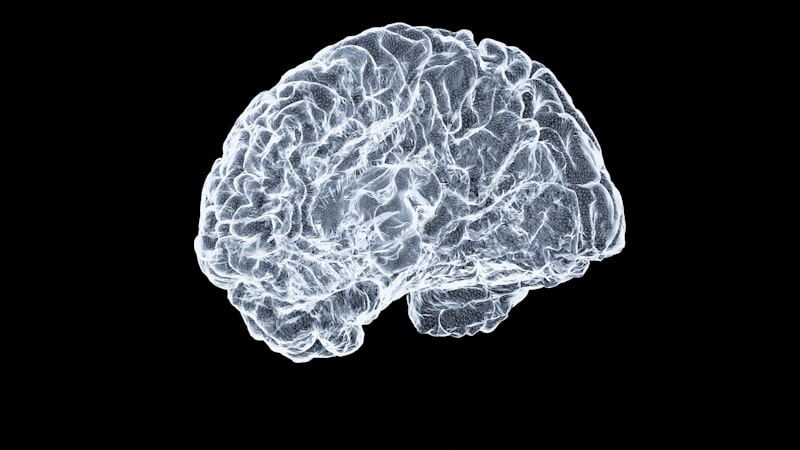
Definition and Core Principles of Stereopsis
Stereopsis, often referred to as stereoscopic depth perception, is the highly sophisticated visual process by which the brain calculates the precise distance of objects in the environment, primarily utilizing the minute differences between the images projected onto the retinas of the two eyes. This critical mechanism is the most refined form of binocular depth cues available to humans and many other primates, allowing for exceptionally accurate judgments of relative and absolute depth, which is vital for tasks requiring fine motor control, navigation, and spatial awareness. While depth perception relies on a combination of monocular cues (such as perspective, occlusion, and relative size) and binocular cues, stereopsis stands apart as the unique outcome of binocular vision, providing a vivid, three-dimensional world that monocular cues alone cannot replicate. It represents the culmination of complex evolutionary adaptations that enable precise interaction with the immediate environment, distinguishing objects that are close from those that are far with remarkable resolution, typically down to a few arcseconds of visual angle.
The core requirement for stereopsis to occur is retinal disparity, sometimes termed binocular disparity. Because the two eyes are physically separated horizontally by an average inter-pupillary distance of approximately 6.5 centimeters in adults, each eye views the world from a slightly different vantage point. Consequently, when the eyes fixate on a specific object, the images of objects located either closer or farther away from that fixation point fall upon non-corresponding points on the two retinas. It is this systematic difference in the location of image features between the left and right retinal maps that serves as the raw data input for the stereoscopic process. The magnitude and direction of this disparity—whether the non-corresponding points are horizontal, vertical, or cyclopean—directly correlate with the object’s distance from the observer and the plane of fixation, providing the necessary mathematical substrate for the visual cortex to solve the geometry of the three-dimensional scene.
It is crucial to differentiate stereopsis from the broader concept of depth perception; while stereopsis is a powerful mechanism for depth perception, it is not the only one. Individuals who lack stereopsis due to certain visual conditions can still perceive depth quite effectively through monocular cues, such as motion parallax, linear perspective, and shading gradients, particularly when objects are far away, where retinal disparity becomes negligible. However, stereopsis is most effective and dominant within the peripersonal space, typically within six to ten feet, where the disparities are substantial enough to be leveraged by the visual system. Beyond this range, the disparity angle rapidly approaches zero, and the brain increasingly relies on monocular or contextual cues to estimate distance. Therefore, stereopsis provides the fine-tuning, high-resolution depth information necessary for tasks like threading a needle or catching a ball, offering a level of precision unmatched by other depth mechanisms.
The Mechanism of Retinal Disparity
The physical basis for stereopsis lies in the precise geometry of vision. When an observer focuses on a point in space, the visual axes of the two eyes converge onto that point, and the images of that point fall upon the fovea of each eye, which are defined as corresponding retinal points. Objects lying on the theoretical surface that passes through the fixation point and maintains zero disparity are said to lie on the horopter. However, any object that is either nearer (crossed disparity) or farther (uncrossed disparity) than the fixation point will project images onto non-corresponding retinal points. Crossed disparity occurs when an object is closer than the fixation point; the image of that object appears on the temporal retina of both eyes. Conversely, uncrossed disparity occurs when an object is farther away; the image falls on the nasal retina of both eyes. The specific amount of horizontal offset between these non-corresponding points is the quantified measure of retinal disparity, and the brain uses this magnitude of offset to determine the object’s precise distance relative to the fixation plane.
The processing of disparity is fundamentally dependent upon the precise alignment and coordination of the two eyes, a state known as orthotropia. If the eyes are misaligned, as in conditions like strabismus, the resulting disparity may be too large or inconsistent to be fused by the visual cortex, leading to diplopia (double vision) or, more commonly, suppression of the image from one eye. For stereopsis to function properly, the visual system must first successfully achieve binocular fusion, merging the slightly disparate images from the two eyes into a single, coherent percept. This fusion process occurs within a limited range of disparity known as Panum’s Fusional Area. If the disparity exceeds this threshold, the visual system fails to fuse the images, and the observer perceives two separate images, losing the stereoscopic effect. Therefore, the mechanism is a delicate balance between registering minor differences and integrating them seamlessly into a single, three-dimensional view.
The calculation of depth from disparity is not purely a geometric exercise but involves significant neural computation. The visual system must overcome the “correspondence problem,” which refers to the challenge of matching a feature point in the left eye’s image with the exact same feature point in the right eye’s image among a vast array of potential matches. This is particularly difficult when dealing with scenes composed of complex textures or random dots, where local features are ambiguous. Early theories suggested that features were matched based on explicit forms or patterns, but the pioneering work using random-dot stereograms by Béla Julesz demonstrated that stereopsis can occur even in the complete absence of monocularly recognizable forms. This established that the visual system relies on correlation and matching processes performed at a very early stage in visual processing, often preceding the full recognition of objects, suggesting a powerful, bottom-up mechanism for depth extraction based solely on luminance and contrast features.
Neural Processing of Stereopsis
The neural substrate for stereopsis begins its journey in the primary visual cortex, or V1. Unlike early stages of processing where retinal inputs remain largely segregated, V1 contains specialized neurons known as binocular neurons, which receive input simultaneously from both the left and right eyes. These neurons are finely tuned to specific levels of retinal disparity. Some neurons respond optimally to zero disparity (objects on the horopter), while others are tuned to crossed disparity (near objects) or uncrossed disparity (far objects). This array of disparity-tuned neurons creates a neural population code that encodes depth information across the visual field. The precise firing rate of a given binocular neuron is determined by how closely the input disparity matches its preferred tuning curve, forming the initial computational basis for stereoscopic depth extraction.
The information processed in V1 is then relayed to higher cortical areas, particularly the extrastriate visual areas V2 and V3, and crucially, the posterior parietal cortex. Area V2 plays a significant role in integrating disparity signals with monocular depth cues and contributing to the formation of the perception of surfaces and boundaries defined solely by disparity. The integration of this depth information is complex; while the extraction of disparity is relatively early, the final perception of three-dimensional space involves feedback loops and interactions with areas responsible for object recognition and motion processing. The parietal cortex, in particular, is central to spatial awareness and the transformation of visual input into motor actions, suggesting that stereopsis is not just about seeing depth, but about utilizing that depth for successful interaction with the environment.
A key aspect of stereoscopic processing is the separation of depth perception into different pathways. Research suggests there are two primary classes of binocular neurons: those sensitive to fine, detailed disparities known as fine stereopsis (often associated with disparity magnitude less than 10 arc minutes), and those sensitive to larger, or coarse, disparities. Fine stereopsis is crucial for precise judgments of depth in the central visual field and is thought to rely on sustained neural responses. Coarse stereopsis handles large disparities, particularly in the peripheral visual field, helping to segment the scene into foreground and background, and is often associated with transient responses. The coexistence of these two systems ensures that the visual field is continuously analyzed for depth, providing both high-precision local depth cues and robust global scene segmentation, even under varying conditions of fixation and attention.
Stereograms and Measurement Techniques
The study and measurement of stereopsis rely heavily on specialized visual stimuli known as stereograms. A stereogram presents two slightly different images, one intended for the left eye and one for the right eye, thereby artificially generating controlled retinal disparity. The most common form used in research is the random-dot stereogram (RDS), invented by Julesz. An RDS consists of a seemingly random pattern of black and white dots. The image presented to one eye is identical to the other, except that a defined region of dots has been horizontally shifted by a specific amount relative to the background. When viewed stereoscopically, the corresponding shift creates a defined shape or surface that appears to float in depth, even though the shape is completely invisible to either eye individually. The utility of the RDS lies in its ability to isolate the stereoscopic mechanism from monocular cues, proving that depth can be calculated purely from disparity signals.
Clinical assessments of stereoscopic function typically involve standardized tests designed to quantify the smallest amount of disparity that an individual can reliably perceive, known as the stereoacuity threshold. These tests often use polarized glasses or red/green filters to ensure that each eye only sees its intended image (dichoptic presentation). Common clinical tests include the Titmus Fly test, which measures coarse stereopsis, and the Random Dot E test or the Frisby Stereo Test, which measure finer stereoacuity. Stereoacuity is measured in arcseconds; a typical young adult with excellent vision might achieve a stereoacuity of 30 arcseconds or better. Low stereoacuity or absence of stereopsis (stereoblindness) is indicative of underlying binocular vision disorders, such as amblyopia or strabismus, highlighting the importance of these tests in ophthalmic diagnostics.
Advanced research techniques, particularly functional magnetic resonance imaging (fMRI) and electrophysiology, have been instrumental in mapping the cortical areas involved in stereopsis. By presenting subjects with stimuli that manipulate disparity—such as comparing viewing an RDS that generates depth versus viewing an RDS with zero disparity—researchers can identify which brain regions are preferentially activated during stereoscopic processing. Furthermore, psychophysical methods allow for detailed exploration of the limits and constraints of stereopsis, including its temporal dynamics and its interaction with other visual properties like motion and attention. These studies confirm that stereopsis is a dynamic, computationally intensive process that is highly susceptible to subtle changes in visual input and neural health, affirming its status as a cornerstone of high-fidelity spatial awareness.
The Horopter and Panum’s Fusional Area
To fully understand the precision of stereopsis, one must grasp two crucial theoretical concepts: the Horopter and Panum’s Fusional Area. The Horopter is defined geometrically as the locus of points in space that project corresponding images onto the retinas when the eyes are converged on a specific fixation point. In other words, all objects lying on the horopter are perceived as being at the same depth as the fixation point and exhibit zero binocular disparity. Due to the spherical nature of the eyes and the specific geometry of retinal correspondence, the theoretical horopter for a given fixation distance is approximately a circle passing through the nodal points of the eyes and the fixation point, known as the Vieth-Müller Circle. However, the empirically measured horopter often deviates slightly from this ideal circle due to anatomical factors, leading to the designation of the empirical horopter. The horopter serves as the reference plane against which all other disparity is measured and translated into perceived depth.
Immediately surrounding the horopter, both nearer and farther, is Panum’s Fusional Area (PFA). This area represents the limited range of horizontal disparity within which the visual system is capable of fusing the two retinal images into a single, cohesive, stereoscopic percept. Disparities within the PFA lead to single vision with depth. If the disparity is too small, the depth is fine and precise; if the disparity approaches the limits of the PFA, the perceived depth is still single, but the quality of the image may degrade. The size of Panum’s area is not uniform across the visual field; it is narrowest in the fovea (allowing for high stereoacuity) and expands significantly in the periphery, accommodating the reduced precision of peripheral vision. This variation ensures that while the central visual field maintains high resolution depth, the peripheral field can still achieve fusion and basic depth segmentation despite greater potential for minor ocular misalignment or larger disparities.
When disparity exceeds the bounds of the PFA, the visual system experiences diplopia, or physiological double vision. Objects that are significantly nearer or farther than the fixation point will appear double because the neural mechanisms responsible for stereoscopic fusion cannot successfully combine the disparate images. While diplopia is generally disruptive, the brain often manages this by suppressing the peripheral double images or by rapidly adjusting vergence to bring objects of interest back within the PFA. The limits imposed by the PFA highlight the computational challenge inherent in stereopsis: the visual system must maintain a delicate balance between sensitivity (detecting minute differences for fine depth) and tolerance (allowing for minor misalignments without inducing diplopia). The size of the PFA is dynamic and can be influenced by factors such as contrast, illumination, and attention, further emphasizing the adaptive nature of stereoscopic processing.
Developmental Aspects of Stereopsis
Stereopsis is not present at birth; it is a learned skill that develops rapidly during a specific, critical period of infancy, typically emerging between three and six months of age. The emergence of stereopsis is a critical developmental milestone, coinciding with the maturation of cortical binocular neurons and the establishment of precise ocular alignment. Prior to this period, infants possess the anatomical structures necessary for binocular input, but the neural circuitry required to process and integrate the disparity signals effectively is still forming. The sudden onset of stereopsis often leads to dramatic changes in an infant’s visual behavior, allowing them to accurately reach for and manipulate objects in three-dimensional space, demonstrating a newfound grasp of depth relationships.
The period from approximately six months to two years is considered a crucial critical period for the development of robust stereopsis. During this time, the visual system is highly plastic and requires consistent, high-quality input from both eyes to establish and refine the binocular connections in the visual cortex. If an infant experiences abnormal visual input during this critical window—such as constant strabismus (eye turn), severe uncorrected refractive error, or unilateral cataracts—the development of stereopsis can be severely compromised or permanently inhibited, leading to a condition known as stereoblindness. This highlights the vital importance of early screening and intervention for pediatric vision disorders, as conditions preventing concurrent alignment of the visual axes can permanently impair the ability to perceive depth stereoscopically.
Even after the critical period, some degree of plasticity remains, though it is significantly reduced. While severe stereoblindness established in early childhood is often permanent, intensive training and corrective procedures (such as surgery for strabismus followed by vision therapy) can sometimes lead to the recovery of some stereoscopic ability, particularly in cases where suppression was intermittent or late-onset. Research into visual plasticity continues to explore methods, including perceptual learning paradigms and dichoptic stimulation, aimed at reactivating dormant binocular pathways in adults who previously lacked stereopsis. Successful development of stereopsis is fundamentally dependent on the synchronized alignment of the two eyes and the continuous simultaneous input of clear, focused images to the visual cortex during the sensitive early stages of life.
Clinical Significance and Disorders
The functional absence or impairment of stereopsis, known as stereoblindness, is a significant clinical marker for underlying binocular vision disorders. The most common causes are amblyopia (often called “lazy eye”), strabismus (misalignment of the eyes), and large differences in refractive error between the two eyes (anisometropia). In strabismus, the constant misalignment means that objects never consistently fall on corresponding points, leading to chronic inability to fuse the images. To avoid the resulting diplopia, the brain often suppresses the input from the misaligned eye, which prevents the development or maintenance of stereoscopic function, ultimately leading to stereoblindness. The degree of stereoacuity loss often correlates directly with the severity and constancy of the underlying binocular anomaly.
Amblyopia often results from strabismus or anisometropia, where the visual cortex fails to develop normal function due to chronic suppression or blurred input from one eye during the critical period. While amblyopic individuals may still possess coarse stereopsis if the underlying cause is mild or intermittent, severe amblyopia often results in total stereoblindness. The functional consequence of profound stereoblindness is a reduced capacity for fine depth judgment, impacting performance in tasks requiring precise spatial localization, such as driving, certain sports, and professions requiring high-level manual dexterity. Though individuals lacking stereopsis often learn to compensate effectively using powerful monocular cues, this compensatory depth perception is generally less accurate and requires conscious cognitive effort, particularly in novel or low-cue environments.
Clinical management of stereopsis disorders focuses heavily on early detection and correction. Treatment for strabismus may involve eye muscle surgery, corrective lenses, or vision therapy aimed at improving ocular alignment and enhancing the ability to fuse disparate images. The goal of early intervention is to restore normal binocular input before the critical period ends, maximizing the chance for stereopsis development. In adults, while anatomical realignment may be achieved, the functional recovery of stereopsis is often more challenging due to reduced neural plasticity. However, modern vision therapy techniques sometimes utilize customized visual stimuli, such as dichoptic training where contrasting images are presented to each eye, to encourage the brain to re-engage binocular correspondence and potentially improve stereoacuity, offering hope for individuals previously considered permanently stereoblind.
Applications in Technology and Media
The principles governing stereopsis have been extensively leveraged in technology and media to create compelling three-dimensional experiences. The entire field of 3D display technology, including cinema, virtual reality (VR), and augmented reality (AR), is fundamentally predicated on the precise control and presentation of retinal disparity. In these systems, two slightly offset images are generated—one for the left camera viewpoint and one for the right—and then delivered separately to the corresponding eyes using various methods, such as polarized lenses, shutter glasses, or autostereoscopic displays. This controlled presentation of disparity mimics natural viewing conditions, tricking the visual system into perceiving depth where none physically exists, known as synthetic stereopsis.
In fields outside of entertainment, stereopsis is crucial for professional applications. Surgical robots and advanced laparoscopic tools often incorporate stereoscopic visualization systems, providing surgeons with crucial depth perception necessary for precise manipulation of instruments inside the body. Without the high-fidelity depth provided by stereopsis, tasks requiring fine motor control, such as suturing or dissection, would be significantly more challenging and less accurate. Similarly, remote control of vehicles, drones, and underwater submersibles often utilizes stereoscopic camera setups to provide operators with the requisite spatial awareness for safe and effective navigation in complex, remote environments.
Furthermore, stereoscopic principles are integral to cartography and photogrammetry. Aerial and satellite images are frequently taken with overlapping fields of view, creating stereo pairs that, when viewed through a stereoscope, allow analysts to perceive the terrain’s topography in three dimensions. This technique enables accurate measurement of elevation, slope, and volume, which is vital for civil engineering, geological surveys, and military intelligence. The reliance on accurate disparity calculation across these diverse fields underscores the evolutionary importance of stereopsis as a powerful mechanism for spatial measurement and interaction, extending its utility far beyond the biological constraints of human vision.