Visual Perception: How Pupil Angles Shift Your Reality
Scientifically Reviewed · Dr. Marwa Abd-Alazim · August 30, 2026
Review Criteria & Clinical Standards
This content undergoes rigorous scientific peer-review and medical editorial standards at Arab Psychology Network to ensure clinical accuracy, validity, and compliance with evidence-based guidelines from leading psychological and healthcare authorities (APA / WHO).
Historical Context and Definition of the Phenomenon
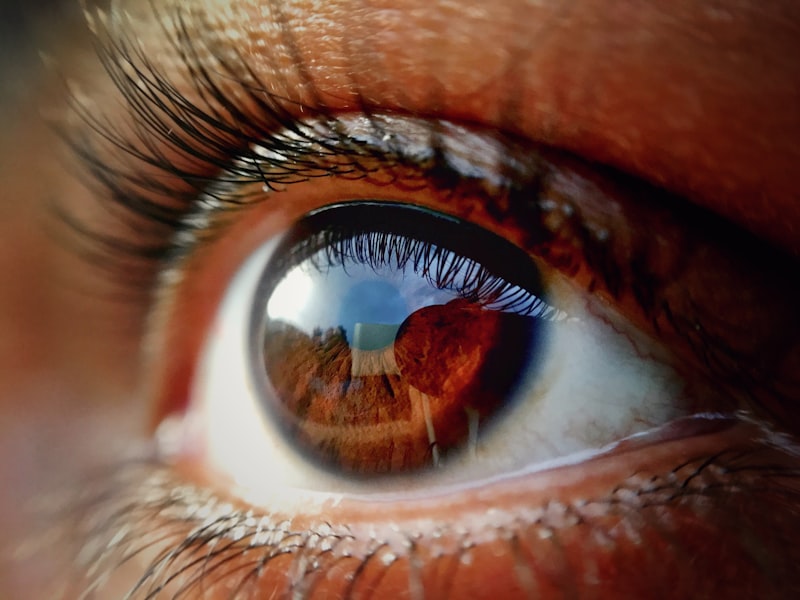
The Stiles-Crawford Effect (SCE) stands as a foundational concept within physiological optics, describing a crucial non-uniformity in the human visual system: the sensitivity of the retina to light is dependent upon the angle at which the light rays enter the eye’s pupil. This phenomenon fundamentally dictates that the eye is not merely a passive optical instrument, but rather a complex biological sensor where the efficacy of light absorption is highly directional. Specifically, light rays entering near the center of the pupil are far more effective at stimulating the photoreceptors, resulting in a significantly brighter perception, compared to light rays of identical energy entering near the periphery or edge of the pupil. This observation directly contradicts the standard assumption of geometric optics where the illumination on an image plane should obey the cosine law, irrespective of the entry angle.
The effect is named after two prominent mid-20th-century British scientists who independently and collaboratively quantified this directional sensitivity: Sir Walter Stiles (1901–1985), a distinguished physicist, and Brian H. Crawford, a physiologist. Their pioneering work, primarily conducted between the 1930s and 1950s, established that the perceived luminosity and colour of a visual stimulus are directly contingent upon the precise location within the pupillary aperture through which the light ray passes. Their findings revolutionized the understanding of visual phototransduction, confirming that the initial stage of vision involves not only the quantity of light but also its vectoral properties relative to the retinal structure. This discovery necessitated a complete rethinking of photometric measurements and the effective optical characteristics of the living eye.
Formally, the SCE dictates that the perceived brightness or colour of a light stimulus is radically influenced by the point of entry into the pupillary plane before the light proceeds to the retina. This phenomenon demonstrates that the light-gathering efficiency of the photoreceptors is maximal along the axis that points toward the center of the pupil, often referred to as the peak of the directionality function. The significance of this effect is immense, as it provides a natural mechanism by which the visual system can minimize the detrimental impacts of peripheral optical aberrations, such as spherical and chromatic aberration, which are typically most pronounced for rays passing through the outer margins of the lens system. By reducing the sensitivity to these aberrated rays, the SCE contributes substantially to optimizing the quality of the retinal image under normal viewing conditions.
The Mechanism of Photoreceptor Directionality
The physical basis for the Stiles-Crawford Effect lies deep within the retinal architecture, specifically in the structural properties and orientation of the photoreceptors themselves, particularly the cone cells. Cones, responsible for photopic (daylight) and color vision, are not simply passive light detectors; they function as highly efficient, microscopic optical waveguides. The outer segment of a cone is an elongated, semi-crystalline structure defined by a refractive index that is slightly higher than the surrounding interphotoreceptor matrix. This index difference is crucial because it allows the cone to effectively guide incident light along its long axis, maximizing the probability that the photons will be absorbed by the photopigments contained within the stacked discs of the outer segment.
The directional sensitivity arises because the cones are precisely aligned, or “tilted,” toward the center of the entrance pupil of the eye, or more accurately, the eye’s nodal point. When light enters the eye centrally, the rays travel nearly parallel to the preferred axis of the cone waveguides, resulting in highly efficient coupling and maximal photopigment excitation. Conversely, when light enters through the periphery of the pupil, the rays strike the cones at an oblique angle. Due to the physics of wave propagation in waveguides, this oblique entry causes a significant portion of the light energy to leak out or be reflected away from the photosensitive outer segment, rather than being guided down the structure. This reduced coupling efficiency directly translates to a diminished neural response, leading to the perception of reduced brightness, even if the total radiant energy delivered to the retina remains constant.
It is important to note the differential response between the two primary types of photoreceptors. The SCE is overwhelmingly dominated by the directional properties of the cones, which exhibit a steep drop-off in sensitivity as the light entry point moves away from the center. In contrast, the rod photoreceptors, which mediate scotopic (low-light) vision, demonstrate minimal or negligible directionality. This difference is attributed to structural variations; rods are generally wider and less perfectly aligned than cones, diminishing their effectiveness as precise optical waveguides. The strong directionality of the cones suggests a biological adaptation designed to optimize spatial resolution and visual acuity specifically under bright illumination where the cone system is active, effectively filtering out light that has been significantly degraded by off-axis aberrations of the eye’s primary refractive elements.
Quantitative Measurement: The Stiles-Crawford Function
To accurately describe and analyze the Stiles-Crawford Effect, scientists utilize a quantitative measure known as the Stiles-Crawford Function, which mathematically defines the relationship between luminous efficiency and the radial distance of the light entry point from the pupil center. This measurement is typically conducted using specialized psychophysical techniques, most famously the Maxwellian view system, which allows the experimenter to precisely control the location and angle of the light beam entering the subject’s eye, ensuring that only a narrow pencil of light strikes the retina from a specific pupillary coordinate. The subject performs a brightness matching task, comparing the perceived luminosity of an off-axis test beam against a reference beam fixed at the peak efficiency point.
The results of this matching procedure yield a relative luminous efficiency curve, which is typically well-approximated by an exponential function, often resembling a Gaussian distribution centered around the point of maximum efficiency (P-value). The primary parameter characterizing the steepness of this function is denoted by $rho$ (rho), referred to as the directionality parameter. A higher value of $rho$ indicates a more pronounced, or steeper, drop-off in sensitivity as the light source moves peripherally, signifying greater photoreceptor directionality. Conversely, a lower $rho$ suggests less directional sensitivity. Variations in $rho$ are observed between individuals and can also be influenced by factors such as retinal eccentricity and wavelength, underscoring the complexity of the cone system’s optical properties.
The location of the peak efficiency, or the P-value, is critical and provides insight into the overall alignment of the photoreceptor mosaic. While one might expect the P-value to align perfectly with the geometric center of the pupil, measurements often show a slight temporal or nasal displacement, reflecting the actual aiming point of the cone axes relative to the eye’s optical axis. Measuring both the parameter $rho$ and the coordinates of the P-value provides comprehensive data on the functional status of the foveal and parafoveal cones. Clinically, changes in these parameters can serve as sensitive indicators of retinal health, as diseases that disrupt the outer retinal layers or the interface between the photoreceptors and the retinal pigment epithelium can cause measurable shifts or broadening of the directionality function.
The First Kind (Luminosity) and Second Kind (Color) Effects
The Stiles-Crawford Effect is commonly classified into two distinct manifestations, though both originate from the same underlying mechanism of photoreceptor directionality. The most widely studied and discussed version is the Stiles-Crawford Effect of the First Kind (SCE-I), which deals with the perceived luminosity or brightness of the stimulus. SCE-I states that the luminous efficiency of light decreases systematically as the entry point moves away from the pupil center. This means that if two beams of light possess identical radiant power but one enters centrally and the other peripherally, the centrally entering beam will be perceived as significantly brighter. This effect forms the foundation for understanding how the effective aperture of the eye changes under photopic conditions.
In contrast, the Stiles-Crawford Effect of the Second Kind (SCE-II) is concerned with changes in perceived colour or chromaticity. SCE-II observes that when monochromatic light enters the eye at different points across the pupil, the perceived hue and saturation of that light can shift. This chromatic variation occurs because the three types of cone photoreceptors—L-cones (long-wavelength sensitive), M-cones (medium), and S-cones (short)—do not exhibit identical directional characteristics. Their physical structure, size, or refractive index properties may vary slightly, leading to different $rho$ parameters for each cone class.
The implications of SCE-II are significant for precise colorimetry and understanding photopigment dynamics. For instance, if the S-cones are slightly less directional (a lower $rho$) than the L- or M-cones, light entering the pupil periphery will selectively stimulate the S-cones relatively more efficiently than the other two types, causing a perceptible shift in the eye’s overall color-matching function. This means that the perception of white light, which depends on a balance of stimulation across all three cone types, can change subtly depending on whether the light originates from the center or the edge of the pupil. The study of SCE-II provides researchers with a powerful non-invasive tool to probe the underlying physical and optical differences between the various cone subtypes in the living retina.
Implications for Clinical Vision and Ophthalmic Devices
The Stiles-Crawford Effect is far from a mere academic curiosity; it possesses profound implications for clinical visual assessment, the design of ophthalmic devices, and the established standards of photometry. In visual science, the SCE provides a correction factor necessary for accurately relating physical light intensity to perceived brightness. Without accounting for the SCE, measurements of retinal illumination based solely on the geometric pupil size would overestimate the actual visual effectiveness of peripheral rays, especially in systems utilizing large pupils or wide field optics. This principle is vital for establishing accurate photometric units, such as the troland, which must incorporate the directional sensitivity of the cones.
In the realm of ophthalmic technology, the SCE plays a crucial role in the development and performance evaluation of intraocular lenses (IOLs), particularly those designed to address presbyopia, such as multifocal or extended depth-of-focus IOLs. These lenses often rely on pupil size and diffraction patterns to distribute light energy across different focal points. The SCE acts as a natural filter, preferentially weighting the central, high-quality light rays over the peripheral, potentially aberrated rays generated by the lens edges. Designers must factor in the SCE to predict the patient’s effective visual performance and contrast sensitivity, especially under conditions where the pupil dilates or constricts, changing the proportion of centrally versus peripherally entering light.
Furthermore, the SCE impacts the fields of aberrometry and adaptive optics. When measuring the wavefront errors of the eye (aberrations), instruments sample light returning from the retina across the entire pupil. However, because peripheral rays contribute less to the final perceived image due to the SCE, researchers often apply a weighting function—the SCE function—to the measured wavefront data. This weighting ensures that the optimization process prioritizes the correction of aberrations in the central pupil region, where light contributes most meaningfully to perceived image quality, leading to more visually relevant corrections than a uniform weighting scheme would provide.
The Role of the Waveguide Structure
A deeper examination of the cone’s function reveals its sophisticated structure as a true optical fiber or waveguide. The ability of the cone to direct light depends fundamentally on the physical properties that govern wave propagation. The primary requirement for waveguiding is the existence of a core material (the cone outer segment) with a refractive index ($n_{core}$) greater than that of the cladding material (the interphotoreceptor matrix, $n_{cladding}$). For the cone to act as an effective light collector, this index difference must be maintained, and the cone must be geometrically stable, ensuring that the light that enters the base of the outer segment is reflected internally along the structure until it reaches the photopigment discs.
The geometric configuration of the cone mosaic is essential to the SCE’s manifestation. Unlike parallel fibers, the cones are not oriented along the optical axis of the cornea and lens but are instead directed toward a specific point, often slightly nasal and posterior to the center of the pupil, sometimes referred to as the photoreceptor aiming point. This precise tilting is thought to be an active, biologically regulated process, maximizing the collection efficiency from the rays that tend to pass through the least aberrated portion of the eye’s refractive components. Disturbances to the stability of the cone outer segment, such as those caused by fluid accumulation or inflammatory processes, can disrupt the $n_{core}/n_{cladding}$ relationship or alter the cone tilt, leading to a measurable change in the SCE function.
The efficiency of the waveguide is also influenced by the wavelength of the incident light. Shorter wavelengths (blue light) tend to scatter more easily within the cone structure and may couple less efficiently than longer wavelengths (red light), potentially contributing to the SCE-II phenomenon. Furthermore, the light guiding property is highly sensitive to the dimensions of the cone segment; small changes in the diameter or length of the outer segment can shift the cone’s acceptance angle. Research utilizing the SCE as a bio-optical probe has demonstrated that this directionality is tightly linked to the structural integrity of the outer retina, making the measurement a valuable proxy for assessing the physiological state of the foveal cones.
Deviations and Clinical Significance
While the typical Stiles-Crawford function exhibits a smooth, well-defined directional profile centered near the pupil, deviations from this norm are highly informative and often signify underlying retinal pathology. The two main parameters subject to deviation are the directionality parameter ($rho$) and the position of the peak efficiency (P-value). A significant reduction in the value of $rho$ indicates a loss of directionality, meaning the cones are scattering light rather than guiding it efficiently. This loss is frequently observed in conditions that cause disorganization of the photoreceptor layer, such as retinal detachment or diffuse retinal edema, where the precise alignment of the cones is compromised.
A displacement of the P-value—where the point of maximum sensitivity shifts significantly away from the expected central location—is a robust indicator of structural misalignment. Conditions such as central serous chorioretinopathy, where fluid accumulation beneath the retina physically lifts and tilts the photoreceptors, result in a measurable shift in the P-value. Similarly, in early stages of age-related macular degeneration (AMD) or certain types of inherited retinal degenerations like retinitis pigmentosa, the directional properties of the remaining healthy cones may be altered, providing an early, functional metric of disease progression that precedes obvious structural changes visible via standard imaging techniques.
In summary, the Stiles-Crawford Effect transcends its definition as a simple optical curiosity, serving instead as a vital biological adaptation that optimizes retinal image quality by inherently filtering aberrated light and maximizing the efficiency of the cone system. Its measurement provides clinicians and researchers with a sensitive tool for monitoring the functional health and physical alignment of the photoreceptors. The study of the SCE continues to bridge classical optics, psychophysics, and molecular retinal biology, emphasizing the sophisticated, active role of the photoreceptor mosaic in shaping the perception of brightness and color based on where light rays enter the eye.