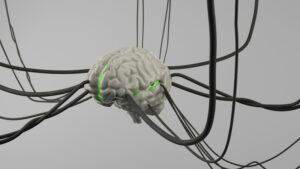
Stimulus Filtering: Master Your Focus and Clarity
Scientifically Reviewed · Dr. Marwa Abd-Alazim · August 26, 2026
Review Criteria & Clinical Standards
This content undergoes rigorous scientific peer-review and medical editorial standards at Arab Psychology Network to ensure clinical accuracy, validity, and compliance with evidence-based guidelines from leading psychological and healthcare authorities (APA / WHO).

STIMULUS FILTERING
Stimulus filtering is a fundamental biological and psychological process defined by the inherent specification of the nervous system, whereby organisms selectively process relevant sensory input while actively ignoring or attenuating irrelevant environmental noise. This mechanism is critical for survival, enabling an organism to focus its limited cognitive resources exclusively on signals vital for feeding, reproduction, or predator avoidance. Without effective stimulus filtering, the brain would be overwhelmed by the sheer volume of raw data flooding the sensory pathways, leading to cognitive paralysis and an inability to execute targeted behavioral responses. The efficiency of filtering dictates the fidelity of the organism’s perceived reality, ensuring that only necessary stimuli reach the higher processing centers of the brain, while superfluous information is discarded at peripheral or subcortical levels.
The concept resolves the central paradox of sensory perception: how an organism maintains behavioral stability despite constant environmental variability. The environment is replete with millions of sensory data points—temperature fluctuations, shifting light patterns, ambient sounds, and constant tactile pressure—most of which are meaningless at any given moment. Stimulus filtering acts as a neural gate, specifying which energies in the environment constitute a “signal” and which constitute “noise.” This specification is not arbitrary; it is meticulously sculpted by evolution to match the specific ecological challenges faced by the species. For instance, stimuli that indicate immediate danger or potential mates are prioritized, while predictable background inputs are automatically suppressed, optimizing the metabolic cost associated with neural processing.
While the term has been historically associated with the limits of sensory organs (such as the specific frequencies of sound that can be heard by the ear, as suggested by earlier, limited definitions), modern neuroethology defines stimulus filtering much more broadly. It encompasses all levels of neural processing, from the molecular selectivity of receptor proteins to the complex attentional modulation executed by the cerebral cortex. This process ensures that the vast majority of sensory input is preemptively excluded, allowing the brain to construct a coherent, manageable, and behaviorally relevant internal representation of the external world. Therefore, the sensory world experienced by any organism is necessarily a restricted and highly specialized subset of physical reality, determined by the organism’s unique set of biological filters.
Biological Mechanisms of Filtration
The implementation of stimulus filtering occurs through a cascade of specialized biological mechanisms distributed across the peripheral and central nervous systems. At the earliest stage, filtering is achieved through the structural and chemical limitations of the sensory receptors themselves. Peripheral filtering dictates the physical range of stimuli an organism can potentially detect. For example, the specific range of electromagnetic wavelengths that human photoreceptors are sensitive to (the visible light spectrum) is a form of filtering, rejecting ultraviolet and infrared light energy entirely. This initial selection is mandatory and hardwired, defining the sensory envelope of the species before any cognitive processing even begins. Specialized receptors, such as olfactory neurons tuned only to specific pheromone molecules, exemplify this highly restrictive peripheral filtering designed to isolate biologically significant cues from a complex chemical environment.
Beyond the peripheral receptors, significant filtering occurs at subcortical and brainstem levels through inhibitory neural networks. These central filtering mechanisms are responsible for gating the flow of information from the sensory organs toward higher cortical centers. A crucial example is the processing that occurs in the thalamus, often referred to as the brain’s principal relay station. The thalamus does not simply pass along all incoming signals; it actively modulates and suppresses repetitive or predicted inputs, a function often linked to sensory gating. This mid-level filtration ensures that the cerebral cortex, the area responsible for complex decision-making and consciousness, is not overloaded by redundant information. The filtering here is highly dynamic, influenced by the organism’s immediate state, arousal level, and current behavioral goals, allowing for flexible prioritization of incoming data streams.
Furthermore, filtering involves descending control pathways—neural projections originating in the cortex or brainstem that travel back down to the sensory relay nuclei or even the sensory organs themselves. These descending signals provide top-down control, instructing lower-level sensory structures on which inputs to enhance and which to suppress based on current cognitive demands. For instance, when an animal is intensely focused on hunting prey, descending neural signals may increase the sensitivity of auditory pathways relevant to the prey’s movements while simultaneously inhibiting pathways related to irrelevant background sounds. This intricate system of checks and balances ensures that the filtering process is adaptive, constantly adjusting the organism’s sensitivity profile to maximize the probability of survival and successful task completion in a changing environment.
The Role of Nervous System Specification
Stimulus filtering is fundamentally intertwined with the architectural specification of the nervous system, establishing the necessary conditions for adaptive behavior. The neural architecture of any species is not a passive receiver; rather, it is pre-programmed to recognize and prioritize specific patterns of input that have proven evolutionarily salient. This specification determines that only relevant stimuli reach the brain, effectively defining the neural pathways and synaptic weights that govern the initial processing of sensory data. For example, certain neurons may possess highly specific tuning curves, responding vigorously only to a narrow band of stimuli (e.g., a specific angle of light or a particular frequency of vibration) while remaining entirely unresponsive to inputs outside this critical range.
The concept of relevance is encoded directly into the neural circuitry. A stimulus is deemed relevant if its detection reliably predicts an outcome important to the organism’s fitness. This relevance is often processed via specialized neural units known as feature detectors. These are individual neurons or small neural clusters that are exquisitely sensitive to complex, composite features of the environment, such as movement, edges, or the presence of a predator’s silhouette. By utilizing such dedicated detectors early in the sensory pathway, the nervous system bypasses the need for massive parallel processing of irrelevant raw data. This dedicated circuitry acts as an immediate filter, transforming complex sensory fields into simple, behaviorally actionable signals, thus dramatically reducing the computational load on the central nervous system.
In vertebrates, key structures like the reticular activating system (RAS) in the brainstem play a paramount role in this neural specification. The RAS governs general arousal and wakefulness, but it also acts as a coarse initial filter, determining the overall level of sensory information permitted entry to the forebrain. Dysfunction in the RAS or related structures can lead to profound filtering deficits, such as hypersensitivity to minor environmental changes or, conversely, profound sensory neglect. This demonstrates that the nervous system’s innate structure is the primary determinant of filtering efficiency, ensuring that the organism is neither overwhelmed by noise nor oblivious to critical information, maintaining a state of optimal vigilance and responsiveness calibrated to its ecological needs.
Sensory Organ Specialization: The Moth Example
Perhaps the most elegant demonstrations of stimulus filtering occur at the level of specialized sensory organs, which are often highly simplified to achieve maximum signal isolation. The classic example involves the auditory system of certain insects, particularly the Noctuid moths. These moths face a nightly existential threat from echolocating bats, and their survival hinges entirely on their ability to detect specific ultrasound frequencies produced by the predators. The moths’ ears are a perfect illustration of filtering through anatomical minimalism and neural specialization.
The auditory organ of the Noctuid moth typically contains only two sensory neurons, designated A1 and A2. This extreme reduction in neuronal count facilitates an extraordinarily precise filter. The A1 neuron is highly sensitive to low-intensity ultrasound, allowing the moth to detect a bat approaching from a considerable distance. When activated, the A1 neuron triggers an evasive maneuver (flying away from the sound source). The A2 neuron, conversely, requires a much higher intensity of ultrasound to fire, signaling that the bat is extremely close. Activation of A2 triggers a drastic, non-directional diving or erratic flight pattern, maximizing the chance of escape.
The brilliance of this system lies in its filtering efficiency: the entire apparatus is tuned almost exclusively to the ultrasonic frequencies used by bats (around 20 kHz to 100 kHz) and is completely insensitive to the vast array of other ambient sounds, such as wind, rustling leaves, or the calls of other insects. By possessing only these two specialized neurons, the moth’s nervous system automatically filters out nearly all environmental noise, focusing its entire auditory attention solely on the signal of predation. This specialization is a highly optimized evolutionary strategy where the filtering is built into the physical structure of the detector, ensuring rapid and unambiguous behavioral response without the need for complex cortical analysis.
Habituation and Sensory Adaptation
Stimulus filtering is not a static process; it involves dynamic adjustments mediated by mechanisms such as habituation and sensory adaptation, which allow the organism to maintain efficiency in a constantly changing environment. Habituation is a non-associative learning process where an organism decreases its behavioral response to a repeated, irrelevant stimulus. For example, the constant ticking of a clock or the background hum of an air conditioning unit initially register but quickly cease to elicit conscious attention or a measurable physiological response. This is a crucial form of central filtering, conserving cognitive resources by labeling predictable, non-threatening inputs as noise.
Habituation differs significantly from sensory adaptation, although both achieve a filtering effect. Sensory adaptation is a peripheral phenomenon involving temporary changes in the sensitivity of sensory receptors themselves, usually in response to prolonged, constant stimulation. For instance, when a person enters a brightly lit room, the photoreceptors in the eye become temporarily desensitized to prevent overload. Similarly, continuous pressure on the skin (like wearing a watch) quickly leads to the desensitization of mechanoreceptors. This peripheral filtering process reduces the rate of firing in the afferent nerve fibers, physically lowering the volume of signals transmitted to the central nervous system until the stimulus changes or ceases.
The interplay between habituation (central, cognitive filtering) and adaptation (peripheral, receptor-level filtering) provides a robust system for managing sensory influx. Adaptation handles predictable, unchanging physical inputs, while habituation manages inputs that are repetitive but perhaps less physically constant. Both mechanisms serve the essential evolutionary function of ensuring that neural pathways are not cluttered by information that has lost its novelty or predictive value. This dynamic management of sensory resources allows the organism to remain maximally sensitive to novel or unexpected stimuli—the signals that are most likely to require an immediate behavioral response.
Ecological and Evolutionary Significance
The evolutionary success of a species is intimately linked to the efficiency and specificity of its stimulus filtering mechanisms. Filtering is the primary determinant of an organism’s Umwelt—its subjective, perceived world. Evolution selects for organisms whose filters are precisely tuned to the critical ecological variables of their niche, maximizing the signal-to-noise ratio for survival-critical information. An organism that wastes resources processing irrelevant sensory data is metabolically inefficient and behaviorally slow, placing it at a distinct disadvantage compared to a competitor whose nervous system is optimally specified.
Consider the ecological need for predator avoidance. A species that lives in a noisy, dense forest must evolve filtering mechanisms that can instantaneously isolate the specific sound signature of a predator’s approach (e.g., the snap of a twig) from the constant background noise of wind and insects. Conversely, a deep-sea fish might evolve visual filtering that enhances sensitivity to bioluminescent flashes while filtering out the constant dim blue background light. The specialization of sensory filters is thus a direct reflection of the selective pressures exerted by the environment.
This specialization often leads to the evolution of unique sensory modalities that act as filters themselves.
- The pit viper possesses infrared sensing pits, allowing it to filter thermal radiation distinct from visible light, enabling precise strikes on endothermic prey in darkness.
- Electric fish generate and sense weak electrical fields, filtering out electromagnetic interference to focus solely on distortions in their self-generated field caused by prey or rivals.
- Bats utilize sophisticated acoustic filtering, specializing their hearing apparatus to interpret complex returning echoes while filtering out their own loud vocalizations.
These examples underscore that filtering is not just about ignoring noise; it is about the active construction of a sensory world optimized for ecological performance, demonstrating the profound evolutionary advantage conferred by precise neural specification.
Psychological Implications: Attention and Cognition
In human psychology, stimulus filtering at the neurological level is directly related to the high-level cognitive process known as selective attention. Selective attention is the psychological manifestation of the brain’s ability to focus on one source of information while simultaneously inhibiting the processing of competing inputs. Early psychological models of attention, such as Broadbent’s Filter Model, posited a rigid, all-or-nothing sensory filter positioned early in the cognitive process. This theoretical filter selected information based purely on physical characteristics (e.g., location, pitch, or color) before semantic analysis could occur.
Later, more nuanced models, such as Treisman’s Attenuation Theory, suggested that the filter is not a rigid gate but an attenuator—a mechanism that merely reduces the volume of unwanted input rather than completely blocking it. This view aligns more closely with biological reality, where neural inhibition rarely achieves absolute silence. The attenuated, irrelevant information remains available at a lower level of processing, explaining phenomena such as the “cocktail party effect.” This effect describes the ability of a listener to focus on a single conversation in a loud room while simultaneously demonstrating that highly salient, previously filtered information—such as hearing one’s own name mentioned in an unattended conversation—can instantly break through the attentional barrier.
The cognitive efficiency gained through effective filtering is essential for higher executive functions. By reducing the computational noise, selective attention allows working memory and decision-making centers to operate effectively. Failures in cognitive filtering can lead to significant impairments in task performance, as the individual is constantly distracted by irrelevant environmental cues. Thus, the biological efficiency of stimulus filtering provides the necessary foundation for sustained concentration, complex problem-solving, and the integration of sensory data into stable, coherent conscious experience.
Clinical Relevance and Dysfunction
When the intricate processes of stimulus filtering fail or become disorganized, it results in clinically significant pathology, often manifesting as sensory processing disorders or severe psychiatric conditions. A key concept here is sensory gating, which refers to the neural mechanism responsible for suppressing redundant or repetitive stimuli, a central element of filtering. Deficiencies in sensory gating mean that the brain is unable to suppress the second presentation of an identical stimulus, leading to neural overload.
Deficits in stimulus filtering are particularly noted in disorders such as Schizophrenia. Research using physiological measures, such as the P50 auditory evoked potential test, consistently shows that individuals with schizophrenia often lack the normal suppression response to the second of two rapid auditory clicks. This inability to filter out redundant information is hypothesized to contribute to the cognitive fragmentation, distractibility, and sensory flooding often experienced by these patients, preventing the establishment of a stable, focused internal state necessary for clear thought.
Furthermore, atypical stimulus filtering is a recognized feature in Autism Spectrum Disorder (ASD). Many individuals with ASD experience sensory hypersensitivity (hyper-responsiveness) or hyposensitivity (hypo-responsiveness). Hyper-responsiveness occurs because the neural filters are insufficiently suppressive, allowing normal environmental sounds, lights, or textures to register as painful or overwhelming stimuli. Conversely, hypo-responsiveness suggests filters that are too restrictive, requiring massive input to register a signal. Understanding the precise breakdown in the filtering mechanisms—whether peripheral adaptation, central habituation, or cognitive attention—is crucial for developing targeted sensory integration therapies aimed at normalizing the individual’s experience of environmental input.
Models and Theoretical Frameworks
The complexity of stimulus filtering necessitates various theoretical frameworks to categorize and understand its operational modes. Filtering can generally be classified along the dimension of control: bottom-up versus top-down processing. Bottom-up filtering is driven purely by the physical properties of the stimulus itself—salience, intensity, novelty, or specific frequency—and occurs early in the sensory pathway, often peripherally. This filtering is involuntary and reactive.
In contrast, top-down filtering is goal-directed and driven by cognitive factors, such as expectation, motivation, or current task demands. This centralized filtering relies on feedback loops from the cortex to modulate lower sensory centers, allowing the organism to actively search for a specific signal or ignore a predicted noise source. An effective organism utilizes an integrated model where bottom-up salience rapidly alerts the system to potential threats, while top-down control maintains sustained focus on complex tasks, ensuring high processing flexibility.
In summary, the theoretical understanding of stimulus filtering emphasizes its role as a resource optimizer, ensuring that the computationally expensive central processing resources are allocated only to essential information. Key characteristics of an effective stimulus filtering system include:
- Selectivity: The ability to isolate specific, relevant features (the signal).
- Attenuation: The capacity to dynamically reduce the strength of irrelevant inputs (the noise).
- Adaptability: The flexibility to adjust filtering parameters based on context, learning, and immediate behavioral goals.
- Efficiency: The execution of filtering at the earliest possible stage in the nervous system to minimize energy expenditure.
Stimulus filtering is thus not merely the absence of distraction, but the fundamental neurobiological mechanism that shapes perception, directs behavior, and permits the emergence of complex cognitive function in a world saturated with sensory data.