Stimulus-Intensity Dynamism: Master Your Neural Responses
Scientifically Reviewed · Dr. Marwa Abd-Alazim · October 15, 2026
Review Criteria & Clinical Standards
This content undergoes rigorous scientific peer-review and medical editorial standards at Arab Psychology Network to ensure clinical accuracy, validity, and compliance with evidence-based guidelines from leading psychological and healthcare authorities (APA / WHO).
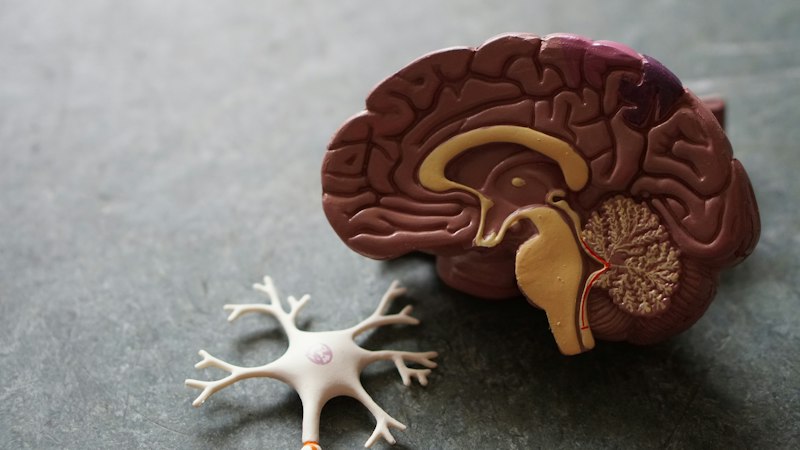
The Core Definition of Stimulus-Intensity Dynamism
Stimulus-intensity dynamism, often abbreviated as SID, is a fundamental concept in psychology referring to the inherent capacity of an organism to modulate the magnitude of its behavioral or cognitive response based directly on the perceived intensity of the initiating stimulus. This principle posits that responses are not fixed reactions but exist along a wide continuum, ranging from low-intensity reactions to weak cues, up to high-intensity reactions elicited by potent or overwhelming stimuli. The core mechanism involves a dynamic calibration system within the nervous system, which processes the physical characteristics of the input—such as loudness, brightness, or emotional salience—and scales the output behavior accordingly. This concept is crucial because it moves beyond simple stimulus-response models to incorporate the variability and adaptive nature of psychological processes, acknowledging that survival and effective interaction with the environment require proportional reactions rather than uniform ones.
The key idea underpinning stimulus-intensity dynamism is the proportional relationship between input energy and output energy. If an individual encounters a mild environmental cue—a distant whisper or a faint smell—their attention and physical reaction will typically be minimal, representing a low-intensity response. Conversely, if the stimulus is significant—a sudden, loud explosion or an immediate threat—the resulting behavior, such as the fight-or-flight response, will be dramatically heightened in intensity. This dynamism is not merely reflexive; it involves complex filtering and regulatory processes within cognition, ensuring that the organism does not expend unnecessary energy on trivial stimuli while remaining prepared to mobilize resources immediately when faced with high-intensity demands. Understanding this adjustment capacity is vital for analyzing adaptive behavior across species.
Historical Foundations and Theoretical Origin
While the precise terminology of stimulus-intensity dynamism may not be tied to a single, originating figure, the principle itself has deep roots within early 20th-century experimental psychology, particularly within the schools of behaviorism and early motivational theory. Researchers focused heavily on establishing mathematical relationships between stimulus characteristics and observable responses, seeking quantitative laws of learning and motivation. The concept is heavily influenced by theories of drive and arousal, where the intensity of a physiological or environmental stimulus was understood to multiply or amplify the strength of a habit or learned response. For instance, Clark Hull’s comprehensive theories of learning and motivation implicitly relied on the idea that greater stimulus intensity would lead to greater excitatory potential, driving stronger performance.
The origin of this detailed focus arose from the necessity to account for variance in experimental results. Early models often failed to predict the full range of responses observed because they treated all stimuli of a given class as equal. Researchers soon recognized that the physical magnitude of the stimulus—its intensity—was a powerful moderator of the resulting behavior. Therefore, the concept of dynamism was introduced to describe this inherent variability and adjustability. It represented a crucial shift from static models to dynamic models, acknowledging that the internal state of the organism, combined with the objective intensity of the external cue, dictates the proportional energy invested in the reaction. This historical context links SID closely to psychophysics, the scientific study of the relationship between physical stimuli and sensations and perceptions.
The Mechanism of Response Adjustment
The mechanism through which stimulus-intensity dynamism operates involves several interconnected neurological and cognitive systems. At a basic level, sensory receptors translate the physical intensity of a stimulus into the frequency of neural firing; a more intense stimulus generates a higher firing rate. This signal is then processed through the brainstem and limbic system, which are crucial for assessing threat and triggering general arousal. The intensity signal acts as an internal amplifier, modulating the overall state of alertness and readiness for action. For example, a loud noise activates the reticular activating system more intensely than a quiet noise, increasing generalized cortical arousal and leading to a more energetic physical or mental response.
Crucially, the adjustment of the response intensity is not purely automatic; it is often filtered by higher-order cognitive processes, especially when the stimulus involves complex information or social cues. An individual must interpret the meaning of the intensity before deciding on a proportional reaction. If a stimulus is highly intense but judged to be irrelevant or harmless (e.g., an extremely loud but distant fireworks display), the cognitive system can actively dampen the emotional or behavioral response, demonstrating the adaptive control inherent in SID. This filtering allows organisms to maintain homeostasis and allocate resources efficiently, responding strongly only when the intense stimulus is also deemed relevant to current goals or safety.
Stimulus-Intensity Dynamism in Learning and Cognition
In the domain of learning, stimulus-intensity dynamism is instrumental in determining the salience and subsequent retention of new information. Studies suggest that stimuli presented with greater intensity—perhaps through increased emotional impact, vividness, or physical magnitude—tend to create stronger neural traces, thereby facilitating acquisition and memory consolidation. Specifically, research has shown that individuals who are highly skilled at accurately adjusting their cognitive and attentional responses to match the intensity of the learning material are often more efficient learners. If a student recognizes a topic as highly complex or critical (a high-intensity cognitive stimulus), the ability to mobilize a corresponding high-intensity focus and effort (the dynamic response) correlates positively with successful mastery and retention of that material.
Conversely, a failure in SID can hinder effective learning. If a mild stimulus is mistakenly treated as highly intense (over-responding), the individual may waste cognitive resources on trivial details. If a high-intensity, crucial piece of information is treated with a low-intensity response (under-responding), the subject may fail to allocate sufficient attention or encoding effort, leading to poor recall. Therefore, the dynamic adjustment component is not just about having a strong response, but having a *calibrated* response. This principle applies broadly to educational strategies, suggesting that techniques designed to increase the perceived intensity or relevance of key concepts can significantly enhance mnemonic strength and academic performance.
Influence on Motivation and Decision Making
Stimulus-intensity dynamism is a powerful factor in motivation, particularly concerning how individuals react to rewards and punishments. The motivational efficacy of an incentive is often directly proportional to its perceived intensity. A small, immediate reward (low intensity) may yield a modest motivational response, whereas a substantial, life-changing reward (high intensity) will typically elicit a highly intense motivational drive, leading to sustained effort and persistence. Studies show that individuals who are proficient at adjusting their effort proportional to the potential intensity of the outcome are more effective at goal pursuit and self-regulation.
Similarly, in the field of decision making, SID influences the perceived risk and potential magnitude of outcomes. When faced with a decision involving high-intensity consequences—such as a major financial investment or a career change—individuals who can appropriately calibrate their cognitive intensity tend to engage in more thorough analysis, higher levels of deliberation, and greater information seeking. This heightened cognitive response to a high-intensity decision scenario generally leads to more reasoned and higher-quality decisions compared to those who react with a low-intensity, impulsive response. The ability to appropriately scale cognitive resources in relation to the emotional and practical intensity of the choice is central to rational behavior.
Practical Application: A Real-World Scenario
To illustrate stimulus-intensity dynamism in everyday life, consider the scenario of encountering a sudden, loud sound while walking down a busy street.
- Low-Intensity Stimulus: A distant car horn beeps softly. The brain registers the sound, but because the intensity is low, the response is minimal. The individual exhibits a low-intensity behavioral response, perhaps just a slight shift in auditory attention, and continues walking. Cognitive processing resources are minimally diverted.
- High-Intensity Stimulus: A truck suddenly backfires directly next to the individual with an extremely loud, sharp noise. This is a high-intensity stimulus that signals potential danger.
- The Dynamic Response (High Intensity): The individual’s physiological and behavioral response scales immediately. The reaction includes a high-intensity startle response (jump, gasp), rapid mobilization of resources (increased heart rate, adrenaline release), and an immediate, high-intensity cognitive focus on locating the source of the noise and assessing threat. This is a successful manifestation of SID, where a strong, urgent stimulus triggers a maximally prepared reaction.
- The “How-To” of SID: The system automatically adjusts by interpreting the raw sensory input (loudness) as proportional to the necessity of immediate action. The individual who exhibits stimulus-intensity dynamism effectively is the one whose startle and subsequent assessment dissipate quickly if the source is identified as harmless (e.g., a burst tire), demonstrating appropriate scaling both up (mobilization) and down (de-escalation) based on the evolving perception of intensity.
Significance in Clinical Psychology
The concept of stimulus-intensity dynamism holds significant importance in clinical psychology, particularly in understanding and treating psychological disorders characterized by dysregulated emotional or physical reactivity. Disorders such as Post-Traumatic Stress Disorder (PTSD) or generalized anxiety disorder often involve a disruption of SID. In these conditions, individuals may experience hyper-reactivity, where low-intensity, non-threatening stimuli (e.g., a door slamming softly) are mistakenly processed as high-intensity threats, leading to disproportionately strong anxiety or fear responses. This failure to accurately scale the response is often referred to as a failure of inhibition or sensitization.
Conversely, some disorders, such as certain forms of depression or emotional blunting, might involve hypo-reactivity, where high-intensity stimuli fail to elicit an appropriately energetic response. Individuals may show low-intensity emotional or behavioral reactions even to major life events. Understanding SID provides a framework for therapeutic interventions. For example, exposure therapy aims to recalibrate the patient’s dynamic response system, gradually exposing them to feared stimuli at increasing intensities while teaching them to maintain a regulated, non-proportional (and thus lower) anxiety response, thereby correcting the maladaptive intensity scaling associated with the psychological disorders. The goal is always to restore the adaptive capacity to adjust responses based on actual, rather than perceived, intensity.
Connections to Related Psychological Concepts
Stimulus-intensity dynamism belongs broadly to the subfield of **Experimental Psychology** and **Biological Psychology**, with strong ties to **Motivational Psychology** and **Behaviorism**. It is closely related to several established psychological theories, offering a mechanism through which they operate.
One crucial connection is to **Arousal Theory**, which posits that there is an optimal level of physiological or psychological arousal for performance. SID explains *how* arousal is triggered: the intensity of the external stimulus directly determines the initial level of arousal generated. Furthermore, SID integrates well with the **Yerkes-Dodson Law**, which dictates that performance increases with arousal only up to a point, after which performance decreases. A highly intense stimulus might push arousal past this optimal threshold, leading to poor behavior, unless the individual can dynamically adjust and manage that intensity.
Another related concept is **Adaptation Level Theory**, which suggests that judgments about stimuli are relative to an individual’s existing standard or “adaptation level.” If an individual is accustomed to high-intensity stimuli (e.g., working in a loud environment), a subsequent moderate-intensity stimulus may be perceived and reacted to as if it were low-intensity, demonstrating that the baseline for dynamic adjustment is flexible and context-dependent. The strength of stimulus-intensity dynamism lies in its ability to serve as a mediating variable, explaining why the same objective stimulus may lead to different scaled responses across different people or contexts.