Memory Storage: How Your Brain Keeps Memories Alive
Scientifically Reviewed · Dr. Marwa Abd-Alazim · September 10, 2026
Review Criteria & Clinical Standards
This content undergoes rigorous scientific peer-review and medical editorial standards at Arab Psychology Network to ensure clinical accuracy, validity, and compliance with evidence-based guidelines from leading psychological and healthcare authorities (APA / WHO).
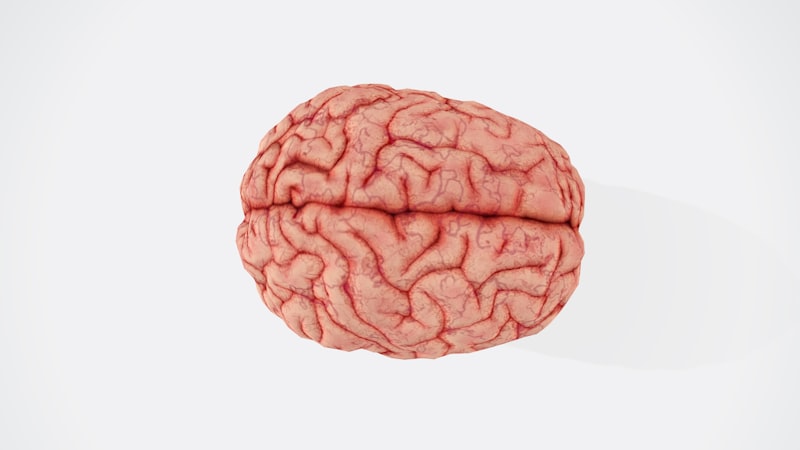
STORAGE: A Core Process in Human Memory
The concept of storage in cognitive psychology refers fundamentally to the retention of encoded information within the neural architecture over time. It represents the crucial intermediary stage between the initial acquisition (encoding) and the eventual utilization (retrieval) of knowledge or experience. Without robust storage mechanisms, human cognition—including learning, reasoning, and identity formation—would be impossible. Storage is not a passive repository; rather, it involves dynamic, structural changes within the brain that allow previously encountered material, ranging from fleeting sensory impressions to complex life narratives, to persist. The efficiency and durability of this retained material are often synonymously discussed under the term retention, which measures how well the memory trace endures the passage of time and potential interference.
Psychological models view storage as a complex system operating across multiple time scales and capacities. The initial input must first be successfully transformed into a usable format, a process known as encoding. Once encoded, the information enters various storage bins, each possessing distinct limitations regarding duration and volume. For instance, the storage of a sound byte lasts mere moments, while the storage of one’s native language persists across decades. Understanding storage requires analyzing how these different systems interact and how information is transformed as it moves from temporary holding areas into permanent, consolidated repositories within the cortical structures.
The quality of stored memories is directly proportional to the depth of the initial encoding process. If an item is shallowly processed—for example, merely repeating a word without understanding its meaning—its storage trace will likely be fragile and prone to rapid decay or interference. Conversely, material that is elaborated upon, linked to existing knowledge, or emotionally salient tends to create more resilient and durable storage traces. Thus, memory storage is less about simply holding data and more about actively integrating new information into an organized network of existing knowledge, ensuring its accessibility when retrieval cues are later presented.
The Interplay of Encoding, Storage, and Retrieval
Storage cannot be isolated from the other two cardinal processes of memory: encoding and retrieval. These three components form a functional loop essential for successful memory operation. Encoding is the process of generating a persistent internal representation of external information, essentially converting sensory input into a memory trace or engram. If encoding fails—perhaps due to distraction, lack of attention, or insufficient processing—there is nothing available to be stored, rendering subsequent retrieval impossible. The success of the storage phase is therefore entirely dependent upon the fidelity and completeness of the preceding encoding operation.
Once information is stored, its functional utility rests entirely on the ability to retrieve it upon demand. Retrieval is the conscious or unconscious process of accessing stored information. A common misconception is that failure to remember means the information was never stored; however, retrieval failure often occurs when the storage trace exists but cannot be accessed due to inadequate retrieval cues, disorganized storage, or competitive interference. Consequently, optimizing storage often involves creating better organizational schemes during encoding, which provides multiple pathways or indexes for later retrieval, significantly enhancing the overall reliability of the memory system.
Furthermore, storage is not a terminal point for memory but rather an active state that can be altered during retrieval. The act of recalling a memory often makes that memory temporarily vulnerable to alteration, a phenomenon known as reconsolidation. When a memory trace is retrieved, it enters a labile state and must be stabilized again through a process similar to the original consolidation. This mechanism highlights the dynamic nature of storage, indicating that memories are continuously maintained, updated, and potentially modified throughout the lifespan, rather than being static recordings fixed at the moment of initial learning.
The Multi-Store Model and Storage Capacity
The foundational understanding of storage architecture in cognitive psychology is largely derived from the Atkinson-Shiffrin Multi-Store Model (1968), which posits that memory comprises three distinct, sequential storage systems: the sensory register, short-term memory (STM), and long-term memory (LTM). Each of these stores is characterized by specific parameters concerning duration, capacity, and the mechanisms by which information is lost or transferred. This model provided a critical framework for analyzing how information is temporarily held and subsequently transferred into more permanent storage.
The first stage, the sensory register, holds incoming information in its raw sensory form for an extremely brief duration—generally less than a second for visual (iconic) information and slightly longer for auditory (echoic) information. This storage is vast in capacity but fleeting in duration; its primary function is to hold sensory input long enough for attention and initial cognitive processing to occur. If the information is attended to, it is transferred to the next stage, short-term memory. The second stage, STM, serves as a temporary holding system for information currently in use. STM is severely limited in both capacity (often cited as 7 ± 2 items or chunks) and duration (approximately 15 to 30 seconds without rehearsal). Information is maintained here primarily through rehearsal, a process of active repetition.
The final and most crucial storage system is long-term memory (LTM), which functions as a seemingly permanent and virtually limitless repository of all knowledge, skills, and experiences. Transfer from STM to LTM is achieved through effective encoding strategies, such as elaborative rehearsal, which links new information to existing knowledge structures. Loss from LTM is typically attributed not to capacity limitations, but rather to interference or failure of retrieval cues. The vast scope and organization of LTM storage underpin the complexity of human learning and behavioral consistency.
Working Memory and Active Short-Term Storage
While the Multi-Store Model established the concept of short-term storage, subsequent research led to the refinement of this concept into working memory (WM), notably proposed by Baddeley and Hitch. Working memory is not merely a passive holding space but an active system that temporarily stores and manipulates information necessary for complex cognitive tasks such as learning, comprehension, and reasoning. This conceptual shift emphasizes the active processing component inherent in temporary storage.
The WM model describes storage as being managed by a central executive control system that oversees and allocates resources to specialized subsidiary storage systems. These subsystems include the phonological loop, which is specialized for the temporary storage of auditory and verbal information (e.g., remembering a phone number), and the visuospatial sketchpad, which handles the temporary storage and manipulation of visual and spatial information (e.g., mentally rotating an image). These specialized storage components allow WM to simultaneously handle multiple types of information without immediately exceeding its capacity, provided the tasks utilize different processing channels.
The capacity limitations of WM storage remain a critical area of study. The ability to increase the effective storage capacity of WM relies heavily on the encoding strategy of chunking, grouping individual items into meaningful, larger units. For example, grouping 12 random digits into four meaningful dates significantly reduces the burden on WM storage capacity, allowing the system to process more information simultaneously. Thus, the effective management of short-term storage hinges less on the absolute number of items and more on the organization and meaningfulness of the encoded material.
Architectures of Long-Term Storage
Long-term storage is highly organized and categorized into various systems based on the type of information stored and the manner in which it is accessed. The primary distinction is between explicit (declarative) memory, which involves conscious recollection of facts and events, and implicit (non-declarative) memory, which involves unconscious retention demonstrated through performance or behavior.
Explicit storage is further subdivided into two crucial components: Semantic Memory and Episodic Memory. Semantic storage houses general world knowledge, facts, concepts, and language understanding—information abstracted from specific time and place. For instance, knowing that Paris is the capital of France resides in semantic storage. Episodic storage, conversely, retains memories of specific personal experiences, linked to a particular time and context, allowing for mental time travel. Remembering the specific details of a high school graduation ceremony is an example of episodic storage. The integrity of both systems is vital for a comprehensive understanding of self and the world.
Implicit storage operates outside conscious awareness but heavily influences behavior. Key types of implicit storage include Procedural Memory, which stores the knowledge necessary to perform motor skills and cognitive habits (e.g., riding a bicycle); Priming, where exposure to one stimulus influences the response to a subsequent stimulus; and Classical Conditioning, the learned association between stimuli. These implicit forms demonstrate that information can be robustly stored and retrieved without intentional effort or conscious recollection, emphasizing the diverse neural systems dedicated to long-term retention.
Neural Correlates and Memory Consolidation
The physical manifestation of storage involves structural and biochemical changes at the synaptic level, a concept known as the engram or memory trace. The process by which new, initially fragile memory traces are transformed into enduring, stable representations in LTM is called consolidation. This process occurs at two levels: synaptic consolidation, which happens rapidly (minutes to hours) through changes in synaptic efficiency, and systems consolidation, which is a slower process (days to years) involving the reorganization of brain regions supporting the memory.
The hippocampus plays a central and temporary role in systems consolidation. Initially, episodic memories are dependent on the hippocampus, which links together disparate information stored across various cortical areas (visual, auditory, spatial). Over time, through repeated reactivation and communication, these cortical links become strong enough to be independent of the hippocampus. This gradual transfer ensures that memories become permanently stored in distributed networks across the neocortex, thus protecting them from loss should the hippocampus be damaged. Failures in this consolidation process result in anterograde amnesia, where new information cannot be transferred from temporary storage into permanent LTM.
At the cellular level, storage is mediated by synaptic plasticity, particularly Long-Term Potentiation (LTP). LTP is the persistent strengthening of synapses based on recent patterns of activity. When neurons fire together repeatedly, the efficiency of their communication increases, essentially creating a stronger neural circuit that represents the stored information. This biological mechanism provides the physiological basis for durable storage, ensuring that once information is successfully encoded and consolidated, the neural pathways supporting its retrieval are robust and long-lasting.
Factors Influencing Storage Strength and Reliability
The ultimate reliability of memory storage is not uniform; it is highly susceptible to various cognitive, physiological, and environmental factors. A key determinant is the depth of processing applied during encoding, as stipulated by the Levels of Processing framework. Material processed semantically (deeply, focusing on meaning) is stored more effectively than material processed shallowly (e.g., focusing only on the visual appearance of words).
Storage strength is also significantly impacted by the phenomenon of interference, where the storage of one set of information impedes the storage or retrieval of another. Proactive interference occurs when previously learned information disrupts the storage of new material, while retroactive interference occurs when newly learned information interferes with the retrieval of older, previously stored memories. Minimizing competing information during the consolidation window is critical for maximizing storage integrity.
Physiological states also modulate storage reliability. Factors such as sleep, stress, and emotion profoundly influence consolidation. Sleep, particularly slow-wave sleep, is recognized as essential for systems consolidation, actively facilitating the transfer of memories from the hippocampus to the cortex. Conversely, extreme stress or trauma can sometimes lead to overly strong, highly detailed storage (flashbulb memories) or, conversely, may impair the storage of surrounding contextual details, depending on the timing and intensity of the emotional event relative to the learning process.