Alien Hand Syndrome: When Your Limb Betrays Your Will
Scientifically Reviewed · Dr. Marwa Abd-Alazim · September 1, 2026
Review Criteria & Clinical Standards
This content undergoes rigorous scientific peer-review and medical editorial standards at Arab Psychology Network to ensure clinical accuracy, validity, and compliance with evidence-based guidelines from leading psychological and healthcare authorities (APA / WHO).
Introduction and Nomenclature
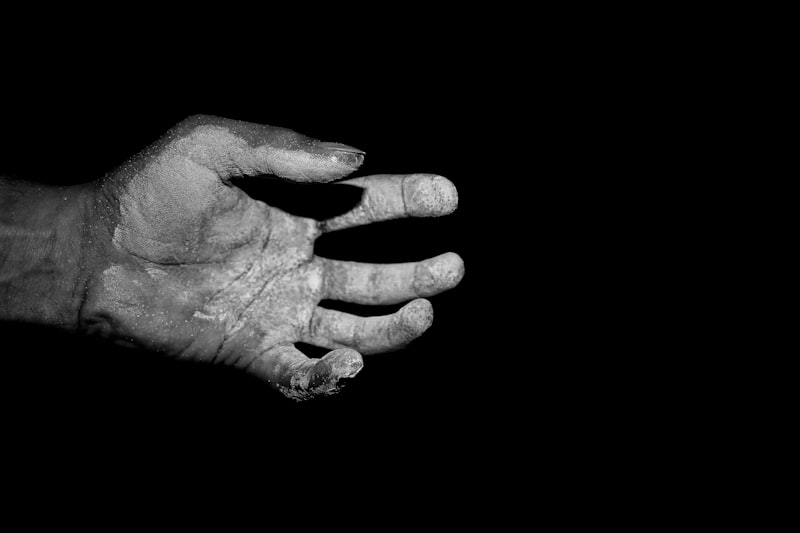
The condition referred to colloquially as the Strange-Hand Sign is clinically recognized as Alien Hand Syndrome (AHS), a complex and rare neurological disorder characterized by involuntary, yet seemingly purposeful motor activity in a limb, coupled with a profound lack of ownership or sense of agency over that limb. The affected individual perceives the hand, arm, or sometimes the leg, as acting autonomously, often against their conscious will, leading to descriptions such as the limb being “possessed” or “foreign.” This perceptual dissociation—where motor control is lost while sensation remains largely intact—highlights a critical failure in the brain’s ability to integrate sensorimotor feedback with the conscious experience of self. Historically, the recognition of this phenomenon evolved from isolated case studies, providing initial insights into the crucial neural substrates responsible for self-awareness and voluntary movement initiation.
While the term Alien Hand Syndrome is the prevailing designation in contemporary neurology, the earlier terminology of the Strange-Hand Sign accurately captures the initial patient experience: the disturbing recognition that a part of one’s own body is behaving in an unfamiliar or alien manner. This disorder presents a unique challenge to the understanding of bodily self, illustrating that the subjective feeling of ‘my hand’ is not merely a consequence of anatomical connection but is dependent upon the continuous, coordinated function of specific cerebral networks. The severity of AHS varies widely among patients, ranging from mild, infrequent unsolicited movements to highly disruptive, antagonistic actions where the alien hand actively interferes with the activities of the normal hand, such as buttoning clothes or reaching for objects.
The formal study of AHS began in the early 20th century, though definitive localization of the underlying pathology became clearer with advancements in neuroimaging and surgical techniques. The syndrome fundamentally involves a dissociation between the execution of motor commands and the conscious experience of initiating those commands, a state known as anosognosia for motor control. Understanding this syndrome requires a multidisciplinary approach, integrating knowledge from cognitive neuroscience, neuropsychology, and neuroanatomy, particularly focusing on how information flows between the cerebral hemispheres and the frontal lobes responsible for planning and inhibiting action. The profound nature of this defect suggests that the perception of body ownership is a dynamic, highly integrated cortical process susceptible to disruption by focal brain lesions.
Defining the Clinical Phenomenon
The primary clinical manifestation of Alien Hand Syndrome is the exhibition of complex, involuntary movements that appear purposeful but are entirely outside the patient’s voluntary control. These movements are often characterized by semi-automatic motor behaviors, such as reaching, grasping, manipulating nearby objects, or even touching the patient’s face or clothing without conscious intent. Crucially, the patient is typically aware that the movement is occurring but feels utterly detached from the initiation of the action, describing it as if the hand is driven by an independent external force. This lack of agency is a defining characteristic, differentiating AHS from other involuntary movement disorders like tremors or dystonia, where the movements are generally non-goal-directed or recognized as originating from within the self, albeit uncontrollably.
In many severe cases, the alien hand displays antagonistic behavior, actively working against the patient’s intentions. For example, if the patient attempts to close a door with their functional hand, the alien hand might simultaneously attempt to open it. If the patient tries to hold a cup, the alien hand might grasp the cup and pull it away. This intermanual conflict is particularly common in types of AHS stemming from corpus callosum lesions, where conflicting motor programs initiated in isolated hemispheres cannot be reconciled or inhibited effectively. The patient often tries to physically restrain the alien hand, sitting on it or tucking it under their leg, underscoring the profound psychological distress caused by this constant internal conflict and the inability to trust one’s own limb.
While the movements themselves are involuntary, they are not purely reflexive. They often appear highly organized and sophisticated, suggesting that complex motor planning centers remain functional but are operating disconnected from the higher cortical areas that bestow conscious intention and inhibit unwanted actions. Furthermore, sensory deficits are usually minimal or absent in the classic presentation of AHS; the individual can typically feel the hand, experience pain, and perceive touch, yet they cannot acknowledge it as their own in the context of action. This sensory preservation combined with motor disownership creates a paradox central to the disorder, emphasizing that agency is distinct from mere sensation or motor execution.
Etiology and Neural Correlates
The occurrence of Alien Hand Syndrome is invariably linked to focal brain damage, specifically lesions affecting the motor planning areas and the pathways that connect them, ensuring interhemispheric communication and coordination. The most common underlying etiologies include cerebral infarction (stroke), intracranial hemorrhage, tumors, neurodegenerative conditions such as corticobasal degeneration (CBD), and, historically, surgical procedures. Among surgical causes, the primary procedure associated with AHS is anterior callosotomy or commissurotomy—a procedure once commonly performed to control severe, intractable epilepsy by severing the corpus callosum, the massive bundle of fibers connecting the two cerebral hemispheres.
The specific neurological location of the lesion dictates the pattern of AHS observed. Generally, lesions that result in AHS fall into three major categories based on the anatomical region affected:
- Frontal/Anteromedial Lesions: Affecting the supplementary motor area (SMA) or the anterior cingulate cortex, these lesions primarily cause grasping, reaching, and impulsive manipulation behaviors in the hand contralateral to the lesion. This variant is often associated with a loss of inhibition.
- Callosal/Posteromedial Lesions: Damage to the posterior body of the corpus callosum and adjacent areas results in intermanual conflict and the most classic presentation of AHS. The alien hand is typically the non-dominant hand, and the symptoms are often related to the disconnection between the two hemispheres.
- Parietal/Posterior Lesions: Lesions in the posterior parietal cortex (PPC) can result in a different type of AHS characterized less by active manipulation and more by sensory disorientation, where the patient denies ownership of the limb even when it is stationary.
The core neural correlate in AHS is the disruption of the circuits governing motor initiation and control. Voluntary motor action requires not only the execution signal from the primary motor cortex but also preparatory signals from the supplementary motor area (SMA) and the prefrontal cortex, which provides contextual information and inhibitory control. When these circuits are damaged, particularly the connections between the SMA and the primary motor cortex, the executive control system fails. The hand acts based on immediate environmental triggers (e.g., seeing an object prompts a grasp reflex) without receiving the necessary inhibitory feedback or confirmation of intent from the higher-level consciousness, thus resulting in the perception of the hand acting independently.
The Role of the Corpus Callosum
As highlighted in the initial description of the disorder, a defect or lesion in the corpus callosum is a central cause for the development of Alien Hand Syndrome, particularly the intermanual conflict variant. The corpus callosum serves as the principal anatomical bridge, facilitating rapid, extensive communication between the specialized areas of the left and right cerebral hemispheres. This connection is vital for harmonizing motor planning and ensuring that the two halves of the body operate cohesively under a single conscious command structure. When the callosum is damaged, especially its anterior and mid-sections, the two hemispheres become functionally isolated regarding certain motor and cognitive processes.
The disconnection caused by callosal damage leads to a phenomenon where motor plans generated in one hemisphere—for instance, the left hemisphere initiating a goal-directed movement—cannot be fully communicated to or controlled by the other hemisphere. Crucially, it is believed that the dominant hemisphere (usually the left) is responsible for general inhibitory control and the sense of agency. When the corpus callosum is severed or damaged, the non-dominant hemisphere’s supplementary motor area can sometimes initiate actions without the benefit of inhibitory input from the dominant hemisphere’s executive centers. This results in the non-dominant hand (controlled by the non-dominant hemisphere) performing actions that conflict with the overall conscious intention of the individual, which is still primarily governed by the dominant hemisphere.
The resulting lack of communication prevents the conscious self, localized primarily within the dominant hemisphere’s prefrontal cortex, from recognizing, inhibiting, or taking ownership of the actions generated by the isolated motor circuits in the other hemisphere. The hand is therefore perceived as operating under its own volition because the necessary neural mechanism for integrating that action into the conscious self-narrative has been physically severed. This profound disconnection not only explains the involuntary nature of the movements but also the patient’s strong conviction that the limb belongs to someone or something else, demonstrating the critical role the corpus callosum plays in maintaining a unified sense of bodily control and agency.
Variations and Classification of AHS
While Alien Hand Syndrome is a singular diagnosis, clinical presentations are highly heterogeneous, leading neurologists to classify AHS into subtypes based on the location of the causative lesion and the specific symptoms exhibited. This classification is vital for accurately understanding the underlying pathophysiology and predicting the patient’s specific behavioral profile. The three main subtypes are defined by the primary anatomical involvement, typically corresponding to the motor pathways or the sensory integration pathways.
The three major clinical classifications of AHS are summarized as follows:
- Frontal (Anteromedial) AHS: This is generally associated with lesions affecting the supplementary motor area (SMA), anterior cingulate cortex, or the anterior aspect of the corpus callosum. Symptoms are characterized by grasping, groping, or compulsive manipulation of tools or objects, often exhibiting an inability to release the object once grasped (utilization behavior). The alien hand is typically contralateral to the lesion, and the patient frequently reports that the hand is acting against their will.
- Callosal (Posteromedial) AHS: Resulting from damage to the posterior body of the corpus callosum, this subtype is defined by intermanual conflict. The non-dominant hand (usually the left) performs antagonistic actions against the intentions or actions of the dominant hand. The patient feels profound disownership over the hand, perceiving it as having a separate, often mischievous, personality.
- Posterior (Parietal) AHS: Less common and sometimes classified separately, this subtype results from lesions in the posterior parietal cortex. Unlike the frontal variant, which emphasizes motor impulsivity, the parietal variant is characterized more by sensory disconnection, where the patient denies ownership of the limb even when it is stationary. The disownership is perceptual rather than purely motor.
The distinction between these subtypes underscores the complexity of bodily self-perception. Frontal AHS demonstrates a loss of inhibitory control, where environmental stimuli automatically trigger motor sequences. Callosal AHS shows a failure of coordination between highly specialized hemispheric motor plans. Parietal AHS reveals a breakdown in the sensorimotor integration necessary for maintaining a cognitive map of the body. Understanding these variations allows clinicians to pinpoint the precise mechanism of agency failure, highlighting that the Strange-Hand Sign is not a single entity but a constellation of disorders resulting from lesions in different parts of the motor control and integration network.
Diagnostic Assessment
Diagnosing Alien Hand Syndrome relies fundamentally on clinical observation and detailed patient history. The key diagnostic criteria revolve around the presence of involuntary, seemingly goal-directed movements that the patient denies conscious control over or ownership of. Neurological assessment must carefully distinguish AHS from other movement disorders, such as apraxia, chorea, or seizure activity, none of which typically involve the profound sense of disownership that characterizes AHS. A crucial part of the physical examination involves observing the hand’s reaction to environmental cues, such as placing an object near the alien hand to see if it compulsively reaches out and grasps it.
Neuroimaging techniques are essential for confirming the presence and location of the underlying brain pathology. Magnetic Resonance Imaging (MRI) is the preferred method, offering high-resolution visualization of brain structures, allowing clinicians to precisely map the lesion—be it an ischemic stroke, hemorrhage, tumor, or evidence of surgical sectioning of the corpus callosum. The findings from the MRI or Computed Tomography (CT) scan are then correlated with the specific clinical subtype of AHS observed (e.g., callosal damage corresponding to intermanual conflict) to strengthen the diagnostic certainty. In cases of progressive neurological disorders like corticobasal degeneration, imaging may reveal widespread cortical atrophy, though the specific focal disruption leading to AHS remains the diagnostic focus.
A comprehensive neuropsychological evaluation is often required to rule out related cognitive deficits. While AHS patients typically retain normal strength and sensation, they must be assessed for related conditions such as unilateral spatial neglect, limb apraxia, or anosognosia (lack of awareness of deficits), which frequently co-occur with the underlying brain damage. Differential diagnosis is critical; for example, distinguishing AHS from simple utilization behavior (where a patient compulsively uses objects but recognizes the hand as their own) or pathological grasping (a purely reflexive movement without complex goal-directedness) requires careful observation and patient reporting regarding the internal experience of agency.
Management Strategies and Prognosis
Management of Alien Hand Syndrome remains challenging because the symptoms stem from structural brain damage, making pharmacological intervention generally ineffective. No single drug has proven reliably curative for AHS. Treatment strategies are primarily focused on behavioral modification, cognitive retraining, and symptomatic management designed to inhibit the involuntary movements and reduce the profound distress caused by the lack of control. These strategies aim to increase sensory feedback and force the patient to re-engage with the alien limb consciously.
Effective behavioral strategies often involve techniques that distract or occupy the alien hand. Patients are frequently advised to hold an object (like a cane or a ball) with the alien hand, providing continuous sensory feedback that often helps dampen the involuntary movements. Another common strategy involves physically restraining the hand, such as placing it in the patient’s pocket, tucking it under their arm, or employing a soft splint or mitt. For the callosal variant, techniques that encourage bimanual coordination, such as having the patient perform a task that requires both hands to work together intentionally, can sometimes override the antagonistic behavior by forcing the hemispheres to cooperate on a conscious task.
The prognosis for Alien Hand Syndrome varies significantly depending on the underlying etiology. AHS resulting from acute causes like stroke or hemorrhage often shows improvement over time, sometimes resolving completely as the brain undergoes spontaneous reorganization (plasticity). However, AHS caused by surgical sectioning of the corpus callosum or progressive neurodegenerative diseases like corticobasal degeneration tends to be more chronic and resistant to treatment. Although the movements themselves rarely pose a direct physical danger to the patient, the psychological impact, including anxiety, depression, and social embarrassment, necessitates ongoing supportive therapy and careful patient education to help the individual cope with the disturbing experience of having a part of their body operate outside the bounds of their self.