Cognitive Dissonance: Why Your Mind Craves Consistency
Scientifically Reviewed · Dr. Marwa Abd-Alazim · October 15, 2026
Review Criteria & Clinical Standards
This content undergoes rigorous scientific peer-review and medical editorial standards at Arab Psychology Network to ensure clinical accuracy, validity, and compliance with evidence-based guidelines from leading psychological and healthcare authorities (APA / WHO).
The Core Definition of Cognitive Dissonance
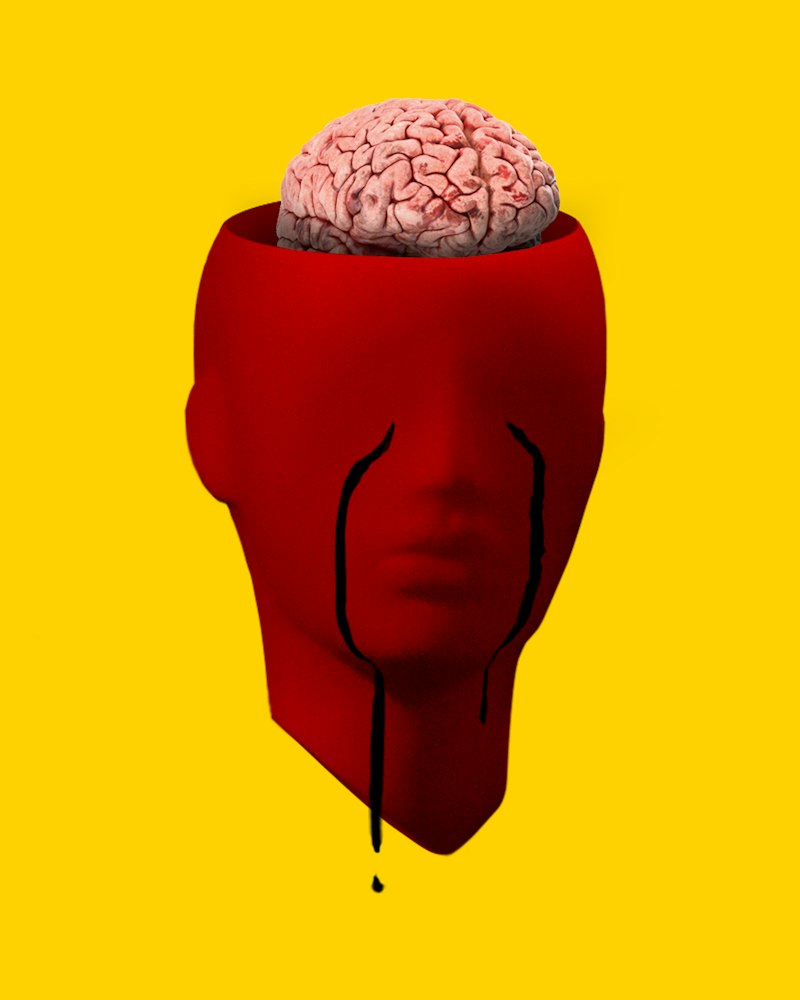
The concept of Cognitive Dissonance stands as one of the most foundational and influential theories within modern social psychology. At its heart, it describes the profound mental discomfort, or psychological stress, experienced by an individual who simultaneously holds two or more conflicting beliefs, attitudes, or values, or when a person behaves in a way that is inconsistent with their existing beliefs. This internal inconsistency generates a state of aversive arousal, which the individual is then motivated to reduce. This motivation is not merely intellectual; it is deeply visceral and powerful, driving significant changes in thought or behavior far beyond what simple logic might predict. The magnitude of the dissonance experienced is directly proportional to the importance of the cognitions involved and the degree of inconsistency between them, meaning that conflicts over core values generate far more distress than minor disagreements.
The fundamental mechanism underpinning Cognitive Dissonance Theory (CDT) is the human need for psychological consistency. Unlike earlier models of human behavior that often focused strictly on external rewards and punishments, CDT highlights the internal drive to maintain a coherent self-image and worldview. When an action contradicts a strongly held belief—for instance, an environmentally conscious person driving a gas-guzzling vehicle—the mind seeks equilibrium. The resolution process is rarely passive; it often involves active self-persuasion, where the individual rationalizes their actions to minimize the discrepancy, thereby restoring psychological harmony. This explains why people often stick vehemently to beliefs even when faced with contradictory evidence, as accepting the evidence would mean admitting a painful inconsistency in past behavior or judgment.
In essence, dissonance is not just disagreement; it is an active state of tension. This tension arises because the conflicting cognitions—which include any belief, knowledge, attitude, or behavior—cannot logically coexist without causing internal friction. To escape this uncomfortable state, individuals employ various reduction strategies that aim to minimize the psychological gap. These strategies are often unconscious and can lead to surprisingly irrational behavior, such as altering memories, selectively ignoring information, or drastically changing attitudes to align with an immutable action already taken. Understanding this powerful internal mechanism provides crucial insight into consumer behavior, political polarization, and personal decision-making processes.
Historical Development and Key Researchers
Cognitive Dissonance Theory was formally introduced to the field of psychology by the American social psychologist Leon Festinger in his seminal 1957 book, A Theory of Cognitive Dissonance. Festinger’s work did not emerge in a vacuum; it built upon earlier consistency theories, such as Heider’s balance theory and Newcomb’s symmetry theory, but provided a much more dynamic and testable framework rooted in the concept of psychological arousal. Festinger was profoundly interested in how people managed internal conflicts, especially those arising from forced compliance or insufficient justification, and his research provided a powerful counterpoint to the then-dominant paradigm of behaviorism, which struggled to explain internal mental states.
One of the most defining and famous pieces of research supporting CDT is the “induced compliance” paradigm, often referred to as the “$1/$20 experiment” (Festinger & Carlsmith, 1959). In this study, participants were asked to perform a series of extremely boring tasks and were then paid either $1 or$20 to tell the next participant that the tasks were actually interesting. The participants who received $20 had high external justification for lying (the large payment), thus experiencing low dissonance. However, the participants who received only$1 had insufficient external justification for their lie, leading to high dissonance between their belief (“The task was boring”) and their behavior (“I told someone the task was interesting”). To resolve this discomfort, the $1 group convinced themselves internally that the task really wasn’t that boring after all, demonstrating attitude change resulting from minimal external reward.
Another foundational study that inspired Festinger was his observation of a small cult in Chicago who believed the world was going to end on a specific date. When the prophecy failed, instead of admitting they were wrong, the members engaged in massive rationalization and proselytizing, claiming that their faith had saved the world. This dramatic example of belief perseverance in the face of undeniable contradictory evidence demonstrated the immense power of dissonance reduction. Festinger theorized that the greater the commitment (the effort, time, and social isolation invested in the belief), the greater the dissonance when the belief is disconfirmed, leading to desperate measures to justify that original commitment. This historical context established CDT as a cornerstone of modern social psychology, revolutionizing how researchers understood attitude change and self-justification.
Mechanisms of Dissonance Reduction
When an individual experiences cognitive dissonance, the resulting tension compels them to engage in one of several established reduction strategies. These mechanisms are designed to bring the conflicting cognitions back into alignment, thereby alleviating the uncomfortable psychological state. The choice of strategy often depends on which cognition is easiest or most practical to change, with behaviors that are already completed being the most difficult to alter, leading to a focus on changing attitudes or beliefs instead. Understanding these mechanisms is key to predicting human responses to failure, temptation, or conflicting advice.
The first primary mechanism is the **Changing of Behavior or Cognition**. If the behavior is still ongoing or reversible, the easiest way to reduce dissonance is to stop the dissonant action. For example, if a person who values health continues to smoke, the simplest resolution is to quit smoking. However, if the behavior is completed (e.g., a large purchase has already been made) or incredibly difficult to change (e.g., quitting an addiction), the individual must resort to changing their belief or attitude instead. In the smoking example, the individual might change their cognition about the risks, perhaps by thinking, “The evidence linking smoking to cancer is overstated,” or “I will die happy, not healthy.”
The second major strategy is **Adding Consonant Cognitions**. This involves selectively seeking out and emphasizing new information that supports the dissonant behavior while downplaying or ignoring information that increases the dissonance. This is a common mechanism in post-decisional justification, often called “buyer’s remorse.” After purchasing an expensive car, the buyer might actively read positive reviews and focus on minor, positive features they hadn’t considered before, while completely forgetting about the car’s poor fuel economy, thereby justifying the high expense. These added cognitions serve as powerful psychological buffers against feelings of regret or having made a poor choice.
Finally, individuals can employ the strategy of **Reducing the Importance of the Conflicting Cognitions**. This involves mentally minimizing the significance of either the belief or the action. For instance, the person driving the gas-guzzler might acknowledge that environmental protection is important, but argue that their personal contribution to pollution is negligible in the grand scheme of things, thus reducing the weight of the conflicting environmental cognition. By framing the conflict as a minor issue rather than a major moral failing, the individual successfully lowers the felt magnitude of the dissonance, allowing them to continue the behavior without significant internal distress.
Practical Application: The Effort Justification Paradigm
A highly illustrative real-world scenario demonstrating Cognitive Dissonance is the phenomenon known as effort justification. This occurs when an individual expends significant effort—time, money, pain, or humiliation—to achieve a goal, only to find the resulting outcome or reward to be disappointing or mediocre. To avoid the highly dissonant cognition that “I suffered greatly for nothing,” the individual convinces themselves that the goal or outcome was actually worth the suffering, thereby elevating its perceived value. This principle explains the loyalty observed in military training, fraternity initiations, or demanding academic programs.
Consider a scenario where a university student attempts to join a highly exclusive but ultimately boring academic club. The initiation process is long, arduous, and embarrassing, requiring weeks of preparation, late nights, and public humiliation. Once initiated, the student discovers the club meetings are dull, poorly attended, and offer little intellectual stimulation. The core dissonance arises between the cognition “I endured weeks of hardship (high effort)” and the cognition “The club is actually tedious (low reward).”
The application of CDT proceeds through measurable, observable steps:
- Initial Cognitive Conflict: The student recognizes the inconsistency: the high effort invested does not match the low value received. The magnitude of dissonance is high because the effort was significant.
- Aversive Arousal: The student experiences psychological discomfort, feeling foolish, regretful, or internally conflicted about their commitment.
- Dissonance Reduction Strategy (Internal Justification): Because the effort (the initiation) is an immutable past behavior, the student cannot change it. Therefore, they must change the attitude toward the club. They start emphasizing minor, positive aspects of the club, perhaps thinking, “The people here are truly dedicated,” or “The networking opportunities are actually priceless, even if the meetings are slow.”
- Attitude Change Outcome: The student’s attitude shifts dramatically. They now genuinely believe the club is more valuable and interesting than they would have judged it to be had they joined easily. This self-persuasion successfully resolves the dissonance, justifying the initial, painful effort. The result is increased loyalty and commitment to the mediocre organization.
Significance and Enduring Impact on Social Psychology
The introduction of Cognitive Dissonance Theory marked a pivotal shift in the study of attitude change, moving psychological investigation away from strictly external reinforcement models typical of behaviorism. Prior to Festinger, many psychologists assumed attitudes changed primarily due to direct persuasion or through rewards and punishments. CDT demonstrated that attitude change could, counter-intuitively, be greatest when the reward for an action was minimal (insufficient justification), because it forced the individual to find internal justification. This insight provided a powerful theoretical basis for understanding self-persuasion, showing that people often change their own minds to validate their behavior, rather than changing their behavior to match their minds.
The impact of CDT extends far beyond academic research, influencing fields from clinical therapy to public health campaigns. In clinical settings, the principles of dissonance are central to techniques like motivational interviewing, which guides clients to articulate their own reasons for change. By gently highlighting the discrepancy between a client’s stated goals (e.g., “I want to be healthy”) and their current behavior (e.g., “I continue to drink excessively”), therapists increase the client’s internal motivation to resolve the resulting dissonance by changing their behavior, rather than simply being told what to do. This approach harnesses the innate human drive for consistency.
Furthermore, CDT has profound implications for understanding phenomena such as victim blaming, cult adherence, and political polarization. When individuals have invested heavily in a particular outcome or belief system, the pressure to reduce dissonance leads them to defend that system rigorously, often by derogating the victims of their actions (to justify their behavior) or by dismissing contradictory sources (to protect their core beliefs). This widespread application highlights the theory’s enduring relevance as a tool for explaining how attitudes are formed, maintained, and sometimes irrationally changed across diverse social contexts.
Connections to Related Psychological Constructs
While highly influential, Cognitive Dissonance Theory does not exist in isolation and shares conceptual space with several other consistency models and opposing viewpoints in psychology. Its primary competitor for explaining attitude change resulting from minimal external justification is Daryl Bem’s Self-Perception Theory (SPT). SPT argues that people do not necessarily experience internal “dissonance” or aversive arousal. Instead, they simply observe their own behavior and infer their attitudes from those observations, especially when their initial attitudes are weak or ambiguous. For example, a person thinks, “I told someone the boring task was fun for only $1, therefore, I must actually think the task was somewhat fun.”
The key distinction between CDT and SPT lies in the role of psychological arousal. CDT posits that the painful state of dissonance is the engine of attitude change, whereas SPT suggests a cool, rational, inferential process without discomfort. Research generally supports CDT when initial attitudes are strong (high dissonance) and supports SPT when initial attitudes are weak or ambiguous (low dissonance). These theories are often seen as complementary, explaining attitude change under different circumstances.
CDT also relates closely to other consistency theories, such as Balance Theory, which focuses on the relationship between three elements (a person, another person, and an object) and predicts that people strive for balanced or harmonious relationships among these elements. Additionally, CDT is fundamentally tied to theories of **Attribution**, as individuals often attribute their dissonant feelings to external factors to avoid the pain of internal conflict. Ultimately, CDT falls squarely within the broad subfield of **Social Psychology**, specifically within the study of attitudes, social influence, and self-justification, providing a powerful lens through which the sometimes irrational, yet predictable, nature of human rationalization can be understood.