Stream of Consciousness: Master Your Inner Mental Flow
Scientifically Reviewed · Dr. Marwa Abd-Alazim · August 30, 2026
Review Criteria & Clinical Standards
This content undergoes rigorous scientific peer-review and medical editorial standards at Arab Psychology Network to ensure clinical accuracy, validity, and compliance with evidence-based guidelines from leading psychological and healthcare authorities (APA / WHO).

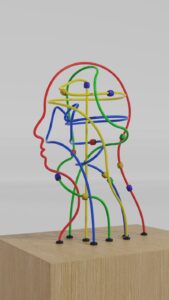
The Stream of Consciousness refers to the continuous, never-ending, and dynamic flow of subjective mental experience. This psychological concept emphasizes that human consciousness is not composed of discrete, separable ideas or thoughts, but rather represents a seamless, ever-shifting current of feelings, sensations, memories, and associations. It fundamentally rejects earlier atomistic views of the mind, which attempted to break down thought into static, measurable units. Instead, the Stream of Consciousness posits that conscious experience is inherently fluid, personal, and temporally oriented, continually moving forward without repetition.
This model highlights the highly subjective quality of our inner life, stressing that the moment-to-moment experience is unique to the individual and impossible to fully replicate or pause. While a person may focus intensely on a particular point or idea—a substantive part of the stream—the surrounding context, emotional tone, and associative links are always in transition, ensuring that the experience of revisiting an idea is always qualitatively new. The metaphor of the stream captures this inherent movement and transition, serving as a foundational concept in both modern psychology and philosophy regarding the nature of the self and subjective reality.
Understanding the stream involves recognizing the interplay between attention and automatic processing. Consciousness acts as a filtering mechanism, selecting specific data points from the enormous influx of sensory information and internal processing. This selection process creates temporary points of focus, yet these focal points remain embedded within the larger, constantly moving current of awareness. Therefore, the stream is both continuous and selective, allowing for purposeful thought while maintaining the underlying subjective unity of experience.
Historical Origins and the Work of William James
The concept of the Stream of Consciousness was formally introduced and extensively elaborated by American philosopher and psychologist William James in his seminal 1890 work, The Principles of Psychology. James utilized this powerful metaphor to challenge the dominant psychological models of his time, particularly British Empiricism and early associationist theories, which viewed the mind as a collection of separate, static ideas linked together through mechanical laws of association. James argued that these models failed entirely to capture the vital, living reality of conscious thought, which is characterized by its warmth, complexity, and ceaseless motion.
James’s primary motivation was to establish a psychology rooted in functionalism, emphasizing the adaptive role of consciousness. He posited that consciousness serves a crucial biological purpose: enabling an organism to choose and adapt to complex environments. To serve this function, consciousness must be dynamic and selective, prioritizing certain pieces of information while discarding others. He famously described the attempt to stop the stream and analyze a thought in isolation as analogous to trying to catch a fish by grasping at the water it swims in—the true object of study is lost the moment one tries to fix it. This critique laid the groundwork for modern approaches to subjective experience.
The adoption of the river metaphor was deliberate and essential to James’s argument. A river is continuous, flowing between its banks, yet its contents are never identical from one moment to the next. The water that passes a certain point is instantly replaced by new water, just as one thought gives way to the next. Furthermore, the stream is experienced as a unified whole; though it may contain tributaries (sensations) and eddies (focused thoughts), the individual perceives it as a single, coherent current, reinforcing the idea of a unified, singular self that experiences this flow. James’s detailed analysis provided the necessary theoretical framework for psychologists and later philosophers and literary critics to explore the inner architecture of the mind.
The Four Essential Characteristics of the Stream
James identified four core characteristics that define the Stream of Consciousness, distinguishing it sharply from any mechanistic or atomistic view of the mind. These characteristics—personal ownership, continuity, constant change, and selectivity—provide the essential framework for understanding how subjective experience is generated and maintained. First and foremost, the stream is always intensely personal; every thought, feeling, and sensation belongs uniquely to the individual experiencing it. The contents of two people’s consciousness, even when observing the exact same event, are fundamentally different due to varying memories, expectations, and emotional histories. This personal quality makes consciousness proprietary and emphasizes its intrinsic subjective nature.
Secondly, the stream is defined by its continuity, meaning there are no genuine breaks, gaps, or seams in the flow of consciousness, except perhaps in deep sleep or unconsciousness. While we may experience momentary shifts in attention or sudden jumps in topic, the transition itself is experienced as smooth. James used the term “transitive parts” to describe these moments of transition, often characterized by feelings of relationship, anticipation, or fleeting connections, as opposed to the “substantive parts” where the mind rests on a definite object or concept. The feeling of “going somewhere” is inherent to the continuous nature of thought, even if the destination is unclear.
Thirdly, the stream is marked by constant change. It is impossible to have the same thought or feeling twice, even if the objective subject matter is identical. If one returns to a concept previously contemplated, the context—the surrounding memories, the mood, the temporal location—has shifted, rendering the subsequent experience unique. James famously stated that “No state once gone can recur and be the same with what it was before.” This characteristic underscores the temporal nature of consciousness, integrating memory and anticipation into every current moment.
Finally, consciousness is selective, meaning it operates teleologically—it is goal-directed and actively chooses what to focus on. We are constantly bombarded by sensory data, yet the conscious mind filters, emphasizes, and ignores, ensuring that only relevant information enters the focal awareness. This selective function is crucial for survival and adaptation, allowing the individual to concentrate effort and attention on solving problems or navigating the environment. The selective nature of the stream demonstrates that consciousness is not a passive receptacle but an active agent in constructing reality.
Methodological Challenges in Studying Inner Experience
Despite its intuitive appeal and powerful explanatory ability, the Stream of Consciousness presents significant methodological difficulties for scientific investigation, challenges that contributed to the rise of behaviorism in the early 20th century. The primary issue stems from the difficulty of studying a phenomenon without fundamentally altering it. The traditional psychological method for studying inner life, introspection, requires the observer to pause the thought process to analyze its contents, thereby freezing the very flow they are attempting to measure. This process invariably transforms the dynamic, transitive nature of the stream into a static, substantive entity, resulting in an inadequate representation of the true experience.
The lack of objective, external metrics further complicated empirical validation. Unlike observable behaviors or measurable neurological responses, the subjective stream resists quantification. Behaviorists, led by figures like John B. Watson, rejected the concept entirely, arguing that any mental phenomenon inaccessible to public observation and objective measurement was unsuitable for scientific inquiry. This led to a significant period where the study of consciousness, particularly its internal, subjective flow, was marginalized in favor of stimulus-response models.
Modern cognitive psychology and neuroscience have developed techniques aimed at circumventing these limitations, attempting to capture the stream indirectly. Methods such as Experience Sampling Methodology (ESM) and Think-Aloud Protocols require participants to report their thoughts immediately upon receiving a prompt, minimizing the time available for conscious reflection and distortion. While these methods do not capture the stream perfectly, they provide valuable insight into the frequency, content, and characteristics of spontaneous thought and mind-wandering, allowing researchers to build empirical models that align with James’s original descriptions of continuous, varied mental states. These newer approaches acknowledge that the study of subjective experience requires specialized, non-reductive methodologies.
The Role of Focus and Attention within the Stream
Within the ceaseless current of consciousness, attention acts as the mechanism by which the mind temporarily stabilizes its focus, allowing for reflection and decision-making. James distinguished between the substantive parts and the transitive parts of the stream to explain how attention operates. The substantive parts are those moments when the mind rests or dwells upon a definite object, concept, or image—this is where focus is achieved and sustained, reflecting the core information noted in the original definition about focusing on a “particular point.” These parts are relatively stable and often involve concrete reasoning or clear perceptual awareness.
Conversely, the transitive parts are the moments of flight, the feelings of “tendency” or “relationship” where the mind is connecting ideas or moving from one substantive point to the next. These parts are elusive, difficult to describe introspectively, and represent the pure movement of the stream. They are crucial because they provide the sense of continuity and direction; without the transitive parts, consciousness would devolve into a series of disconnected mental snapshots. The interplay between rest (substantive) and motion (transitive) defines the experience of directed thought within the overall flow.
Furthermore, attention often operates with a surrounding context known as the “fringe” or “halo” of consciousness. This fringe encompasses all the peripheral elements that are not currently in the spotlight of attention but still influence the current thought. For instance, when searching for a forgotten name, one often experiences the “tip-of-the-tongue” phenomenon—a strong feeling of knowing or familiarity without the explicit content being available. This feeling resides in the fringe, demonstrating that the stream is constantly processing information outside of the immediate, focused awareness, proving that the focused point is merely the brightest spot in a much wider field of awareness.
Influence on Philosophy and Phenomenology
The concept of the Stream of Consciousness exerted a profound influence beyond psychology, particularly on 20th-century philosophy, especially Phenomenology. Phenomenologists, such as Edmund Husserl, sought to describe the structures of experience as they are lived, a pursuit perfectly aligned with James’s emphasis on subjective reality. The stream provided a framework for understanding consciousness not as a static substance but as an ongoing, lived process, often termed *Erlebnis* (lived experience).
The focus on the inherent temporality and continuity of the stream also deeply impacted existential philosophy. Existential thinkers emphasize the nature of being-in-time and the constantly unfolding self. The stream demonstrates that the self is not a fixed entity but a temporal project, continuously redefined by the flow of past memories, present decisions, and future anticipations. The continuous, unique flow of consciousness provides the very ground for individual freedom and the perpetual requirement for self-creation, key tenets of existential thought.
In the philosophy of mind, the stream concept reinforces the complexity of the Mind-Body Problem. If consciousness is a highly personal, qualitative, and dynamically changing flow (possessing *qualia*), it becomes exceedingly difficult to reduce it entirely to physical brain states or computational processes. The experience of the flow—the feeling of smooth transition and subjective coherence—is arguably irreducible to the firing of individual neurons, suggesting that functional explanations alone cannot fully account for the richness of subjective awareness. The stream remains a central argument for those who uphold the distinctiveness of phenomenal consciousness.
Application in Literary Theory and Modernism
One of the most visible and impactful applications of James’s concept occurred in the realm of literature, becoming the defining stylistic trait of the Modernist movement in the early 20th century. Authors sought to move away from external, objective narrative perspectives and instead capture the unfiltered, chaotic reality of internal thought as described by psychologists. The Stream of Consciousness became both a theoretical framework and a specific literary technique.
Pioneering writers such as James Joyce (particularly in Ulysses), Virginia Woolf (in Mrs. Dalloway and To the Lighthouse), and William Faulkner employed techniques designed to mimic the non-linear, associative, and often grammatically incomplete nature of genuine thought. These techniques included interior monologue, where the character’s thoughts are presented directly and without narrative mediation, and free indirect discourse, which blends the narrator’s voice with the character’s internal voice, blurring the line between external description and subjective awareness.
The literary application of the stream allowed for a profound exploration of subjective time, where minutes of real-world action could span chapters of intense internal reflection, and years of memory could be invoked in a single sentence. This commitment to psychological realism prioritized the character’s internal reality over external plot progression, forever altering the structure of the novel. The use of the stream demonstrated the literary power of capturing the mind’s fluidity, its simultaneous processing of multiple sensory inputs, and its tendency to leap associatively between disparate ideas.
Contemporary Cognitive and Neuroscientific Perspectives
Modern cognitive neuroscience has revived interest in the Stream of Consciousness by seeking its neural correlates. While the subjective experience itself remains challenging to measure directly, neuroscientists study the underlying brain activity that generates continuous subjective states. A key focus area is the Default Mode Network (DMN), a set of interconnected brain regions that become active when an individual is not focused on the external world—i.e., when they are engaged in mind-wandering, self-reflection, and spontaneous thought.
Research suggests that the DMN may be the neural engine driving the continuous flow of the stream, responsible for integrating memories, future planning, and self-referential processing into a coherent, ongoing narrative. When attention is directed externally (the substantive parts), the DMN generally deactivates; when attention turns inward (the transitive parts and spontaneous flow), the DMN reactivates. This neural dynamic supports James’s distinction between focused attention and the underlying, continuous mental background.
Furthermore, contemporary models view consciousness not as a location, but as a dynamic process of information integration. The brain constantly weaves together disparate streams of data—sensory input, emotional states, memory retrieval—into a unified, real-time subjective experience. This integrative process ensures the continuity and coherence of the stream. The ongoing challenge for neuroscience is to precisely map how these dynamic, distributed neural processes result in the deeply personal and qualitative experience of conscious flow, upholding the core tenet that consciousness is fundamentally a process of ceaseless, integrated motion.