The Stroop Effect: Why Your Brain Struggles to Focus
Scientifically Reviewed · Dr. Marwa Abd-Alazim · August 31, 2026
Review Criteria & Clinical Standards
This content undergoes rigorous scientific peer-review and medical editorial standards at Arab Psychology Network to ensure clinical accuracy, validity, and compliance with evidence-based guidelines from leading psychological and healthcare authorities (APA / WHO).
Definition and Core Phenomenon
The Stroop Effect represents one of the most robust and widely studied phenomena in experimental psychology, providing crucial insights into the mechanisms of selective attention, cognitive interference, and information processing speed. Fundamentally, the effect demonstrates the difficulty and resulting delay experienced when an individual is asked to name the color of the ink used to print a word, when that word itself names a different color. This classic task requires participants to override an automatic, highly practiced process, which is reading the word, in favor of a less automatic one, which is naming the ink color, resulting in a measurable increase in reaction time and errors under incongruent conditions. The time difference observed between performing the task under congruent conditions, where the word matches the ink color, for example, the word “RED” printed in red ink, and incongruent conditions, such as the word “RED” printed in blue ink, quantifies the magnitude of this cognitive interference. This measurement serves as a powerful diagnostic tool for understanding the interplay between controlled and automatic processing within the human cognitive architecture.
The core mechanism revolves around the asymmetry of processing speeds for different types of stimuli. Reading, for literate adults, is an extremely automatized skill, highly efficient, and difficult to suppress. When presented with a color word, the semantic meaning of the word is processed rapidly and involuntarily, often reaching consciousness before the visual attribute, the ink color, can be successfully isolated and named. This involuntary semantic activation creates a competing response: the participant’s natural inclination is to vocalize the word they have read, but the instructed task requires them to vocalize the color they see. This conflict demands significant executive function resources to suppress the dominant reading response and focus attention solely on the relevant color dimension. The resulting delay in response time under incongruent conditions is the hallmark of the Stroop Effect, serving as a direct measure of the cognitive effort required for response inhibition and conflict resolution.
The original conceptualization highlighted this temporal disparity: the time taken to identify the color of the ink when the color name is different is significantly longer compared to the time taken when the word and the ink color are matched, or when the stimulus is simply a neutral shape or non-word color patch. For instance, an individual will take measurably less time to state the color “pink” when the word PINK is printed in pink ink, versus the increased time required when the word YELLOW is printed in pink ink. This interference is so strong because the semantic pathway for reading is faster and more difficult to ignore than the pathway dedicated to color identification. Therefore, the effect provides empirical evidence that certain cognitive processes, once learned to a high degree of fluency, operate outside the immediate control of conscious intent, thus influencing performance in tasks requiring selective attention.
Historical Context and J. Ridley Stroop’s Contribution
While the phenomenon of semantic interference had been peripherally noted by earlier researchers, notably Cattell in 1886 and later by researchers seeking to understand attention, the definitive experimental investigation and subsequent naming of the effect is attributed to the American psychologist John Ridley Stroop. His seminal work, published in 1935 under the title “Studies of Interference in Serial Verbal Reactions,” meticulously detailed the experimental conditions necessary to elicit and measure the interference effect reliably. Stroop’s experimental design systematically manipulated the relationship between the written word and the color of its ink, quantifying the resulting reaction times across various conditions, thereby providing the first rigorous empirical validation of the phenomenon that now bears his name.
Stroop employed several tasks, but the critical demonstrations involved two primary conditions. The first, the Word Reading Task, required participants to read the color words printed in black ink, establishing a baseline reading speed. The second, the Color Naming Task, was split into two crucial sub-tasks: naming the ink color of non-meaningful stimuli, like squares or Xs, and, most importantly, naming the ink color of incongruent color words, which is the classic Stroop condition. Stroop’s data conclusively demonstrated that reading the word was significantly faster than naming the color of the ink, particularly when the ink color and the word were mismatched. This established the functional asymmetry: reading interferes with color naming, but color naming does not significantly interfere with reading, confirming the directional nature of processing automaticity.
The lasting legacy of Stroop’s research lies not only in the demonstration of the effect itself but in establishing a standardized paradigm for investigating the limitations of attention and the nature of automaticity. Although Stroop’s original paper received modest attention initially, it gained prominence in the 1960s and 1970s as cognitive psychology moved toward information processing models. Today, the Stroop task is a foundational tool, replicated thousands of times, and remains essential for research into cognitive control, attention deficits, and neurological functioning. The clarity and simplicity of the experimental setup made it an ideal measure for probing the fundamental conflict between rapid semantic processing and slower visual feature processing, ensuring its widespread use across psychological sub-disciplines.
Theoretical Explanations of Interference
The robust nature of the Stroop Effect has spurred various theoretical models attempting to explain the precise mechanisms underlying the observed interference. The dominant explanations typically fall under three main categories: Speed of Processing Theory, Selective Attention Theory, and Automaticity Theory. The Speed of Processing Theory posits that the core conflict arises simply because reading the word is a significantly faster process than identifying the color. Because the word processing finishes much earlier, the semantic information of the word becomes available to the response system sooner, creating a preparatory or competing response that must be actively suppressed, thus delaying the correct color-naming response and quantifying the interference based on processing lag.
The Selective Attention Theory focuses on the differential demands placed on the attentional system. In the Stroop task, the participant must selectively attend to the relevant dimension, the ink color, and ignore the irrelevant dimension, the word meaning. This theory argues that the reading dimension is inherently more salient and thus requires greater attentional effort to filter out. The interference is quantified by the difficulty encountered in successfully focusing attention exclusively on the less salient visual feature, the ink color. This perspective emphasizes the role of executive functions, particularly the ability to inhibit distractors, as central to performance on the task, explaining why individuals with deficits in attentional control often exhibit a larger Stroop interference effect due to their inability to effectively filter the distracting semantic information.
Finally, the Automaticity Theory, arguably the most pervasive explanation, highlights the non-volitional nature of reading. Automatic processes, by definition, require little conscious effort, are fast, and are difficult to prevent once initiated. Reading, for competent adult readers, is considered an obligatory process. When the visual stimulus containing the word is presented, the brain automatically retrieves its semantic meaning, regardless of the explicit instruction to focus on the color. The interference, therefore, is the time required for the controlled process, color naming, to overcome the highly efficient, automatically generated, and competing response generated by the word reading pathway. These theoretical viewpoints are not mutually exclusive; modern cognitive models often integrate elements of all three, suggesting that interference results from the confluence of processing speed differences, attentional filtering demands, and the highly practiced nature of reading as a deeply ingrained cognitive skill.
Neural Correlates and Cognitive Control
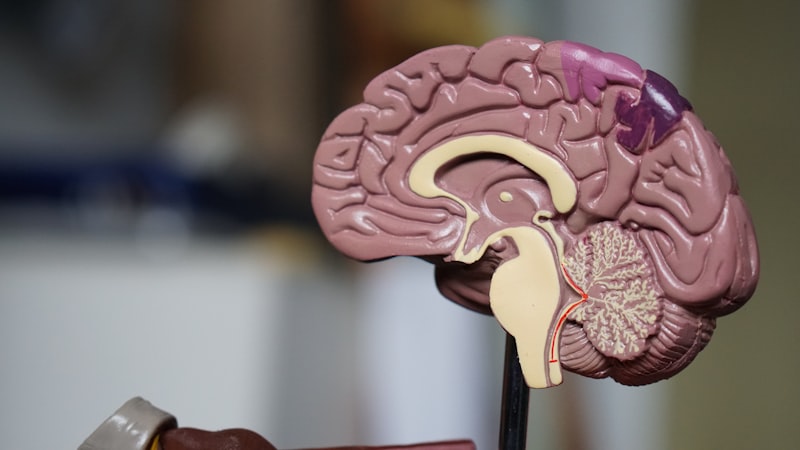
Neuroscientific investigations utilizing functional Magnetic Resonance Imaging, fMRI, and electroencephalography, EEG, have provided critical insights into the brain regions responsible for resolving the Stroop conflict. The resolution of cognitive interference, which is central to the Stroop task, is primarily mediated by the brain’s executive control system. The most consistently implicated region is the Anterior Cingulate Cortex (ACC), particularly its dorsal division. The ACC is widely believed to function as a conflict monitoring system. When the response pathways for reading and color naming diverge during incongruent trials, the ACC detects this internal conflict and signals the need for increased cognitive control to the rest of the executive network, effectively initiating the resolution sequence.
Once conflict is detected by the ACC, control signals are thought to be relayed to the Dorsolateral Prefrontal Cortex (DLPFC). The DLPFC plays a critical role in implementing the necessary control mechanisms, specifically focusing attention on the relevant dimension, the ink color, and actively inhibiting the irrelevant, automatic response, the word reading. Studies show heightened activation in the DLPFC during incongruent Stroop trials compared to congruent or neutral trials, reflecting the increased computational resources dedicated to maintaining task goals and suppressing distracting semantic information. The interplay between the ACC, monitoring conflict, and the DLPFC, implementing control, forms the core neural circuit responsible for effective Stroop performance and suppression of automatic interference.
Furthermore, event-related potentials, ERPs, reveal temporal dynamics consistent with these models. The N400 component, typically associated with semantic processing, is often modulated during the Stroop task, reflecting the rapid semantic activation of the word. Later components, such as the P300 or specific frontal slow waves, are linked to the response selection and execution phases, showing delays and increased amplitude corresponding to the cognitive effort expended in resolving the conflict. These neurological findings confirm that the Stroop Effect is a sensitive marker of executive dysfunction; damage or impairment to the ACC or DLPFC circuits, often seen in conditions like schizophrenia, Attention Deficit Hyperactivity Disorder, or traumatic brain injury, typically results in a markedly exaggerated Stroop interference score, underscoring the test’s diagnostic utility.
Variations and Adaptations of the Stroop Task
Given its reliability and theoretical significance, the original Stroop task has been adapted extensively to explore various aspects of cognitive processing beyond simple color-word interference. One major variation is the Emotional Stroop Task. In this adaptation, instead of color words, participants are presented with emotional words, such as “fear,” “grief,” or “happy,” printed in different colors, and instructed to name the ink color. Interference in this context is observed when the emotional content of the word captures attention, slowing the color-naming process. This variation is frequently used in clinical settings to assess emotional processing biases; for example, anxious individuals typically show greater interference when naming the color of threat-related words, suggesting an underlying attentional bias towards perceived danger and emotional salience.
Another important adaptation is the Reverse Stroop Task, or the Manual Stroop. Here, participants might be presented with a color word and asked to manually select the corresponding ink color from a selection of colored blocks, or, alternatively, they might be shown a colored patch and asked to read the name of the color that corresponds to the patch, which may or may not be the word printed. These variations help dissociate different stages of processing, such as input interference versus output interference, and allow researchers to manipulate the response modality. Additionally, spatial versions, where the meaning of a word indicates a location different from its physical location on the screen, known as the Spatial Stroop Task, are used to study spatial attention and movement preparation conflicts by forcing the inhibition of automatic spatial mapping.
Further modifications include the Numerical Stroop Task, where participants must compare the physical size of two numbers while ignoring their numerical value, for example, the large number ‘2’ presented next to the small number ‘8’. The use of these diverse paradigms confirms that the principle of conflict between an automatic, irrelevant dimension and a controlled, relevant dimension is highly generalizable. These adaptations allow researchers to move beyond the specific case of reading and explore automaticity in areas such as emotional salience, numerical magnitude, and spatial orientation, solidifying the Stroop paradigm as a universal measure of cognitive conflict resolution applicable across various sensory and semantic domains.
Practical Applications in Psychology and Neuroscience
The Stroop test is not merely an academic curiosity; it serves as a fundamental psychometric tool across clinical, developmental, and experimental domains. In Clinical Neuropsychology, the test is routinely administered as a sensitive measure of frontal lobe function, executive control deficits, and working memory capacity. Patients exhibiting significantly larger-than-normal Stroop interference scores often suffer from conditions that impair cognitive control, such as Attention Deficit Hyperactivity Disorder, where impaired inhibitory control is a core symptom, or various forms of dementia, where filtering irrelevant information becomes increasingly challenging due to neurodegeneration of frontal circuits.
In Developmental Psychology, the Stroop task provides insights into the maturation of cognitive functions. Children show a decreasing magnitude of the Stroop effect as they age, reflecting the development of reading automaticity and the concomitant strengthening of executive function and inhibitory control circuits, typically stabilizing around late adolescence. Tracking Stroop performance across the lifespan allows researchers to chart normal cognitive development and identify deviations that might signal developmental disorders. Furthermore, longitudinal studies use the Stroop test to assess age-related cognitive decline, as increases in interference scores often correlate with reductions in frontal lobe integrity and processing speed in older adults, making it an excellent marker for cognitive aging.
Beyond clinical and developmental applications, the Stroop paradigm is indispensable in Human Factors and Ergonomics research. Understanding the limitations imposed by automatic processing helps designers create interfaces and systems that minimize cognitive conflict. For instance, warning labels or critical data displays must avoid configurations that induce Stroop-like interference, ensuring that the critical information, the signal, is processed quickly without competition from irrelevant, distracting features, the noise. Moreover, its application in Psychopharmacology allows researchers to test the effects of various drugs—such as stimulants, sedatives, or psychoactive substances—on attention and inhibitory control, quantifying subtle changes in cognitive efficiency that might be undetectable through less sensitive behavioral measures.
Factors Influencing the Magnitude of the Effect
The magnitude of the Stroop Effect, the difference in reaction time between incongruent and congruent trials, is not static but is influenced by several measurable factors related to both the stimulus characteristics and the individual’s cognitive state. One critical factor is stimulus familiarity and automaticity. The more practiced and automatic the irrelevant dimension, for example, reading a simple word, the greater the interference. If the irrelevant dimension were less automatic, such as reading complex jargon or a foreign language one barely knows, the interference would be significantly reduced because the semantic meaning would not be processed as rapidly or automatically, thereby reducing the conflict with color naming.
Another major determinant is response set preparation and expectation. If a participant is told beforehand that 80% of the trials will be congruent, they might adopt a less vigilant attentional strategy, potentially increasing the interference when the rare incongruent trial appears. Conversely, if the task instructions emphasize speed over accuracy, participants might rush, leading to an increase in error rates on incongruent trials, which is another manifestation of the effect. The proximity of the response options also matters; using a vocal response, naming the color, generally produces a stronger effect than a manual response, pressing a key corresponding to the color, suggesting that the interference is strongest when the competing responses are tightly coupled within the speech production system.
Individual differences also play a significant role. Factors such as working memory capacity and fluid intelligence are often negatively correlated with the magnitude of the Stroop effect; individuals with higher cognitive resources are generally better at maintaining the task goal and inhibiting the automatic response, leading to smaller interference scores. Furthermore, transient factors such as fatigue, stress, or time of day can acutely influence performance, typically exacerbating the interference effect due to a temporary depletion of executive control resources. Understanding these variables is essential for the valid interpretation of Stroop test results in both laboratory and clinical settings, ensuring that observed differences are attributable to the cognitive function being tested rather than confounding transient or stable individual factors.
Critical Evaluation and Future Directions
Despite its enduring relevance, the Stroop task is subject to ongoing critical evaluation, primarily regarding the precise definition of automaticity and the generalizability of the interference mechanism. Early criticisms questioned whether the effect was purely due to semantic reading interference or if visual factors, such as the spatial arrangement of the letters or complexity of the visual fields, contributed to the delay. Modern research has largely settled these debates by showing that semantic processing is indeed the primary driver, but the discussion continues regarding the extent to which attention can truly modulate automatic processes, particularly in highly skilled individuals who might develop meta-cognitive strategies to preemptively manage conflict.
Future research directions are focused on leveraging advanced neuroimaging techniques and computational modeling. Researchers are moving beyond simple reaction time measurements to model the neural dynamics of conflict resolution with greater precision. This includes using machine learning algorithms to predict individual Stroop susceptibility based on resting-state functional connectivity patterns, aiming to identify biomarkers for impaired inhibitory control before behavioral deficits become pronounced. Furthermore, the application of Transcranial Magnetic Stimulation (TMS) allows for the temporary disruption of key neural areas, such as the DLPFC, providing causal evidence for the role of specific brain regions in overcoming Stroop interference, moving from correlational to causal understanding.
In conclusion, the Stroop Effect remains a cornerstone of cognitive psychology, offering a simple yet profound window into the complex interplay between automatic and controlled processing. Its continued application across diverse fields—from assessing neurological injury to exploring emotional regulation—ensures its status as a vital experimental and clinical measure. The ongoing evolution of the Stroop paradigm, incorporating new technologies and theoretical refinements, promises deeper understanding of how the human brain manages the inevitable conflicts arising from parallel information processing pathways and how executive control is successfully implemented.