Subvocal Speech: Unlocking the Power of Your Inner Voice
Scientifically Reviewed · Dr. Marwa Abd-Alazim · October 19, 2026
Review Criteria & Clinical Standards
This content undergoes rigorous scientific peer-review and medical editorial standards at Arab Psychology Network to ensure clinical accuracy, validity, and compliance with evidence-based guidelines from leading psychological and healthcare authorities (APA / WHO).
The Core Definition of Subvocal Speech
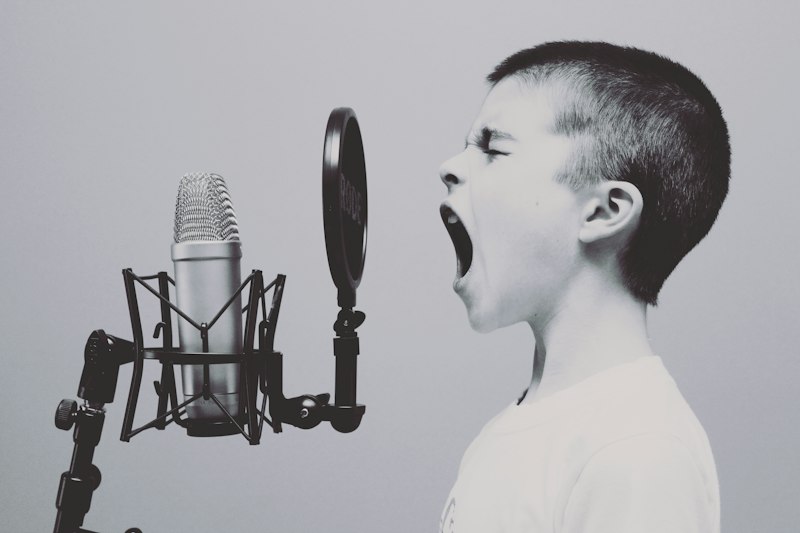
Subvocal speech, often referred to as the inner voice or internal monologue, is fundamentally the silent, internal articulation of words without producing audible sound or expelling air pressure. This phenomenon represents a crucial intersection between thought and physical action, serving as a covert form of speech production. While the person experiencing subvocal speech is consciously aware of “saying” the words internally, the process bypasses the final acoustic stage of vocalization. It is a neurological and motor event that simulates the physical movements required for speaking, engaging the necessary muscles, but only at a minimal, non-audible level. This silent rehearsal is a ubiquitous human experience, occurring during activities ranging from reading a complex text to planning a response in a conversation, and serves as a vital component of linguistic and cognitive processing.
The key mechanism defining subvocal speech is the dissociation between motor command and acoustic output. Research confirms that the brain initiates the motor programs necessary for speech—activating muscles in the vocal cords, tongue, lips, and jaw—but inhibits the intensity needed to generate sound waves. This differentiates it from whispering, which still involves airflow and minimal acoustic energy. Subvocal articulation is, therefore, categorized as a form of motor rehearsal. This foundational understanding allows researchers to study the neural pathways of language processing in their most elemental form, revealing how language is prepared for output even when it remains entirely internal.
Historical and Conceptual Context
The concept of internal speech has roots reaching back to early twentieth-century psychology, particularly within the framework of Behaviorism, though interpreted very differently. Early behaviorists, notably John B. Watson, proposed the peripheral theory of thinking, suggesting that thought itself was nothing more than minute, unobservable movements of the laryngeal and vocal musculature—essentially, thought was reduced entirely to subvocal speech. This theory, while later proven too simplistic, correctly identified the motor component associated with inner verbalization and spurred early attempts to measure these movements physiologically.
The shift from radical behaviorism to the cognitive revolution in the mid-20th century allowed researchers to view subvocal speech not merely as residual muscle habit, but as an essential element of high-level cognitive function. Pioneers in psycholinguistics began using sophisticated physiological measurements, such as early Electromyography (EMG) (Usage 2), to detect subtle electrical activity in the articulatory muscles during silent thinking and reading. These studies confirmed that even when participants were instructed to think silently, there was measurable muscular activity, particularly in the throat area, strongly suggesting a continuous link between internal language processing and the motor system designed for articulation. This realization paved the way for modern research that integrates motor control, linguistics, and cognitive models.
The Physiology and Motor Mechanism
From a physiological perspective, subvocal speech is characterized by the low-amplitude activation of the same muscles utilized for overt vocalization. These muscle groups include the intrinsic and extrinsic laryngeal muscles (vocal cords), the tongue, the soft palate, the jaw, and the orbicularis oris (lips). When an individual engages in silent reading or verbal rehearsal, the motor cortex sends signals to these articulators, initiating a truncated version of the full speech sequence. This muscular involvement is what classifies subvocal speech as a motor event, even in the absence of sound.
The primary method for objectively measuring and confirming the existence of this silent activity is Electromyography (EMG) (Usage 3). EMG sensors, typically placed on the surface of the skin over the throat and facial muscles, detect the minute electrical potentials generated by muscle fiber activation. Research consistently shows that EMG readings increase significantly when a person engages in tasks requiring internal verbalization—such as mental arithmetic, silent reading, or memory rehearsal—compared to tasks that are purely visual or spatial. This physiological evidence is critical because it firmly establishes subvocal speech as a tangible motor phenomenon rather than a purely abstract cognitive process.
This motor involvement highlights the deep coupling between the language production system and the cognitive architecture. The consistent finding of muscle activation suggests that the brain defaults to using the physical apparatus of speech, even when output is suppressed. Understanding this physiological reality helps explain why interference with articulation (e.g., chewing gum or holding the mouth open) can sometimes disrupt cognitive tasks relying heavily on the inner voice, such as the maintenance of information in short-term memory.
Cognitive Functions and Psychological Roles
Subvocal speech plays a pivotal and multifaceted role in Cognitive Psychology (Usage 2), particularly in how humans process, store, and manipulate verbal information. One of its most recognized functions is its role in verbal rehearsal. According to models of working memory (Usage 2), such as the influential model proposed by Baddeley and Hitch, the inner voice is the mechanism of the phonological loop. This loop acts as a temporary storage system for auditory and verbal information, where subvocal rehearsal is necessary to prevent the decay of memory traces over short intervals. Without the ability to silently “repeat” information, short-term memory capacity would be severely limited.
Beyond memory, subvocal articulation is integral to complex tasks such as planning, problem-solving, and critical reading. When an individual reads difficult academic material, they often slow down and articulate the words internally, a process known as speech shadowing. This silent articulation facilitates deeper language comprehension (Usage 2) by reinforcing the auditory and motor codes of the text, thereby aiding in the integration of new information into existing semantic networks. It allows the cognitive system to pause, process sentence structure, and resolve ambiguity before moving on.
Psychologically, subvocal speech is closely linked to self-talk, which serves a self-regulatory function. This internal dialogue is often employed to organize thoughts, structure goals, regulate emotional responses, and guide behavior. For instance, when facing a stressful situation, an individual might internally rehearse calming phrases or step-by-step instructions. This inner voice bridges the gap between impulsive reaction and deliberate, measured action, serving as a continuous feedback loop that modulates cognitive and emotional states.
Practical Application: Real-World Scenarios
To illustrate the pervasive nature and function of subvocal speech, consider the common scenario of memorizing a new, temporary piece of information, such as a six-digit security code or a short telephone number provided verbally. When you hear the number, the acoustic information enters your short-term store. To hold this fragile information long enough to dial it or write it down, you instinctively engage your inner voice.
The application of the principle occurs in the following sequential steps, demonstrating the “How-To” of subvocal rehearsal:
- Initial Encoding: The auditory input (e.g., “4-1-7-5-3-9”) is acoustically encoded into the working memory (Usage 3) system.
- Subvocal Rehearsal Initiation: To prevent the code from fading (which typically happens within 2-3 seconds), the motor system is engaged. You silently “say” the number repeatedly inside your head: “four-one-seven… four-one-seven…”
- Motor Activation: During this silent repetition, low-level EMG activity is detectable in the muscles of the tongue and larynx, mirroring the movements required to say the number aloud, even though no sound is made.
- Duration Extension: This continuous, silent motor rehearsal refreshes the memory trace, effectively resetting the decay clock and allowing the information to be maintained in the phonological loop until it is used.
If one attempts to perform a task that requires simultaneous vocal articulation (like loudly singing a song) while trying to remember the number, the subvocal rehearsal mechanism is blocked, leading to immediate forgetting. This interference effect provides powerful empirical support for the essential role of the inner voice in temporary verbal storage.
Significance, Impact, and Modern Applications
The study of subvocal speech is highly significant to psychology because it provides a foundational link between motor control, language, and thought. It validates the idea that cognitive processes are not purely abstract but are often grounded in or dependent upon physical systems. Understanding how the inner voice functions is crucial for developing accurate and complete models of human language acquisition, reading development, and cognitive load management.
The practical applications of detecting and interpreting subvocal signals are increasingly relevant in modern technology, particularly in human-computer interaction and assistive technologies. Research has focused on developing non-acoustic speech recognition systems that utilize EMG (Usage 4) signals captured from the facial and laryngeal muscles. These systems aim to translate silent thoughts, articulated internally as subvocal speech, directly into digital commands or text.
Potential applications for this technology are transformative, including:
- Assistive Communication Devices: Developing hands-free and non-vocal communication aids for individuals with severe speech impairments resulting from conditions such as cerebral palsy, ALS, or stroke. By translating the silent intent of speech production (Usage 2) into output, these devices could restore communication capabilities.
- Extreme Environment Communication: Creating silent communication systems for environments where acoustic noise is prohibitive or where vocalization is difficult, such as in space exploration, military operations, or deep-sea diving.
- Seamless Computing Interfaces: Allowing users to interact with computers, smartphones, or virtual reality systems using silent commands, enhancing privacy and efficiency in public spaces.
Related Concepts and Broader Subfields
Subvocal speech is interconnected with several major concepts within the broader field of psychology, primarily residing within Cognitive Psychology (Usage 3), psycholinguistics, and speech science. Its most direct theoretical connection is to the concept of the Phonological Loop, which is the verbal component of Alan Baddeley and Graham Hitch’s model of working memory (Usage 4). The inner voice is the active rehearsal mechanism of this loop, maintaining sequences of sounds or words.
Another related concept is Whispered Speech. While subvocal speech involves no airflow, whispering is a fully articulated form of speech that minimizes vocal cord vibration but still utilizes air. Studying the continuum between full speech, whispered speech, and subvocal speech helps researchers isolate the specific motor and acoustic components of language processing. Furthermore, subvocal speech is a critical component of Internal Monologue (or inner speech), a broader term encompassing all forms of non-externalized verbal thought, including reflective thought and narrative rumination.
The study of subvocalization also informs clinical psychology and neuropsychology. For example, understanding the relationship between the inner voice and motor control is essential when researching conditions like dyslexia or certain forms of aphasia, where the ability to silently rehearse or process language may be impaired. Ultimately, subvocal speech serves as a foundational concept, illustrating the deep and often surprising connections between our most private mental experiences and our physical motor systems.