Cerebral Anatomy: Decoding the Brain’s Hidden Map
Scientifically Reviewed · Dr. Marwa Abd-Alazim · August 24, 2026
Review Criteria & Clinical Standards
This content undergoes rigorous scientific peer-review and medical editorial standards at Arab Psychology Network to ensure clinical accuracy, validity, and compliance with evidence-based guidelines from leading psychological and healthcare authorities (APA / WHO).
Definition and Anatomical Context
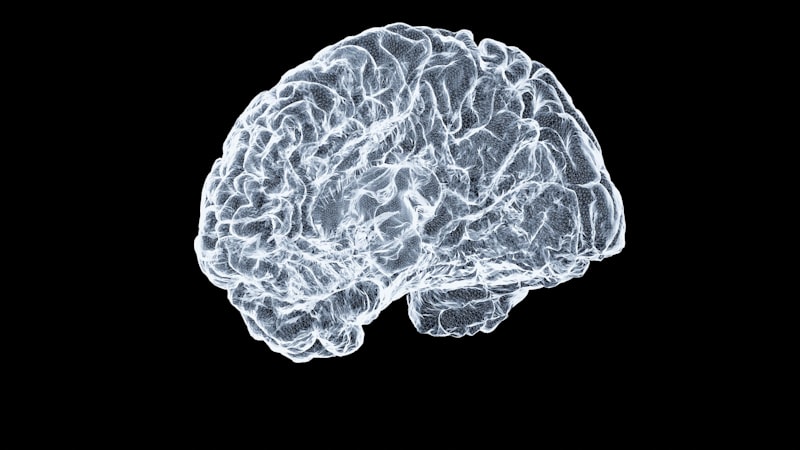
The term sulcus (plural: sulci), derived from the Latin word meaning “furrow” or “groove,” refers to the depressions or invaginations that characterize the highly convoluted surface of the cerebral cortex. Far from being merely incidental features, these grooves are fundamental components of the brain’s gross anatomy, serving to dramatically increase the cortical surface area without necessitating a larger skull volume. This intricate pattern of folding—a defining characteristic of the primate and especially the human brain—is essential for supporting the complex cognitive functions housed within the cortex. A sulcus typically represents the trough between two adjacent ridges, which are known as gyri, forming a highly efficient geometric system for neural networking and processing, maximizing the concentration of gray matter available for computation.
Anatomically, the depth and prominence of sulci vary significantly across different regions of the brain. Some sulci are relatively shallow, serving primarily to delineate minor functional subdivisions, while others are deep and continuous, often extending through the entire thickness of the cerebral hemisphere to define major lobes. The presence of sulci allows for the packing of billions of neurons into a confined space; approximately two-thirds of the total cortical surface area is hidden within these folds, making the exposed surface area only a fraction of the total computational capacity. Consequently, understanding the specific location and orientation of individual sulci is paramount for neuroanatomists, neurosurgeons, and cognitive psychologists seeking to map functional areas, such as those responsible for language, motor control, or sensory processing, often relying on these landmarks for precise localization of both healthy and pathological tissue.
While the overall pattern of sulcation is highly conserved across all healthy human brains, ensuring consistency in the demarcation of major functional regions, the finer details of sulcal morphology exhibit considerable individual variability. These subtle differences in folding patterns are often studied in relation to handedness, cognitive ability, and neurological disorders, highlighting that the precise architecture of the cortical surface is a dynamic and complex reflection of genetic programming and developmental influences. The initial concept relating the sulcus to the cerebral surface is accurate in that the sulcus is a key feature of that surface, fundamentally defining its texture, complexity, and inherent capacity. The structural integrity provided by this folding pattern is crucial for maintaining the organization necessary for advanced cortical function.
The Relationship Between Sulci and Gyri
The existence of a sulcus is intrinsically linked to the existence of a gyrus (plural: gyri); these two structures are fundamentally inseparable, representing the valleys and peaks, respectively, of the cortical landscape. A gyrus is defined as the convex ridge situated between two adjacent sulci, meaning that every cortical fold necessitates both a groove and a crest. This alternating pattern is known as gyrification, and it is the primary mechanism by which the brain maximizes the amount of gray matter—the tissue containing the cell bodies, dendrites, and synapses—available for computational processes. The gray matter is located superficially on the surface of both the gyri and the walls (or banks) of the sulci, ensuring that neural processing efficiency is maximized across the entire convoluted surface area.
From a functional perspective, the close proximity fostered by sulcation ensures that functionally related areas, often residing on adjacent gyri or within the banks of a single sulcus, can communicate rapidly and efficiently. For instance, the primary motor cortex (located largely on the precentral gyrus) and the primary somatosensory cortex (on the postcentral gyrus) are separated only by the deep central sulcus. This anatomical arrangement minimizes the distance required for white matter tracts to connect these crucial sensory and motor processing hubs, thereby facilitating the rapid feedback loops necessary for coordinated movement and sensory interpretation. The specific folding pattern thus directly influences the efficiency of neuronal communication networks throughout the brain, optimizing signal propagation time and reducing metabolic cost associated with long-distance signaling.
The degree of gyrification, often quantified using metrics like the gyrification index (GI)—a ratio comparing the total cortical surface area to the exposed surface area—is a direct measure of the complexity of the brain’s folding. Higher GI values are typically associated with species capable of greater cognitive capacity, emphasizing the evolutionary advantage of intense cortical folding. In humans, the GI is remarkably high, illustrating the extent to which the cerebral cortex is tucked away within the sulci. Furthermore, while the thickness of the cortex is generally consistent across both gyri and sulci, subtle differences in neuronal density and layering sometimes exist between the exposed crests and the hidden banks, reflecting highly specialized local circuitry and functional micro-architecture.
Distinguishing Sulci from Fissures
While the terms sulcus and fissure are often used interchangeably in general discourse, particularly in older anatomical texts, modern neuroanatomy draws a clear distinction based primarily on depth, extent, and functional significance. Both terms describe grooves or depressions on the brain surface, fulfilling the observation that a “fissure is also like a sulcus,” yet a fissure typically denotes a groove that is significantly deeper, more prominent, and often extends throughout the entire thickness of the cerebral hemisphere, sometimes reaching the ventricles or separating major structural subdivisions, such as lobes or even the hemispheres themselves. The term sulcus, conversely, is typically reserved for shallower grooves that primarily delineate gyri within a single lobe or region, representing secondary divisions rather than primary structural barriers.
The most prominent example of a fissure is the Longitudinal Fissure (or interhemispheric fissure), which runs anteroposteriorly along the midline and completely separates the left and right cerebral hemispheres, being bridged only by the corpus callosum and anterior/posterior commissures. Another key example is the Lateral Fissure (or Sylvian Fissure), which is exceptionally deep and separates the temporal lobe inferiorly from the frontal and parietal lobes superiorly. In contrast, structures like the superior frontal sulcus or the intraparietal sulcus, while critical landmarks, are typically shallower and serve to subdivide the major lobes into functional gyri. This hierarchical classification is vital for precise anatomical localization, where recognizing the deep, constant boundary of a fissure is distinct from identifying the more variable, but still critical, pattern of the sulci.
Neurodevelopmentally, fissures are often the earliest folds to appear in the fetal brain, acting as primary organizational boundaries around which the subsequent, finer folding (sulcation) occurs. The relative constancy and early appearance of fissures across individuals make them reliable landmarks for surgical planning and neurological imaging. While both sulci and fissures contribute equally to the overall increase in cortical surface area by creating banks where gray matter resides, the fissure represents a fundamental dividing line in macro-anatomy, whereas the sulcus represents the secondary, finer division of structure and function within those macro-regions. Therefore, while analogous in their role as depressions, their magnitude, developmental timing, and structural permanence necessitate distinct nomenclature in formal anatomical descriptions.
Major Sulci of the Human Brain
Several specific sulci serve as universally recognized landmarks essential for mapping the functional architecture of the human brain. Understanding the location and boundaries defined by these primary sulci is fundamental to both clinical neurology and cognitive neuroscience. The most critical among these is the Central Sulcus (or Fissure of Rolando), which represents the primary division between the frontal lobe (anteriorly) and the parietal lobe (posteriorly). This sulcus is perhaps the most functionally significant, as it separates the primary motor cortex (precentral gyrus) from the primary somatosensory cortex (postcentral gyrus), defining the boundary for voluntary movement planning and the processing of bodily sensations, a crucial separation for sensorimotor integration.
Another crucial set of posterior landmarks includes the Parieto-occipital Sulcus and the Calcarine Sulcus. The Parieto-occipital Sulcus separates the parietal lobe from the occipital lobe, marking a key transition point in processing streams, particularly between somatosensory integration and visual processing pathways. The Calcarine Sulcus, located deep within the medial surface of the occipital lobe, is critical because its superior and inferior banks house the Primary Visual Cortex (V1), the area responsible for initial visual input processing and retinotopic mapping. The depth and constant location of the Calcarine Sulcus make it an indispensable marker for identifying the initial stages of visual perception, and damage to this area results in specific field deficits.
Furthermore, within the frontal lobe, the Superior Frontal Sulcus and the Inferior Frontal Sulcus divide the frontal cortex into three parallel gyri (superior, middle, and inferior frontal gyri), which are crucial for executive functions, working memory, and language production (e.g., Broca’s area resides largely within the inferior frontal gyrus). Similarly, the Superior Temporal Sulcus (STS), which separates the superior and middle temporal gyri, is highly significant in social cognition, visual motion processing, and auditory integration. The consistent identification and reliable mapping of these major sulci allow researchers to compare functional data across different subjects and studies, forming the indispensable foundation of modern structural and functional brain mapping methodologies.
Developmental Neurobiology of Sulcation
The process of sulcation, or the folding of the cerebral cortex, is a complex, highly regulated neurodevelopmental event that primarily occurs during the late second and third trimesters of human gestation, although minor folding continues into early infancy. Initially, the fetal brain surface is relatively smooth (a condition termed lissencephaly when pathologically persistent). The formation of sulci is driven by a combination of factors, including cellular proliferation, mechanical tension, and differential growth rates between the deep white matter and the superficial gray matter. Specifically, the rapid, constrained expansion of the cortical sheet relative to the underlying white matter scaffolding is thought to induce buckling, leading to the characteristic peaks (gyri) and valleys (sulci). This intricate process ensures that the vast number of cortical neurons are positioned correctly and efficiently for future functionality, minimizing wiring length.
Research suggests that the pattern of folding is not random but follows genetically predetermined trajectories, leading to the consistent placement of major sulci across all healthy individuals, while allowing for individual variation in the finer, tertiary folds. There are two leading mechanical models attempting to fully explain the forces behind sulcation. The first is the differential tangential expansion hypothesis, which posits that the rapid increase in the surface area of the gray matter, while constrained by the fixed size of the skull and the underlying connections, necessitates inward folding to accommodate the expansion. The second is the axonal tension hypothesis, which proposes that the connections formed by the white matter tracts pull the cortex inward at specific points, thus aligning the folding patterns with underlying functional connectivity networks. While both mechanisms likely contribute, the precise interplay and initiation signals remain an active area of neuroscientific investigation.
Abnormalities in the timing or extent of sulcation can lead to severe neurological conditions, often categorized as cortical dysplasia. For example, conditions such as polymicrogyria (characterized by too many small, shallow folds) or pachygyria (characterized by thick, few, and broad folds) are typically associated with migration disorders during development and often result in significant intellectual disability, intractable epilepsy, and motor deficits. Studying the developmental timeline of sulcal formation provides critical insights into the etiology of these congenital disorders, reinforcing that the intricate folding pattern is not just an anatomical curiosity but an absolute prerequisite for normal cognitive and motor development, determining the functional layout of the mature brain.
Functional Significance of Cortical Folding
The most immediate and profound functional significance of sulcation is the maximization of the cortical surface area, which is directly proportional to the available computational power of the brain. By folding the cortex, the human brain achieves a surface area of approximately 2,500 square centimeters—an area that would be impossible to accommodate within the confines of the cranium if the cortex were smooth. This expansion allows for the necessary quantity of gray matter required for advanced functions such as abstract reasoning, complex language processing, sophisticated self-awareness, and high-level sensory integration, capabilities that fundamentally distinguish human cognition from that of less gyrified species.
Beyond simply packing more neurons, sulci play a crucial role in shaping functional organization by influencing the distance and time required for information transmission. The folding pattern often organizes functionally related areas into adjacent gyri or within the banks of a specific sulcus, thereby optimizing the length of the white matter fibers connecting them. This anatomical optimization minimizes propagation delay, ensuring rapid integration of information across different specialized cortical modules. Studies using advanced imaging techniques like functional magnetic resonance imaging (fMRI) frequently demonstrate that activity patterns adhere closely to the boundaries defined by major sulci, confirming that these anatomical landmarks accurately reflect underlying functional divisions, such as the precise separation between motor and sensory processing or adjacent visual fields.
Furthermore, the subtle morphology of individual sulci has been implicated in specific cognitive abilities and lateralization. For instance, asymmetries in the depth or length of certain perisylvian sulci (e.g., the superior temporal sulcus or the central sulcus) have been correlated with specialized functions, notably language dominance and handedness. This suggests that the subtle, individually variable folding pattern may reflect or even influence the highly personalized organization of cognitive resources in the adult brain. The efficient geometric arrangement provided by the sulci is, therefore, integral not only to the quantitative capacity but also to the qualitative functional architecture and high-speed, parallel processing necessary for complex human behavior.
Clinical Implications of Abnormal Sulcation
The study and identification of sulci are indispensable in clinical neuroscience, particularly in surgical planning, diagnostic imaging, and the understanding of neurological disorders. In neurosurgery, precisely identifying specific sulci is crucial for navigating the cortical surface to locate tumors, arteriovenous malformations, or epileptic foci while strictly avoiding damage to vital functional areas, such as the primary motor strip or language centers. Modern neuronavigation systems rely heavily on pre-operative Magnetic Resonance Imaging (MRI) scans to map the individual patient’s sulcal and gyral patterns, ensuring that surgical interventions are carried out with sub-millimeter precision, respecting the critical anatomical and functional boundaries defined by these grooves.
Abnormalities in sulcal depth, width, or connectivity are frequently observed in various neuropsychiatric and neurological conditions, often indicating underlying developmental or degenerative pathology. For instance, subtle alterations in the sulcal pattern have been reported in individuals with Schizophrenia, particularly in areas related to executive function (frontal lobe) and auditory processing (temporal lobe), suggesting a disruption in early developmental folding. Similarly, developmental disorders such as Autism Spectrum Disorder sometimes show atypical patterns of gyrification and sulcation, indicating a deviation from the typical developmental trajectory of cortical folding, potentially reflecting altered cellular migration or connectivity during gestation. These morphological markers offer potential biomarkers for early diagnosis and for monitoring disease progression.
Moreover, the analysis of sulcal morphology is increasingly important in the study of aging and neurodegenerative diseases. As the brain ages, the widening of sulci—often accompanied by the shrinking of gyri—is a common observation, reflecting generalized cortical atrophy and tissue loss, such as that seen prominently in Alzheimer’s disease. Quantification of sulcal widening (often measured via a sulcal index) derived from high-resolution MRI scans provides a measurable, quantitative indicator of the extent of brain volume loss over time. Thus, the sulcus, seemingly a simple groove, acts as a profound indicator of both healthy brain development and pathological decline, solidifying its importance far beyond mere descriptive anatomy.