Ocular Motor Control: How Your Eyes Reveal Your Inner Mind
Scientifically Reviewed · Dr. Marwa Abd-Alazim · October 19, 2026
Review Criteria & Clinical Standards
This content undergoes rigorous scientific peer-review and medical editorial standards at Arab Psychology Network to ensure clinical accuracy, validity, and compliance with evidence-based guidelines from leading psychological and healthcare authorities (APA / WHO).
Core Definition and Anatomical Placement
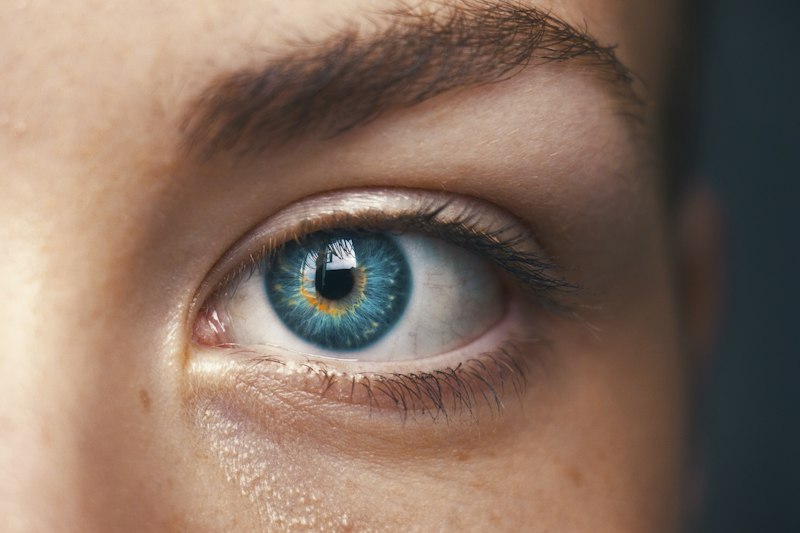
The Superior Rectus (SR) is fundamentally defined as one of the seven extraocular muscles (EOMs) essential for controlling precise and coordinated eye movement. Situated within the orbit, the SR belongs to the group of four rectus muscles—superior, inferior, medial, and lateral—which are primarily responsible for the gross positioning and movement of the eyeball. The core function of the SR is the elevation of the eye, meaning it pulls the visual axis upwards. However, due to its anatomical path and insertion point, its action is complex and multifaceted, contributing to other movements depending on the starting position of the globe. Understanding its exact placement and mechanical leverage is crucial for comprehending both normal visual function and the etiology of many ocular motor deficits.
The anatomy of the SR dictates its physiological role. It originates deep within the orbital apex, specifically from the superior aspect of the annular ligament (or Annulus of Zinn), a fibrous ring that encircles the optic canal. From this posterior origin, the muscle travels anteriorly, passing over the globe and inserting into the superior sclera, approximately 7.7 millimeters posterior to the corneoscleral limbus. Crucially, the axis of the orbit is not perfectly aligned with the visual axis when the eye is in primary gaze; the orbital axis deviates laterally by about 23 degrees. This deviation means that the SR tendon approaches the globe at an angle, leading to its secondary and tertiary actions. The SR is also the most superior of the four rectus muscles, sitting directly beneath the orbital roof and overlying the optic nerve sheath and the ophthalmic artery as it emerges from the apex.
Histologically, the SR, like other EOMs, possesses specialized muscle fibers that allow for rapid, fine movements necessary for accurate visual tracking and fixation. These fibers are distinct from skeletal muscles found elsewhere in the body, featuring a higher ratio of nerve fibers to muscle fibers, enabling rapid response times and high contractile speed. Its blood supply is derived mainly from the muscular branches of the ophthalmic artery. The SR’s precise anatomical relationship with surrounding structures—including the levator palpebrae superioris muscle (which elevates the eyelid) and the superior oblique muscle—requires careful consideration, particularly in surgical contexts, as damage to adjacent tissues can result in secondary functional impairment.
Physiological Mechanisms of Ocular Movement
The primary action of the Superior Rectus is the elevation of the eye, or supraduction. This elevation is achieved when the muscle contracts, pulling the superior aspect of the globe posteriorly toward its origin. However, the SR is not a pure elevator. Because the muscle’s pull is angled approximately 23 degrees nasally (medially) relative to the primary visual axis, contraction also produces two secondary actions: adduction (movement toward the midline) and intorsion (inward rotation of the top of the eyeball). This complex interaction highlights the sophisticated coordination required for binocular vision, where muscles must work synergistically to maintain alignment.
The effectiveness of the SR as a pure elevator is maximized when the eye is abducted (turned outwards) by approximately 23 degrees. In this specific position, the anatomical axis of the SR aligns perfectly with the visual axis, eliminating its secondary rotational and horizontal components. Conversely, when the eye is strongly adducted, the SR becomes a more powerful intortor than an elevator. This variability in function based on gaze position mandates constant neural compensation and coordination with antagonistic and synergistic muscles. The primary synergistic partner for elevation is the inferior oblique, while the primary antagonist is the inferior rectus.
The entirety of the SR’s function is managed by the superior division of the oculomotor nerve (III). This cranial nerve is entirely motor, providing efferent signals that trigger muscle contraction. The precise innervation ensures that signals for elevation are delivered synchronously, enabling smooth tracking and saccadic movements. The tonic activity of the SR is also critical for maintaining the primary position of the eye—the neutral straight-ahead gaze—acting as a brake against the pull of antagonistic muscles. Disruption of this neural pathway, whether due to nerve compression, trauma, or demyelinating diseases, immediately compromises the muscle’s ability to contract effectively, leading to predictable visual symptoms.
Historical Understanding of Extraocular Musculature
The basic anatomical structure of the extraocular muscles, including the Superior Rectus, was first described by early anatomists, though their precise physiological function and innervation were not fully understood until centuries later. Galenic anatomical studies, dating back to the Roman Empire, provided initial, albeit flawed, descriptions of the muscles surrounding the eye. Renaissance anatomists, such as Andreas Vesalius in the 16th century, improved upon these descriptions through human dissection, accurately mapping the positions and attachments of the four rectus muscles and the two obliques, thus solidifying the anatomical basis for modern ophthalmology.
The physiological understanding of how these muscles created movement was significantly advanced during the 17th and 18th centuries, coinciding with the rise of modern mechanics and optics. Researchers began to analyze the rotational geometry of the eye, recognizing that the muscles did not pull the eye in straight lines but caused rotation around a center of rotation, which is typically located slightly posterior to the geometric center of the globe. The recognition of the oblique angle of the Superior Rectus, which explains its secondary intorsion and adduction capabilities, was a key milestone in moving beyond simple, linear models of eye movement.
The crucial link between the EOMs and the central nervous system was firmly established in the 19th and early 20th centuries, marking the shift toward neuro-ophthalmology. Researchers identified the specific cranial nerves responsible for innervating each muscle, establishing that the oculomotor nerve (III) was the sole supplier for the SR, along with the medial rectus, inferior rectus, and inferior oblique. This realization was pivotal, allowing clinicians to use specific patterns of eye movement impairment (paralysis or paresis) to localize neurological lesions within the brainstem or along the nerve’s peripheral path, transforming the diagnosis of neurological disorders.
Clinical Presentation: Identifying Superior Rectus Dysfunction
Dysfunction of the Superior Rectus typically manifests through a recognizable set of clinical symptoms, providing a practical example of its critical role. The most common and distressful symptom reported by patients experiencing SR paresis (weakness) or paralysis is diplopia, or double vision. This occurs because the paretic eye cannot elevate adequately, especially when attempting to look up and out, causing a vertical misalignment between the two eyes. The brain receives two slightly different images, which it cannot fuse into a single, cohesive perception, leading to the sensation of seeing two separate objects.
A systematic, step-by-step examination is used to diagnose SR palsy. The clinician employs the standardized H-pattern or cross-pattern of gaze to isolate the function of each EOM. The patient is asked to follow a target through various fields of gaze. The specific steps illustrating SR dysfunction are as follows:
- The patient is asked to look up and out (supraduction in abduction). This position isolates the SR as the primary elevator, minimizing the action of the inferior oblique.
- If the SR is weak, the affected eye fails to elevate as high as the unaffected eye, resulting in maximal vertical separation and the greatest degree of diplopia in this field of gaze.
- The clinician may employ the Parks-Bielschowsky Three-Step Test, a diagnostic sequence designed to identify which cyclovertical muscle is paretic. If the SR is weak, the vertical deviation often worsens when the head is tilted toward the side of the affected eye (due to the intact, opposing torsional muscles attempting to function).
- To compensate for the vertical double vision, patients often develop a characteristic head posture, tilting the chin up or slightly rotating the head to shift their gaze into a field where the eyes are better aligned, thereby mitigating the symptoms.
The resulting ocular motor deficit can range from subtle misalignment, which is easily compensated for, to severe acquired strabismus (eye turn), necessitating intervention. The precise measurement of the deviation, often using prisms, confirms the extent of the paresis and guides the subsequent treatment strategy, whether optical correction or surgical adjustment.
Significance in Neuro-Ophthalmology and Diagnosis
The integrity of the Superior Rectus and its innervation by the oculomotor nerve (III) holds profound significance in clinical neuro-ophthalmology. Because the SR is supplied by the superior division of the oculomotor nerve, its isolated paralysis or weakness often serves as a key diagnostic indicator for specific neurological conditions. For instance, processes that compress the superior division of the nerve, such as certain orbital tumors or aneurysms, will preferentially affect the SR and the levator palpebrae superioris, leading to elevation deficit and ptosis (droopy eyelid).
The study of EOM function is crucial because it acts as a non-invasive window into the brainstem and peripheral nervous system. The precise organization of the cranial nerve nuclei (like the oculomotor nucleus) and their pathways means that damage to specific localized areas within the brainstem (e.g., due to stroke, demyelination, or vascular disease) will produce highly predictable patterns of EOM palsy. The SR, therefore, is not just a muscle of movement but a vital diagnostic landmark. Its functional status helps differentiate between orbital causes (like muscle restriction) and neurological causes (like nerve damage) of eye movement disorders.
Beyond diagnosis, the SR plays a role in rehabilitation and therapy. Understanding the muscle’s biomechanics is paramount when planning ocular muscle surgery, which is often required to correct chronic strabismus resulting from SR palsy. Surgeons must calculate precise recession (weakening) or resection (strengthening) amounts to restore proper alignment and minimize diplopia in the primary and reading positions. Incorrect surgical adjustment of the SR can inadvertently induce severe vertical deviations or torsional errors, emphasizing the clinical importance of accurate anatomical and physiological knowledge.
Connections to Related Ocular Structures and Fields
The concept of the Superior Rectus is inseparable from the broader field of ocular motility, which falls under the umbrella of neuroscience and clinical neuro-ophthalmology. It is connected to several other key structures and principles:
- Antagonists and Synergists: The SR works in concert with the inferior oblique muscle to achieve elevation (synergists). Its primary antagonist for vertical movement is the inferior rectus, and its primary antagonist for torsion is the superior oblique. These muscles operate under the principles of Sherrington’s Law of Reciprocal Innervation and Hering’s Law of Equal Innervation, ensuring coordinated movements between the two eyes.
- The Oculomotor Complex: The SR is intrinsically linked to the entire oculomotor nerve (III) complex. This nerve not only controls the SR but also the medial, inferior rectus, and inferior oblique muscles, as well as the intrinsic muscles responsible for pupil constriction and accommodation, making third nerve palsy a widespread and complex motor deficit.
- Vestibular System: Eye movements are deeply connected to the body’s balance system. The SR participates in the vestibulo-ocular reflex (VOR), which uses signals from the inner ear to stabilize the gaze during head movement. If the head moves down, the VOR causes the SR to contract slightly to elevate the eyes, keeping the visual field steady.
This topic belongs primarily to the subfield of clinical neuro-ophthalmology, which bridges neurology and ophthalmology, focusing on visual problems related to the nervous system. It is also highly relevant to basic anatomy and physiology, providing essential data for understanding sensorimotor control and visual processing. The study of the SR’s movement and neural control is a fundamental component in understanding complex ocular conditions like congenital fibrosis of the extraocular muscles and various forms of acquired strabismus.
Therapeutic Approaches to Superior Rectus Deficits
Treatment for deficits involving the Superior Rectus is highly dependent upon the underlying cause, whether it is neurological damage (paresis), mechanical restriction (fibrosis), or congenital malformation. When the deficit is acute and secondary to a known neurological insult, such as a mild stroke or inflammation, treatment often begins with observation, as many palsies, especially those related to microvascular ischemia, may spontaneously resolve within several months. During this observation period, managing symptoms is paramount, frequently involving the use of prisms placed in glasses to optically realign the images and fuse them, thereby eliminating the debilitating diplopia.
If the SR deficit proves chronic or permanent, surgical intervention often becomes the definitive solution. Ocular muscle surgery aims to adjust the tension of the muscles to bring the eyes into alignment, particularly in the primary gaze position where the patient spends most of their time. For a paretic SR (which is too weak), surgeons might perform a resection (shortening) of the SR to increase its pulling power, or a recession (weakening) of the opposing inferior rectus. In severe cases of third nerve palsy, muscle transposition procedures may be necessary, where portions of healthy, innervated muscles (like the lateral rectus) are surgically moved and attached to the insertion point of the weakened SR to provide substitute elevation force.
Beyond surgical and optical solutions, vision therapy and neuro-ophthalmic medications also play supportive roles. Vision therapy may involve targeted exercises designed to improve fusional ability or expand the patient’s field of single vision, helping the patient’s brain adapt to the residual muscle weakness. In specific inflammatory conditions affecting the muscle itself, systemic medications, such as corticosteroids, may be employed to reduce swelling and improve function. The management pathway for SR deficits is always customized, requiring detailed diagnostics to ensure the chosen treatment addresses the specific biomechanical and neurological pathology present.