Superordinate Categories: How Your Mind Maps Reality
Scientifically Reviewed · Dr. Marwa Abd-Alazim · August 27, 2026
Review Criteria & Clinical Standards
This content undergoes rigorous scientific peer-review and medical editorial standards at Arab Psychology Network to ensure clinical accuracy, validity, and compliance with evidence-based guidelines from leading psychological and healthcare authorities (APA / WHO).
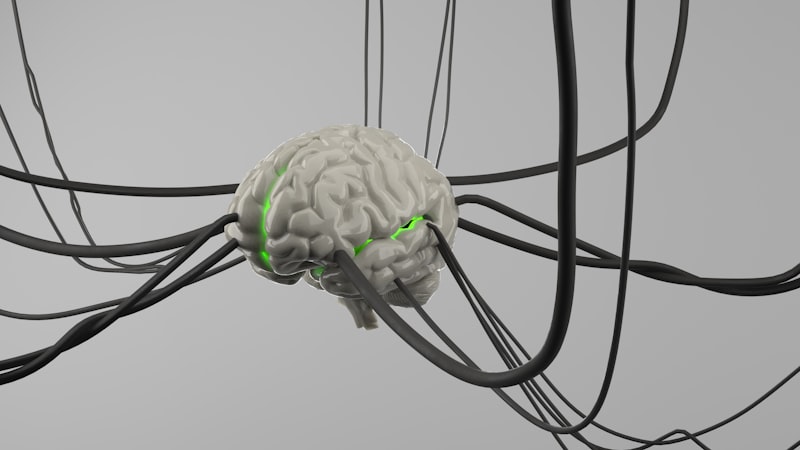
The Definition and Scope of Superordinate Categories
The concept of the superordinate category denotes a high-level class characterized by its expansive scope and significant degree of abstraction. This category functions as an encompassing structure, serving to incorporate and organize multiple lower-level categories, often referred to as basic-level or subordinate categories, into a coherent cognitive framework. Crucially, a superordinate category possesses the capacity to subsume a considerable number of individual subjects or distinct groups, thereby establishing a hierarchical relationship where it resides at the apex of categorization within a specific domain of knowledge. Its fundamental purpose is to provide an organizational scaffold for the immense volume of sensory input and conceptual information processed by the human mind, allowing for efficient generalization across diverse entities that share only minimal, yet essential, defining features.
In psychological and linguistic contexts, the superordinate category is essential for understanding how meaning is structured. Whereas lower-level categories, such as the basic level, are optimized for perception and immediate interaction—offering maximum information gain with the least cognitive effort—the superordinate level prioritizes breadth over descriptive detail. For instance, while the basic-level category of “Chair” provides rich perceptual features necessary for interaction (e.g., sitting mechanism, four legs), the superordinate category of “Furniture” abstracts away these specifics, encompassing objects as disparate as desks, beds, and stools. The utility of this high-level classification lies in its ability to facilitate broad inferences and conceptual organization, even at the cost of sacrificing the detailed feature specification characteristic of more concrete categories.
To illustrate this hierarchical inclusion, consider the example provided in sociological and demographic classification: the category “Human being” serves as a classic superordinate category. Under this expansive umbrella, one finds various subordinate groups, such as “black people,” “white people,” and “Asian people.” Although these subordinate categories possess distinct cultural, genetic, or geographical characteristics, they are all conceptually unified and subsumed under the overarching, highly abstract category of “Human being.” This structure demonstrates the core function of the superordinate level: to unify disparate elements based on a small set of highly critical, shared attributes (in this case, belonging to the species Homo sapiens), thereby allowing for generalized understanding and communication across groups.
Historical Context and Cognitive Foundations
The psychological investigation into categorization, which provides the foundation for understanding superordinate levels, traces its roots back to classical Aristotelian views, where categories were defined by necessary and sufficient conditions. However, modern cognitive psychology shifted dramatically with the introduction of Prototype Theory, pioneered by Eleanor Rosch in the 1970s. Rosch’s work established that categories are not always rigid boxes but often possess fuzzy boundaries and internal structure, organized around prototypical examples. More importantly, her research established the fundamental concept of the categorical hierarchy, which mandates the existence of three distinct yet interconnected levels of abstraction: the Superordinate, the Basic, and the Subordinate levels.
Before Rosch, researchers often treated all category classifications equally. Rosch demonstrated that the human cognitive system is optimized to operate most efficiently at the Basic Level (e.g., “Car” rather than “Vehicle” or “Sedan”). The basic level is where maximum within-category similarity and maximum between-category difference are achieved, making it the most informative and perceptually salient. The superordinate level, by contrast, emerged as the level above this cognitive sweet spot. Psychologists recognized that while the basic level is central to immediate recognition and naming, the superordinate level is vital for abstract thought, structural organization of long-term memory, and enabling sophisticated generalization across vastly different members.
The historical recognition of the superordinate category solidified the understanding that knowledge is not stored as a flat list of facts but rather as a highly organized, hierarchical structure. This structure ensures cognitive economy. Instead of listing every property of every individual entity, the system organizes information by assigning high-level, generalized properties to the superordinate category. These properties are then inherited by the lower-level categories, unless overridden by specific, subordinate features. This architecture is fundamental to models of semantic memory, such as Quillian’s semantic network models, which rely entirely on hierarchical links and property inheritance to explain how the brain retrieves and utilizes stored knowledge efficiently.
Characteristics of Superordinate Categories
Superordinate categories exhibit several distinct characteristics that differentiate them from their basic and subordinate counterparts. One of the primary features is low feature overlap among their constituent members. Unlike basic-level categories, whose members share numerous perceptual and functional attributes (e.g., most chairs look and function similarly), the members of a superordinate category often share very few defining physical characteristics. For example, the superordinate category “Tools” includes objects as visually and functionally diverse as a hammer, a wrench, and a measuring tape. The unifying factor is not shared form or immediate perceptual similarity, but rather a high-level functional or conceptual role, such as “used to perform manual tasks.”
Another defining characteristic is the high degree of inclusiveness, coupled with a commensurate level of abstraction. Superordinate categories possess an extremely large extension—they cover a vast number of individual tokens and lower-level classes. Because of this breadth, the features used to define the category must be extremely abstract. The category “Animals,” for instance, is defined by abstract features like “is alive,” “moves independently,” and “requires sustenance,” features which are too general to allow for specific predictions about any given member. Consequently, superordinate categories are typically less useful for making fine-grained predictions or guiding immediate behavior compared to the basic level. If one is told to “fetch the animal,” the instruction is far less actionable than being told to “fetch the dog.”
Furthermore, superordinate categories often correspond to the earliest levels of formal academic classification, especially in disciplines like biology (Kingdom, Phylum) or library science (major classification divisions). Their function is primarily organizational and structural, providing the major branches of a knowledge tree. They serve as essential anchoring points for intellectual inquiry and systematic classification. Psychologically, their abstract nature means they are generally slower to verify than basic-level categories in reaction time studies; subjects require more time to confirm that a specific object belongs to a superordinate category (e.g., “Is a robin a bird?” is faster than “Is a robin an animal?”), reflecting the cognitive effort required to move up the hierarchy to a more abstract, less perceptually constrained level.
The Categorical Hierarchy: Relation to Basic and Subordinate Levels
The superordinate category is inseparable from the overall framework of the Categorical Hierarchy, which posits that human knowledge is naturally structured into at least three tiers. This hierarchy moves from the most general (superordinate) to the most specific (subordinate), with the basic level serving as the crucial intermediary and the cognitive optimum. The basic level is privileged because it represents the highest level of abstraction at which objects still share highly recognizable motor programs and perceptual features. For example, “Chair” is basic because most people sit on chairs in the same general way, and chairs share a common physical outline. The superordinate level, positioned above this, sacrifices this perceptual and functional coherence for maximum conceptual breadth.
The relationship between the superordinate and its subordinate categories is one of strict inclusion, governed by the principle of inheritance. The superordinate category establishes the default properties for all classes nested beneath it. For instance, if the superordinate category “Reptiles” possesses the feature “cold-blooded,” then all subordinate categories, such as “Snakes,” “Lizards,” and “Turtles,” inherit this feature automatically. Specific features that distinguish the subordinates (e.g., “has a shell” for Turtles) only need to be stored at the subordinate level, thus minimizing redundancy and maximizing cognitive efficiency across the entire semantic network. This efficient structure underscores why the superordinate level, despite its abstractness, is indispensable for large-scale knowledge management.
Conversely, the subordinate level (e.g., “Dining Room Chair,” “Office Chair”) offers the highest level of detail and specificity, making fine distinctions that are crucial in specialized fields but often irrelevant in everyday communication. The superordinate category exists as a necessary counterpoint to the extreme specificity of the subordinate level. While subordinate categories are ideal for experts—allowing them to differentiate between a “Chihuahua” and a “German Shepherd”—the superordinate category (“Dog”) provides the necessary common ground for generalized communication. Thus, the superordinate category acts as a conceptual anchor, ensuring that even when details are lost or unknown, a broad, meaningful classification is retained, facilitating communication when fine distinctions are unnecessary or impossible to make.
Role in Cognitive Processing and Efficiency
The primary cognitive function of the superordinate category is to enhance cognitive efficiency, particularly in processes related to memory retrieval, inference, and complex problem-solving. By grouping together a vast array of dissimilar items under a single conceptual label (e.g., “Weapons,” “Clothing,” “Beverages”), the superordinate level allows the mind to access large chunks of related information through a single retrieval cue. This is essential for schema development. Schemas—generalized knowledge structures about objects, situations, or events—often rely on superordinate categories to define their scope and content. For example, the schema for “A Trip to the Grocery Store” heavily relies on superordinate categories like “Produce,” “Dairy,” and “Canned Goods” to organize the layout and content expectations.
Furthermore, superordinate categories play a critical role in deductive reasoning and generalized inference. If an individual learns a new property about a superordinate group, they can logically infer that this property likely applies to all or most of the subordinate categories contained within. For instance, if a new environmental toxin is found to be harmful to the superordinate category “Mammals,” a scientist can immediately infer that this toxin is likely dangerous to humans, dogs, and whales, without needing specific testing on every single species. This ability to project high-level properties downwards through the hierarchy makes the superordinate level crucial for rapid learning, risk assessment, and generalized prediction in unfamiliar situations.
In the domain of language acquisition, the superordinate category serves a later developmental function. Studies show that children typically learn and name basic-level categories first, as these are perceptually salient and frequently encountered. They then progress to learning the abstract superordinate labels (e.g., learning “apple” and “banana” before mastering “Fruit”). However, the mastery of superordinate terms signifies a major cognitive leap—the ability to move beyond concrete perceptual similarities and grasp abstract, conceptual relationships. This abstraction is vital for advanced linguistic competence, allowing the child to structure their vocabulary and understand relationships between words that do not share obvious physical resemblance, enabling complex metaphorical and analogical thought.
Linguistic Manifestations and Utility
Linguistically, superordinate categories often manifest as generic terms or hypernyms—words that function as umbrella terms within the lexicon. These terms are indispensable for effective communication, especially when specificity is either unnecessary or unattainable. For instance, if a speaker observes an unknown species of bird, they can reliably communicate the object to a listener using the superordinate term “Bird,” even if the specific subordinate category (e.g., “Magpie” or “Jay”) remains elusive. This demonstrates the superordinate category’s utility in situations of incomplete knowledge, providing a necessary level of descriptive accuracy that prevents the total breakdown of communication.
In formal discourse, the use of superordinate categories is central to defining and structuring academic and scientific knowledge. Taxonomy in biology, for example, is entirely built upon a system of nested superordinate categories, from the broadest concept of “Life” down through Domains, Kingdoms, and Phyla. Similarly, legal and political classifications rely heavily on superordinate terms—such as “Crime,” “Contract,” or “Government”—to organize complex regulatory systems. These terms act as necessary conceptual containers, providing clear legal or scientific boundaries and ensuring that rules and definitions applied at the highest level apply consistently across all contained subordinate cases.
Furthermore, superordinate terms are vital for providing coherence in narrative and textual organization. Writers and speakers frequently employ superordinate terms as topic sentences or rhetorical devices to transition between detailed discussions of subordinate items. For example, a paragraph discussing various types of tools—screwdrivers, hammers, and saws—is often introduced by the superordinate heading “Hand Implements,” immediately signaling the conceptual scope to the reader. This linguistic scaffolding aids comprehension, allowing the receiver of the information to quickly establish the context and hierarchical relationship of the detailed examples that follow. Without the organizational power of superordinate terms, detailed communication would quickly devolve into an unmanageable list of specifics.
Challenges and Ambiguities in Superordinate Categorization
While superordinate categories are essential for cognitive organization, they are not without challenges, particularly concerning fuzzy boundaries and conceptual ambiguity. Because these categories are defined by a minimal set of abstract features, the border between one superordinate category and another can often be vague and context-dependent. Consider the boundary between “Food” and “Medicine.” Certain substances, like herbal supplements or fortified products, may fit the abstract definition of both, leading to categorization difficulties. This lack of sharp demarcation makes the application of superordinate labels complex in real-world scenarios, often requiring social consensus or expert judgment rather than strict feature matching.
Another significant challenge stems from the high degree of intra-category heterogeneity. The members grouped under a superordinate label can be so structurally and functionally different that generating useful, non-trivial inferences about the entire group becomes difficult. For instance, while “Vehicle” is a useful superordinate category, the functional properties shared by a sailboat and a motorcycle are extremely limited. This heterogeneity means that while the category provides organizational efficiency, its predictive power is often weak. Psychologically, this weakness is reflected in the fact that subjects often struggle to list shared features for superordinate categories, resorting instead to listing functional goals or abstract relationships rather than concrete, shared attributes.
Finally, the utility and structure of superordinate categories are subject to cultural and domain-specific variation. What constitutes a useful, organizationally relevant superordinate category in one culture or professional domain may be useless or nonexistent in another. For example, an indigenous culture deeply familiar with local flora might have extremely detailed subordinate categories for plants that a Western biologist would group under a single, highly abstract superordinate label, indicating that the cognitive optimization of the categorical hierarchy is not universally fixed but adapts based on environmental relevance and learned expertise. These variations highlight that the superordinate level, despite its apparent formality, is fundamentally a product of learned conceptual structure.
Empirical Evidence and Psychological Studies
The existence and specific properties of the superordinate category have been rigorously confirmed through extensive empirical research in cognitive psychology. One primary line of evidence comes from reaction time studies. Numerous experiments have shown that subjects are consistently slower and less accurate when asked to verify a statement involving a superordinate category compared to the basic level. For example, confirming that “A dog is an animal” takes longer than confirming that “A dog is a dog” or “A dog is a mammal.” This delay reflects the additional cognitive steps required to access and verify the abstract features defining the superordinate group, confirming that this level is indeed higher up the cognitive hierarchy.
Further psychological validation comes from feature listing tasks. When subjects are asked to list attributes shared by members of a specific category, they typically list many more shared features for basic-level categories (e.g., “Chair: has legs, has a seat, is used for sitting”) than for superordinate categories (e.g., “Furniture: used indoors, is manufactured”). The features listed for superordinate categories are often abstract and relational, confirming the low perceptual overlap and high conceptual nature of this level. This empirical finding provides direct support for the claim that superordinate categories rely on abstract functional definitions rather than concrete, shared visual or motoric properties.
Neuroscientific studies employing functional magnetic resonance imaging (fMRI) have also differentiated the processing of categorical levels. Research indicates that basic-level categorization often engages sensory and motor areas of the brain, consistent with its perceptual richness. However, superordinate categorization, particularly when dealing with highly abstract groups, tends to activate regions associated with semantic retrieval and executive function, such as the prefrontal cortex. This distinction suggests that processing a superordinate category requires a greater degree of conceptual manipulation and integration of non-perceptual knowledge, solidifying its status as the most abstract and structurally complex level in the cognitive hierarchy.
Conclusion: Summary of Importance
The superordinate category stands as an indispensable component of human cognitive architecture, providing the essential scaffolding necessary for organizing vast and complex domains of knowledge. Defined by its high level of abstraction, its expansive scope, and its function as an organizational container for multiple lower-level categories, it enables the human mind to move beyond simple perceptual data and engage in complex generalization, inference, and deductive reasoning. Although it sacrifices the rich descriptive detail of the basic level, this abstraction is precisely what grants it its power, facilitating cognitive economy and large-scale semantic structure.
From the formal organization of scientific taxonomies to the fluid requirements of everyday communication, the superordinate category ensures that information is structured efficiently, allowing for property inheritance and minimizing redundancy within the semantic network. Whether classifying biological life, structuring a library catalogue, or simply communicating about an unknown object, the superordinate level provides the necessary conceptual anchor. Its mastery represents a crucial developmental milestone, reflecting the capacity for abstract thought and the ability to grasp relationships between disparate entities.
In summary, the superordinate category is far more than just a broad label; it is a fundamental mechanism of conceptual organization. Its operational efficiency allows humans to manage the overwhelming complexity of the world by grouping phenomena into manageable, high-level classes. The understanding of this category is central to cognitive science, linguistics, and philosophy, confirming its role as a necessary foundation for all forms of generalized thought and structured knowledge.