Supported Retirement: Dignity in Aging for the IDD Community
Scientifically Reviewed · Dr. Marwa Abd-Alazim · September 12, 2026
Review Criteria & Clinical Standards
This content undergoes rigorous scientific peer-review and medical editorial standards at Arab Psychology Network to ensure clinical accuracy, validity, and compliance with evidence-based guidelines from leading psychological and healthcare authorities (APA / WHO).
Defining Supported Retirement: Core Concepts and Population
Supported Retirement, often formally referred to as supportive retirement, is a specialized, ongoing program designed to provide necessary assistance and comprehensive social support to older individuals who live with concurrent intellectual or developmental disabilities (IDD). This framework recognizes that the shift from structured vocational or day programming into the retirement phase of life presents unique challenges for this population, requiring continuous, individualized supports to maintain quality of life and community integration. Unlike typical retirement planning which focuses primarily on financial stability and leisure, Supported Retirement must integrate sophisticated health management, therapeutic maintenance, and adapted social opportunities.
The core population served by these programs includes older adults who have historically received services within the disability support system. As life expectancies for individuals with IDD have increased significantly due to advances in medical care and improved community living arrangements, the need for specialized geriatric services tailored to their specific cognitive and physical needs has become paramount. These programs ensure that the supports previously provided in a work or training context are seamlessly transitioned into a retirement context, focusing heavily on leisure activities, volunteerism, and maintaining established routines and relationships.
The philosophical foundation of Supported Retirement is rooted in the principles of normalization and self-determination. It mandates that retirement should be a meaningful and dignified phase of life, characterized by choices, autonomy, and continuous inclusion in the wider community. The provision of assistance is structured not merely to address deficits but to empower the individual to engage in activities reflective of their personal interests and history, thereby sustaining psychological well-being and preventing the isolation or functional regression often associated with the abrupt cessation of lifelong routines.
Historical Context and Evolution of Care Models
The concept of formalized Supported Retirement is a relatively modern development, evolving directly from the broader movement of deinstitutionalization that gained momentum in the late 20th century. Historically, individuals with IDD who aged were often relegated to long-term institutional settings where aging and disability services were merged in restrictive environments, severely limiting social engagement and personal freedom. The lack of structured retirement options in community settings meant that aging frequently led to a decline in activity and an increase in dependency, even for those who had successfully transitioned to community residences.
The adoption of person-centered planning (PCP) and principles like social role valorization (SRV) profoundly influenced the creation of modern retirement models. These concepts demanded that individuals with disabilities possess the right to experience life stages comparable to their non-disabled peers, including the natural transition into retirement. This required service providers to pivot their focus from purely vocational outputs to life enrichment and health maintenance, a significant paradigm shift that necessitated new funding mechanisms and specialized training for staff.
The evolution of funding, particularly through mechanisms such as Medicaid Home and Community Based Services (HCBS) waivers in the United States, played a critical role in formalizing these supports. Previously, funds were often restricted to activities deemed “productive” or “vocational.” Advocacy efforts successfully argued that the maintenance of skills, social connection, and overall health in older individuals constitutes a vital, reimbursable service, leading to the establishment of dedicated programs designed specifically to meet the complex, multi-faceted needs of the aging population with IDD.
Psychological and Social Benefits of Supported Retirement
The psychological impact of a supportive retirement program cannot be overstated. For many individuals who have participated in highly structured day programs for decades, the transition to retirement can precipitate a significant identity crisis. The sudden loss of routine, familiar social contacts, and a defined role can lead to feelings of purposelessness, increased anxiety, and clinical depression. Supported Retirement programs counteract these negative outcomes by replacing previous structure with meaningful, self-directed engagement, maintaining a sense of continuity and self-worth.
A primary benefit is the reduction of social isolation, which is a key risk factor for cognitive and physical decline in all older adults. Through structured activities and integration into generic community settings, such as local senior centers, these programs ensure continuous interaction with both peers and non-disabled community members. This sustained social engagement helps maintain crucial communication and interpersonal skills, fostering a robust support network that extends beyond paid staff, thereby enhancing overall emotional resilience and quality of life.
Furthermore, programs emphasize active aging, promoting physical activities, cognitive stimulation, and the acquisition of new, age-appropriate skills. By engaging in hobbies, arts, light volunteer work, and educational classes, participants are actively involved in preventing functional regression. This proactive approach to health and wellness reinforces the individual’s sense of mastery and autonomy, crucial psychological components for navigating the challenges of aging with a disability.
Key Components and Service Delivery Models
High-quality Supported Retirement programs are characterized by a holistic approach that simultaneously addresses health, leisure, and social connectivity. The foundational element of service delivery is a deeply personalized Person-Centered Plan (PCP), which dictates that services must be built around the individual’s expressed desires, historical preferences, and current capabilities, rather than being fitted into a standardized group activity structure.
Service delivery models frequently employ a decentralized strategy, utilizing community resources rather than operating solely within segregated day facilities. This often takes the form of a centralized agency coordinating specialized support staff, transportation, and clinical oversight, while the actual recreational and social activities occur in diverse community venues. This strategic use of community settings maximizes opportunities for genuine social inclusion and normalization.
The programmatic components of a robust Supported Retirement service typically include:
- Health and Wellness Monitoring: Comprehensive oversight including medication management, routine geriatric screenings, coordination with specialists, and tailored physical therapy to address age-related mobility issues.
- Leisure and Recreational Opportunities: Facilitation of access to hobbies, arts, continuing education classes, and recreational activities chosen by the individual, ensuring activities are meaningful and age-appropriate.
- Community Integration Activities: Provision of structured opportunities for participation in community life, such as visiting libraries, attending cultural events, or participating in local senior center programs, fostering interactions with non-disabled peers.
- Assistance with Daily Living (ADL) Support: Maintenance of necessary assistance in areas like personal care, meal preparation, and household management, adapting support levels as age-related needs increase.
- Behavioral Support: Continuous access to behavioral specialists to manage changes in routine or environment that may lead to challenging behaviors, ensuring a stable and predictable retirement environment.
Challenges in Implementation and Resource Allocation
Despite the clear benefits, the implementation of comprehensive Supported Retirement programs faces several significant structural and financial challenges. Chief among these is funding sustainability. Service costs associated with an aging population with IDD are inherently higher due to increased medical fragility, greater need for individualized behavioral supports, and the demand for lower staff-to-individual ratios to ensure safety and quality engagement. Existing funding streams, often rooted in systems designed for working-age adults, frequently fail to adequately cover these specialized geriatric needs.
Another substantial challenge lies in workforce development and retention. Direct Support Professionals (DSPs) working in these settings require a highly specialized skill set that merges expertise in developmental disabilities with principles of gerontology and complex chronic disease management. Attracting and retaining qualified staff is difficult when faced with low reimbursement rates that suppress competitive wages, leading to high turnover and discontinuity of care, which is particularly detrimental to individuals who rely on consistent relationships.
Furthermore, infrastructural and systemic barriers persist. Many community residential settings and even day program facilities were not initially designed for the mobility issues prevalent in an aging population, requiring expensive retrofitting for accessibility. Programmatic adaptation is also complex; service providers must constantly navigate the regulatory divide between disability services and generic aging services, ensuring that individuals can seamlessly access both sets of resources without administrative penalty or reduction in established supports.
Policy Frameworks and Legislative Mandates
The structure and operation of Supported Retirement programs are heavily influenced by federal and state legislative mandates designed to protect the rights of individuals with disabilities and promote community living. Key legislation, such as the Americans with Disabilities Act (ADA) and the Developmental Disabilities Assistance and Bill of Rights Act, establishes the fundamental right to live an integrated life, which necessarily extends into the retirement years.
The shift toward Home and Community Based Services (HCBS) waivers under Medicaid has been the primary policy driver enabling the funding of these specialized retirement supports. HCBS mandates that states prioritize community-based care over institutionalization, providing the financial flexibility needed to fund non-medical, life-enriching supports such as day activities, specialized transportation, and community integration coaches essential to a successful retirement model.
Policy advocacy continues to focus on achieving age equity, ensuring that individuals aging with IDD are not excluded from resources available to the general senior population. This involves legislative efforts to mandate cross-agency collaboration between developmental disability service systems and aging service networks. Advocacy organizations often stress the principle that retirement services must be tailored to maximize the use of generic community resources while simultaneously providing the intensive, individualized support required to ensure meaningful and safe participation.
The Role of Community Integration and Senior Centers
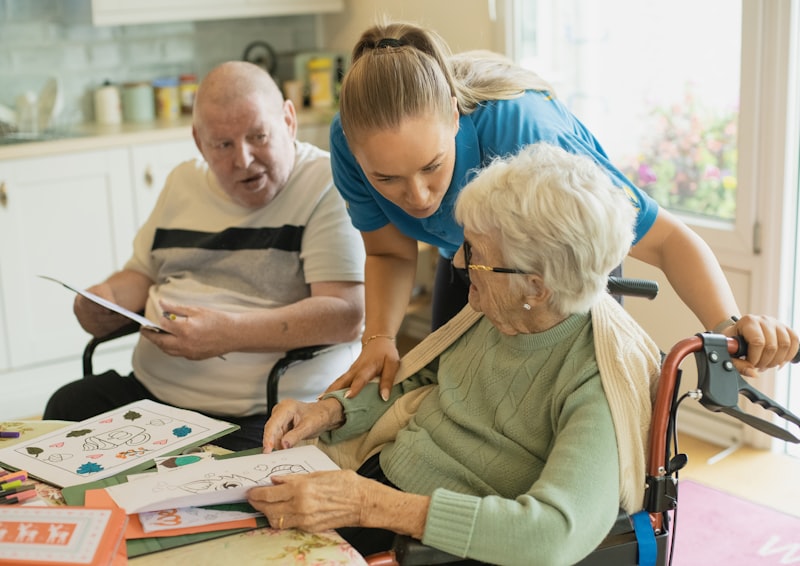
Community integration is the cornerstone of Supported Retirement, emphasizing that services must be delivered in natural, non-segregated settings. The success of this model is exemplified by programs like that of The Arc of Howard County, which actively utilizes local senior centers as primary venues for social interaction and peer engagement. This approach is vital because it avoids the creation of segregated retirement facilities, thus maintaining the principles of normalization.
For integration to be effective, it requires careful planning and support. Programs must ensure that participants are prepared for interaction in a mainstream setting, often involving pre-training in social communication and appropriate community behaviors. Simultaneously, the receiving environment—such as the local senior center staff and patrons—must receive sensitization and awareness training to foster genuine acceptance and interaction, moving beyond simple co-location toward true inclusion.
The advantages of participating in senior centers are manifold. They offer a diverse array of activities, from exercise classes and cultural discussions to shared meals, providing a rich context for interaction with non-disabled peers. This interaction validates the individual’s role as a valued member of the wider community and helps prevent the entrenchment of a disability-centric identity, reinforcing a broader sense of belonging and social inclusion crucial for psychological health in later life.
Future Directions and Best Practices
The future of Supported Retirement is moving toward greater innovation in personalized technology and proactive, longitudinal planning. One key area of development involves the increased integration of technology-assisted supports, including remote health monitoring, smart home technology, and adaptive communication devices. These tools can enhance independence, improve safety within the home, and provide effective data for clinical oversight without necessitating constant, face-to-face staff presence.
A crucial best practice involves establishing longitudinal retirement planning well in advance of the actual transition. This process should ideally begin in the individual’s 40s or 50s, involving structured discussions between the individual, family members, guardians, and support professionals to articulate future preferences regarding residence, desired activities, and anticipated medical needs. Proactive planning ensures resource allocation is efficient and the transition is managed seamlessly, reducing anxiety and maximizing the chances of a successful retirement experience.
Ultimately, best practices in Supported Retirement demand an unwavering commitment to person-centered outcomes, continuous professional development for DSPs in both gerontology and disability support, and aggressive strategies for maximizing community participation. By focusing on maintaining health, fostering meaningful relationships, and ensuring access to self-directed leisure, these programs uphold the dignity and autonomy of older individuals with IDD, affirming their right to a fulfilling and well-supported retirement.