Symbolic Consciousness: Decoding the Hidden Meaning of Reality
Scientifically Reviewed · Dr. Marwa Abd-Alazim · September 1, 2026
Review Criteria & Clinical Standards
This content undergoes rigorous scientific peer-review and medical editorial standards at Arab Psychology Network to ensure clinical accuracy, validity, and compliance with evidence-based guidelines from leading psychological and healthcare authorities (APA / WHO).
Introduction to Symbolic Consciousness
Symbolic consciousness represents a pivotal stage in cognitive evolution, defining the distinctly human capacity for awareness. This form of awareness transcends the immediate, raw input provided by the sensory organs, enabling the interpretation of events where their inherent meaning goes beyond sensory contents. Unlike basic, instinctual awareness—which is tethered strictly to the present moment and direct external stimuli—symbolic consciousness allows the organism to construct and navigate an internal world populated by arbitrary signs and representations. It is the fundamental mechanism through which we assign value, predict future outcomes, and understand abstract concepts such as justice, time, and identity. The foundational definition asserts that symbolic consciousness is being aware of events not merely as physical occurrences, but as entities imbued with meaning derived from shared, internalized systems of reference.
The transition from purely sensory processing to symbolic processing marks a profound shift in how reality is experienced and understood. A creature relying only on sensory awareness perceives a red light as merely an intense frequency of electromagnetic radiation; a creature possessing symbolic consciousness perceives the red light as a command to stop, an encoded warning, or a cultural representation of danger. This difference highlights the arbitrary yet necessary nature of the symbol: the meaning is not intrinsic to the physical object but is assigned via convention and shared cognitive framework. This capacity permits the development of complex language, mathematical reasoning, and cultural systems that collectively define human civilization, allowing for the exponential growth of knowledge across generations, free from the constraints of immediate physical demonstration.
To fully appreciate symbolic consciousness, it must be viewed as an intricate structure of awareness that involves recursive thought and metarepresentation—the ability to hold a thought or concept and simultaneously know that one is holding it. This function liberates cognition from the here and now, allowing for extensive mental time travel, scenario building, and the manipulation of complex conceptual frameworks. Psychologically, this explains our unique ability to experience emotions tied to non-existent entities, such as grief for a fictional character or anxiety about a distant, potential future. The symbol, whether linguistic, mathematical, or ritualistic, becomes the medium through which human experience is formalized, shared, and ultimately given transcendental meaning, establishing the basis for cultural and philosophical inquiry.
The Cognitive Leap: From Index to Symbol
The psychological mechanisms underlying symbolic consciousness require the brain to move beyond simple associative learning—where one event directly predicts another (an index)—to the realm of true symbol manipulation, where the connection is based purely on convention (an arbitrary signifier). In indexical awareness, smoke directly indicates fire, a cause-and-effect relationship observable by many species. However, symbolic consciousness involves recognizing that the four letters F-I-R-E, when spoken or written, evoke the exact concept and associated sensory data, even in the complete absence of heat or smoke. This requires a significant cognitive leap: the ability to decouple the sign from the object and treat the sign itself as a reusable mental currency. This process is heavily dependent on sophisticated working memory and the capacity for rapid pattern recognition and abstraction.
Central to this transition is the development of abstraction, wherein specific sensory details are filtered out, leaving only the essential, generalized properties that can be encapsulated in a single symbolic unit. For instance, the symbolic concept of “tree” manages to hold thousands of individual sensory experiences (oaks, pines, elms, green, brown, rough bark) into one easily manipulable mental unit. This economy of thought dramatically increases the efficiency of processing and communication. Without this abstractive power, every encounter with the world would be a novel experience, overwhelming the cognitive system. Symbolic consciousness provides the necessary scaffolding to organize the infinite variability of the world into finite, manageable categories, which are then encoded into symbols for storage and retrieval.
Furthermore, symbolic processing introduces the capacity for displacement, a linguistic feature that allows human communication to refer to things that are not physically present, that do not exist in reality, or that occurred in the distant past or future. This ability is foundational to complex human planning and historical consciousness. The sheer power of symbols to represent non-actual states is what allows for engineering design, legal systems, and the formulation of scientific hypotheses about unseen phenomena. It represents a liberation from the spatial and temporal constraints of immediate experience, granting humanity the unique power to build conceptual structures that govern behavior across vast distances in both space and time.
The Linguistic Architecture of Symbolic Thought
Language stands as the most explicit and pervasive manifestation of symbolic consciousness. Human language is not merely a sophisticated communication system; it is the primary architecture through which symbolic thought is structured and expressed. The core feature enabling this is the principle of arbitrariness, meaning that there is no inherent, physical connection between a word (the signifier) and the concept it represents (the signified). This arbitrary pairing necessitates a shared, communal agreement—a symbolic contract—which must be learned and maintained by the population, reinforcing the social nature of symbolic consciousness. The system of grammar further layers complexity upon these basic arbitrary units, creating rules for combining symbols in infinite ways, allowing for recursive thought and the generation of novel, complex meanings that are immediately comprehensible to other users of the system.
The relationship between language and consciousness is deeply reciprocal, suggesting that while the capacity for symbolic thought made language possible, language, in turn, refined and structured the way we think. Theories such as the linguistic relativity hypothesis, often associated with Sapir and Whorf, posit that the specific grammatical and lexical structures of a person’s native language influence or even determine how they categorize and perceive the external world. While strong determinism is debated, it is undeniable that language provides the framework for encoding reality, influencing which aspects of experience are salient enough to be symbolized and discussed, thus shaping the collective symbolic consciousness of a culture. This means that symbolic consciousness is not a universal, monolithic entity, but one heavily modulated by the specific symbolic tools—the languages—available to the individual.
Beyond simple communication, linguistic symbolism is crucial for the development of inner speech, or thought. When humans think internally, they often utilize the syntax and vocabulary of their native language, suggesting that symbols are the very currency of introspective thought. This inner dialogue, made possible by the internalization of shared linguistic symbols, is necessary for complex problem-solving, moral deliberation, and self-reflection. The ability to manipulate language internally allows individuals to rehearse actions, simulate social interactions, and develop theories of mind regarding others, all without immediate external input. Therefore, language acts not only as the expression of symbolic consciousness but also as its operational core, essential for maintaining a continuous, coherent sense of self and reality.
Abstraction in Mathematics and Logic
Symbolic consciousness extends far beyond natural language, finding its purest forms in abstract systems such as mathematics and formal logic. These disciplines rely entirely upon symbols that are divorced from any direct sensory referent in the physical world. Mathematical symbols, for instance, represent relationships, quantities, and operations that exist solely within a defined conceptual space. The power of a symbol like the square root sign or the algebraic variable ‘x’ lies in its capacity to stand in for an entire class of potential values or operations, allowing for computation and manipulation at a level far removed from concrete counting or measurement. This ability to handle abstract entities represents a peak achievement of symbolic consciousness, demonstrating the mind’s capacity to create internally consistent, non-empirical realities.
Formal logic systems similarly utilize symbolic representations to analyze and evaluate arguments based on structure rather than content. Logical symbols (e.g., conjunction, negation, implication) are tools for reasoning about relationships between propositions. The manipulation of these symbols allows humans to deduce necessary conclusions from premises, even when those premises involve hypothetical or counterfactual scenarios. This capacity for detached, structured reasoning—the ability to engage in “if-then” thinking about non-existent states—is a hallmark of symbolic consciousness. It requires suppressing the immediate, emotional, or sensory interpretation of the situation in favor of following the arbitrary rules established by the symbolic system itself, facilitating objective analysis and scientific advancement.
The invention and mastery of these abstract symbolic systems highlight the generative nature of human consciousness. These symbols are not merely labels for existing phenomena; they are tools that enable the creation of new knowledge and new conceptual domains. Calculus, quantum mechanics, and abstract algebra are examples of human achievements built entirely upon the manipulation of symbols that refer only to other symbols, demonstrating the mind’s ability to construct infinitely complex hierarchies of meaning. The existence of these abstract systems underscores the definition of symbolic consciousness: an awareness that operates effectively and meaningfully within a domain where the sensory contents are entirely transcended by the symbolic structure.
Symbolic Consciousness and Cultural Frameworks
Symbolic consciousness is the indispensable foundation for all complex human culture. Culture, in essence, is a vast, interconnected web of shared symbolic meanings, rituals, and artifacts. Institutions such as law, religion, and economics rely entirely upon collective acceptance of arbitrary symbols. For example, the concept of monetary value is purely symbolic; a piece of paper or a digital ledger entry holds purchasing power only because every member of the society agrees to uphold that symbolic contract. Similarly, social roles, rites of passage, national flags, and religious icons are potent symbols that evoke complex emotional and behavioral responses despite their inherent lack of physical utility. These symbols provide the coherence necessary for large groups of unrelated individuals to cooperate effectively.
Myths and narrative structures are critical vehicles for transmitting complex symbolic meanings across generations. These narratives encapsulate moral lessons, historical identity, and cosmological understanding in symbolic form, allowing societies to manage existential concerns and maintain social cohesion. The symbolic content of a creation myth, for example, goes far beyond the literal story; it defines the group’s relationship to the world, to the divine, and to each other. Participation in ritualistic behavior, another pervasive cultural element, often involves symbolic actions (e.g., bowing, wearing specific garb) that reaffirm the individual’s connection to the collective symbolic framework, reinforcing shared meaning and social hierarchy.
The profound impact of symbolic consciousness on culture is evident in how knowledge is stored and transmitted. Unlike genetic transmission, which is slow and costly, symbolic transmission through language, writing, and art allows for the rapid accumulation and dissemination of complex information. This externalization of memory into symbolic artifacts (books, databases, monuments) creates a cumulative cultural evolution that far outpaces biological evolution. This collective symbolic knowledge forms the environment within which individuals are raised, meaning that the development of symbolic consciousness in the individual is inextricably linked to the symbolic landscape of their surrounding culture, establishing a feedback loop between individual cognition and collective meaning.
The Developmental Trajectory of Symbolic Awareness
The emergence of symbolic consciousness follows a clear developmental path (ontogeny) within the lifespan of an individual, often mapped through stages of cognitive development. In early childhood, awareness is largely concrete and sensorimotor, focusing on direct interaction with objects. According to developmental psychologists, the critical shift occurs when the child begins to engage in symbolic play—using one object (e.g., a banana) to represent another (e.g., a phone). This mental substitution demonstrates the dawning realization that meaning can be arbitrary and mentally imposed, signaling the transition to representational thought. Subsequent mastery of language accelerates this process, solidifying the child’s ability to manipulate complex symbols internally.
The phylogenetic emergence of symbolic consciousness in the human lineage is a subject of extensive anthropological debate, but it is generally linked to the anatomical and behavioral changes that define Homo sapiens. Evidence of early symbolic behavior, such as intentional burial rites, cave paintings, and the creation of non-utilitarian abstract carvings, suggests that fully developed symbolic cognition was present tens of thousands of years ago. The shift from tool use based purely on immediate functional necessity (indexical awareness) to the creation of objects imbued with ritualistic or aesthetic meaning (symbolic awareness) marks a crucial evolutionary divergence. It suggests a brain capable not only of planning complex hunts but also of contemplating abstract concepts like death, the afterlife, and spiritual entities.
Comparative studies of animal cognition emphasize the uniqueness of human symbolic capacity. While many species exhibit remarkable communication systems and problem-solving skills, these systems often lack the features of displacement, arbitrariness, and recursive grammar that characterize human symbolic language. The capacity to engage in true metarepresentation—thinking about symbols as symbols—appears to be a quantitative leap that granted humans unprecedented cognitive flexibility. This flexibility allowed for the development of theory of mind, enabling complex social strategizing and empathy, as one can symbolically model the intentions and beliefs of others, a skill essential for navigating highly stratified symbolic societies.
Neurological Correlates and Neural Networks
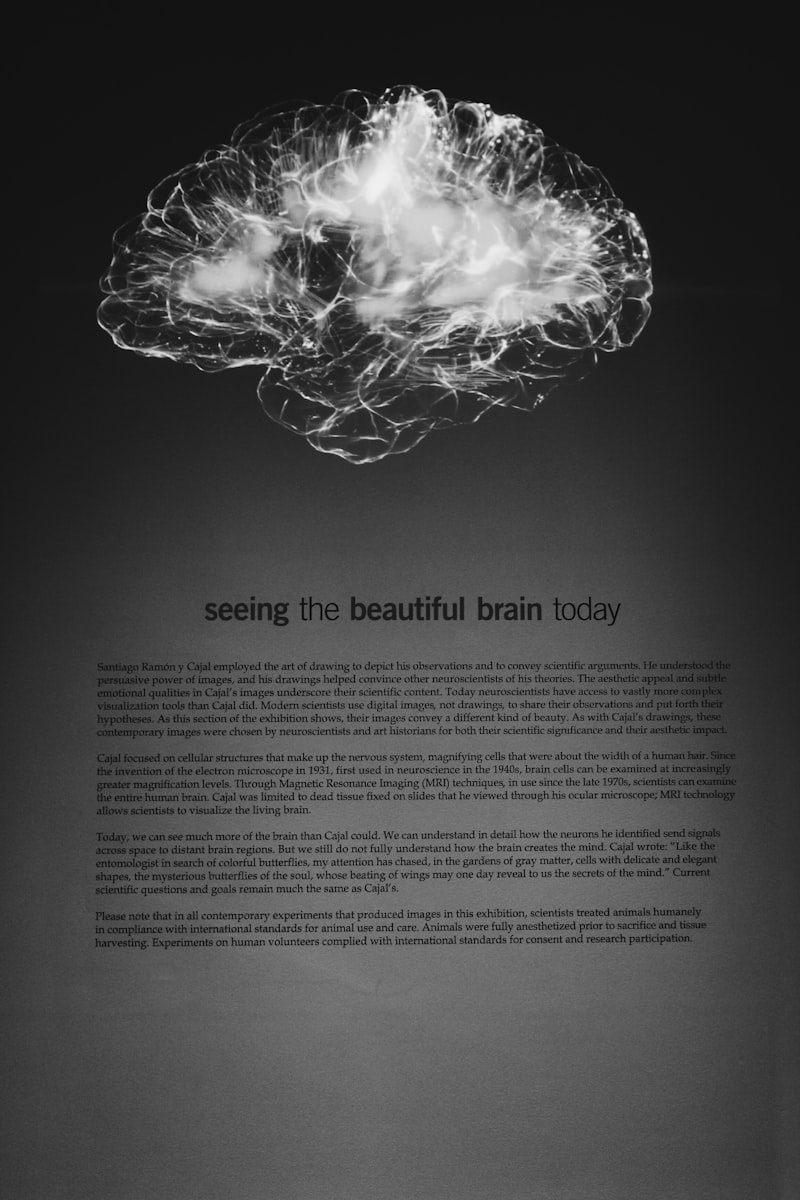
The physical basis for symbolic consciousness is distributed across a highly integrated network of brain regions, reflecting the complexity of abstract thought. Key areas historically associated with symbolic processing involve the language centers, notably Broca’s area (associated with symbolic production and syntax) and Wernicke’s area (associated with symbolic comprehension and semantic meaning). However, modern neuroimaging confirms that symbolic processing is not localized solely to these areas but relies heavily on the frontal and parietal lobes, particularly the prefrontal cortex (PFC), which is crucial for executive function, inhibitory control, working memory, and the manipulation of abstract concepts.
Symbolic thought requires the rapid integration of information across sensory modalities and abstract conceptual domains. The parietal cortex plays a significant role in spatial reasoning and numerical cognition, helping to map abstract symbols onto spatial frameworks (e.g., a timeline or a graph). Crucially, symbolic consciousness relies on the efficiency of white matter tracts, such as the arcuate fasciculus, which connect disparate cortical regions, allowing for the instantaneous linking of a visual symbol (a written word) with its auditory representation and its associated abstract meaning. Disruptions to these connection pathways, often seen in conditions like conduction aphasia, illustrate how the breakdown of the symbolic link, rather than the destruction of a singular ‘symbol center,’ impairs awareness.
The study of pathological conditions further elucidates the neural requirements of symbolic consciousness. Conditions such as severe schizophrenia or certain forms of traumatic brain injury can lead to a fundamental disruption in the coherence of symbolic systems, resulting in disorganized thought patterns where the conventional links between signifier and signified are lost or distorted. Conversely, the high degree of neural plasticity in the human brain allows for the development of entirely new symbolic systems, such as reading Braille or learning sign language, demonstrating the brain’s remarkable capacity to re-assign neural resources to process arbitrary symbols that allow the individual to maintain their connection to the shared symbolic world.
The Philosophical Implications of Symbolic Self-Awareness
Symbolic consciousness raises profound philosophical questions, particularly regarding the nature of self-awareness. The ‘self’ itself can be viewed as the ultimate symbolic construct, a narrative created and maintained by the integration of memories, future projections, and social roles, all encoded symbolically. We do not experience the self as a raw, sensory entity, but as a continuous, internally consistent story built through linguistic and conceptual symbols. This symbolic representation of the self is what enables introspection, moral responsibility, and the existential contemplation of one’s own mortality.
Furthermore, symbolic consciousness is intrinsically linked to the development of ethics and morality. Abstract symbols like “justice,” “rights,” and “duty” are necessary for creating systems of morality that govern behavior beyond immediate emotional response or tribal affiliation. The ability to symbolize consequences that extend into the distant future allows for long-term ethical planning and the establishment of legal frameworks. This suggests that the capacity for moral judgment is directly proportional to the sophistication of an individual’s symbolic awareness, highlighting its importance not just for cognition, but for the functioning of human society at its most fundamental ethical level.
In conclusion, symbolic consciousness is the defining feature of human awareness—the cognitive capacity that transforms a world of undifferentiated sensory input into a universe of meaning. It is the engine of culture, the bedrock of language, and the framework for abstract thought. By moving beyond the indexical and the concrete, humanity gains access to a boundless symbolic domain, allowing for creation, prediction, and self-reflection. The awareness of events, when mediated by symbols, ceases to be a simple physiological response and becomes a dynamic, generative act of meaning-making that continuously shapes and redefines human reality.