Visual Perception: Master the Speed of Sight
Scientifically Reviewed · Dr. Marwa Abd-Alazim · October 17, 2026
Review Criteria & Clinical Standards
This content undergoes rigorous scientific peer-review and medical editorial standards at Arab Psychology Network to ensure clinical accuracy, validity, and compliance with evidence-based guidelines from leading psychological and healthcare authorities (APA / WHO).
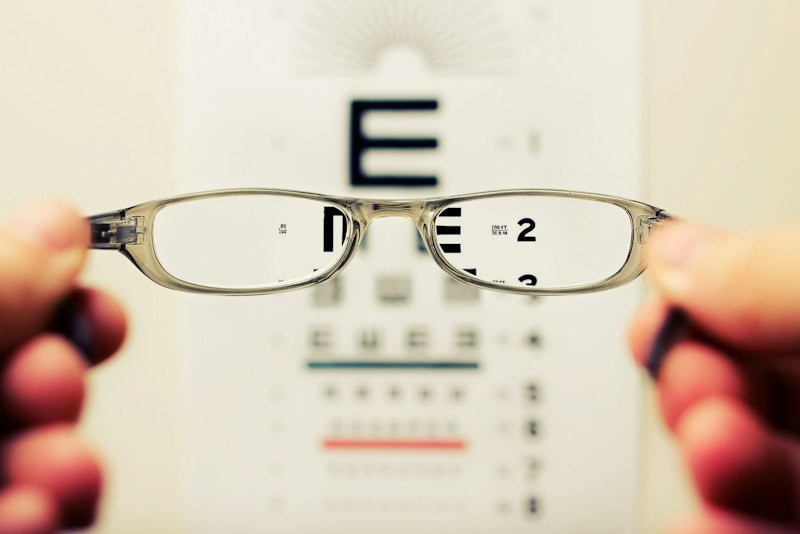
The Core Definition of the Tachistoscope
The Tachistoscope is a highly specialized scientific instrument designed within the field of experimental psychology to precisely control the duration of a visual stimulus presentation. Essentially, it functions as an ultra-fast shutter device, capable of projecting an image, word, or pattern onto a screen for periods often lasting only milliseconds, sometimes significantly less than one second. This unparalleled ability to manipulate exposure time allows researchers to study the fundamental limits of human sight and cognitive processing, making the tachistoscope indispensable for analyzing how the brain registers and interprets information under severe time constraints.
At its foundation, the device is used to measure two crucial aspects of human cognition: the speed at which an individual can process Visual Information Processing and the corresponding Reaction Time required for a subject to respond to the presented stimulus. The key mechanism lies in controlling the duration with such precision that the stimulus presentation is often below the threshold of conscious awareness, or only just long enough to be recognized. This allows psychologists to isolate specific stages of perception, such as encoding, storage, and retrieval, without interference from prolonged viewing or subsequent conscious analysis.
The underlying principle driving the use of the tachistoscope is the exploration of the minimum duration required for recognition, often referred to as the critical duration or perceptual threshold. By systematically varying the exposure time, researchers can determine the exact point at which a stimulus transitions from being purely subliminal to consciously perceived. This mechanism has been pivotal in understanding theories of sensory memory, particularly the concept of the iconic store, which holds a high-capacity, brief image of the visual field immediately after the physical stimulus has disappeared. Therefore, the tachistoscope is not merely a timing device; it is a critical tool for quantifying the speed and efficiency of the human visual system.
Historical Roots and Key Pioneers
While the most recognized and modernized versions of the device emerged in the 20th century, the concept of a rapid-exposure viewing apparatus has roots stretching back to the mid-19th century. Early experimentalists recognized the need to isolate the time factor in perception studies, leading to rudimentary mechanical shutters. However, the systematic and precise application of this technology in psychology is often credited to the work of psychologists focusing on psychophysics and the earliest forms of cognitive testing.
A significant leap forward occurred in the early 1900s with researchers like Alfred L. Yarbus, a Russian psychologist and psychophysicist whose seminal work focused on the intricate mechanics of eye movements and their relationship to perception. Although Yarbus is perhaps best known for his later work detailed in “Eye Movements and Vision,” the development of sophisticated devices capable of controlled, brief exposure was crucial to his early investigations into how subjects scan and recognize complex visual fields. By the 1930s, the refinement of mechanical and, later, electronic timing mechanisms transformed the tachistoscope from a niche laboratory curiosity into a standard, indispensable tool utilized across numerous laboratories engaged in the study of Visual Perception and attention.
The proliferation of the Tachistoscope during the mid-20th century paralleled the rise of the nascent field of cognitive psychology. Researchers needed reliable methods to quantify mental processes that were previously only studied through introspection. The tachistoscope provided an objective, empirical means to measure the duration of mental events, enabling breakthrough studies into topics such as span of apprehension, the influence of context on word recognition, and the comparison of hemispheric differences in processing speed, particularly following the development of dual-field tachistoscopes. The instrument became foundational in establishing measurable parameters for complex psychological phenomena.
Mechanism and Operational Design
The design of a functional tachistoscope, regardless of whether it is a traditional mechanical model or a modern digital setup, must incorporate three fundamental components: a stimulus delivery system, a high-precision timer, and a viewing field. Historically, the device utilized a projector or an illuminated cabinet to display the visual item. The crucial element was the mechanical shutter, which would open and close with extreme rapidity, often controlled by calibrated spring mechanisms or solenoids, ensuring exposure times ranging from a few hundred milliseconds down to as little as one millisecond. The subject would typically view the stimulus through a viewing port or on a calibrated screen.
Modern tachistoscopes, however, have largely transitioned to digital platforms, utilizing high-speed computer monitors or specialized LED screens. These digital setups offer significantly greater flexibility and precision. Instead of relying on mechanical shutters, the computer controls the presentation time by precisely turning pixels on and off, allowing for exposure times that are accurate to the refresh rate of the monitor. This advancement has streamlined research, permitting easier manipulation of variables like color, contrast, complexity, and location of the stimulus, which is crucial when studying visual field deficits or lateralized brain functions.
Regardless of the generation of the instrument, the operational procedure follows a strict protocol designed to isolate the initial perceptual phase. The subject is instructed to fixate on a central point, often indicated by a small cross, immediately before the experiment begins. This fixation is critical to ensure the stimulus falls on the intended area of the retina, usually the fovea, for maximum clarity. The stimulus is then flashed for the predetermined duration, and immediately afterward, the screen is often followed by a masking stimulus—a pattern of random lines or noise—to prevent the subject from continuing to process the lingering iconic image, thus ensuring that the measured Reaction Time truly reflects the processing of the brief exposure.
Primary Applications in Perception Research
The tachistoscope has been used extensively in defining the limits of human Visual Perception, particularly concerning how much information the visual system can absorb instantaneously. Early studies used the device to establish the “span of apprehension”—the maximum number of discrete items (such as dots or letters) an individual could accurately report after a single, very brief exposure. These findings were fundamental in demonstrating that sensory memory is vast but extremely fleeting, laying the groundwork for subsequent models of memory proposed by researchers like Sperling.
Furthermore, the instrument is indispensable for research into selective Attention. By presenting competing visual stimuli to different parts of the visual field simultaneously (using a split-field or dual-channel tachistoscope), researchers can study which stimuli are prioritized by the brain and under what conditions. For instance, studies examining the Stroop effect or the effects of emotional salience on processing speed often rely on the precise timing offered by the tachistoscope to ensure that the emotional or distracting stimulus is processed at the same initial phase as the primary task stimulus, thereby isolating the attentional interference.
A particularly powerful application involves the study of subliminal perception. By setting the exposure time below the subject’s empirically determined threshold of conscious awareness, researchers can investigate whether the visual system still registers and processes the meaning of the stimulus, even if the subject reports seeing nothing but a flash. These experiments, which often involve flashing emotionally charged words or images, seek to understand the extent to which non-conscious Visual Information Processing can influence subsequent judgments, preferences, or behavior, leading to enduring debates about the ethics and efficacy of subliminal messaging.
Illustrating the Principle: A Practical Experiment
To fully appreciate the tachistoscope’s function, consider a classic experiment designed to measure the efficiency of letter recognition. The researcher is interested in determining if subjects recognize common four-letter words faster than they recognize random strings of four letters, a phenomenon known as the word superiority effect. The methodology requires absolute control over exposure time, which the tachistoscope provides.
The experiment proceeds in a precise, standardized manner using the following steps, which highlight the application of the psychological principle:
- The subject is seated comfortably and instructed to fixate on a cross displayed in the center of the tachistoscope screen. They are told that they will see a rapid flash of letters and must report what they saw immediately afterward.
- The experimenter sets the exposure time extremely low, perhaps to 50 milliseconds (0.05 seconds). This duration is chosen because it is typically too brief for full conscious recognition but long enough to activate early visual encoding.
- In randomized trials, the tachistoscope presents either a meaningful word (e.g., “MINT”) or a non-word (e.g., “NTIM”). Immediately after the flash, a masking pattern is displayed to clear the visual field.
- The subject is then asked to report what they saw or, often, to choose between two possible letters that might have been in a specific position (e.g., “Was the first letter M or R?”).
- The results consistently show that subjects are significantly better at correctly identifying the letters when they form a meaningful word compared to when they form a random non-word. This difference demonstrates that the context (the word structure) facilitates the speed of Visual Information Processing, a key finding that relies entirely on the tachistoscope’s ability to precisely control the brief exposure duration.
Role in Cognitive Psychology and Memory Studies
The significance of the tachistoscope extends deep into the study of learning and memory, specifically by helping differentiate between various memory stores. Early use of the device by George Sperling demonstrated the existence of iconic memory—a very short-term, high-capacity sensory register. By flashing matrices of letters and then cueing subjects to recall only a specific row (the partial report method), Sperling proved that subjects momentarily held nearly all the information, even though they could only report a fraction of it, a finding only possible because of the precisely controlled, rapid presentation afforded by the tachistoscope.
In the realm of applied psychology, the principles derived from tachistoscopic research have found application in fields such as perceptual training. During World War II, for example, the device was used to train aircraft spotters to identify enemy planes based on minimal visual cues. Similarly, it has been used in educational settings to improve reading speed and comprehension by forcing the eyes to take in larger chunks of information during brief glances, thereby increasing the effective span of Attention and processing efficiency.
The instrument also plays a crucial role in clinical psychology and neuropsychology, where it is used as a diagnostic tool. By testing processing speeds under conditions of extremely brief exposure, clinicians can assess potential deficits in Reaction Time or visual recognition that may be linked to neurological conditions, learning disabilities, or the effects of aging. The ability to lateralize stimuli (presenting images only to the left or right visual field) allows researchers to compare the processing efficiency of the two cerebral hemispheres, offering insights into language processing and specialized cognitive functions.
Connections to Related Psychological Concepts
The tachistoscope is fundamentally rooted in the subfield of psychology known as Psychophysics, the study of the relationship between physical stimuli and the sensations and perceptions they produce. Concepts such as absolute threshold (the minimum intensity required to detect a stimulus) and difference threshold are often empirically measured using the control afforded by the tachistoscope.
The technology is also intimately connected to several key cognitive theories and phenomena:
- Iconic Memory: As detailed previously, the device was the primary instrument used to validate the existence and characteristics of the visual sensory register, demonstrating its vast capacity and rapid decay rate.
- Subliminal Perception: The tachistoscope is the quintessential tool for investigating whether stimuli presented below the threshold of conscious Visual Perception can still influence behavior or cognitive processes, touching on deep theoretical questions regarding the nature of consciousness.
- Dichotic Listening and Divided Attention: Although primarily a visual tool, the principles of presenting competing information under time pressure parallel the studies conducted using dichotic listening tasks, where auditory information is presented to both ears simultaneously to study selective Attention and filtering mechanisms.
- Signal Detection Theory (SDT): The precise control over stimulus presentation time and intensity makes the tachistoscope an ideal apparatus for applying SDT, which separates a subject’s sensory ability (sensitivity) from their decision-making bias (criterion) when reporting the presence or absence of a briefly flashed stimulus.
In summary, the tachistoscope is more than a historical relic; it is a conceptual cornerstone, linking early experimental psychophysics with modern Cognitive Psychology and neuroscience. Its legacy rests on its capacity to transform fleeting, subjective mental events into quantifiable, measurable data points, driving forward the scientific understanding of speed, accuracy, and efficiency in human visual processing.