Tactile Illusion: Why Your Brain Can Be Fooled by Touch
Scientifically Reviewed · Dr. Marwa Abd-Alazim · October 21, 2026
Review Criteria & Clinical Standards
This content undergoes rigorous scientific peer-review and medical editorial standards at Arab Psychology Network to ensure clinical accuracy, validity, and compliance with evidence-based guidelines from leading psychological and healthcare authorities (APA / WHO).
Core Definition and Mechanism
The Tactile Illusion is fundamentally defined as a sensory phenomenon wherein an individual perceives a touch stimulus in a manner that is qualitatively or quantitatively inconsistent with the actual physical properties of the object or event stimulating the skin. It represents a disconnect between the input received by the peripheral touch receptors and the interpretation constructed by the central nervous system. Unlike simple misidentification, an illusion involves a consistent, predictable distortion of reality, often stemming from the hard-wired processing rules of the brain attempting to interpret ambiguous or novel sensory data. This misperception can involve characteristics such as texture, temperature, location, pressure intensity, or movement across the skin surface.
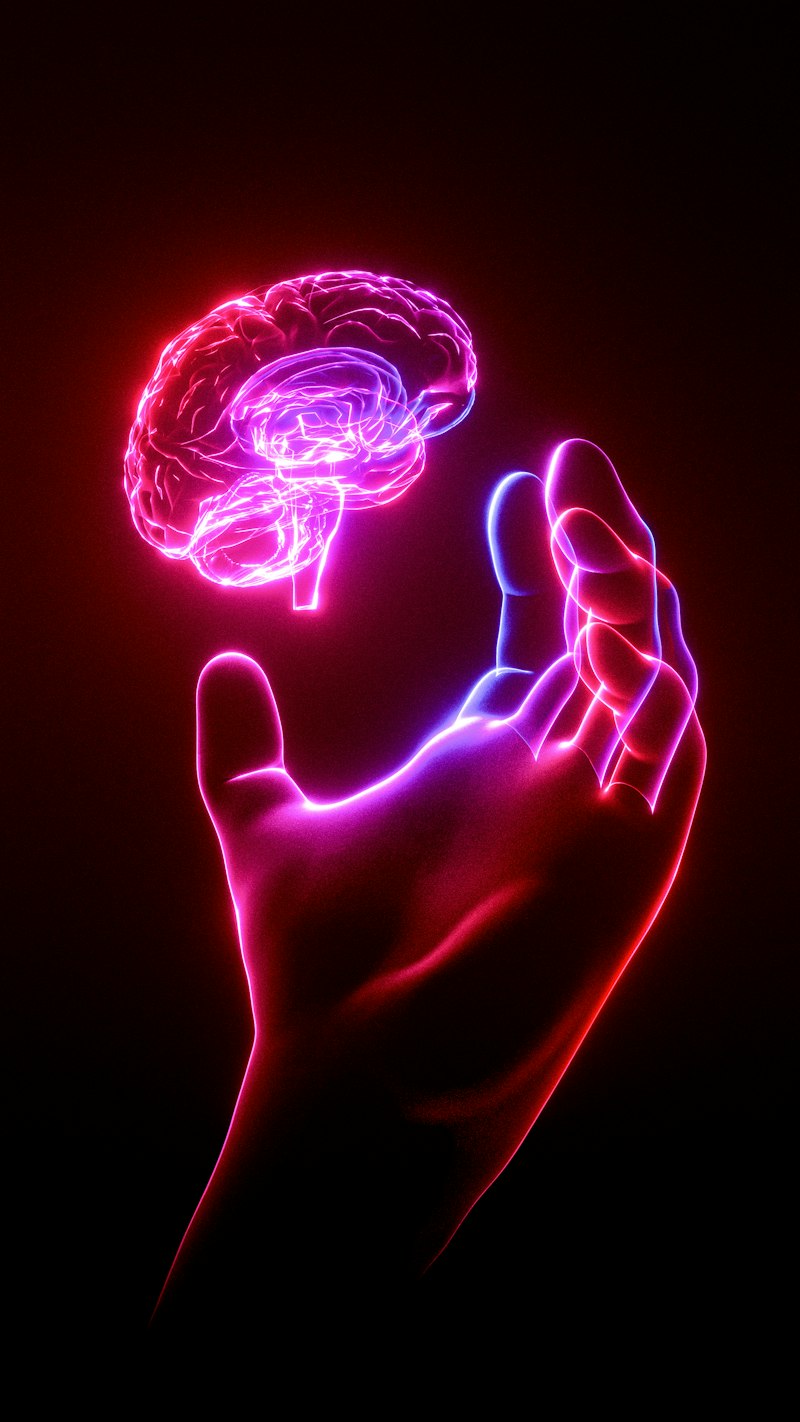
The fundamental mechanism underlying these illusions lies in the complex process of Haptic Perception, which integrates information from cutaneous receptors (exteroception) and bodily position/movement receptors (proprioception and kinesthesia). When the brain receives conflicting signals—for instance, spatial information that violates established topographical maps—it defaults to the most probable or expected interpretation, sometimes leading to an erroneous conclusion. These illusions highlight that the sense of touch is not a direct readout of the environment but rather a highly filtered and constructed representation, dependent on prior experience and cognitive context.
A key idea derived from the study of tactile illusions is that the brain uses relative rather than absolute information to judge sensory input. For example, judging the softness of a cloth is not merely about measuring the force exerted, but comparing that force against preceding stimuli or against expectations. If the sensory system is fatigued, adapted, or receiving spatially confusing input, the resulting perceptual judgment can be systematically flawed. This demonstrates the active, interpretative role of the Somatosensory Cortex in generating our conscious experience of touch.
The Sensory Pathways of Touch
The initial detection of touch stimuli begins with specialized nerve endings known as Mechanoreceptors, located throughout the skin. These receptors—including Meissner’s corpuscles (sensitive to light touch and flutter), Pacinian corpuscles (sensitive to vibration and deep pressure), Merkel’s disks (sensitive to sustained pressure), and Ruffini endings (sensitive to stretch)—transduce mechanical energy into electrochemical signals. These signals travel up the spinal cord via pathways such as the dorsal column-medial lemniscal system, which is crucial for fine touch, conscious proprioception, and vibration sense.
Once these signals reach the thalamus, they are relayed onward to the primary Somatosensory Cortex (S1), located in the postcentral gyrus. This area contains a highly organized topographical map of the body, often referred to as the sensory homunculus. The processing of tactile information is not purely localized to S1; it involves extensive feedback loops with secondary somatosensory areas (S2), the posterior parietal cortex, and various motor regions. Illusions often arise when these complex central processing centers struggle to reconcile novel or conflicting peripheral inputs with the established body map or the expected sensory outcome.
For instance, in the specific example of being unable to judge the softness of a cloth after prolonged rubbing—as detailed in the original prompt—the phenomenon likely involves sensory adaptation. Sustained, uniform stimulation of the mechanoreceptors causes a temporary reduction in their firing rate, desensitizing the system to the continuing stimulus intensity. If the person is asked to judge the softness during this adapted state, the perceived intensity of the stimulus will be significantly lower than its actual intensity, leading to a Tactile Illusion of reduced texture or pressure.
Historical Foundations of Haptic Perception
The study of tactile misperception is deeply rooted in early philosophical and scientific inquiry into the nature of reality and sensory reliability. One of the earliest documented investigations into what we now call a tactile illusion dates back to the Greek philosopher, Aristotle (4th century BCE). His observation, known today as the Aristotle Illusion, demonstrated that sensory experience could be manipulated by altering the physical orientation of the body parts involved, proving that touch perception is not purely passive but involves central interpretation of spatial data.
The formal scientific investigation of touch accelerated significantly during the 19th century with the rise of Psychophysics. Pioneers like Ernst Heinrich Weber and Gustav Fechner systematically quantified the relationship between physical stimuli and sensory experience. Weber’s work on the two-point discrimination threshold established that the spatial resolution of touch varies dramatically across different areas of the body, laying the groundwork for understanding why certain spatial tactile illusions are more pronounced in areas with lower sensory resolution (like the back) compared to areas with high resolution (like the fingertips).
Later researchers, including Max von Frey, developed instruments and techniques to measure pressure sensitivity (using von Frey hairs), further refining the understanding of how intensity and localization contribute to haptic experience. The historical trajectory shows a shift from purely observational accounts to rigorous, quantitative analysis, moving the understanding of Haptic Perception from philosophy into the domain of experimental psychology and neuroscience.
Common Forms of Tactile Illusion
Tactile illusions manifest in numerous predictable ways, each illuminating a different aspect of somatosensory processing. One well-studied category involves spatial mislocalization. The Aristotle Illusion, where two crossed fingers touching a single object perceive two distinct points, is the prototypical example. Another form is the Thermal Grating Illusion, where alternating warm and cool bars placed on the skin are perceived as painfully hot or cold, even though the temperatures individually are innocuous. This specific illusion reveals how the central nervous system integrates disparate thermal signals, sometimes generating a paradoxical perception.
Another significant category involves dynamic perception and movement. The Kinesthetic Illusion occurs when people experience movement in a limb that is actually stationary, often induced by vibrating tendons. This illusion demonstrates the powerful influence of proprioceptive feedback over visual or cutaneous feedback in determining perceived limb position. Furthermore, the Cutaneous Rabbit Illusion (or “Saltation”) occurs when a series of taps are delivered rapidly along a limb; the taps are perceived as jumping smoothly along the skin rather than appearing only at the actual contact points, showcasing the temporal smoothing and spatial interpolation performed by the brain.
Perhaps the most complex and clinically relevant Tactile Illusion is the Phantom Limb Sensation, experienced by amputees. While not an illusion in the classical psychophysical sense, it is a profound distortion of the somatosensory map, where the brain continues to receive signals corresponding to a missing limb, often resulting in sensations of touch, pressure, pain, or movement. This phenomenon powerfully illustrates the enduring, plastic nature of the central body representation within the Somatosensory Cortex.
Practical Illustration: The Aristotle Illusion
The Aristotle Illusion serves as the most accessible and demonstrable example of tactile spatial distortion, making the concept immediately clear to a general audience. This illusion involves the misperception of singularity, leading the individual to believe they are touching two distinct objects when only one is present. The effectiveness of the illusion depends entirely on the spatial context provided by the tactile receptors and the brain’s interpretation of that context.
To demonstrate this principle, the following steps illustrate the application of the psychological principle:
- Preparation: Cross the index finger over the middle finger of one hand. Ensure the fingers are tightly crossed so that the usual spatial relationship between them is distorted.
- Stimulation (Normal): Without crossing the fingers, touch the tip of a pencil or a small bead to the tips of both fingers simultaneously. The normal perception is of one object making contact. The brain correctly recognizes that the stimulus is contacting two adjacent, normally oriented points on the sensory map, and correctly integrates this into a perception of a single object.
- Stimulation (Illusory): While keeping the fingers crossed, lightly touch the same pencil tip or bead to the small space between the tips of the crossed fingers.
- Result: The overwhelming majority of individuals perceive two distinct, separate objects touching their fingers, one on the index finger and one on the middle finger.
The “How-To” explanation for this illusion is based on the brain’s reliance on its established body map. When the fingers are crossed, the receptive fields of the two fingers are physically adjacent, but the brain’s internal map still maintains that these two points are typically separated by the width of the finger. Since the brain interprets contact on these two widely separated internal map points, it defaults to the assumption that two separate physical objects must be responsible for stimulating those two distinct, non-adjacent parts of the sensory representation.
Psychological Significance and Research Impact
The study of tactile illusions holds profound significance for theoretical psychology and neuroscience. They serve as critical tools for mapping the functional organization of the Somatosensory Cortex and understanding its inherent limitations and computational strategies. By systematically inducing errors in perception, researchers can reverse-engineer the rules the brain uses to integrate sensory input, revealing how spatial and temporal information is fused to create a coherent sense of touch.
Tactile illusions have been instrumental in advancing the field of sensory integration. They demonstrate clearly that touch is intrinsically linked to vision, hearing, and proprioception (Multimodal Perception). For instance, visual cues can dramatically alter the perceived intensity or location of a touch stimulus, underscoring the brain’s preference for visual information when resolving ambiguity. This research has led to sophisticated models of sensory weighting, explaining which sensory modality dominates perception under different environmental conditions.
Furthermore, understanding these illusions contributes directly to research on neuroplasticity. Studies on the modification of the sensory homunculus—such as those involving mirror therapy for phantom limb pain—rely on the principle that the brain’s tactile map can be tricked and reorganized. By manipulating tactile input, researchers can explore the extent to which the cortical representation of the body is fixed versus malleable, offering insights into recovery following neurological injury or amputation.
Connections to Other Sensory Phenomena
Tactile illusions belong broadly to the subfield of Sensation and Perception, which itself falls under the larger umbrella of Cognitive Psychology and Experimental Psychology. They are intrinsically linked to other forms of sensory misperception, such as visual illusions (e.g., the Müller-Lyer illusion) and auditory illusions. The underlying principle in all these cases is the same: the brain employs heuristics, or mental shortcuts, to process complex data, and these shortcuts occasionally lead to systematic errors.
Tactile illusions are also closely related to the concept of Sensory Adaptation and Habituation. While adaptation (the desensitization of Mechanoreceptors after continuous stimulation) can cause a reduction in perceived intensity, habituation (a higher-level cognitive process) involves the filtering out of irrelevant, continuous stimuli by the central nervous system. Many illusions, particularly those involving misjudgment of texture or softness, are exacerbated by these adaptive processes, demonstrating the limitations of sustained sensory input.
Finally, the insights gained from Tactile Illusion research have practical applications in various fields today. In rehabilitation, they inform techniques used to desensitize areas affected by chronic pain or to treat central pain syndromes. In technology, they are crucial for the development of effective haptic feedback systems in virtual reality (VR) and robotics, where engineers must design stimuli that convincingly trick the Haptic Perception system into feeling textures or forces that are not physically present, relying on principles discovered through Psychophysics.