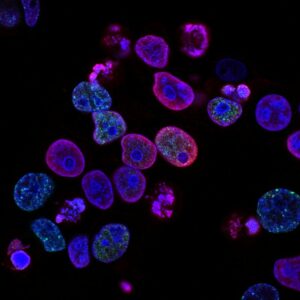
Tag: Cellular Components


CYTOPLASM

Definition and Historical Context The term cytoplasm refers comprehensively to all the contents of a eukaryotic cell enclosed by the plasma membrane, excluding the nucleus. This vast, highly organized internal environment serves as the fundamental medium in which all cellular metabolic processes occur, providing the structural integrity and chemical conditions necessary for life. Historically, the […]

Read More

MICROTUBULC

Definition, Morphology, and Fundamental Role Microtubules are foundational components of the cellular cytoskeleton, appearing universally across eukaryotic cell types. Characterized by their precise dimensions, a typical microtubule measures between 20 and 26 nanometers (nm) in outer diameter, classifying them as the thickest of the three major cytoskeletal filaments, surpassing both actin filaments and intermediate filaments. […]

Read More

CELL MIGRATION

Cell Migration: Mechanisms and Regulation The Core Definition and Biological Significance Cell migration is fundamentally defined as the self-propelled movement of a cell from one location to another within an organism or a tissue culture environment. This intricate biological mechanism is not merely passive drift; rather, it is a highly regulated, active process requiring the […]

Read More