Tag: Computational Chemistry


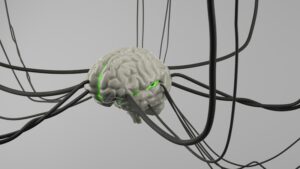
Organicity Testing: Mapping the Brain's Hidden Deficits

Organicity Testing: Mapping the Brain’s Hidden Deficits

The Concept of Organicity Testing in Neuropsychology The Core Definition and Purpose The term Organicity Test, originating primarily in the mid-20th century, refers to a set of psychological and neuropsychological assessments designed specifically to differentiate between cognitive or behavioral deficits caused by structural, physiological, or chemical changes in the brain (known as “organic” causes) and […]

Read More
Cognitive Deconstruction: Breaking Free from Mental Blocks

Cognitive Deconstruction: Breaking Free from Mental Blocks

MILLIGAN ANNIHILATION METHOD Introduction to the Milling Annihilation Method The Milling Annihilation (MA) Method represents a groundbreaking advancement in the realm of molecular dynamics simulations, offering an innovative and highly efficient approach to modeling the intricate behaviors of molecular systems. Traditional molecular dynamics, while an indispensable tool for understanding phenomena at the atomic level, frequently […]

Read More

FORCE FIELD

Conceptual Foundations of Molecular Force Fields In the expansive domain of computational chemistry, the term force field (FF) refers to a sophisticated mathematical model designed to approximate the complex interactions between atoms and molecules. These models serve as the cornerstone for simulating molecular behavior, providing a necessary bridge between the abstract laws of physics and […]

Read More