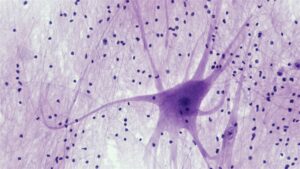
Tag: nerve endings


Nociception: Decoding Your Body’s Pain Signals

Nociception: Decoding Your Body’s Pain Signals

Nociceptors are specialized sensory neurons located throughout the body that detect potentially damaging stimuli. These neurons are activated by mechanical, thermal, and chemical stimuli, and they play a crucial role in the body’s response to pain (O’Neill, 2019). Nociceptors are found throughout the skin, muscle, joint, and organ tissues, and they are responsible for the […]

Read More

PRIMARY SKIN SENSES

Introduction to the Primary Skin Senses The primary skin senses, collectively categorized under the scientific umbrella of somatosensation, represent a complex network of sensory systems that allow humans to perceive, interpret, and react to their physical environment. These essential senses include touch, pressure, vibration, temperature, and pain. Far from being simple, passive receptors, these cutaneous […]

Read More

MERKEL’S TACTILE DISK

Introduction to Merkel’s Disks and Their Location The structure commonly known as the Merkel’s Tactile Disk represents a specialized and highly critical component of the mammalian somatosensory system, primarily responsible for the sophisticated encoding of light touch, sustained pressure, and textural details. These sensory units are indispensable for fine tactile discrimination, allowing humans and other […]

Read More

STRETCH RECEPTOR

Introduction to Stretch Receptors The concept of the stretch receptor is fundamental to understanding the somatic nervous system, particularly the intricate mechanisms governing muscular contraction, posture, and movement coordination. Defined fundamentally as specialized sensory receptor cells, these structures possess the crucial ability to monitor and respond dynamically to changes in the length of the muscle […]

Read More

SENSORY SPOT

Definition and Fundamental Characteristics The concept of a sensory spot, often referred to in physiological and psychological literature as a punctate sensory field, denotes a localized area on the integumentary surface (skin) that exhibits a significantly heightened sensitivity to specific categories of external stimuli. These discrete cutaneous regions are characterized by a lowered threshold for […]

Read More

PACINIAN CORPUSCLE

Introduction and Definition of the Pacinian Corpuscle The Pacinian corpuscle, frequently referred to in anatomical literature as the Pacinian body or lamellar corpuscle, constitutes a critical element within the broader classification of somatosensory receptors. It functions primarily as a form of cutaneous receptor organ, specifically categorized as a rapidly adapting mechanoreceptor. This specialized structure is […]

Read More

PAIN SENSE

Introduction and Definition of Pain Sense (Nociception) The pain sense, formally recognized in neuroscience and psychology as nociception, constitutes a fundamental and indispensable sensory modality essential for the survival and maintenance of organismal integrity. This crucial sensory system is initiated by specialized sensory receptors known as nociceptors, which are essentially free nerve endings distributed extensively […]

Read More

SKIN-SENSORY SPOT

Introduction to Skin-Sensory Spots The concept of the skin-sensory spot forms a fundamental pillar in the understanding of somatic sensation, differentiating the general perception of touch from the highly localized, punctate nature of specific sensory reception. Far from being a uniform sheet of receptive tissue, the human skin is organized into a mosaic of discrete […]

Read More

TWO-POINT THRESHOLD

TWO-POINT THRESHOLD Core Definition and Mechanism The Two-Point Threshold (TPT) is a fundamental measure in psychophysics and experimental psychology, defining the spatial resolution limits of the human tactile system. It is precisely described as the shortest distance between two points of simultaneous stimulation on the skin at which an individual perceives those two stimuli as […]

Read More

TOUCH

The Somatosensory System and the Sense of Touch The Core Definition of Somatosensation The sense of touch, scientifically referred to as the somatosensory system, represents a complex and multifaceted perceptual modality that provides us with crucial information about our body’s interaction with the external environment and its internal state. It is far more comprehensive than […]

Read More

SENSITIVE ONE

Differential Somatic Sensitivity: The Psychology and Physiology of Highly Responsive Sensory Points The Core Definition of Somatic Sensitivity The concept of the “sensitive one,” often referred to in formal psychology and physiology as Differential Somatic Sensitivity or localized high sensory receptivity, describes specific areas on the body surface that exhibit a dramatically heightened responsiveness to […]

Read More

EXTEROCEPTION

Exteroception: Perception of External Stimuli The Core Definition of Exteroception Exteroception is fundamentally defined as the neurological process by which an organism receives and interprets information regarding stimuli originating from outside the body. This sensory mechanism is essential for interacting with the external environment, providing the necessary data points—such as light, sound waves, physical pressure, […]

Read More

SKIN STIMULATION

Skin Stimulation: The Psychology of Cutaneous Sensation The Core Definition of Cutaneous Sensation Skin stimulation, scientifically referred to as cutaneous sensation or the somatosensory system, encompasses the intricate set of physiological processes by which the nervous system detects, processes, and interprets stimuli acting upon the surface of the skin. This ubiquitous sensory system is fundamentally […]

Read More

TACTILE RECEPTOR

Tactile Receptors: The Foundation of Mechanoreception The Core Definition of Tactile Receptors The tactile receptor, fundamentally known as a mechanoreceptor, is a highly specialized type of sensory neuron or nerve ending designed to detect and respond exclusively to mechanical changes within the organism’s immediate environment. These receptors are the biological transducers responsible for the sense […]

Read More

CUTANEOUS RECEPTIVE FIELD

Cutaneous Receptive Fields: An Encyclopedia Entry The Core Definition of Cutaneous Receptive Fields The skin, being the body’s largest organ, requires a highly sophisticated mechanism to process the constant barrage of external stimuli, ranging from gentle pressure and vibration to temperature changes and pain. The foundation of this sensory interpretation lies in the concept of […]

Read More

TONIC RECEPTOR

Tonic Receptor Core Definition of Tonic Receptors The term tonic receptor refers to a specialized type of sensory receptor found ubiquitously throughout the body, particularly within the skin, skeletal muscles, and joints. These receptors are fundamentally characterized by their ability to respond to a sustained stimulus with a sustained discharge of nerve impulses, effectively providing […]

Read More

EROGENOUS ZONE

Erogenous Zones: A Comprehensive Overview The Core Definition An erogenous zone is broadly defined as an area of the body that is particularly sensitive to sexual stimulation, the activation of which can induce or enhance sexual arousal and sexual pleasure. This heightened sensitivity stems from a dense concentration of specialized nerve endings located within these […]

Read More

PROTOPATHIC SENSATION

PROTOPATHIC SENSATION The Essence of Protopathic Sensation: A Fundamental Sensory System Protopathic sensation represents a primordial form of sensory processing, fundamental to an organism’s interaction with its environment. It is primarily responsible for detecting crude, undifferentiated sensations that are vital for survival, such as pain, variations in temperature, the sensation of itch, and the subtle […]

Read More

MEISSNER’S CORPUSCLE

MEISSNER’S CORPUSCLE The Core Definition of Meissner’s Corpuscle A Meissner’s corpuscle is a highly specialized type of mechanoreceptor, situated within the dermal papillae of the skin, primarily responsible for the perception of light touch and low-frequency vibrations. This sensory end organ plays a critical role in our ability to discern the subtle nuances of surface […]

Read More

CUTANEOUS SENSE

Cutaneous Sense: The Foundation of Touch and Somatosensation The Cutaneous Sense: Core Definition The cutaneous sense, often referred to as the sense of touch, constitutes a fundamental aspect of the human sensory system, enabling organisms to perceive and interact with their immediate physical environment through the skin. This sophisticated sensory modality encompasses a diverse range […]

Read More