Avian Vocalization: The Psychology of Bird Song
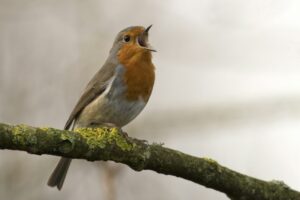
Avian Syrinx: The Marvel of Bird Song Introduction The syrinx is an extraordinary anatomical structure found exclusively in birds, serving as their primary organ of sound production. Located at the base of the trachea, where it bifurcates into the two primary bronchi, this highly specialized vocal apparatus enables birds to produce an astonishing array of […]
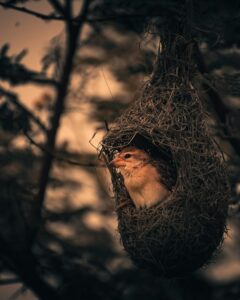
NEST BUILDING
Conceptualizing Nest Building within Psychological Frameworks While the phenomenon of nest building is frequently categorized as a purely biological or instinctual behavior observed in avian and mammalian species, its psychological implications are vast and multifaceted. Within the field of psychology, nest building is viewed as a foundational behavioral system that addresses the organism’s core needs […]
BROOKLANDS EXPERIMENT
Introduction to the Brooklands Experiment and Urban Ecology The relentless global expansion of human settlements has led to a critical increase in the study of urban ecology, particularly concerning its impact on faunal populations. Urbanization introduces a complex suite of environmental stressors, including habitat fragmentation, increased noise and light pollution, altered hydrological cycles, and the […]
FLOCKING
1. Defining Avian Flocking Behavior Flocking is a highly organized, collective behavior primarily observed among avian species, representing a quintessential example of complex self-organization in nature. It is fundamentally defined as the grouping of birds driven by intrinsic social attraction and continuous, dynamic interaction among individuals. This phenomenon transcends simple co-location, requiring active, synchronized movement […]
DISPLAY BEHAVIOR
A sterotyped action bringing about a response as part of animal communication. See display rules. DISPLAY BEHAVIOR: “Birds use display behaviour to attract a mate.”
PREENING
Definition and Scope of Preening Behavior Preening is defined within the discipline of ethology as a highly specialized form of autogrooming or allogrooming behavior predominantly observed in avian species. This complex maintenance activity involves the systematic manipulation of feathers using the beak and, occasionally, the feet, serving the fundamental physiological purpose of preserving the structural […]