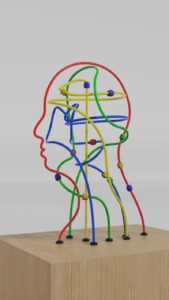
Externalizing-Internalizing: Decoding Emotional Patterns
Externalizing-Internalizing I Introduction to Externalizing-Internalizing I Externalizing-Internalizing I (EI) represents a specific and often maladaptive pattern of emotional regulation that significantly impacts an individual’s psychological and social well-being. At its core, this phenomenon is characterized by a distinctive bipartite coping mechanism: a pronounced tendency to externalize negative emotions, projecting them outward onto circumstances or others, […]
BELIEF SYSTEM
The Conceptual Foundations of Belief Systems A belief system serves as the fundamental cognitive framework through which individuals and collectives interpret reality, assign meaning to experiences, and determine appropriate courses of action. These systems are not merely abstract ideas but are deeply integrated sets of convictions that influence an individual’s thoughts, values, and behaviors on […]
NEGATIVE STEREOTYPE
Negative Stereotypes: The Impact of Preconceived Notions on Perceptions Preconceived notions, or stereotypes, can have a significant impact on the way individuals perceive a person, group, or situation. Negative stereotypes, in particular, can create a negative perception, which can lead to behavior that reinforces the stereotype. This article explores the causes and effects of negative […]
EXPERIENTIAL HISTORY
Defining Experiential History Experiential history, in the context of psychological and behavioral sciences, represents the comprehensive and cumulative record of all events, interactions, and stimuli encountered by an individual from the moment of birth until the present or the point of analysis. It is not merely a collection of isolated memories, but rather the integrated […]
PSYCHOSOCIAL APPROACH
Definition and Core Principles The Psychosocial Approach represents a fundamental orientation within psychological theory, research, and clinical practice, placing paramount emphasis on the intricate interplay between an individual’s internal psychological experience and their external social and cultural environment. This holistic perspective moves beyond purely internal deterministic models, such as those focusing solely on biological drives […]
MULTIAXIAL CLASSIFICATION
Introduction to Multiaxial Classification The concept of multiaxial classification represents a crucial methodological advancement in the field of clinical psychology and psychiatry, designed to provide a comprehensive and holistic framework for diagnosing mental health disorders. Unlike purely categorical systems that focus solely on the presence or absence of a single primary diagnosis, a multiaxial system […]
BEHAVIOR PATTERN
BEHAVIOR PATTERN Defining Behavior Patterns Behavior patterns, in the field of psychology, are defined as the consistent, recurring, and observable ways in which an individual or group interacts with their environment. These patterns are not random occurrences but rather predictable sequences of actions, thoughts, and emotional responses that are triggered by specific stimuli, both internal […]
SOURCE FACTORS
Source Factors in Psychology Source factors are the fundamental, multi-dimensional influences that contribute to the formation, maintenance, and modification of an individual’s behavior, beliefs, and attitudes throughout the lifespan. In the context of mental health, source factors represent the specific inputs—whether internal or external—that increase vulnerability to developing psychological disorders or, conversely, promote resilience and […]