Tag: visual illusions


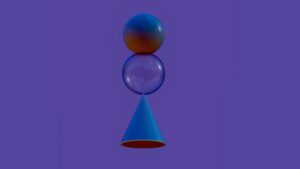
INTERPOSITION

The Fundamental Definition and Role of Interposition in Visual Perception Interposition, frequently referred to in psychological literature as occlusion, represents one of the most critical and powerful tools within the realm of visual cognition. At its most basic level, interposition is defined as the relative placement of two or more objects in a three-dimensional space […]

Read More

BARBER’S-POLE EFFECT

Barber’s-Pole Effect: An Overview The Barber’s-Pole Effect (BPE) stands as a compelling and well-studied phenomenon within the field of visual science, offering critical insights into how the human brain processes motion and resolves perceptual ambiguities. Fundamentally, the BPE describes a specific class of visual illusions where a linear, often striped or patterned, structure appears to […]

Read More

AMES DISTORTION ROOM

Introduction to the Ames Distortion Room The Ames Distortion Room, often referred to simply as the Ames Room, represents a powerful and counterintuitive spatial environment meticulously engineered to manipulate an observer’s perception of range, size, and proportion. Developed by American ophthalmologist and psychologist Adelbert Ames, Jr. in 1946, this controlled space is a cornerstone of […]

Read More

PARADOXICAL MOTION

Introduction to Paradoxical Motion Paradoxical motion refers to a fascinating phenomenon within visual psychology where an observer perceives global movement in a stimulus, despite the individual, localized components of that stimulus remaining demonstrably static or inert. This concept fundamentally challenges the intuitive relationship between sensory input and conscious perception, highlighting the complex, adaptive nature of […]

Read More

METACONTRAST

Metacontrast: Temporal Dynamics of Visual Perception The Core Definition of Metacontrast Metacontrast is a specialized and highly influential form of visual masking, a phenomenon in which the perception of a visual target stimulus is significantly impaired or completely suppressed by the subsequent presentation of a second stimulus, known as the mask. What distinguishes metacontrast from […]

Read More