Team Mental Models: Synchronizing Minds for Peak Results
Scientifically Reviewed · Dr. Marwa Abd-Alazim · October 19, 2026
Review Criteria & Clinical Standards
This content undergoes rigorous scientific peer-review and medical editorial standards at Arab Psychology Network to ensure clinical accuracy, validity, and compliance with evidence-based guidelines from leading psychological and healthcare authorities (APA / WHO).
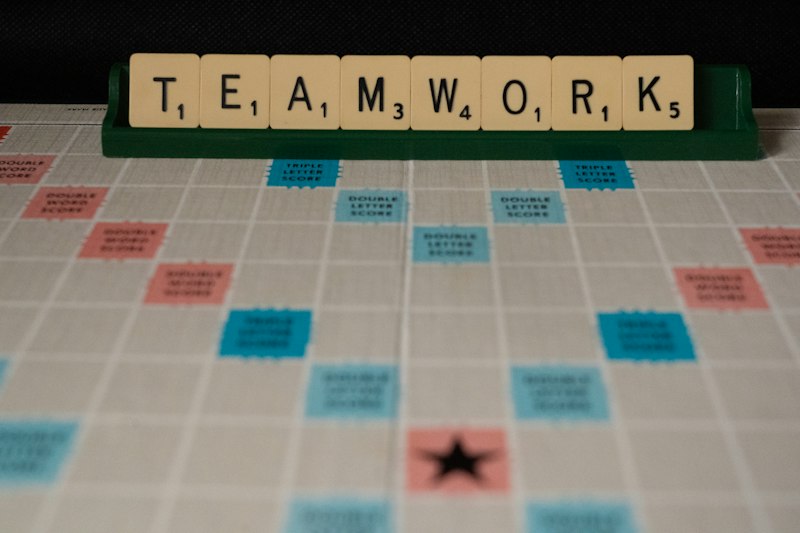
The Core Definition of Team Mental Models
The Team Mental Model (TMM) is fundamentally defined as a shared, organized, and structural shared understanding among team members regarding the critical components of their task environment, the equipment they use, and the specific dynamics of the team itself. This concept moves beyond individual cognition to describe a collective, synchronized knowledge structure that allows members to anticipate each other’s needs and actions, thereby facilitating seamless and efficient coordination. TMMs are often implicit rather than explicitly discussed, developing over time through shared experience, training, and communication, serving as the cognitive glue that binds high-performing groups together, especially under high-pressure or time-sensitive conditions where verbal communication may be impractical or too slow.
The key idea underpinning the TMM is that when team members possess congruent or complementary structures of knowledge, they can predict future states of the system and the behavioral responses of their teammates with high accuracy. This synchronization minimizes the need for explicit communication, reduces cognitive load, and enhances adaptability. For instance, if a team shares a mental model of how a specific project timeline works and who is responsible for which bottleneck, they can immediately adjust their strategies when an unexpected obstacle arises, skipping the lengthy process of re-explaining roles and goals. This shared cognitive framework is essential for transforming a group of individuals into a truly cohesive and functional unit capable of optimizing team performance and achieving complex objectives reliably.
TMMs are not mere overlaps in knowledge; they represent structural similarities in how that knowledge is organized, stored, and retrieved. Researchers often categorize TMM content into two major domains: taskwork and teamwork. The taskwork component focuses on procedures, equipment function, and environmental factors necessary to complete the goal, while the teamwork component centers on interpersonal dynamics, including knowledge of team members’ roles, responsibilities, strengths, weaknesses, and preferred interaction styles. The strength and depth of the TMM determine the team’s ability to engage in adaptive, flexible behavior when unexpected events threaten mission success, making it a critical construct in organizational and military psychology.
Historical Context and Conceptual Foundations
The concept of the Team Mental Model emerged prominently in the early 1990s, catalyzed largely by research in military, aviation, and organizational settings, where the study of complex, high-stakes team functioning became paramount. While the notion of individual mental models had been a staple of Cognitive Psychology for decades—describing how an individual understands how something works in the real world—TMM adapted this framework to the collective level. Pioneering researchers, most notably Eduardo Salas, Susan Tannenbaum, and Janice Cannon-Bowers, formalized the TMM construct to explain the observed differences in efficiency and error rates between expert teams and novice groups performing identical complex tasks.
The initial research that led to the TMM framework was often situated in simulations, such as radar tracking or air traffic control scenarios, designed to test how teams coordinated under intense workload and time constraints. These studies repeatedly demonstrated that successful teams did not necessarily possess superior individual skills, but rather exhibited superior coordination skills rooted in anticipatory behavior. This anticipation, the researchers argued, must stem from a shared, underlying cognitive structure that dictates expectations about what actions need to be taken next and who is best equipped to execute those actions. This realization shifted the focus of team training from simply teaching individual competencies to cultivating collective cognitive structures.
The development of TMM provided a theoretical bridge between pure individual cognition and observable team processes, offering a measurable construct that could explain why certain teams excelled at tasks requiring rapid, non-verbal communication and resource management. This historical trajectory placed TMM squarely within the growing field of team science, emphasizing that group success is not merely the sum of individual abilities, but rather the result of effective cognitive interdependence. By defining TMM, researchers established a robust framework for investigating how shared knowledge structures are acquired, maintained, and utilized to maximize collective efficiency and resilience.
Types and Components of Team Mental Models
To capture the complexity of team interaction, researchers typically segment TMMs into specific component categories. Understanding these distinctions is crucial because a team might have a highly congruent understanding of the task itself, but a fragmented understanding of each other’s roles, which would ultimately undermine overall performance. The two primary categories generally studied are Taskwork Mental Models and Teamwork Mental Models, each focusing on different facets of the operational environment.
The Taskwork Mental Model encompasses the shared knowledge related to the job itself. This includes an understanding of the mission objectives, the required procedures, the characteristics of the equipment and tools being used, and the environmental constraints. For a group of engineers, this might involve a shared understanding of the technical specifications of a machine; for a military unit, it involves a shared map of the terrain and the established rules of engagement. Congruence in the taskwork model ensures that all members are working toward the same goal using the prescribed methods, minimizing procedural deviations and errors.
The Teamwork Mental Model, conversely, focuses on the shared knowledge about the team as a social and operational entity. This includes detailed information about team members’ roles, responsibilities, preferred communication methods, and performance expectations. Crucially, this model includes meta-knowledge—knowing who knows what, which is a critical element related to Transactive Memory Systems. A strong Teamwork Mental Model allows members to quickly and correctly allocate resources, back up teammates, and anticipate workload distribution without explicit, time-consuming verbal negotiation.
Measuring the Shared Understanding
Measuring a team mental model presents significant methodological challenges because it is an internal, cognitive construct that must be inferred, not directly observed. Researchers have developed a variety of techniques that fall generally into two camps: self-report measures and performance-based (or structural) measures. The goal of all measurement techniques is to assess the degree of similarity or congruence among individual mental models within the team, which is the operational definition of a shared understanding.
Self-report measures involve directly asking team members about their understanding of the task, the team, and the operational environment through structured interviews, questionnaires, or surveys. While easy to administer, these methods are susceptible to social desirability bias and may only capture explicit, conscious knowledge, potentially missing the nuanced, implicit coordination knowledge that characterizes high-performing teams. Examples include the use of questionnaires that ask members to rate their confidence in their teammates’ understanding of specific roles or procedures.
Performance-based or structural measures are often considered more robust as they attempt to map the cognitive structure itself. These techniques involve using tasks such as concept mapping, card sorting, or pathfinder analysis, where team members organize or relate critical concepts pertaining to the task or team. By comparing the structural similarity of these cognitive maps across team members using statistical similarity metrics (e.g., correlations of sorting matrices), researchers can quantify the degree of TMM congruence. Furthermore, behavioral measures, such as observational analysis of coordination efficiency during simulations, can serve as proxies for TMM strength; the fewer communication errors and hesitations observed, the stronger the inferred TMM.
Practical Application: A Real-World Scenario
To illustrate the power of the TMM, consider the high-stakes environment of a modern operating theater, where a surgical team consisting of a lead surgeon, an anesthesiologist, and multiple nurses must execute a complex procedure requiring rapid decision-making and precise coordination. If this team has a poorly developed TMM, every transition, tool request, and unexpected physiological change requires a lengthy, explicit verbal exchange, slowing the operation and increasing risk.
In contrast, a surgical team with a highly developed TMM operates with fluid efficiency. The shared understanding allows for anticipatory behavior that bypasses the need for constant verbal instruction. For example, as the surgeon completes one phase of the procedure, the scrub nurse, having anticipated the next step based on the shared procedure model, already has the required instrument positioned and ready before the surgeon even asks for it. The anesthesiologist, understanding the shared model of the procedure’s timeline and the patient’s expected reaction at critical junctures, preemptively adjusts medication levels without being prompted, simply by observing the surgeon’s actions and the established protocol. This seamless integration—where actions are performed based on prediction rather than reaction—is the hallmark of strong TMM.
-
Shared Procedure Knowledge (Taskwork TMM): All members understand the exact sequence of surgical steps and potential complications. When the surgeon encounters an unexpected anatomical variation, the team immediately recognizes the deviation from the standard plan.
-
Mutual Role Knowledge (Teamwork TMM): The circulating nurse knows the anesthesiologist’s primary focus is physiological stability and will thus prioritize monitoring equipment maintenance, while the scrub nurse knows the surgeon’s need for instrument precision and maintains the sterile field.
-
Anticipatory Action: The surgeon’s non-verbal cues (e.g., slight shift in posture or hand movement) trigger the scrub nurse’s action to hand over the next instrument, eliminating the need for a verbal request, saving precious seconds, and reducing cognitive overload in the operating room.
Significance and Impact on Team Performance
The significance of the Team Mental Model to organizational and applied psychology cannot be overstated, as empirical research consistently demonstrates its strong positive correlation with robust team performance, particularly in dynamic and complex environments. TMM acts as a critical mechanism linking team training inputs to successful behavioral outcomes. Teams with congruent TMMs exhibit superior coordination, fewer errors, greater efficiency, and a heightened capacity for adaptation when faced with novel or stressful situations. This makes TMM research central to designing effective training programs aimed at developing collective competence rather than just individual proficiency.
In application, the concept of TMM is utilized heavily in training design, particularly within fields such as aviation, emergency response, and military operations. Training protocols are often specifically structured to promote TMM congruence through shared experience and structured debriefing sessions. For example, cross-training, where members temporarily swap roles, is an effective technique for enhancing the Teamwork Mental Model by giving individuals deeper insight into the demands and constraints faced by their teammates. Furthermore, the explicit discussion of goals and strategies before a mission, often called “briefing,” is a direct attempt to align Taskwork Mental Models before execution begins.
Ultimately, TMM helps to explain variance in team success that cannot be accounted for by individual factors alone. It provides a measurable, trainable cognitive mechanism that dictates how well a group can function as a single unit. Organizations that prioritize the assessment and development of shared cognitive structures are better equipped to handle complexity, manage uncertainty, and sustain high levels of productivity over time, confirming TMM’s role as a cornerstone of effective team science.
Connections and Related Concepts
The Team Mental Model does not exist in isolation but is tightly interwoven with several other key psychological constructs that govern collective behavior and knowledge management. Understanding these relationships helps situate TMM within the broader landscape of team science, which draws heavily from organizational, social, and Cognitive Psychology.
One closely related concept is Situational Awareness (SA), or more specifically, Shared Situational Awareness (SSA). While TMM is the underlying cognitive structure (the long-term blueprint of how things work), SSA is the immediate, real-time perception and comprehension of the current environment and the projection of its future status. A robust TMM facilitates the achievement of SSA; because the team already shares a mental framework, they can more quickly integrate new data points (e.g., a sudden warning light or a change in weather) into their existing understanding, ensuring that everyone maintains the same accurate picture of the immediate operational reality.
Another crucial related concept is Transactive Memory Systems (TMS). TMS refers to the collective understanding of who knows what within the team—the “memory of the team.” While TMM is the shared knowledge of the content (the roles, the procedures), TMS is the shared knowledge of the distribution of that content (who is the expert on the equipment, who handles the scheduling). Both concepts are highly correlated and mutually reinforcing; a strong TMM facilitates the accurate development of a TMS, allowing teams to efficiently retrieve specialized knowledge by knowing exactly which team member possesses the necessary expertise. The study of TMM belongs primarily to the subfield of Industrial-Organizational (I-O) Psychology, particularly the specialty area of team science, though its theoretical roots are firmly planted in individual Cognitive Psychology.