Test-Wiseness: Decode Exam Logic for Superior Results
Scientifically Reviewed · Dr. Marwa Abd-Alazim · August 20, 2026
Review Criteria & Clinical Standards
This content undergoes rigorous scientific peer-review and medical editorial standards at Arab Psychology Network to ensure clinical accuracy, validity, and compliance with evidence-based guidelines from leading psychological and healthcare authorities (APA / WHO).
The Core Definition of Test-Wisdom
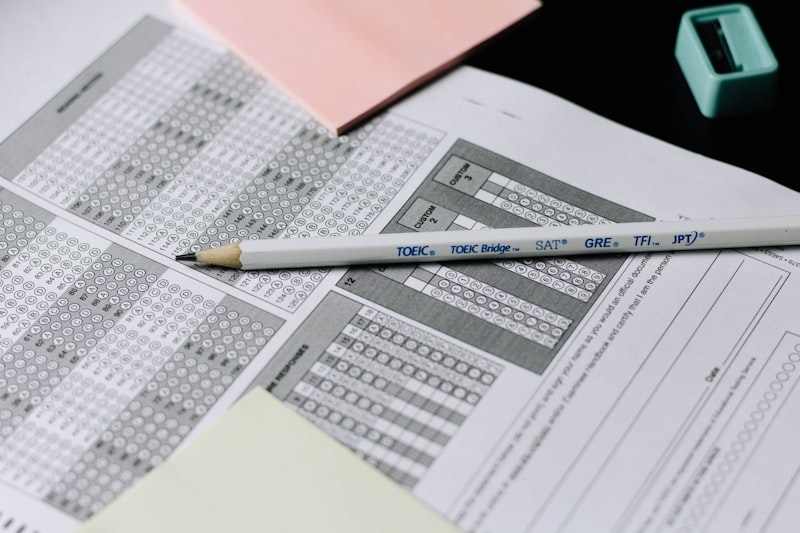
Test-Wisdom, often referred to interchangeably as test-wiseness, is a crucial construct within educational and psychological assessment that describes a test-taker’s capacity to utilize certain non-content-based strategies and cues inherent in the testing situation or the structure of the test items themselves to improve their score. Essentially, it reflects skills that are developed through extensive experience with testing formats, rather than specialized knowledge of the subject matter being assessed. A highly test-wise individual possesses an aptitude for navigating the procedural and structural aspects of an examination environment, enabling them to make educated guesses or deductions that are independent of their mastery of the core curriculum. This phenomenon highlights a significant distinction between genuine achievement—what the student truly knows—and demonstrated performance—what the student scores on a particular test.
The fundamental mechanism underlying Test-Wisdom is the utilization of inferential reasoning and pattern recognition applied to the format of the assessment instrument. A test-wise person recognizes common item-writing flaws, understands the statistical distribution of correct answers, and employs effective time management strategies to maximize opportunities for earning points. This ability is generally acquired through exposure; as the original definition suggests, people who have taken a large amount of tests are more adept at taking tests than those who are fairly new to the procedure. The presence of test-wiseness complicates the interpretation of scores, particularly when attempting to draw conclusions about a student’s pure cognitive ability or content knowledge, thereby introducing a potential source of error into the measurement process.
It is critical to conceptualize Test-Wisdom not as rote memorization or specific subject knowledge, but as a set of generalized problem-solving heuristics applied within the specific domain of formalized assessment. These heuristics often involve exploiting implicit or explicit cues that test developers unintentionally embed within the examination structure. When researchers compare groups, they frequently find that while the test-wise group often performs better overall, the margin may be subtle, reflecting that strategic advantage provides an edge but cannot compensate entirely for a lack of foundational knowledge. This is encapsulated in findings such as, “The test-wise group only did slightly better than their counterparts,” suggesting that while strategy is helpful, content knowledge remains the primary determinant of high performance.
Fundamental Mechanisms and Components
Test-Wisdom is not a monolithic skill but rather a cluster of independent, yet mutually reinforcing, strategic behaviors. These mechanisms can be broadly categorized into two types: those related to item construction analysis and those related to test administration management. Item construction analysis involves scrutinizing the multiple-choice options, true/false statements, or essay prompts for structural clues, grammatical inconsistencies, or absolute qualifiers that often signal incorrect answers. This requires a sharp eye for detail and an understanding of how poorly designed test items are typically structured by amateur test writers.
The components related to test administration management focus on optimizing the test-taker’s performance across the entire duration of the examination. This includes sophisticated time allocation strategies, knowing when to skip a difficult question and return to it later, and understanding the scoring rules (e.g., whether there is a penalty for guessing). A test-wise individual will strategically allocate more time to higher-weighted questions or areas where they feel less confident, ensuring maximum coverage and efficiency. These metacognitive skills are crucial for translating limited content knowledge into the highest possible score under pressurized conditions.
Specifically, researchers have identified several key sub-components that collectively define the construct of Test-Wisdom. These specific strategies are transferable across various testing environments, from high-stakes university entrance examinations to workplace competency tests, making them powerful tools for experienced test-takers.
- Use of Intentional Cues: This involves analyzing the stem of a multiple-choice question for grammatical agreement with the options, or noticing that one option is significantly longer or more detailed than the others, often suggesting it is the correct answer.
- Use of Unintentional Cues: This relates to recognizing patterns in the distribution of correct answers across the test (e.g., avoiding selecting the same letter multiple times in a row) or recognizing specific terminology that repeats from the question stem into the correct option.
- Time Management: The ability to pace oneself effectively, ensuring that all items are attempted, and utilizing residual time for review and double-checking difficult responses.
- Error Avoidance: Strategically eliminating implausible distractors in multiple-choice questions to narrow the field, significantly increasing the probability of a correct guess, especially when content knowledge is insufficient.
Historical Development and Early Research
The concept of Test-Wisdom gained significant attention during the mid-20th century, coinciding with the rapid proliferation of Standardized Tests in education and military selection processes. As these tests became high-stakes gatekeepers for academic and professional opportunities, psychometricians and educators grew increasingly concerned that factors unrelated to the intended curriculum were influencing results, potentially undermining the fairness and accuracy of these instruments. The formal study of Test-Wisdom crystallized in the 1960s, driven by the need to understand these extraneous variables.
One of the most foundational works in this area was conducted by Dr. Jason Millman in 1966, who defined test-wiseness as a set of abilities that enable a student to derive a higher score by exploiting characteristics of the test format and the testing situation, independent of their knowledge of the subject matter. Millman and his contemporaries were instrumental in dissecting this construct, moving it from a vague notion of “being good at tests” to a measurable set of behaviors. Their research often involved creating control groups and experimental groups, where the latter received explicit training in test-taking strategies. The resulting data consistently showed that test-wise strategies could produce measurable, albeit moderate, gains in scores, validating the construct’s existence as a significant variable in educational assessment.
The historical context of this research is tied directly to the field of Psychometrics, which strives for perfect measurement validity. Early psychometricians recognized that if a test score was influenced by strategic ability rather than pure content mastery, the test was failing its primary objective. This realization spurred decades of research into improved item construction guidelines designed specifically to neutralize or eliminate the cues that test-wise students exploit. Thus, the study of Test-Wisdom became not just a descriptive psychological concept, but a prescriptive guide for better assessment design.
Practical Application: Recognizing Flaws
To illustrate the power of Test-Wisdom, consider a common scenario involving a poorly constructed multiple-choice question in a high school history examination. A test-wise student, even if uncertain about the historical facts, can often deduce the correct answer by analyzing structural flaws. Suppose a question asks about the primary cause of a major war, and the options are highly disparate in their level of detail or use of absolute language.
The practical application of test-wiseness in this scenario involves a systematic process of elimination that relies on structural analysis rather than content retrieval. A student employing Test-Wisdom treats the question as a logical puzzle rather than a knowledge recall task. They understand that test items containing extreme qualifiers (such as “always,” “never,” “all,” or “none”) are statistically more likely to be false, as few psychological or historical concepts are absolute. Conversely, options containing moderate qualifiers (such as “often,” “may,” or “typically”) are more often correct because they allow for exceptions.
Here is a step-by-step example of how a test-wise student approaches an item where they lack specific content knowledge:
- Analyze Extremity: The student notes Option A uses the term “always,” which immediately flags it as highly suspicious and likely incorrect.
- Check for Grammatical Cues: The student reviews the stem of the question and sees it requires an answer beginning with the vowel sound “an.” They check the remaining options (B, C, and D) and find that only Option C grammatically follows the stem, indicating a strong, if unintended, cue from the test writer.
- Evaluate Relative Length: The student observes that Option D is significantly longer and contains more qualifying clauses than B or C. Often, test writers who are trying to ensure the correct answer is technically unimpeachable will include more detail, making Option D a statistically favorable guess.
- Informed Guess: Based on the combined elimination of the extreme option (A) and the grammatical cue favoring (C), the student weighs the probability. If a guess must be made, the structural evidence provided by the test format (C and D being the strongest structural choices) is used to select the final response, maximizing the chance of success without relying on rote memory.
The Impact on Validity and Reliability
The existence of Test-Wisdom poses a critical challenge to the core principles of assessment design, specifically concerning Test Validity and reliability. Validity refers to the degree to which a test measures what it purports to measure. If a history test score is inflated because the student skillfully exploited grammatical cues rather than demonstrating historical understanding, the test lacks content validity because it is measuring strategic ability (test-wiseness) as an unintended construct. This contamination of the score threatens the integrity of the assessment process, particularly in high-stakes environments where decisions about academic progression or professional licensing are made based on these results.
Furthermore, Test-Wisdom introduces potential inequity. If test-wiseness is unequally distributed across different demographic or socioeconomic groups—perhaps due to differential access to test preparation resources or varying levels of prior testing experience—the test becomes biased. This bias means that the score reflects not only the achievement gap but also a strategic gap, resulting in systematic advantages for certain test-takers that are unrelated to the target construct. This is why psychometricians view Test-Wisdom as an extraneous variable that must be rigorously controlled or eliminated during test development.
Reliability, the consistency of the test results, is also subtly affected. While Test-Wisdom itself can be a consistent skill for an individual, its manifestation depends on the quality of the test items. A test with many structural flaws will allow Test-Wisdom to contribute highly to the score, whereas a perfectly constructed test should theoretically suppress its influence. The variability introduced by the interaction between the test-taker’s strategy and the test’s construction quality can add noise to the measurement, complicating efforts to ensure that the test consistently measures the same thing over time or across different versions.
Applications in Educational Assessment
The recognition of Test-Wisdom has had a profound and practical impact on the field of educational assessment, driving continuous improvements in item writing and assessment design protocols. Educators and Educational Psychology specialists now actively work to minimize the susceptibility of tests to strategic exploitation, thereby enhancing the fairness and accuracy of evaluation. This effort has led to the widespread adoption of strict guidelines for constructing multiple-choice and true/false items that are “cue-free.”
One major application is the implementation of mandatory training for item writers. This training emphasizes avoiding common errors such as providing overly detailed correct options, ensuring all distractors are plausible, and eliminating grammatical clues between the stem and the key. By making the test items structurally sound, the assessment ensures that the only reliable method of achieving a high score is genuine content knowledge, effectively neutralizing the advantage held by the test-wise student.
Conversely, recognizing the strategic nature of Test-Wisdom has also led to the development of test-taking skills courses designed to democratize these strategies. These programs aim to teach students effective time management, how to approach different item formats, and basic deduction techniques. By explicitly teaching Test-Wisdom skills to all students, particularly those who lack extensive prior testing experience, educators can level the playing field, ensuring that differences in scores are more reflective of content knowledge rather than familiarity with the testing ritual. This approach addresses the equity issue by providing access to the “hidden curriculum” of test-taking.
Connections and Relations to Other Concepts
Test-Wisdom occupies a unique position in the psychological landscape, bridging cognitive strategy, metacognition, and Psychometrics. It is often confused with or related to several other concepts, yet clear distinctions must be maintained to understand its specific function. One primary distinction is made between Test-Wisdom and general Study Skills or knowledge preparation. Study skills relate to the effective acquisition and organization of knowledge prior to the test, while Test-Wisdom relates exclusively to the effective deployment of that knowledge (or lack thereof) during the test itself. A student can have excellent study skills but poor Test-Wisdom if they fail to manage their time or misinterpret the directions, or vice-versa.
Another important contrast is with Test Anxiety. Test anxiety is an emotional and physiological response that impairs performance, often causing students to underperform relative to their actual knowledge. Test-Wisdom, however, is a cognitive advantage that helps students maximize performance, potentially allowing them to score higher than their knowledge might otherwise dictate. While a student may be highly test-wise, anxiety can still interfere with the cool, calculated application of those strategies. Conversely, a relaxed student may still lack the strategic acuity to be considered test-wise.
Test-Wisdom is also closely linked to Metacognition—the awareness and understanding of one’s own thought processes. Test-wise behavior is a highly metacognitive act, requiring the student to monitor their progress, assess their certainty in an answer, and strategically choose between guessing, skipping, or deductive reasoning. This self-monitoring and strategic adjustment during the assessment are hallmarks of advanced cognitive function applied specifically to the testing environment.
The Role in Cognitive and Educational Psychology
The study of Test-Wisdom is predominantly situated within the subfield of Educational Psychology, but it draws heavily on principles from cognitive psychology regarding strategy formation, problem-solving, and metacognitive control. Educational psychologists utilize the concept of Test-Wisdom to understand how environmental and procedural factors interact with learning outcomes. Their goal is not just to measure learning, but to optimize the learning environment and the assessment methods used therein. By studying how students game the system, researchers gain insight into the flaws of the system itself.
The broader theoretical implication of Test-Wisdom is its contribution to the understanding of expertise. Being “test-wise” can be seen as a form of specialized expertise in the domain of formal assessment. This expertise is procedural and strategic, independent of domain-specific content. Cognitive psychologists examine this phenomenon to understand how experience transforms general logical ability into specific, context-bound strategies, offering a tangible example of skill transfer across diverse academic subjects.
Ultimately, the study of Test-Wisdom serves as a crucial feedback mechanism for the entire assessment industry. By identifying the specific strategies that successfully bypass genuine content knowledge, researchers continually refine psychometric standards, pushing for better test construction that accurately reflects educational achievement. This concept ensures that assessment remains a valid and equitable measure of learning, fulfilling its vital function in both academic placement and professional credentialing.