Thermal Discrimination: How Your Brain Senses Temperature
Scientifically Reviewed · Dr. Marwa Abd-Alazim · October 7, 2026
Review Criteria & Clinical Standards
This content undergoes rigorous scientific peer-review and medical editorial standards at Arab Psychology Network to ensure clinical accuracy, validity, and compliance with evidence-based guidelines from leading psychological and healthcare authorities (APA / WHO).
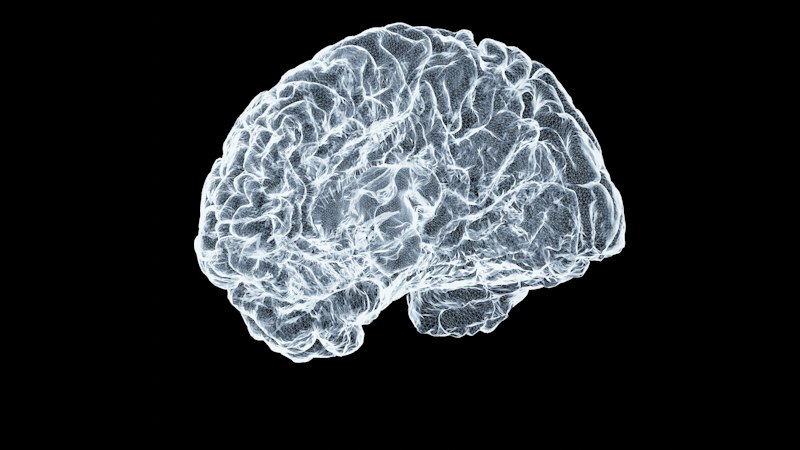
The Essence of Thermal Discrimination: A Core Definition
Thermal discrimination refers to the human body’s sophisticated capacity to perceive and differentiate between various temperatures. This fundamental sensory ability is not merely about detecting heat or cold, but rather about discerning nuanced differences in thermal stimuli, allowing for a precise understanding of the environment’s thermal landscape. It represents a crucial component of our homeostatic regulation mechanisms, which are vital for maintaining the body’s internal stability amidst fluctuating external conditions. Without this intricate sensory input, the body would be severely hampered in its ability to adjust its internal temperature, making it vulnerable to the dangers of extreme environmental stimuli.
At its core, the ability to discriminate temperatures hinges on the activity of specialized sensory receptors and their intricate neural pathways. This process begins in the skin, where dedicated sensors constantly monitor the surrounding thermal energy. These signals are then transmitted through the peripheral nervous system, culminating in complex processing within the central nervous system. The fundamental principle is that different temperature ranges activate specific sets of receptors and neural circuits, enabling the brain to interpret not just the presence of a thermal stimulus, but also its relative intensity and change over time. This continuous feedback loop is what allows the body to maintain a delicate balance, initiating physiological responses to counteract potentially harmful thermal shifts.
Furthermore, thermal discrimination is inextricably linked to our subjective experience of comfort and discomfort. The range within which we perceive temperatures as neutral or pleasant is relatively narrow, highlighting the precision required for optimal functioning and well-being. Deviations from this optimal zone, whether too hot or too cold, trigger not only physiological adjustments but also behavioral responses, such as seeking shade, putting on more clothing, or adjusting environmental controls. This interplay between sensory input, physiological regulation, and conscious perception underscores the multifaceted importance of thermal discrimination in daily life and survival.
The Physiological Basis: Thermoreceptors and Neural Pathways
The primary organ responsible for initiating thermal discrimination is the skin, which acts as the body’s largest sensory interface with the external world. Embedded within its layers, particularly in the epidermis and dermis, are specialized structures known as thermoreceptors. These nerve endings are exquisitely sensitive to changes in temperature, but importantly, they are not uniformly distributed or sensitive to all temperatures. Instead, there are distinct types of thermoreceptors: warm receptors, which respond to increasing temperatures, and cold receptors, which react to decreasing temperatures. This division allows for a broad spectrum of thermal detection, covering both ends of the temperature continuum.
When the temperature of the surrounding environment deviates from a certain threshold, either upward or downward, these thermoreceptors become activated. Upon activation, they generate electrical signals (action potentials) that are then transmitted along afferent nerve fibers. These signals travel through the peripheral nervous system to the spinal cord, where they ascend specific pathways, primarily the spinothalamic tract, towards the brain. The routing of these signals ensures that thermal information reaches various brain regions for both conscious perception and subconscious regulation. This complex neural network is essential not only for sensing temperature but also for localizing where the thermal change is occurring on the body, contributing to a coherent thermal map of our surroundings.
A critical component in the body’s thermal regulation system, and therefore in the processing of thermal discrimination signals, is the hypothalamus. Located deep within the brain, the hypothalamus acts as the body’s primary thermostat, receiving input from peripheral thermoreceptors as well as its own central thermoreceptors. It integrates this vast amount of thermal information to determine the body’s core temperature and compare it against a predefined set point. When a discrepancy is detected, the hypothalamus initiates appropriate physiological responses via the autonomic nervous system. These responses are designed to either conserve or dissipate heat, bringing the body’s temperature back into a safe and optimal range.
Historical Perspectives on Temperature Sensation
The scientific exploration of thermal discrimination has roots tracing back to early physiological and psychological investigations into human sensory capabilities. Initially, the understanding of temperature sensation was intertwined with the broader study of touch and pain. Early physiologists observed that certain areas of the skin were more sensitive to cold, while others were more sensitive to warmth, suggesting a specificity of receptors long before their microscopic identification. This early work laid the groundwork for the field of psychophysics, pioneered by figures like Ernst Heinrich Weber and Gustav Theodor Fechner in the 19th century, which sought to quantify the relationship between physical stimuli and their subjective perception. While their work wasn’t solely focused on temperature, the principles they established for measuring sensory thresholds and just-noticeable differences were instrumental in understanding thermal perception.
As neuroscience progressed in the late 19th and early 20th centuries, researchers began to differentiate the specific neural pathways and receptor types responsible for various somatosensory modalities. It became clear that temperature sensation was distinct from the sensation of pressure or even pain, although extreme temperatures could indeed evoke pain. The concept of “specific nerve energies,” proposed by Johannes Müller, posited that each sensory nerve fiber conveys a particular type of sensation, a principle that helped guide the search for dedicated thermoreceptors. This period saw the development of more sophisticated experimental techniques, allowing for a finer mapping of temperature-sensitive spots on the skin and the characterization of their distinct responses to heat and cold.
Further advancements in the mid-20th century, particularly with electrophysiological techniques, allowed scientists to record the activity of individual thermoreceptive nerve fibers. This provided concrete evidence for the existence of specialized cold and warm receptors, confirming earlier hypotheses based on psychophysical observations. Researchers were able to characterize the firing patterns of these neurons in response to different temperatures, revealing their dynamic range and adaptation properties. The discovery of specific ion channels (like the Transient Receptor Potential, or TRP, channels) in the late 20th and early 21st centuries has provided a molecular understanding of how thermoreceptors convert thermal energy into electrical signals, marking a significant milestone in our comprehension of thermal discrimination at a fundamental level.
From Sensation to Survival: A Practical Example
To illustrate the intricate process of thermal discrimination, consider a common everyday scenario: stepping out of a comfortably warm indoor environment into a surprisingly brisk autumn evening. As you exit the building, the cooler air immediately envelops your exposed skin. This sudden change in ambient temperature serves as a potent thermal stimulus, initiating a rapid cascade of physiological and neurological events designed to assess and respond to the new thermal reality. The efficiency and accuracy of this process are critical for maintaining your body’s thermal equilibrium and ensuring comfort.
The moment the cool air makes contact with your skin, the cold thermoreceptors, located densely just beneath the skin’s surface, are activated. These specialized nerve endings, sensitive to temperatures below the body’s set point, begin to fire rapidly. Simultaneously, the warm thermoreceptors, which were likely firing at a baseline rate in the warmer indoor environment, decrease their firing rate. This differential activity—an increase in cold receptor signaling and a decrease in warm receptor signaling—provides a distinct neural signature that is interpreted by the brain as “cold.” The strength and frequency of these signals are directly proportional to the magnitude of the temperature drop, allowing your body to discriminate not just “cold,” but “how cold.”
These electrical signals are then swiftly transmitted along peripheral nerves to your spinal cord, ascending to higher brain centers. The thalamus acts as a crucial relay station, directing the sensory information to the somatosensory cortex for conscious perception, allowing you to actually feel and register the cold sensation. Concurrently, signals are sent to the hypothalamus, the body’s thermoregulatory control center. The hypothalamus integrates this new information with internal temperature data and, recognizing a potential threat to core body temperature, initiates a series of physiological and behavioral responses. These might include immediate vasoconstriction in the skin to reduce heat loss, followed by an urge to seek warmth or put on a jacket, demonstrating the direct link between thermal discrimination and adaptive survival behaviors.
Profound Implications: Significance in Health and Beyond
The ability of the human body to perform thermal discrimination holds immense significance, extending far beyond mere comfort. Fundamentally, it is indispensable for survival, serving as the first line of defense against the perils of hypothermia and hyperthermia. By precisely detecting changes in ambient temperature and the body’s own thermal state, thermal discrimination enables the rapid initiation of thermoregulatory responses, such as shivering to generate heat or sweating to dissipate it. This constant vigilance ensures that the core body temperature remains within the narrow, life-sustaining range necessary for optimal cellular and enzymatic function, directly contributing to overall homeostasis.
In the realm of clinical medicine, understanding and assessing thermal discrimination is crucial for diagnosing various neurological conditions. Damage to peripheral nerves, the spinal cord, or specific brain regions can impair a patient’s ability to perceive temperature accurately. Neurologists often perform sensory tests, including thermal threshold testing, to identify the location and extent of nerve damage, which can be indicative of conditions such as diabetic neuropathy, multiple sclerosis, or spinal cord injuries. These assessments provide vital diagnostic information, guiding treatment strategies and informing prognosis. Moreover, in rehabilitation, monitoring thermal sensation can help track recovery of sensory function following injury or surgery.
Beyond clinical diagnostics, the principles of thermal discrimination find practical applications in diverse fields. In occupational health and safety, it informs guidelines for working in extreme environments, ensuring that workers are protected from thermal stress. Ergonomists consider thermal perception when designing clothing, workspaces, and consumer products, aiming to optimize user comfort and safety. For instance, the design of thermal insulation in buildings or the heating/cooling systems in vehicles relies on an understanding of how humans perceive and react to temperature gradients. Even in sports science, researchers study thermal discrimination to optimize athlete performance and recovery, particularly in varying environmental conditions, by understanding how the body adapts to and recovers from thermal challenges.
Interconnectedness: Thermal Discrimination’s Place in Psychology and Physiology
Thermal discrimination is not an isolated sensory function but is deeply integrated into the broader tapestry of human physiology and psychology, connecting with numerous other fundamental concepts. Its most direct relationship is with thermoregulation, the overarching physiological process by which the body maintains its internal temperature. Thermal discrimination provides the essential sensory input that informs the thermoregulatory system, acting as its primary alert mechanism. Without the ability to detect thermal changes, the sophisticated machinery of thermoregulation, involving complex hormonal and neural responses, would be rendered ineffective in its adaptive function.
Furthermore, thermal discrimination shares significant overlap with pain perception, or nociception. While distinct sets of receptors typically mediate temperature and pain, extreme temperatures, whether very hot or very cold, can activate nociceptors, signaling potential tissue damage. This dual sensitivity highlights a protective mechanism, where a sensation that is normally informative (temperature) becomes a warning signal (pain) when it crosses a critical threshold. Understanding this interplay is vital in fields like pain management and neurophysiology, as it sheds light on how different sensory modalities interact and contribute to our overall perception of bodily states and environmental threats.
Within the broader subfields of psychology, thermal discrimination falls primarily under Sensory Psychology and Physiological Psychology (also known as Behavioral Neuroscience). Sensory psychology focuses on the mechanisms of sensation and perception, delving into how physical stimuli are translated into psychological experiences. Physiological psychology, on the other hand, investigates the biological basis of psychological processes, examining the neural and physiological underpinnings of phenomena like thermal sensation and its role in behavior. It also touches upon Cognitive Neuroscience, especially when considering the cortical processing and conscious awareness of thermal stimuli, and Environmental Psychology, which explores how physical environments influence human behavior and well-being, with thermal comfort being a key factor.
Modern Insights and Future Directions
Recent research continues to deepen our understanding of thermal discrimination, moving beyond the identification of basic receptors to explore the intricate molecular and neural mechanisms governing this vital sensory function. For example, a study published in the Journal of Physiology in 2020 by Keller, Blakely, and Weng underscored the critical role of the hypothalamus in fine-tuning thermal discrimination. Their findings provided compelling evidence that the hypothalamus is not merely a passive thermostat but an active integrator and modulator of thermal sensory information, directly impacting the precision with which the body perceives and reacts to temperature changes. This highlights the complex interplay between peripheral sensation and central processing in achieving accurate thermal awareness and regulation.
Another significant contribution, published in the American Journal of Physiology in 2012 by Lambertucci and Tschiedel, emphasized the fundamental importance of thermal discrimination for maintaining a stable core body temperature within a safe range for optimal physiological functioning. Their work reinforced the idea that this ability is not just about comfort but is a cornerstone of physiological resilience. These studies, among many others, collectively affirm that thermal discrimination is an active, dynamic process involving continuous feedback loops and sophisticated neural computations, rather than a simple, reflexive response to thermal stimuli.
Looking ahead, future studies are poised to unravel the exact mechanisms by which thermal discrimination is regulated at an even finer resolution. This includes investigating the role of specific ion channels in different types of thermoreceptors, understanding the plasticity of thermal pathways in response to chronic thermal exposure or injury, and exploring individual differences in thermal sensitivity, which can be influenced by genetics, age, and health status. Advanced neuroimaging techniques will continue to map the cortical and subcortical regions involved in the conscious perception and emotional processing of temperature. Ultimately, a more comprehensive understanding of thermal discrimination will pave the way for novel therapeutic interventions for conditions involving sensory deficits, chronic pain, and thermoregulatory disorders, enhancing human health and well-being in diverse environmental contexts.