Tic Disorders: Decoding Involuntary Movements
Scientifically Reviewed · Dr. Marwa Abd-Alazim · October 16, 2026
Review Criteria & Clinical Standards
This content undergoes rigorous scientific peer-review and medical editorial standards at Arab Psychology Network to ensure clinical accuracy, validity, and compliance with evidence-based guidelines from leading psychological and healthcare authorities (APA / WHO).
The Core Definition of Tic Disorder
Tic disorder is formally defined as a neurodevelopmental disorder characterized by the presence of sudden, rapid, recurrent, non-rhythmic, and involuntary movements or vocalizations known as tics. The fundamental mechanism underlying the presentation of these symptoms is theorized to involve dysfunctional signaling within the basal ganglia-thalamocortical circuits, which are critical neural pathways responsible for the regulation of voluntary motor control and habit formation. While often colloquially referred to under the umbrella term of Tourette Syndrome, tic disorder represents a broader diagnostic category defined by the persistence and type of tics observed, adhering strictly to the criteria established by the American Psychiatric Association in the Diagnostic and Statistical Manual of Mental Disorders (DSM-5).
A key distinguishing feature of a tic, separating it from other types of involuntary movements such as tremors or myoclonus, is the presence of a premonitory urge. This is an uncomfortable or irresistible sensation of tension, pressure, or bodily discomfort that precedes the execution of the tic itself. The individual feels compelled to perform the movement or vocalization solely to achieve temporary relief from this internal pressure, highlighting the semi-voluntary nature of the experience, as the tic is performed to relieve an urge, even though the urge itself is involuntary. This cyclic process of tension, release, and renewed tension is central to the subjective experience of living with a tic disorder.
The onset of tic disorders typically occurs during childhood, usually between the ages of five and seven, and the severity and frequency of tics often wax and wane over time, a pattern known as fluctuation. Tics can manifest differently across an individual’s lifespan; they may become less intense or even disappear entirely in late adolescence or early adulthood for some individuals, while for others, they may persist and even worsen under conditions of stress or anxiety. The exact classification of the disorder—such as provisional tic disorder, chronic motor or vocal tic disorder, or Tourette’s Disorder—depends on the duration of symptoms and the combination of motor and vocal tics present.
Classification and Types of Tics
Tics are systematically categorized based on their presentation, primarily differentiating between motor tics, which involve movement, and vocal (or phonic) tics, which involve sound production. Both types are further subdivided into simple and complex forms. Simple tics are generally characterized by brief, sudden, meaningless movements or sounds that involve only a small number of muscle groups. Examples of simple motor tics commonly include rapid eye blinking, nose twitching, shoulder shrugging, or momentary facial grimacing. Simple vocal tics often manifest as throat clearing, sniffing, coughing, or grunting.
In contrast, Complex tics involve more coordinated patterns of movement or more elaborate vocalizations, often appearing purposeful or intentional, which can sometimes lead to misunderstandings in social settings. Complex motor tics might involve sequences such as hopping, jumping, touching specific objects, bending over repeatedly, or performing gestures. Two notable forms of complex motor tics are Echopraxia, the involuntary imitation of another person’s movements, and Copropraxia, the involuntary display of obscene gestures. Complex vocal tics include repeating one’s own words (palilalia), repeating the words of others (Echolalia), or, most famously in Tourette Syndrome, the involuntary utterance of socially inappropriate or taboo words or phrases, known as Coprolalia.
The specific combination and severity of these tic types are essential for accurate diagnosis. Provisional Tic Disorder involves the presence of motor and/or vocal tics for less than one year. Chronic Motor or Vocal Tic Disorder involves the presence of either motor or vocal tics (but not both) for more than one year. Tourette’s Disorder is diagnosed when an individual has experienced both multiple motor tics and at least one vocal tic for a period exceeding one year, highlighting the spectrum of presentation within the tic disorder category.
The Historical and Research Context
While behaviors identifiable as tics have likely existed throughout human history, the formal medical recognition and classification of tic disorders are primarily credited to the French neurologist, Georges Gilles de la Tourette. In 1885, Tourette published a landmark paper titled “Study of a Nervous Affection Characterized by Incoordination Motorée Accompanied by Echolalia and Coprolalia.” This comprehensive account detailed the clinical profiles of nine patients suffering from a complex, chronic movement disorder. His meticulous documentation established the condition, which would later bear his name (Tourette Syndrome), as a distinct neurological entity, separating it from previous, vague diagnoses like hysteria, chorea, or simple nervous habits.
Tourette’s work was instrumental because it provided a systematic framework for understanding the triad of symptoms: involuntary movements, involuntary vocalizations, and the compulsive nature of these behaviors. Prior to the late 19th century, individuals exhibiting severe, complex tics were often institutionalized or misunderstood, their behaviors attributed to moral failure or psychological distress. The subsequent research that followed Tourette’s foundational description shifted the paradigm, focusing investigative efforts on the neurobiological underpinnings of the disorder, particularly its strong hereditary component and its relationship to the brain’s motor circuits.
A Real-World Illustration
To fully grasp the mechanism of tic disorder, it is helpful to examine a practical, real-world scenario that illustrates the premonitory urge and the subsequent relief. Imagine a middle-school student named Sarah who experiences a chronic tic disorder. Her motor tic involves a rapid neck extension and rotation, and her vocal tic is a sudden, loud squeak. These tics significantly interfere with her ability to focus in class and participate in group activities, causing her considerable self-consciousness and anxiety regarding social judgment.
The psychological principle of the premonitory urge and release applies in a specific, unavoidable cycle for Sarah. This cycle is not a conscious choice but a neurological imperative. The process can be broken down step-by-step to demonstrate how the principle operates in daily life:
- The Build-up of Internal Tension: Sarah begins to feel an uncomfortable, almost electric sensation localized in her neck muscles and throat. This sensation intensifies, creating a powerful, distracting urge—the premonitory urge—that demands immediate action.
- The Involuntary Response: Unable to resist the mounting pressure, Sarah performs the tic—a sharp, quick neck jerk, followed by the squeak. This execution is not done for pleasure or attention, but purely to respond to the internal signal.
- The Temporary Relief: Immediately following the tic, Sarah experiences a fleeting moment of profound relief; the tension is released, and the compelling urge subsides. This negative reinforcement cycle—performing the tic to escape discomfort—solidifies the behavior pattern.
- The Cycle Resumes: Unfortunately, the neurological imbalance ensures that the premonitory urge quickly begins to rebuild, often within minutes, leading to the next unavoidable tic. If Sarah attempts to suppress the tic (e.g., during a test or presentation), the internal tension often becomes overwhelming, potentially leading to an eventual “tic explosion” where the suppressed energy is released in a rapid succession of multiple, forceful tics once she is alone or in a safe environment.
Co-occurring Conditions and Comorbidities
A critical clinical feature of tic disorders, particularly Tourette Syndrome, is the high rate of comorbidity with other psychiatric and neurodevelopmental conditions. These co-occurring conditions frequently contribute more significantly to functional impairment and distress than the tics themselves, necessitating an integrated therapeutic approach. The two most common comorbid diagnoses are Attention-Deficit/Hyperactivity Disorder (ADHD) and Obsessive-Compulsive Disorder (OCD), with many individuals meeting the criteria for all three conditions.
The relationship between tic disorders and OCD is particularly strong, often suggesting shared underlying biological mechanisms, possibly involving the same dysfunctional basal ganglia circuits implicated in motor control and repetitive behaviors. Individuals may experience classic OCD symptoms, such as debilitating intrusive thoughts (obsessions) about contamination or symmetry, coupled with ritualistic behaviors (compulsions) designed to neutralize the anxiety. Distinguishing between complex tics and OCD compulsions can sometimes be challenging, though compulsions are generally goal-directed behaviors performed to neutralize a fear, whereas tics are performed primarily to relieve a physical premonitory urge.
Other frequently observed comorbidities include anxiety disorders, mood disorders (like depression), and disruptive behavior disorders. These associated conditions can exacerbate tic severity, as stress and emotional distress are well-known triggers for increased tic frequency. Therefore, effective long-term management requires assessing and treating the full spectrum of symptoms, recognizing that treating the anxiety or ADHD may indirectly lead to a reduction in the severity or frequency of the tics themselves, thereby improving the individual’s overall quality of life and daily functioning.
Significance, Treatment, and Management
The significance of research into tic disorder lies in its multifaceted impact on clinical practice, educational policy, and public understanding of neurodiversity. Psychologically, recognizing the disorder as neurological rather than behavioral is crucial for reducing the profound stigma often associated with involuntary movements and vocalizations. This understanding has driven the development of targeted, non-pharmacological interventions that empower individuals to manage their symptoms effectively, shifting the focus from simply suppressing tics to teaching long-term coping skills.
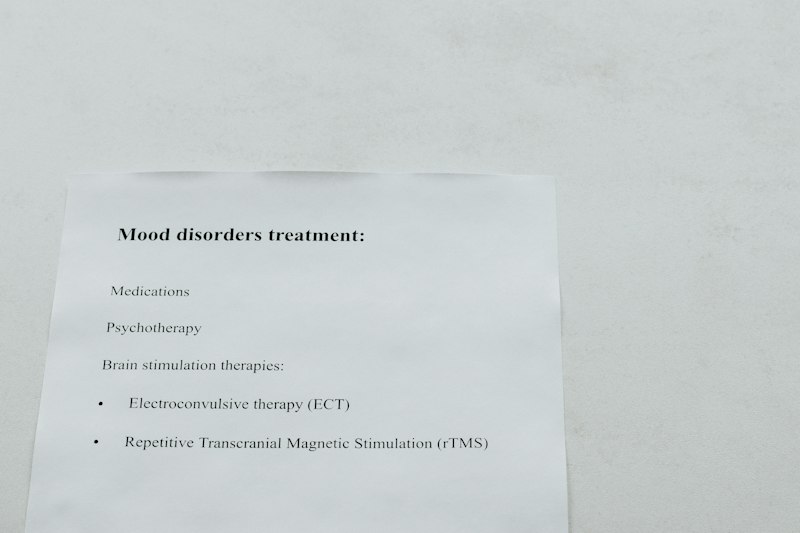
Current treatment protocols emphasize a combination of approaches. While pharmacological agents, particularly those that modulate the neurotransmitter dopamine, are often used to reduce tic severity, behavioral therapy is considered the frontline psychological intervention. The most scientifically supported behavioral treatment is Comprehensive Behavioral Intervention for Tics (CBIT). CBIT includes several components, most notably Habit Reversal Training (HRT), which teaches the individual to become fully aware of the premonitory urge and then execute a competing response—a voluntary movement that is physically incompatible with the tic—until the urge passes.
The application of this knowledge is vital in educational and social settings. Educators and employers must understand that tics are involuntary and must not be punished. Early diagnosis facilitates the implementation of necessary accommodations, such as allowing brief breaks when tics are intense, providing alternative testing environments, or incorporating movement into daily routines. Ultimately, effective management focuses not just on symptom reduction, but on improving psychosocial functioning and helping the individual navigate a world that often misunderstands involuntary neurological differences.
Related Concepts and Subfields
Tic disorder is primarily classified within the subfield of Clinical Neuropsychology, given its clear basis in aberrant brain structure and function, specifically involving the basal ganglia. It also heavily intersects with Developmental Psychopathology due to its typical onset during critical developmental periods of childhood and adolescence, and the subsequent impact on learning, social skills, and emotional regulation. Understanding the genetic contribution and neurochemical pathways places it squarely within Biological Psychology and behavioral genetics research.
Conceptually, tic disorders are related to several other psychological and neurological conditions concerning motor control and impulsivity. They share characteristics with Stereotyped Movement Disorders, though tics are typically briefer, less rhythmic, and associated with the premonitory urge that stereotypies lack. They also share an etiological link with Obsessive-Compulsive Disorder, often viewed by researchers as being on a shared spectrum of basal ganglia dysfunction, which influences the regulation of thoughts and movements. Finally, the study of the premonitory urge connects tic disorders to the broader topic of Impulse Control, providing insight into how internal bodily signals drive behavior, even when that behavior is consciously unwanted or disruptive to daily life.